Overview
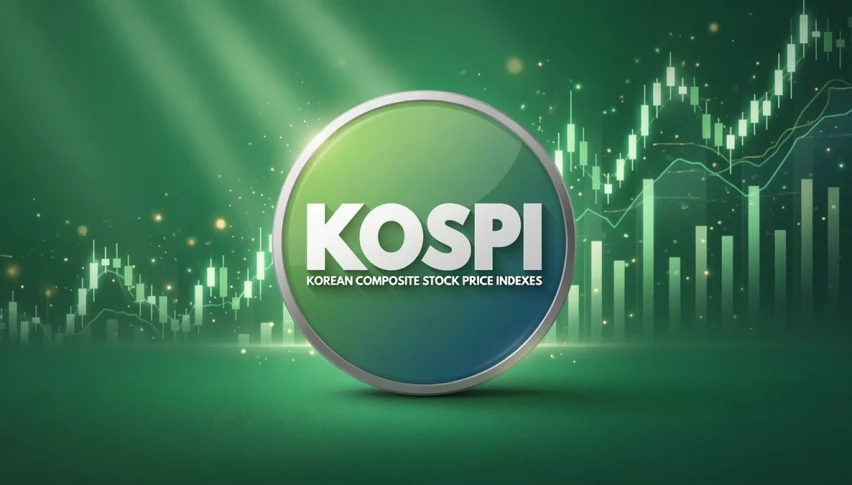
Seoul just recorded the most extreme session in the history of its stock market. The KOSPI closed up 17.91% near 6,595 on July 31, the largest single day gain since the index was created, after surging more than 11% within seven minutes of the open and triggering the exchange's buy side sidecar, which halted program orders for five minutes. SK Hynix ran all the way to a 29.95% gain, touching the Korean market's 30% daily price limit, helped by a rare direct share purchase from SK Group Chairman Chey Tae-won, while Samsung Electronics closed up nearly 27% and rejoined the $1 trillion market cap club. The backdrop was equally extreme. The KOSPI had crashed more than 17% over the prior three sessions and still finished July down 22.19%, its worst month since the 1997 Asian financial crisis. Microsoft's earnings driven semiconductor rally on Wall Street, Samsung's blowout results and a positioning vacuum left by forced deleveraging combined to produce a historic one day repair. The question for global investors is whether this marks the start of a new cycle or a sign that the turbulence is far from over.
Key Takeaways
The KOSPI closed up 17.91% near 6,595 on July 31, its largest single day gain on record, after rising more than 11% within seven minutes of the open and triggering a buy side sidecar that suspended program trading for five minutes.
SK Hynix extended its gain to 29.95%, touching the 30% daily limit, supported by record second quarter earnings and a rare direct share purchase by SK Group Chairman Chey Tae-won.
Samsung Electronics closed up about 27%, rejoining the $1 trillion market cap club, KOSPI total market capitalization recovered above 5,000 trillion won, and Japan's Nikkei 225 rose 4.03% the same day.
The immediate trigger was Wall Street, where Microsoft's earnings drove the Philadelphia Semiconductor Index up 8% and memory names from SanDisk to Micron gained 15% to 26%, restoring the AI infrastructure narrative.
The surge landed on historic oversold conditions, with the KOSPI down more than 17% over the prior three sessions and still down 22.19% for July, its worst month since 1997, after what JPMorgan described as a major unwinding of extreme leverage.
The Vkospi volatility gauge eased from above 90 to around 85, signaling cooling panic, though an 18% index day is itself evidence of fragile market structure, and a confirmed trend reversal remains unproven.
How the Largest Single Day Gain on Record Unfolded
AP reported that the KOSPI opened higher on July 31 and accelerated rapidly, finishing up 17.9% for its biggest one day advance ever.
The Korea JoongAng Daily's account captured the opening minutes in detail. The index opened at 5,657.79, up 1.15%, and within seven minutes was up 11.05%. KOSPI 200 futures rose more than 5% within a single minute, triggering the buy side sidecar and suspending program buy orders for five minutes, with the KOSDAQ's equivalent mechanism activating one second later.
Foreign net buying powered the move. Nor was Seoul alone. Japan's Nikkei 225 rose 4.03% to 64,362, briefly topping 65,000 intraday, as tech complexes across Asia repriced off the overnight US semiconductor rally. By sector, electricals and electronics including semiconductors jumped 24.66%, with machinery and precision instruments broadly higher.
Wall Street Supplied the Ammunition
The catalyst originated in New York. Microsoft's results, showing 43% Azure growth and a $678 billion commercial backlog, sent the stock up 16% with a roughly $450 billion single day value gain, and
CNBC's closing data showed the Nasdaq up 2.8% to snap a six day losing streak while the Philadelphia Semiconductor Index soared 8%. Memory was the strongest group on the tape, with SanDisk up as much as 26% and Micron up 18%, effectively rehearsing the script for Seoul's two heavyweight names.
Why SK Hynix Ran Straight to the 30% Limit
Three Catalysts Converged on One Session
Bloomberg reported that SK Hynix climbed close to the 30% daily limit, helped not only by the US peer rally but by a rare direct share purchase from SK Group Chairman Chey Tae-won. A controlling shareholder buying with his own capital after a deep drawdown sent an unambiguous signal about management's view of fundamentals.
The fundamentals had support of their own. SK Hynix had just posted record second quarter earnings, UBS initiated coverage of its US listed shares this week with a Buy rating and a $204 target, arguing the stock does not reflect the structural improvement AI demand is driving in memory, and Goldman Sachs projected double digit DRAM price gains through year end with HBM pricing potentially doubling next year.
Benzinga also reported that Samsung's Q2 revenue rose 130% with profit up more than 1,800%, alongside a warning that memory supply tightness could persist into 2028, underwriting the bull case for the entire sector.
The Limit Mechanism Amplified Scarcity
Korean equities trade within a 30% daily price band. Once SK Hynix hit its limit, buyers could no longer push the price higher, and unfilled demand spilled into Samsung Electronics, SK Square, Hanmi Semiconductor and other names along the same supply chain, the micro mechanism behind the sector's near 25% single day advance. A locked limit also manufactures scarcity, intensifying the squeeze dynamics.
The Other Side of the Surge Is a Historic Crash
Understanding the 18% requires understanding what preceded it.
TradingKey's tally shows that even after the surge, the KOSPI still lost 22.19% in July, its worst monthly performance since the 1997 Asian financial crisis. The index had fallen more than 17% over the prior three sessions, with Samsung and SK hynix down 27.2% and 18.5% respectively, as doubts about AI capex returns at Meta, Google and Amazon collided with fears of Chinese memory competition following CXMT's IPO, forcing leveraged funds into cascading liquidations.
JPMorgan analysts noted that Korea's extreme leverage had largely unwound through the selloff, and that hedge fund deleveraging in tech and memory was essentially complete. The Vkospi volatility gauge retreated from above 90 on Wednesday to around 85. Exhausted sellers, flushed leverage and then a heavyweight catalyst, that is the mechanical recipe for an 18% day, and also the reason it cannot simply be read as the resumption of a bull market.
What It Means for Investors
Samsung's return to the $1 trillion market cap club and the KOSPI's recovery above 5,000 trillion won in total capitalization mark the scale of the repair. Local analysts nonetheless stress that the index remains well below its June highs, the monthly loss has only been partially recovered, and calling a trend reversal is premature. Confirmation would require the index stabilizing above roughly 7,100, sustained foreign net buying and continued declines in volatility.
For traders, the defining feature of this regime is violent two way movement. SK Hynix fell 18.5% and then rose 30% in a single day within one week, a sequence capable of destroying leveraged positions in either direction within hours. For investors who want exposure to such names but lack access to Korean brokerage channels, platforms such as
MEXC offer USDT settled stock futures that track SK Hynix's price within a crypto market trading framework, though the same discipline on leverage and position sizing applies in full.
What to Watch Next and Where the Risks Sit
Three Signals Needed to Confirm a Reversal
First, flow persistence. After one day of explosive foreign buying, net foreign flows over the next one to two weeks will determine the rally's quality. Second, spot memory prices. If Goldman's projected double digit DRAM increases materialize in the third quarter, fundamentals can take the baton from the valuation repair. Third, global AI capex guidance. Amazon's 37% AWS acceleration was an encouraging data point, and upcoming Nvidia results plus hyperscaler spending commentary are the industry level variables.
Risks That Cannot Be Ignored
The risks are equally clear. Chinese memory capacity ramps and equipment localization, the original trigger of the crash, remain in motion. Long end US Treasury yields sit above 5.2% near 2007 highs with a September Fed hike unresolved, meaning the macro discount rate can re-compress growth valuations at any time. And an 18% index day with repeated sidecar triggers is itself proof of fragile structure. The Korean government is still deliberating market stabilization measures, and the era of extreme volatility is unlikely to be over.
Exclusive View from the MEXC Crypto Pulse Research Team
What genuinely matters about this surge is not the record itself but what it reveals, that the global AI trade has entered a leverage driven pricing regime. The KOSPI fell 22% in a month and then rose 18% in a day while the underlying fundamentals of the same companies changed by nothing of comparable magnitude. What changed was positioning and leverage. When volatility is governed by capital structure rather than fundamentals, markets amplify every marginal headline severalfold, and that feature is likely to persist for months.
The likeliest misreading is to treat a limit up move and a historic record as safety signals. The opposite is closer to the truth. Healthy bull markets rarely require 18% days, which are far more characteristic of vacuum rebounds after violent liquidation. How much of SK Hynix's 30% came from fundamental repricing versus short covering and limit driven scarcity will only be revealed by the next two weeks of trading.
The most useful cross check from here pairs two threads, whether spot memory prices deliver the projected increases, and whether foreign net buying of Korean equities persists beyond a week. The first validates fundamentals, the second validates flows, and only both together upgrade a rebound into a reversal.
For crypto, the lessons run on two levels. Korea is one of the world's most active crypto trading markets, and sharp swings in Korean equity wealth have historically influenced activity in won denominated pairs, making KOSPI stability an indirect positive for Asian session crypto liquidity. More fundamentally, this equity convulsion was a complete demonstration of a leverage cycle, from cascading liquidations to a vacuum rebound, structurally identical to how crypto markets behave. Understanding this one month in the KOSPI is understanding the universal playbook of high leverage markets, directly applicable to position management in any volatile asset.
FAQ
Why did the Korean stock market surge 18% in one day?
The immediate trigger came from Wall Street, where Microsoft's earnings drove the Nasdaq up 2.8% and the Philadelphia Semiconductor Index up 8%, with memory stocks surging and giving Samsung and SK Hynix a new valuation anchor. The deeper cause was extreme oversold positioning. The KOSPI had crashed more than 17% over three sessions and leveraged funds had been flushed out, so exhausted selling met explosive foreign buying, producing a 17.91% close, the largest single day gain since the index began.
How did SK Hynix reach the 30% daily limit?
Three forces converged. US memory peers surged overnight, with SanDisk up as much as 26% and Micron up 18%, lifting the valuation anchor. Fundamentals provided support, as the company had just posted record quarterly earnings, UBS initiated its US shares at Buy with a $204 target, and Goldman projected DRAM and HBM price increases. And SK Group Chairman Chey Tae-won made a rare direct purchase of company shares, a strong confidence signal that helped drive the stock to Korea's 30% daily price ceiling.
What is the sidecar mechanism and why was it triggered?
The sidecar is a Korea Exchange stabilization tool. When KOSPI 200 futures rise or fall more than 5% for at least one minute, program trading orders are suspended for five minutes to buffer extreme moves. On July 31, futures were up nearly 15% within minutes of the open, triggering the buy side sidecar at 9:06 a.m., with the KOSDAQ's equivalent activating one second later. Only program orders pause, and regular trading continues throughout.
Does this surge mean the Korean bear market is over?
Not yet confirmed. Even including the surge, the KOSPI lost 22.19% in July, its worst month since 1997, and the index remains well below its June highs. Local analysts broadly characterize the move as a technical repair from extreme oversold conditions, with a genuine reversal requiring sustained foreign net buying, further declines in the Vkospi volatility index and stabilization at higher levels. The two original fears, Chinese memory competition and AI capex skepticism, also remain unresolved.
How can ordinary investors get exposure to SK Hynix?
Three channels exist. Investors with Korean market access can trade the Seoul listed shares directly. The company's newly listed US depositary shares offer a second route. Derivatives provide a third, with MEXC offering USDT settled SK Hynix stock futures that track the price. It bears emphasis that the stock fell 18.5% and then rose 30% in one day within a single week, so extreme volatility demands strict leverage and position control through any channel, matched to individual risk tolerance.
Does the Korean equity surge affect crypto markets?
Indirectly, yes. Korea is among the world's most active crypto trading markets, and wealth effects from sharp equity swings have historically influenced activity in won denominated trading pairs, so a stabilizing stock market is mildly positive for Asian session crypto liquidity. In this cycle, Bitcoin and AI sector tokens have also traded with high correlation to semiconductor equities, and the joint recovery in the KOSPI and the Philadelphia Semiconductor Index improves the risk appetite backdrop, though the correlation cuts both ways in declines.
Disclaimer
This content is provided for informational purposes only and does not constitute investment advice, financial advice, legal advice, tax advice or a recommendation to buy or sell any asset. Prices of crypto assets, equities, equity derivatives and other financial instruments are highly volatile and may rise or fall sharply within short periods. Past performance is not indicative of future results. The data and information cited here are drawn from public sources and, while reviewed with care, are not guaranteed to be complete or current. Users should conduct their own research, assess their individual risk tolerance and consult licensed professionals where appropriate before making any investment decision. The MEXC Crypto Pulse Team accepts no liability for any direct or indirect losses arising from the use of or reliance on this content.
About the Author
The MEXC Crypto Pulse Team focuses on crypto market trends, on-chain narratives, fintech developments, and digital asset ecosystem research. The team tracks public market data, company announcements, third-party market platforms, and industry news sources to help users better understand market structure, risks, and opportunities.
Research References