Executive Summary
Tesla reported stronger-than-expected revenue for the second quarter of 2026, supported by higher vehicle deliveries and continued growth in energy storage.
However, the revenue beat did not translate into stronger profit. Adjusted earnings per share missed Wall Street expectations, automotive margins remained under pressure and capital expenditure increased sharply as Tesla invested in AI infrastructure, Robotaxi, Cybercab and Optimus.
Tesla generated $28.24 billion in revenue, but capital expenditure reached $5.79 billion and free cash flow fell to negative $1.09 billion. Tesla shares declined by about 4% in extended trading as investors weighed stronger sales against weaker profit quality and higher investment requirements.
Before the results were released, MEXC’s
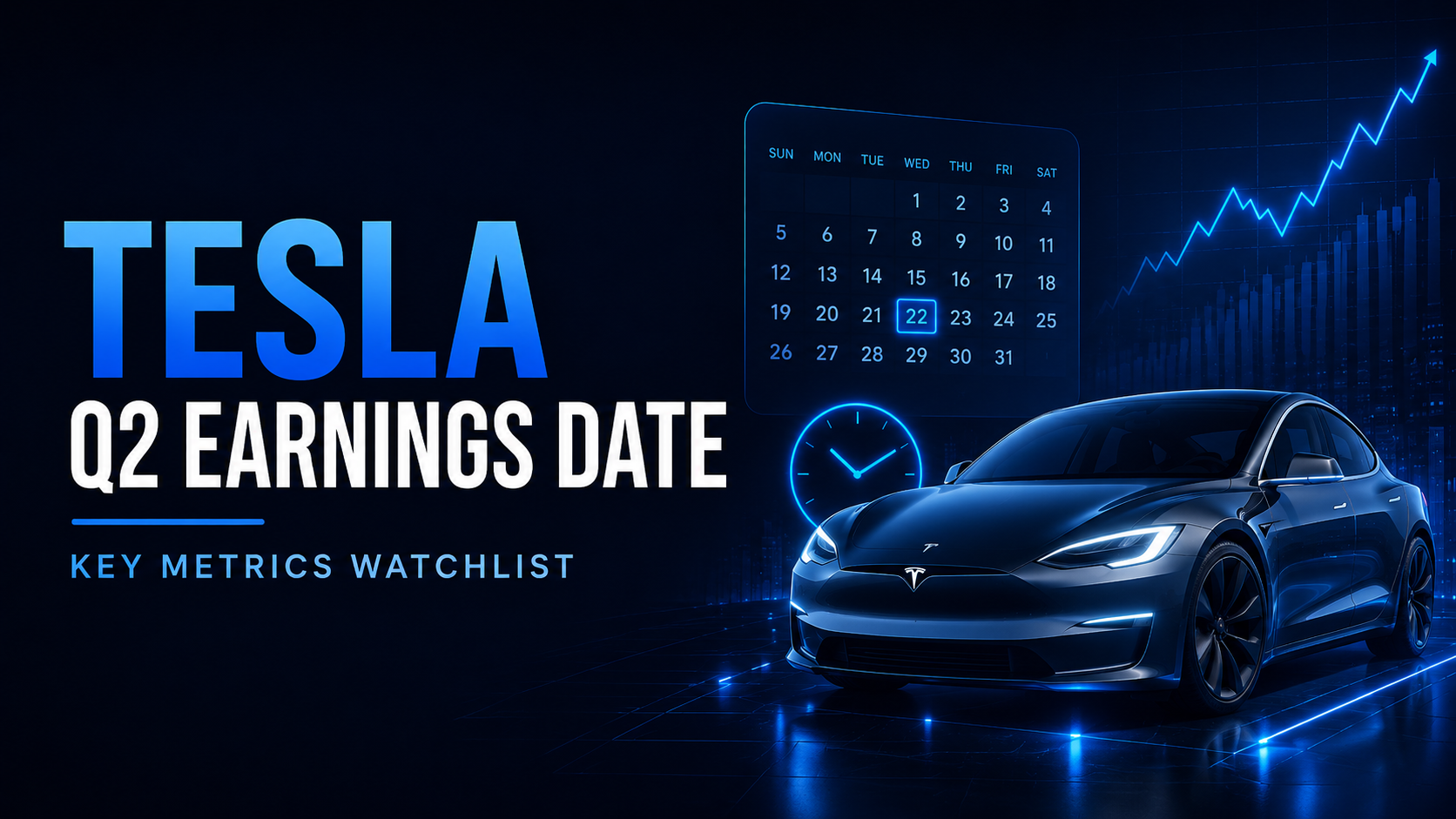
Tesla Q2 2026 earnings preview identified automotive margins, FSD monetization and AI capital expenditure as the most important metrics. The final results confirmed that these areas remain central to Tesla’s earnings outlook.
Tesla Q2 2026 Revenue Beats, but EPS Misses
Tesla generated Q2 2026 revenue of $28.24 billion, an increase of 26% from $22.50 billion in the same quarter of 2025.
Revenue exceeded the average analyst estimate of $25.71 billion compiled by LSEG. Growth was supported by higher vehicle deliveries, energy storage demand, services revenue, favorable foreign exchange effects and increased Full Self-Driving subscriptions. However, Tesla reported adjusted earnings of $0.33 per share, below the LSEG consensus estimate of $0.51. Adjusted EPS also declined from $0.40 one year earlier. GAAP net income attributable to common shareholders was $1.11 billion, down 5% year over year. GAAP diluted EPS was $0.32, compared with $0.33 in Q2 2025. Operating income fell to $398 million, while Tesla’s operating margin narrowed to 1.4%. The company provided a full breakdown of revenue, segment results, cash flow and operational progress in its
official Q2 2026 shareholder update. The results showed a clear difference between Tesla’s revenue growth and profitability. Higher sales supported the top line, but lower vehicle prices, weaker regulatory-credit revenue and rising AI-related expenses limited earnings growth.
Record Q2 Deliveries Did Not Protect Automotive Margins
Tesla delivered 480,126 vehicles during the second quarter, up from 384,122 vehicles in the same period last year.
Model 3 and Model Y accounted for 467,762 deliveries, while other models contributed 12,364 vehicles. Tesla produced 451,758 vehicles during the quarter.
Tesla also deployed 13.5 GWh of energy storage products. The complete figures are available in Tesla’s
official Q2 production, deliveries and deployments announcement. Higher deliveries helped total automotive revenue rise 23% year over year to $20.52 billion. However, the improvement in sales volume did not fully protect profitability. Automotive gross margin excluding regulatory credits was approximately 16.3%, below the 18.0% expected by analysts tracked by Visible Alpha.
Tesla was affected by lower average selling prices as competition remained intense across major electric-vehicle markets. Regulatory-credit revenue also fell to $146 million from $439 million one year earlier. The decline in regulatory-credit revenue was important because these credits have historically carried a high profit margin. Tesla must now rely more heavily on vehicle manufacturing efficiency, software revenue and other business segments to support profitability.
Energy Storage Continued to Grow
Tesla deployed 13.5 GWh of energy storage products during Q2 2026, compared with 9.6 GWh one year earlier and 8.8 GWh in the previous quarter. Energy generation and storage revenue increased 13% year over year to $3.14 billion. The deployment result showed that grid-scale battery demand remained an important source of growth for Tesla. Energy storage is becoming a larger part of Tesla’s business as electricity networks, renewable-energy projects and data centers require more battery capacity. However, Tesla said energy profitability was affected by higher warranty-related costs connected to an issue involving battery cells supplied by a vendor. Future earnings reports will need to show whether deployment growth can translate into stable revenue and margins.
Services Revenue Reached a Record
Tesla’s Services and Other revenue increased 50% year over year to $4.58 billion. The segment includes businesses connected to Tesla’s growing vehicle fleet, such as maintenance, used vehicles, charging and insurance. Gross profit reached $648 million, while gross margin increased to approximately 14%. The services result provided some support as automotive profitability weakened. It also showed how Tesla may generate more recurring revenue from its installed vehicle base after the initial vehicle sale.
Higher AI Spending Turned Free Cash Flow Negative
The largest financial change in Tesla’s Q2 results was the increase in capital expenditure. Tesla spent $5.79 billion on capital expenditure during the quarter, up 142% from $2.39 billion one year earlier. It was also more than double the amount spent in Q1 2026. Operating cash flow remained positive at $4.70 billion. However, the higher investment level pushed free cash flow to negative $1.09 billion. This was Tesla’s first quarter of negative free cash flow in more than two years. Tesla ended the quarter with $43.52 billion in cash, cash equivalents and short-term investments. Research and development spending increased 49% year over year to $2.37 billion. Tesla linked the increase to AI projects, product development, infrastructure and stock-based compensation. Management said full-year capital expenditure is expected to exceed $25 billion in 2026. Spending is expected to support AI computing, autonomous driving, Robotaxi operations, Cybercab, Optimus and additional manufacturing capacity.
FSD Subscriptions and Robotaxi Expansion Remain Important
Tesla ended the quarter with approximately 1.48 million active Full Self-Driving subscriptions, an increase of 56% from one year earlier. FSD is important because software subscriptions may produce higher margins than vehicle manufacturing. Growing subscription revenue could help offset pressure from vehicle pricing and manufacturing costs. Tesla is also expanding its Robotaxi operations across several U.S. markets. However, investors still need measurable information about fleet size, paid miles, geographic coverage and revenue contribution. Cybercab production has started at Gigafactory Texas, but Tesla has not provided detailed commercial production or revenue targets. Progress in FSD, Robotaxi and Cybercab will therefore remain important because these projects must eventually justify the company’s rising AI and infrastructure spending.
Why Did Tesla Stock Fall After Earnings?
Tesla shares declined by about 4% in extended trading after the earnings release. The market reaction reflected the gap between Tesla’s strong revenue and weaker earnings performance. Revenue and deliveries exceeded expectations, but adjusted EPS missed forecasts, automotive margins fell short and operating margin declined to 1.4%. The sharp increase in capital expenditure also raised questions about how quickly Tesla’s AI, Robotaxi and robotics investments can begin producing meaningful revenue. According to
Reuters’ analysis of Tesla’s Q2 earnings and market reaction, automotive gross margin reached approximately 16.3%, compared with the 18.04% expected by analysts, while free cash flow fell to around negative $1.1 billion. Tesla still has a large cash position, but the company is entering a period in which higher investment could continue to pressure margins and cash flow.
What Investors Should Watch After Tesla’s Q2 Earnings
The first metric to watch is automotive gross margin. Higher vehicle deliveries will have less financial value if lower prices and incentives continue to reduce profit per vehicle. The second is free cash flow. Tesla expects capital expenditure to remain high, so future cash generation will depend on operating performance and the pace of infrastructure expansion. Software monetization is another key metric. FSD subscriptions are growing, but Tesla must show that software revenue can become large enough to improve overall margins. Investors should also track Robotaxi fleet expansion, paid autonomous miles and Cybercab production. These figures could provide evidence that Tesla’s AI investment is moving from product development toward commercial revenue. Finally, energy storage must continue expanding while Tesla addresses the warranty costs that affected the segment during Q2. Tesla’s Q2 2026 results showed that vehicle demand and revenue recovered strongly. The next test is whether that growth can fund the company’s AI, autonomous-driving and robotics ambitions without creating prolonged pressure on profit margins and cash flow.
Explore Tesla and Stock-Related Markets on MEXC
Tesla gives market participants exposure to one of the most closely watched companies in the electric-vehicle, energy and artificial-intelligence sectors. MEXC provides two routes for exploring stock-related markets:
Users should understand the product structure, fees and market risks before trading stocks or futures.
Frequently Asked Questions
Did Tesla beat Q2 2026 earnings expectations?
Tesla beat revenue expectations but missed profit expectations. Revenue reached $28.24 billion, compared with the LSEG consensus estimate of $25.71 billion. Adjusted EPS was $0.33, below the expected $0.51.
What was Tesla’s Q2 2026 automotive gross margin?
Tesla’s automotive gross margin excluding regulatory credits was approximately 16.3%, below analyst expectations of about 18.0%.
Why was Tesla’s free cash flow negative?
Tesla generated $4.70 billion in operating cash flow but spent $5.79 billion on capital expenditure. This resulted in negative free cash flow of $1.09 billion.
How many vehicles did Tesla deliver in Q2 2026?
Tesla delivered 480,126 vehicles during the second quarter, an increase of approximately 25% from the same quarter of 2025.
How much will Tesla spend on capital expenditure in 2026?
Tesla management said full-year capital expenditure is expected to exceed $25 billion. Spending is focused on AI computing, Robotaxi, Cybercab, Optimus and manufacturing infrastructure.