BitcoinWorld AI in Sports: The Controversial Experiment of the Oakland Ballers’ AI Manager In the rapidly evolving landscape of technology, the boundaries of innovation are constantly being pushed. For those immersed in the world of cryptocurrency and blockchain, the concept of decentralized decision-making and experimental technology is familiar territory. So, when an independent baseball team decided to let an AI manage a game, it naturally sparked a fascinating conversation. This bold move by the Oakland Ballers wasn’t just about baseball; it was a profound experiment in AI in sports, echoing the spirit of disruption and questioning traditional structures that resonates deeply within the tech community. The Mathematical Heart of Baseball and the Rise of AI in Sports Baseball, often called America’s pastime, is more than just a game of skill and athleticism; it’s a deeply mathematical sport. Every pitch, every swing, every defensive shift can be broken down into granular statistics. Major League teams employ legions of data engineers to crunch numbers, seeking minute advantages that can influence managerial decisions. This data-driven approach, while effective, sometimes leads to an almost absurd level of overanalysis, reminiscent of Mr. Burns in that classic Simpsons episode, who famously pulled an eight-time all-star for Homer Simpson based on ‘playing the percentages.’ This deep analytical foundation makes baseball a prime candidate for technological experimentation, especially with artificial intelligence. The integration of AI in sports isn’t just a futuristic fantasy; it’s becoming a tangible reality, promising to optimize strategies, enhance player performance analysis, and even redefine the role of human coaches. From predictive analytics for player injuries to real-time strategic adjustments, AI offers a new lens through which to view and manage athletic competition. The Oakland Ballers, with their independent spirit, decided to take this concept further than most, venturing into uncharted territory. The Oakland Ballers’ Bold Experiment with Baseball AI The story of the Oakland Ballers is one of resilience and innovation. Founded by edtech entrepreneur Paul Freedman, the Ballers emerged as a beacon of hope for Oakland baseball fans after the painful departure of the Major League A’s. Though a minor league team, the ‘Oakland B’s’ quickly garnered a national following, winning a title in just two seasons. This unique position—a major league team in a minor league market—gave them the freedom to experiment in ways larger leagues couldn’t. Freedman explained to Bitcoin World, "We can play with things and experiment with things way before the MLB or NBA or any of those leagues could do something." This experimental ethos led them to a groundbreaking partnership with Distillery, an AI company, to develop software capable of managing a baseball game in real time. The core of this initiative was to see how a sophisticated Baseball AI could perform under live game conditions. Unlike previous fan-controlled experiments where humorous decisions often trumped strategic ones, this AI initiative aimed for pure data-driven optimization. The implications of such an experiment extend beyond the diamond, touching upon how artificial intelligence might reshape various industries, including those reliant on complex, real-time decision-making. Navigating AI Decision-Making on the Field The choice of baseball for this AI experiment was deliberate. As Freedman noted, "Baseball is the perfect place to do an initial experiment like this, because it is so data-driven, and decisions are made very analytically." The slow pace between pitches allows ample time for an AI system to process data and recommend actions. Distillery trained OpenAI’s ChatGPT on an immense dataset, including over a century of baseball statistics and specific Ballers game data, to mimic the strategic thinking of their human manager, Aaron Miles. The goal wasn’t to replace human ingenuity but to augment it. Freedman clarified, "What the AI did was figure out what our human coach would have done – the ingenuity on strategy and the concepts came from [Miles], and the ability to use the data and recognize patterns… is what the AI did throughout the course of the game." This highlights a critical distinction in the current state of AI decision-making: AI as a powerful tool for optimization, rather than an autonomous replacement for human expertise. During the AI-controlled game, the system performed remarkably, making almost identical decisions to Miles regarding pitching changes, lineup adjustments, and pinch hitters. The only instance where Miles had to intervene was due to a player’s unexpected illness, a scenario outside the AI’s programmed scope. This singular override underscores the enduring necessity of human oversight for unforeseen circumstances and ethical considerations. The manager himself, Aaron Miles, embraced the experiment with good humor, even offering the tablet running the AI for a handshake with the opposing manager, a symbolic gesture of technology meeting tradition. Aspect Human Manager (Aaron Miles) AI Manager (Distillery’s AI) Decision-making Basis Experience, intuition, real-time observation, data analysis Centuries of baseball data, Ballers’ game history, pattern recognition via ChatGPT Key Decisions Made Pitching changes, lineup construction, pinch hitters Identical decisions to Miles for pitching changes, lineup, pinch hitters Override Instances Miles overrode AI once due to player illness Required human override for unexpected player health issue Outcome of Game Smooth execution of managerial strategy Smooth execution, mirroring human decisions The Critical Role of Fan Engagement and Backlash Despite the smooth execution of the AI’s managerial duties, the experiment triggered an unexpected wave of backlash from the Oakland Ballers’ dedicated fanbase. For many, the involvement of companies like OpenAI, which powered Distillery’s AI, felt like a betrayal. Fans expressed concerns that such enterprises prioritize "winning" the AI race over thorough safety testing and ethical deployment. This sentiment was amplified by the recent history of corporate greed that led to the departure of multiple professional sports franchises from Oakland, creating a deep-seated mistrust among locals. Comments like "There goes the Ballers trying to appeal to Bay Area techies instead of baseball fans" highlighted a perceived disconnect. The issue wasn’t just about AI; it was about the broader cultural tension between technological advancement and community values. Fan engagement, crucial for any sports team, proved to be a double-edged sword. While fans had previously embraced novel concepts like fan-controlled games, the AI experiment touched a nerve related to corporate influence and the perceived erosion of authenticity. Paul Freedman acknowledged the unforeseen negative reaction, stating, "It never feels good to have your fans be like, ‘We hate this.’" The Ballers do not intend to repeat this specific AI experiment. However, the experience sparked a vital conversation about the ethical implications and societal acceptance of new technologies. This public discourse, though initially uncomfortable, is essential for navigating the complex future of AI. It underscores that while technology can optimize processes, the human element—emotion, community, and trust—remains paramount. A Look Ahead: Balancing Innovation and Community in the Age of AI The Oakland Ballers’ experiment serves as a compelling case study in the ongoing dialogue surrounding artificial intelligence. It showcased the impressive capabilities of AI in sports for data-driven strategy while simultaneously revealing the critical importance of public perception and fan engagement. The journey of the Oakland Ballers, from a team born out of protest to pioneers in sports technology, reflects a broader societal challenge: how to embrace innovation without alienating the communities it serves. As AI continues to integrate into various aspects of life, including sports and even the financial sector where cryptocurrencies thrive, understanding its practical applications and potential pitfalls becomes increasingly vital. The Ballers’ experience reminds us that while AI can be an incredible tool for optimization, the human touch, ethical considerations, and genuine connection with stakeholders are indispensable. The conversation about AI’s role in our future has just begun, and experiments like these, even with their bumps, are crucial steps in shaping that dialogue responsibly. To learn more about the latest AI in sports trends, explore our article on key developments shaping AI features, institutional adoption, and future applications. This post AI in Sports: The Controversial Experiment of the Oakland Ballers’ AI Manager first appeared on BitcoinWorld.BitcoinWorld AI in Sports: The Controversial Experiment of the Oakland Ballers’ AI Manager In the rapidly evolving landscape of technology, the boundaries of innovation are constantly being pushed. For those immersed in the world of cryptocurrency and blockchain, the concept of decentralized decision-making and experimental technology is familiar territory. So, when an independent baseball team decided to let an AI manage a game, it naturally sparked a fascinating conversation. This bold move by the Oakland Ballers wasn’t just about baseball; it was a profound experiment in AI in sports, echoing the spirit of disruption and questioning traditional structures that resonates deeply within the tech community. The Mathematical Heart of Baseball and the Rise of AI in Sports Baseball, often called America’s pastime, is more than just a game of skill and athleticism; it’s a deeply mathematical sport. Every pitch, every swing, every defensive shift can be broken down into granular statistics. Major League teams employ legions of data engineers to crunch numbers, seeking minute advantages that can influence managerial decisions. This data-driven approach, while effective, sometimes leads to an almost absurd level of overanalysis, reminiscent of Mr. Burns in that classic Simpsons episode, who famously pulled an eight-time all-star for Homer Simpson based on ‘playing the percentages.’ This deep analytical foundation makes baseball a prime candidate for technological experimentation, especially with artificial intelligence. The integration of AI in sports isn’t just a futuristic fantasy; it’s becoming a tangible reality, promising to optimize strategies, enhance player performance analysis, and even redefine the role of human coaches. From predictive analytics for player injuries to real-time strategic adjustments, AI offers a new lens through which to view and manage athletic competition. The Oakland Ballers, with their independent spirit, decided to take this concept further than most, venturing into uncharted territory. The Oakland Ballers’ Bold Experiment with Baseball AI The story of the Oakland Ballers is one of resilience and innovation. Founded by edtech entrepreneur Paul Freedman, the Ballers emerged as a beacon of hope for Oakland baseball fans after the painful departure of the Major League A’s. Though a minor league team, the ‘Oakland B’s’ quickly garnered a national following, winning a title in just two seasons. This unique position—a major league team in a minor league market—gave them the freedom to experiment in ways larger leagues couldn’t. Freedman explained to Bitcoin World, "We can play with things and experiment with things way before the MLB or NBA or any of those leagues could do something." This experimental ethos led them to a groundbreaking partnership with Distillery, an AI company, to develop software capable of managing a baseball game in real time. The core of this initiative was to see how a sophisticated Baseball AI could perform under live game conditions. Unlike previous fan-controlled experiments where humorous decisions often trumped strategic ones, this AI initiative aimed for pure data-driven optimization. The implications of such an experiment extend beyond the diamond, touching upon how artificial intelligence might reshape various industries, including those reliant on complex, real-time decision-making. Navigating AI Decision-Making on the Field The choice of baseball for this AI experiment was deliberate. As Freedman noted, "Baseball is the perfect place to do an initial experiment like this, because it is so data-driven, and decisions are made very analytically." The slow pace between pitches allows ample time for an AI system to process data and recommend actions. Distillery trained OpenAI’s ChatGPT on an immense dataset, including over a century of baseball statistics and specific Ballers game data, to mimic the strategic thinking of their human manager, Aaron Miles. The goal wasn’t to replace human ingenuity but to augment it. Freedman clarified, "What the AI did was figure out what our human coach would have done – the ingenuity on strategy and the concepts came from [Miles], and the ability to use the data and recognize patterns… is what the AI did throughout the course of the game." This highlights a critical distinction in the current state of AI decision-making: AI as a powerful tool for optimization, rather than an autonomous replacement for human expertise. During the AI-controlled game, the system performed remarkably, making almost identical decisions to Miles regarding pitching changes, lineup adjustments, and pinch hitters. The only instance where Miles had to intervene was due to a player’s unexpected illness, a scenario outside the AI’s programmed scope. This singular override underscores the enduring necessity of human oversight for unforeseen circumstances and ethical considerations. The manager himself, Aaron Miles, embraced the experiment with good humor, even offering the tablet running the AI for a handshake with the opposing manager, a symbolic gesture of technology meeting tradition. Aspect Human Manager (Aaron Miles) AI Manager (Distillery’s AI) Decision-making Basis Experience, intuition, real-time observation, data analysis Centuries of baseball data, Ballers’ game history, pattern recognition via ChatGPT Key Decisions Made Pitching changes, lineup construction, pinch hitters Identical decisions to Miles for pitching changes, lineup, pinch hitters Override Instances Miles overrode AI once due to player illness Required human override for unexpected player health issue Outcome of Game Smooth execution of managerial strategy Smooth execution, mirroring human decisions The Critical Role of Fan Engagement and Backlash Despite the smooth execution of the AI’s managerial duties, the experiment triggered an unexpected wave of backlash from the Oakland Ballers’ dedicated fanbase. For many, the involvement of companies like OpenAI, which powered Distillery’s AI, felt like a betrayal. Fans expressed concerns that such enterprises prioritize "winning" the AI race over thorough safety testing and ethical deployment. This sentiment was amplified by the recent history of corporate greed that led to the departure of multiple professional sports franchises from Oakland, creating a deep-seated mistrust among locals. Comments like "There goes the Ballers trying to appeal to Bay Area techies instead of baseball fans" highlighted a perceived disconnect. The issue wasn’t just about AI; it was about the broader cultural tension between technological advancement and community values. Fan engagement, crucial for any sports team, proved to be a double-edged sword. While fans had previously embraced novel concepts like fan-controlled games, the AI experiment touched a nerve related to corporate influence and the perceived erosion of authenticity. Paul Freedman acknowledged the unforeseen negative reaction, stating, "It never feels good to have your fans be like, ‘We hate this.’" The Ballers do not intend to repeat this specific AI experiment. However, the experience sparked a vital conversation about the ethical implications and societal acceptance of new technologies. This public discourse, though initially uncomfortable, is essential for navigating the complex future of AI. It underscores that while technology can optimize processes, the human element—emotion, community, and trust—remains paramount. A Look Ahead: Balancing Innovation and Community in the Age of AI The Oakland Ballers’ experiment serves as a compelling case study in the ongoing dialogue surrounding artificial intelligence. It showcased the impressive capabilities of AI in sports for data-driven strategy while simultaneously revealing the critical importance of public perception and fan engagement. The journey of the Oakland Ballers, from a team born out of protest to pioneers in sports technology, reflects a broader societal challenge: how to embrace innovation without alienating the communities it serves. As AI continues to integrate into various aspects of life, including sports and even the financial sector where cryptocurrencies thrive, understanding its practical applications and potential pitfalls becomes increasingly vital. The Ballers’ experience reminds us that while AI can be an incredible tool for optimization, the human touch, ethical considerations, and genuine connection with stakeholders are indispensable. The conversation about AI’s role in our future has just begun, and experiments like these, even with their bumps, are crucial steps in shaping that dialogue responsibly. To learn more about the latest AI in sports trends, explore our article on key developments shaping AI features, institutional adoption, and future applications. This post AI in Sports: The Controversial Experiment of the Oakland Ballers’ AI Manager first appeared on BitcoinWorld.

AI in Sports: The Controversial Experiment of the Oakland Ballers’ AI Manager

BitcoinWorld
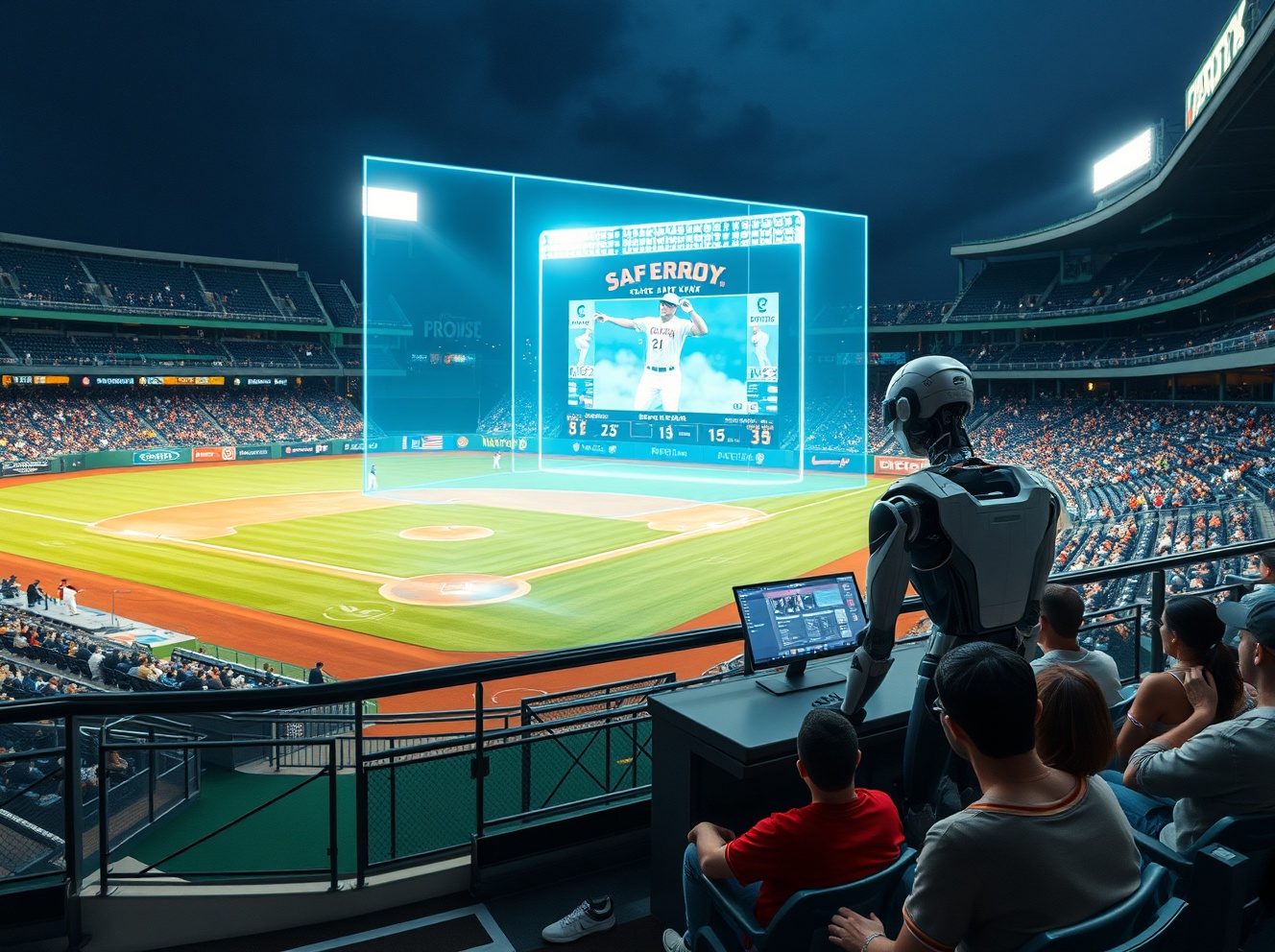
AI in Sports: The Controversial Experiment of the Oakland Ballers’ AI Manager

In the rapidly evolving landscape of technology, the boundaries of innovation are constantly being pushed. For those immersed in the world of cryptocurrency and blockchain, the concept of decentralized decision-making and experimental technology is familiar territory. So, when an independent baseball team decided to let an AI manage a game, it naturally sparked a fascinating conversation. This bold move by the Oakland Ballers wasn’t just about baseball; it was a profound experiment in AI in sports, echoing the spirit of disruption and questioning traditional structures that resonates deeply within the tech community.

The Mathematical Heart of Baseball and the Rise of AI in Sports

Baseball, often called America’s pastime, is more than just a game of skill and athleticism; it’s a deeply mathematical sport. Every pitch, every swing, every defensive shift can be broken down into granular statistics. Major League teams employ legions of data engineers to crunch numbers, seeking minute advantages that can influence managerial decisions. This data-driven approach, while effective, sometimes leads to an almost absurd level of overanalysis, reminiscent of Mr. Burns in that classic Simpsons episode, who famously pulled an eight-time all-star for Homer Simpson based on ‘playing the percentages.’

This deep analytical foundation makes baseball a prime candidate for technological experimentation, especially with artificial intelligence. The integration of AI in sports isn’t just a futuristic fantasy; it’s becoming a tangible reality, promising to optimize strategies, enhance player performance analysis, and even redefine the role of human coaches. From predictive analytics for player injuries to real-time strategic adjustments, AI offers a new lens through which to view and manage athletic competition. The Oakland Ballers, with their independent spirit, decided to take this concept further than most, venturing into uncharted territory.

The Oakland Ballers’ Bold Experiment with Baseball AI

The story of the Oakland Ballers is one of resilience and innovation. Founded by edtech entrepreneur Paul Freedman, the Ballers emerged as a beacon of hope for Oakland baseball fans after the painful departure of the Major League A’s. Though a minor league team, the ‘Oakland B’s’ quickly garnered a national following, winning a title in just two seasons. This unique position—a major league team in a minor league market—gave them the freedom to experiment in ways larger leagues couldn’t. Freedman explained to Bitcoin World, "We can play with things and experiment with things way before the MLB or NBA or any of those leagues could do something."

This experimental ethos led them to a groundbreaking partnership with Distillery, an AI company, to develop software capable of managing a baseball game in real time. The core of this initiative was to see how a sophisticated Baseball AI could perform under live game conditions. Unlike previous fan-controlled experiments where humorous decisions often trumped strategic ones, this AI initiative aimed for pure data-driven optimization. The implications of such an experiment extend beyond the diamond, touching upon how artificial intelligence might reshape various industries, including those reliant on complex, real-time decision-making.

The choice of baseball for this AI experiment was deliberate. As Freedman noted, "Baseball is the perfect place to do an initial experiment like this, because it is so data-driven, and decisions are made very analytically." The slow pace between pitches allows ample time for an AI system to process data and recommend actions. Distillery trained OpenAI’s ChatGPT on an immense dataset, including over a century of baseball statistics and specific Ballers game data, to mimic the strategic thinking of their human manager, Aaron Miles.

The goal wasn’t to replace human ingenuity but to augment it. Freedman clarified, "What the AI did was figure out what our human coach would have done – the ingenuity on strategy and the concepts came from [Miles], and the ability to use the data and recognize patterns… is what the AI did throughout the course of the game." This highlights a critical distinction in the current state of AI decision-making: AI as a powerful tool for optimization, rather than an autonomous replacement for human expertise.

During the AI-controlled game, the system performed remarkably, making almost identical decisions to Miles regarding pitching changes, lineup adjustments, and pinch hitters. The only instance where Miles had to intervene was due to a player’s unexpected illness, a scenario outside the AI’s programmed scope. This singular override underscores the enduring necessity of human oversight for unforeseen circumstances and ethical considerations. The manager himself, Aaron Miles, embraced the experiment with good humor, even offering the tablet running the AI for a handshake with the opposing manager, a symbolic gesture of technology meeting tradition.

AspectHuman Manager (Aaron Miles)AI Manager (Distillery’s AI)
Decision-making BasisExperience, intuition, real-time observation, data analysisCenturies of baseball data, Ballers’ game history, pattern recognition via ChatGPT
Key Decisions MadePitching changes, lineup construction, pinch hittersIdentical decisions to Miles for pitching changes, lineup, pinch hitters
Override InstancesMiles overrode AI once due to player illnessRequired human override for unexpected player health issue
Outcome of GameSmooth execution of managerial strategySmooth execution, mirroring human decisions

The Critical Role of Fan Engagement and Backlash

Despite the smooth execution of the AI’s managerial duties, the experiment triggered an unexpected wave of backlash from the Oakland Ballers’ dedicated fanbase. For many, the involvement of companies like OpenAI, which powered Distillery’s AI, felt like a betrayal. Fans expressed concerns that such enterprises prioritize "winning" the AI race over thorough safety testing and ethical deployment. This sentiment was amplified by the recent history of corporate greed that led to the departure of multiple professional sports franchises from Oakland, creating a deep-seated mistrust among locals.

Comments like "There goes the Ballers trying to appeal to Bay Area techies instead of baseball fans" highlighted a perceived disconnect. The issue wasn’t just about AI; it was about the broader cultural tension between technological advancement and community values. Fan engagement, crucial for any sports team, proved to be a double-edged sword. While fans had previously embraced novel concepts like fan-controlled games, the AI experiment touched a nerve related to corporate influence and the perceived erosion of authenticity.

Paul Freedman acknowledged the unforeseen negative reaction, stating, "It never feels good to have your fans be like, ‘We hate this.’" The Ballers do not intend to repeat this specific AI experiment. However, the experience sparked a vital conversation about the ethical implications and societal acceptance of new technologies. This public discourse, though initially uncomfortable, is essential for navigating the complex future of AI. It underscores that while technology can optimize processes, the human element—emotion, community, and trust—remains paramount.

A Look Ahead: Balancing Innovation and Community in the Age of AI

The Oakland Ballers’ experiment serves as a compelling case study in the ongoing dialogue surrounding artificial intelligence. It showcased the impressive capabilities of AI in sports for data-driven strategy while simultaneously revealing the critical importance of public perception and fan engagement. The journey of the Oakland Ballers, from a team born out of protest to pioneers in sports technology, reflects a broader societal challenge: how to embrace innovation without alienating the communities it serves.

As AI continues to integrate into various aspects of life, including sports and even the financial sector where cryptocurrencies thrive, understanding its practical applications and potential pitfalls becomes increasingly vital. The Ballers’ experience reminds us that while AI can be an incredible tool for optimization, the human touch, ethical considerations, and genuine connection with stakeholders are indispensable. The conversation about AI’s role in our future has just begun, and experiments like these, even with their bumps, are crucial steps in shaping that dialogue responsibly.

To learn more about the latest AI in sports trends, explore our article on key developments shaping AI features, institutional adoption, and future applications.

This post AI in Sports: The Controversial Experiment of the Oakland Ballers’ AI Manager first appeared on BitcoinWorld.

Market Opportunity
B Logo
B Price(B)
$0.20329
$0.20329$0.20329
+2.13%
USD
B (B) Live Price Chart
Disclaimer: The articles reposted on this site are sourced from public platforms and are provided for informational purposes only. They do not necessarily reflect the views of MEXC. All rights remain with the original authors. If you believe any content infringes on third-party rights, please contact service@support.mexc.com for removal. MEXC makes no guarantees regarding the accuracy, completeness, or timeliness of the content and is not responsible for any actions taken based on the information provided. The content does not constitute financial, legal, or other professional advice, nor should it be considered a recommendation or endorsement by MEXC.

You May Also Like

‘Literally billions’ of AI agents to use stablecoins in 5 years: Circle CEO

‘Literally billions’ of AI agents to use stablecoins in 5 years: Circle CEO

Circle CEO Jeremy Allaire says AI agents have no alternative to stablecoins and will conduct everyday activities with the tokens within as little as three years
Share
Coinstats2026/01/23 08:46
Trump says US ‘armada’ heading toward Iran

Trump says US ‘armada’ heading toward Iran

The warships start moving from the Asia-Pacific as tensions between Iran and the US soared following a severe crackdown on protests across Iran in recent months
Share
Rappler2026/01/23 09:37
China Blocks Nvidia’s RTX Pro 6000D as Local Chips Rise

China Blocks Nvidia’s RTX Pro 6000D as Local Chips Rise

The post China Blocks Nvidia’s RTX Pro 6000D as Local Chips Rise appeared on BitcoinEthereumNews.com. China Blocks Nvidia’s RTX Pro 6000D as Local Chips Rise China’s internet regulator has ordered the country’s biggest technology firms, including Alibaba and ByteDance, to stop purchasing Nvidia’s RTX Pro 6000D GPUs. According to the Financial Times, the move shuts down the last major channel for mass supplies of American chips to the Chinese market. Why Beijing Halted Nvidia Purchases Chinese companies had planned to buy tens of thousands of RTX Pro 6000D accelerators and had already begun testing them in servers. But regulators intervened, halting the purchases and signaling stricter controls than earlier measures placed on Nvidia’s H20 chip. Image: Nvidia An audit compared Huawei and Cambricon processors, along with chips developed by Alibaba and Baidu, against Nvidia’s export-approved products. Regulators concluded that Chinese chips had reached performance levels comparable to the restricted U.S. models. This assessment pushed authorities to advise firms to rely more heavily on domestic processors, further tightening Nvidia’s already limited position in China. China’s Drive Toward Tech Independence The decision highlights Beijing’s focus on import substitution — developing self-sufficient chip production to reduce reliance on U.S. supplies. “The signal is now clear: all attention is focused on building a domestic ecosystem,” said a representative of a leading Chinese tech company. Nvidia had unveiled the RTX Pro 6000D in July 2025 during CEO Jensen Huang’s visit to Beijing, in an attempt to keep a foothold in China after Washington restricted exports of its most advanced chips. But momentum is shifting. Industry sources told the Financial Times that Chinese manufacturers plan to triple AI chip production next year to meet growing demand. They believe “domestic supply will now be sufficient without Nvidia.” What It Means for the Future With Huawei, Cambricon, Alibaba, and Baidu stepping up, China is positioning itself for long-term technological independence. Nvidia, meanwhile, faces…
Share
BitcoinEthereumNews2025/09/18 01:37