

Arthur Hayes HYPE NEAR market peak call: why he sold out now
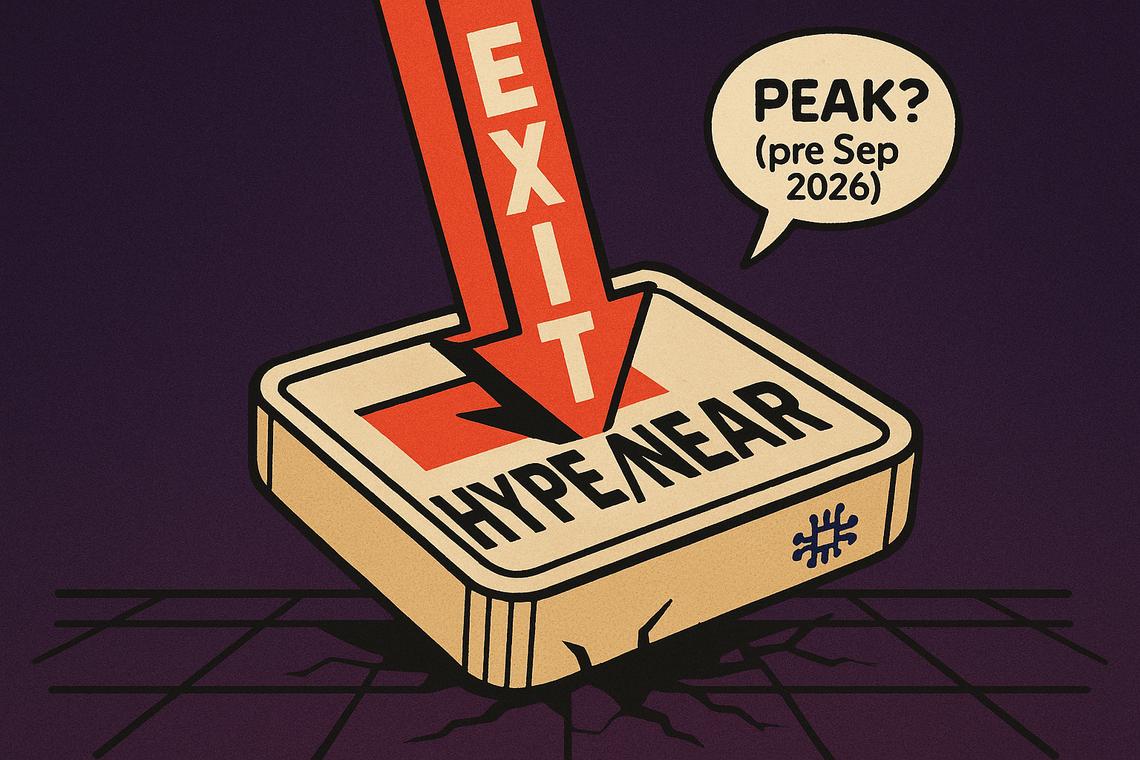
BitMEX co-founder Arthur Hayes has exited his HYPE and NEAR tokens, warning that the Arthur Hayes HYPE NEAR market peak could arrive before September 2026. The move is getting attention not only because of who Hayes is, but also because he says he is taking profits ahead of a possible turn in the market.
Hayes confirmed that he sold all of his HYPE and NEAR holdings. Although he did not disclose the size of those positions, the full exit suggests more than routine portfolio trimming. He said the detailed reasoning will appear in an upcoming essay titled Reality Test, expected next week.
Meanwhile, the explanation he has already given points to a mix of macro pressure, political risk, and capital flows that could reshape crypto and AI markets at the same time.
Arthur Hayes sells HYPE and NEAR tokens ahead of a possible market top
Why the Arthur Hayes HYPE NEAR market peak call matters
Hayes sold his entire positions in both tokens, and that matters because he has a long track record of drawing attention with macro-focused calls. He framed the decision as profit-taking before what he sees as an incoming top, likely somewhere between now and September 2026.
He is not predicting an outright collapse. Instead, he appears to be positioning for a phase where the easiest gains may already be behind the market. In practice, that makes the sale less about panic and more about timing.
The Reality Test essay is expected to spell out the full logic. For now, market watchers are left with the outline, which blends crypto-native thinking with broader economic analysis.
Macroeconomic pressures shaping Hayes’ view
Impact Iran war energy prices and inflation concerns
One of the clearest factors Hayes pointed to is rising energy prices tied to the ongoing Iran war. Energy costs can feed into wider inflation, and that, in turn, can affect risk appetite across financial markets.
When energy prices rise, the pressure often spreads well beyond the oil market. Margins can tighten, central banks can face harder choices, and speculative assets such as crypto can lose some support. Hayes’ exit suggests he sees that chain of effects as a real concern.
He also cited inventory restocking as another factor shaping market conditions. Supply chains rebuilding after periods of contraction can lift activity, but they can also create fresh inflationary pressure. As a result, the macro backdrop looks less friendly than it did earlier in the cycle.
AI IPOs 2026 and the pull on institutional capital
Hayes also highlighted three major AI IPOs expected from summer through early Q3 2026. Those listings could attract large amounts of institutional capital, which matters because money flowing into new public AI companies may be money that does not flow into crypto.
That overlap is central to Hayes’ thinking. If investors rotate into high-profile AI stocks, liquidity can move away from digital assets. At the same time, the timing of those listings lines up with the market peak window he is watching.
In other words, Hayes is not looking at crypto in isolation. He is reading the relationship between AI, IPO demand, and risk appetite as one connected market story.
Political risk and the midterm elections AI influence
Hayes also raised a political scenario involving former President Donald Trump. In his view, Trump may turn against AI as a way to position himself ahead of the midterm elections. That possibility is speculative, however, it adds another layer of uncertainty to an AI market already preparing for major listings.
If that shift happens, even in rhetorical form, it could dampen enthusiasm, pressure valuations, and weaken the same AI momentum that Hayes thinks may be pulling capital away from crypto. The result, in his framework, is a market with too many moving parts and too much overlap between sectors.
Taken together, Hayes sees a top forming before September 2026. Rising energy prices from the Iran war, inventory restocking, three major AI IPOs in 2026, and possible political pressure on AI all point to the same window. His response was to take profits now rather than wait to see which factor hits hardest first.
The broader takeaway is straightforward: Hayes is not calling for a crash, but for a ceiling. He moved ahead of it, and that decision is now drawing fresh attention to the Arthur Hayes HYPE NEAR market peak thesis.
The real test will come when Reality Test lands next week. Until then, the market is left with Hayes’ warning, his exit from HYPE and NEAR, and a forecast that links crypto, AI, energy prices, and politics in one timeline.
FAQ
Why did Arthur Hayes sell all his HYPE and NEAR tokens?
Hayes sold his entire holdings in both HYPE and NEAR tokens as a profit-taking move ahead of what he believes will be a market peak before September 2026. He said several macroeconomic and political factors shaped that decision.
What factors influenced Hayes’ decision to sell before September?
Hayes pointed to rising energy prices related to the Iran war, inventory restocking dynamics, three major AI IPOs expected from summer through early Q3 2026, and the possibility that Trump may turn against AI ahead of the midterm elections.
When will Arthur Hayes explain his reasoning?
Hayes plans to publish a full explanation in an upcoming essay titled Reality Test, which is expected next week.
What major events are expected to impact the market in 2026?
Three major AI IPOs are expected from summer through early Q3 2026. Hayes believes those listings could absorb institutional capital that might otherwise flow into crypto markets.
How could political actions affect the AI market sector?
Hayes said there is a possibility that Trump could turn against AI to influence the midterm elections. If that happens, it could create uncertainty around AI valuations and affect the momentum of the listings expected in the same period.


You May Also Like

Kaspa Gained 10.02% in Last Month and is Predicted to Drop to $0.028204 By Apr 06, 2026

Solana Price Approaches $58 Support as $175 Target Remains

SanDisk (SNDK) Stock Soars 7% as Analysts Boost Price Targets to Record Levels



