

👨🏿🚀TechCabal Daily – Terra’s mega haul
Good morning. 
Apple has chosen to work with Google’s Gemini model in a multi-year deal to power Siri and Apple Intelligence. Did Apple just concede it might be losing AI relevance and collaborate with Google instead?
In other news, Ido Sum has been investing in African startups before it became cool and was a partner at TLCom, a $250 million VC firm, for 14 years. Two months after he left the firm, he published a widely-shared essay arguing that Africa’s VC industry is not broken despite the scarcity of large, repeatable exits, but simply earlier than many investors are willing to admit.
This week, Muktar Oladunmade, our in-house VC reporter, spoke to him about his thoughts on how Africa’s VC can grow, the risks of funding everything with equity, the importance of capital efficiency, and the most realistic near-term liquidity path for African tech. Read it here.
Let’s dive into today’s dispatch.
- Terra Industries raises $11.75 million
- Customers give Temu bad reviews in South Africa
- Lagos and Abuja residents still can’t use Starlink
- World Wide Web 3
- Opportunities
Startups
Nigeria’s Terra Industries raises $11.75 million from US investors
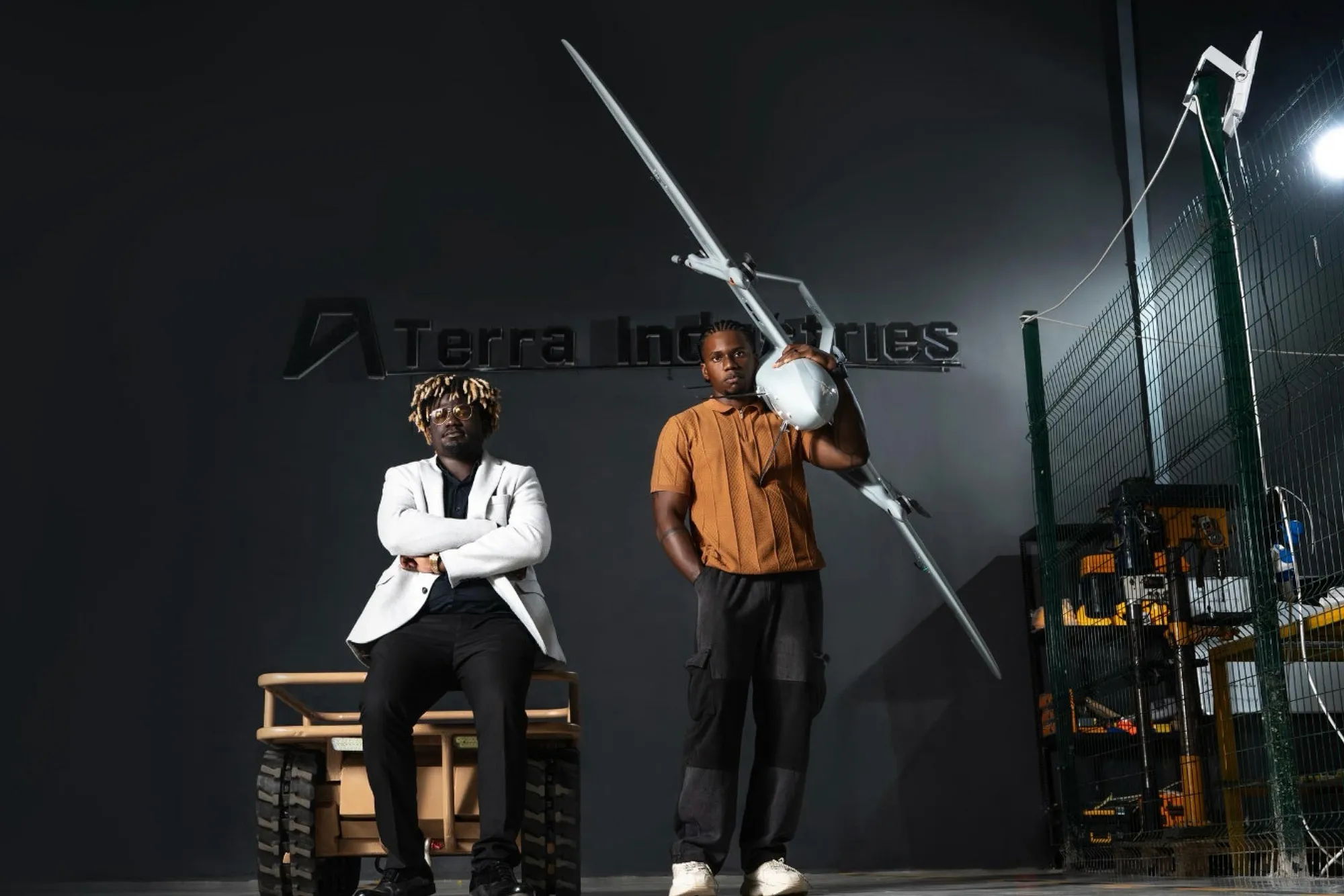 Image Source: Terra Industries
What is the appeal with a defence-tech startup building drones and remote threat sensors from a little factory in Abuja, Nigeria? So much that investors from Silicon Valley and a big name like Palantir lined up with their dollars, cash in hand ready to back an unprecedented $11.75 million funding round?
Three things: first, traction. Nathan Nwachuku and co-founder Maxwell Maduka started building Terra Industries (formerly Terrahaptix) in stealth mode in 2023. Both knowledgeable in robotics—Maduka previously sold his former robotics startup, Spacial Nova, to Nigerian automotive company Nord Motors in 2022—they banded together to build something different. Nwachuku, fresh off his success with edtech startup Klas, had been an investor in Spacial Nova, which brought the two together.
They saw an opportunity to change how drone operators, who often lacked the after-sales support to use foreign drones. Locally-made drones were not on the same quality level, so there was no real competition to the Chinese imports. By 2024, still in stealth mode, Terra had secured over $1 million in surveillance contracts, with Archer, its aerial drone, selling several units. It was an experiment that yielded critical traction that attracted eyeballs.
Soon, heavy-hitters and experienced defence-tech veterans began to join its board. That was the second validation: association.
Third, an experienced team. Starting out as an early-stage startup, Terra wasn’t focused on marketing, rather it wanted to develop the right human capital and expertise to build, a key quality that often lacks in the defence-tech sector. By 2024, Terra had only robotics engineers, hardware operations specialists, and software engineers (for building its ArtemisOS software which serves as a control centre for its drones).
“I felt like I’ll never be able to assemble a team like this again. We started it and it’s been a rocketship since,” said Nwachuku in 2024.
Today, the validation of that speed and careful foundational building is its $11.75 million raise. Terra has become the most visible Nigerian startup putting defence-tech on the global map.
Yet Terra isn’t chasing the world. Selling surveillance hardware like drones, which is effectively military-grade equipment, can draw government scrutiny. There’s also extensive due diligence required to ensure whose hands that hardware ultimately ends up in. Terra is playing a selective game, keeping its enterprise clients local while pursuing carefully chosen scale globally. With Palantir now onboard, there’s a thing or two it could learn.
Your 2026 demands disciplined financial operations
Fincra powers the payments infrastructure businesses rely on to collect, pay, and settle across local and major African currencies with confidence. Get started.
E-commerce
Temu and Shein face regulatory reckoning in South Africa
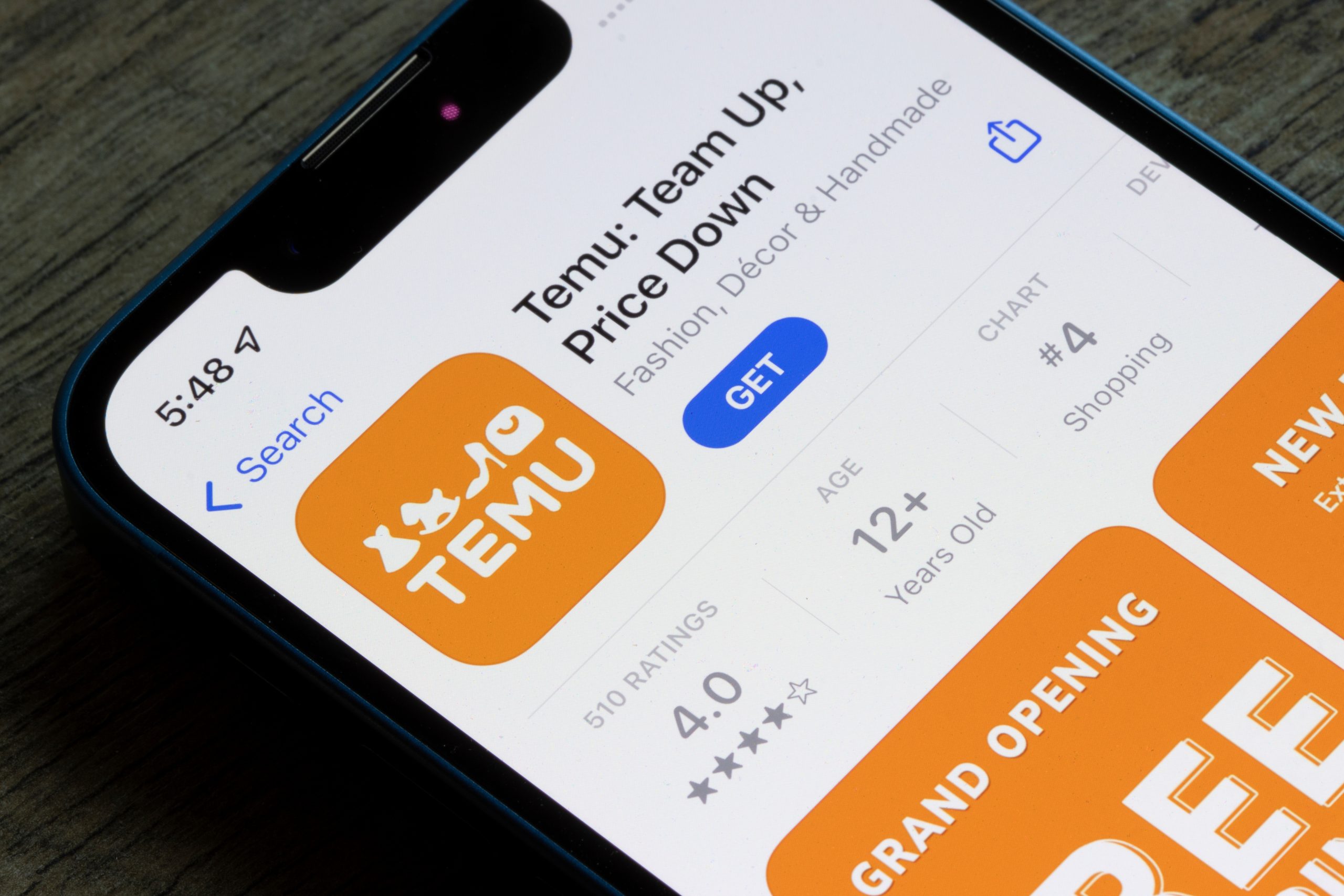 Image Source: TechCentral via MSN
The ‘honeymoon phase’ for Chinese e-commerce brands in South Africa is officially over. Thousands of shoppers reported a nightmare start to 2026, with Temu orders stuck in delivery limbo and a surge of 1-star reviews hitting consumer sentiment platforms like Hellopeter.
The primary culprit appears to be third-party logistics partners, specifically GFS Express, which has been slammed for misleading tracking updates and failed deliveries. In December 2025 alone, 90% of reviewers gave Temu a 1-star rating, with many claiming they ordered items in November for Christmas that have still not arrived.
This delivery crisis comes at a time of peak scrutiny for Chinese e-commerce giants. In November 2025, South Africa’s National Consumer Commission (NCC) launched a formal investigation into both Temu and Shein. The probe is looking into deceptive marketing, product safety, and compliance with the Consumer Protection Act (CPA).
The NCC is also monitoring Temu’s “local warehouse” label, which critics argue is misleading since Temu does not actually own any domestic facilities but uses third-party logistics that are currently failing to meet demand.
Between the lines: Since their South African entry, Shein and Temu’s advantage has been a “regulatory arbitrage,” that exploited tax loopholes to keep prices low. Now that the South African Revenue Service (SARS), the country’s tax czar, has closed those gaps with a flat 45% duty plus VAT, the platforms are being forced to compete on service and reliability—and they are currently failing.
Zoom out: Despite the chaos, both Temu and Shein recorded a combined R7.3 billion in sales in 2024 R7.3 billion ($400 million), grabbing 37% of South Africa’s online clothing market. Research estimates their rise has cost the local economy over 8,000 jobs and nearly R1 billion in lost manufacturing sales. The NCC intends to wrap up its investigation by February 28, 2026. If found guilty of CPA violations like misleading marketing, product quality/safety, labelling, and tax avoidance, these platforms could face penalties of up to 10% of their annual South African turnover.
Internet
New Starlink subscribers in Lagos and Abuja remain locked out after three months
 Image Source: PCMag
If you were hoping to kick off 2026 with high-speed satellite internet in Nigeria’s biggest cities, you’re still out of luck. New checks as of January 12, 2026, show that Starlink remains “sold out” across major hubs in Lagos and Abuja, three months after the service first hit a capacity wall.
Prospective users in neighbourhoods like Lekki, Victoria Island, and Surulere, Lagos, are being met with an “at capacity” notice and a prompt to join a waitlist by paying a deposit.
The real issue is bandwidth. Starlink’s low-earth orbit (LEO) satellites have a technical limit (roughly 1,500 concurrent users per 22km radius). In Nigeria’s dense urban centres, the demand has simply overstretched the existing “cells,” forcing the company to pause new activations to keep speeds from tanking for current users.
The price of performance: While demand is high, it isn’t cheap. Starlink’s prices have surged since its 2022 launch. The standard kit increased from ₦440,000 ($309) to ₦590,000 ($414), while the monthly subscription jumped from ₦38,000 ($27) to ₦57,000 ($40) in 2025, following a heated tariff dispute with the NCC.
This capacity freeze is a recurring headache. Starlink previously suspended sales in Kenya for eight months starting November 2024. Despite resuming in June 2025, the infrastructure hasn’t kept pace with Nigeria’s “digital-first” hunger.
The big picture: With over 66,500 subscribers, Starlink is Nigeria’s second-largest ISP, trailing only Spectranet. The “sold out” status gives local competitors like Tizeti and YahClick a chance to swoop in with cheaper or more available alternatives. SpaceX plans to lower about 4,400 satellites to a lower orbit throughout 2026 to improve safety and potentially boost capacity, but for now, Nigerian urbanites are stuck in the waiting room.
CRYPTO TRACKER
The World Wide Web3
Source:

|
Coin Name |
Current Value |
Day |
Month |
|---|---|---|---|
| Bitcoin | $91,805 |
– 0.27% |
+ 2.17% |
| Ether | $3,131 |
– 0.93% |
+ 0.72% |
| Dolomite | $0.06593 |
+ 52.06% |
+ 72.78% |
| Solana | $139.66 |
– 2.99% |
+ 5.44% |
* Data as of 06.45 AM WAT, January 13, 2026.
Opportunities
-
- Detty December is getting more expensive, but young Africans are not backing down from the vibes. A 2025 Accrue report surveyed 631 people across Ghana, Nigeria, and Kenya—86% of them Gen Zs and late millennials aged 18–34—most living in moderately sized households with at least one income source, yet only 4% earn above $5,000 in total monthly household income. Yet, 60% say they planned to spend more in 2025, with outdoor events, concerts, house parties, travel, dining out, and leisure activities taking the biggest share of their budgets as Detty December cements itself as both culture and economic force. Many rely on money from abroad, receiving funds via mobile money, bank transfers, and virtual USD accounts, while navigating fees and delays. They plan ahead, stretch budgets, borrow, or sell assets just to keep the Detty December tradition alive. Download the report.
- Over 50 companies in Africa have transformed their team members into business growth operators with alGROWithm’s Growth Talent Accelerator Programme
- . Nominate your team members for the February cohort today.
- TechCabal is conducting a short survey to help audit Africa’s tech ecosystem performance, capital conditions, choices, and trade-offs we made in 2025. You can also share this poll with anyone that works in African tech. We would appreciate your participation; fill the form here.
- Nigeria’s tax reset complicates MTN Group’s long-planned share sell-down
- How Nigeria plans to trace crypto money without cracking the blockchain Anthropic wants you to use Claude to ‘Cowork’ in latest AI agent push
- Alphabet tops $4-trillion valuation
Written by: Emmanuel Nwosu, Opeyemi Kareem, and Zia Yusuf
Edited by: Emmanuel Nwosu & Ganiu Oloruntade
Want more of TechCabal?
Sign up for our insightful newsletters on the business and economy of tech in Africa.
- The Next Wave: futuristic analysis of the business of tech in Africa.
- Francophone Weekly by TechCabal: insider insights and analysis of Francophone’s tech ecosystem
P:S If you’re often missing TC Daily in your inbox, check your Promotions folder and move any edition of TC Daily from “Promotions” to your “Main” or “Primary” folder and TC Daily will always come to you.

You May Also Like
Trump ally drops bombshell claim GOP 'deliberately' sabotaging him with impeachment plot

IBM Qiskit v2.3 Adds C API Expansion for Quantum-HPC Integration

The Role of Blockchain in Building Safer Web3 Gaming Ecosystems
- Immutable Ownership of Assets Blockchain records can be manipulated by anyone. If a player owns a sword, skin, or plot of land as an NFT, it is verifiably in their ownership, and it cannot be altered or deleted by the developer or even hacked. This has created a proven track record of ownership, providing control back to the players, unlike any centralised gaming platform where assets can be revoked.
- Decentralized Infrastructure Blockchain networks also have a distributed architecture where game data is stored in a worldwide network of nodes, making them much less susceptible to centralised points of failure and attacks. This decentralised approach makes it exponentially more difficult to hijack systems or even shut off the game’s economy.
- Secure Transactions with Cryptography Whether a player buys an NFT or trades their in-game tokens for other items or tokens, the transactions are enforced by cryptographic algorithms, ensuring secure, verifiable, and irreversible transactions and eliminating the risks of double-spending or fraudulent trades.
- Smart Contract Automation Smart contracts automate the enforcement of game rules and players’ economic exchanges for the developer, eliminating the need for intermediaries or middlemen, and trust for the developer. For example, if a player completes a quest that promises a reward, the smart contract will execute and distribute what was promised.
- Anti-Cheating and Fair Gameplay The naturally transparent nature of blockchain makes it extremely simple for anyone to examine a specific instance of gameplay and verify the economic outcomes from that play. Furthermore, multi-player games that enforce smart contracts on things like loot sharing or win sharing can automate and measure trustlessness and avoid cheating, manipulations, and fraud by developers.
- Cross-Platform Security Many Web3 games feature asset interoperability across platforms. This interoperability is made viable by blockchain, which guarantees ownership is maintained whenever assets transition from one game or marketplace to another, thereby offering protection to players who rely on transfers for security against fraud. Key Security Dangers in Web3 Gaming Although blockchain provides sound first principles of security, the Web3 gaming ecosystem is susceptible to threats. Some of the most serious threats include: