The post Jimmy Butler’s Torn ACL Changes The Warriors’ NBA Trade Deadline Approach appeared on BitcoinEthereumNews.com. Jimmy Butler R of Golden State Warriors The post Jimmy Butler’s Torn ACL Changes The Warriors’ NBA Trade Deadline Approach appeared on BitcoinEthereumNews.com. Jimmy Butler R of Golden State Warriors

Jimmy Butler’s Torn ACL Changes The Warriors’ NBA Trade Deadline Approach

Jimmy Butler R of Golden State Warriors celebrates scoring with teammate Jonathan Kuminga during the 2024-2025 NBA regular season game between Golden State Warriors and New York Knicks in San Francisco, the United States, March 15, 2025. (Photo by Arthur Dong/Xinhua via Getty Images)

Xinhua News Agency via Getty Images

The Golden State Warriors’ dreams of winning a fifth championship with Stephen Curry might have been dealt a fatal blow Monday night. As ESPN’s Shams Charania first reported, star forward Jimmy Butler suffered a torn ACL in the third quarter of the Warriors’ 135-112 over the Miami Heat and will miss the remainder of the season.

After stumbling out to a 13-15 start this season, the Warriors went 12-4 over the past month to rise to eighth in the Western Conference. However, although the Warriors buried the Heat in a barrage of three-pointers after Butler went down Monday, he recently described the team as “mediocre.” Where does that leave them now that they’ll be without their second-leading scorer moving forward?

All roads now lead back to exiled forward Jonathan Kuminga, who officially became trade-eligible on Jan. 15 and demanded a trade that same day, according to Charania. Kuminga began the season as a starter and initially fared well in that role, although he fell out of favor yet against with head coach Steve Kerr by mid-November and has played sparingly since. His last appearance came roughly one month ago in a 99-98 loss to the Phoenix Suns.

“I’m disappointed for him that things didn’t continue to go the way they did the first couple of weeks,” Kerr told reporters earlier this month. “At the same time, it was gonna be tricky to start JK, Jimmy, Draymond [Green], at the 2, 3 and 4. I think anybody can see that’s a tough combination, in a five-man combination, based on shooting.

“Sometimes, Steph [Curry] can just offset every spacing obstacle in your way. He’s that good. But in the modern NBA, I think it’s gonna be tough to do that, and I think we recognize that. We gave that lineup several weeks, and eventually, I think the weaknesses of the lineup were exposed, and that’s why we went in a different direction.”

With Butler now sidelined indefinitely, Kerr can’t fall back on that excuse anymore. Kuminga’s usage—or lack thereof—over the next two weeks could speak volumes about how the Warriors now plan to attack the trade deadline in the wake of Butler’s injury.

Should The Warriors Still Trade Kuminga?

According to Marcus Thompson II, Sam Amick and Nick Friedell of The Athletic, the Warriors expected Kuminga to play on Jan. 2, when they rested all three of Butler, Curry and Green against the Oklahoma City Thunder. However, he popped up on the injury report with “lower back soreness” shortly before the game and did not suit up. Multiple team sources told The Athletic that they suspected Kuminga “wasn’t actually hurt.”

After Monday’s game, a reporter asked Kerr whether Kuminga could get back into the rotation if Butler’s injury proved to be serious. Kerr offered a one-word response: “Absolutely.” The reporter followed up to ask whether he was “ready,” to which Kerr replied plainly: “Yep. Yep.”

Sources told Charania that the relationship between Kerr and Kuminga is now “fractured beyond repair.” Unfortunately for Kuminga, he doesn’t have much recourse in this situation, particularly if the Warriors’ medical staff clears him to play. If he refuses to suit up at that point, the league’s collective bargaining agreement contains a specific section about how teams can penalize players who withhold services.

If Kuminga can put his bad blood with Kerr to the side, Butler’s injury theoretically should open a clear role for him moving forward. The Warriors will still be built around Curry and Green’s “chaos at both ends,” as Kerr told reporters at the beginning of the season, but they’ll need another go-to scorer in Butler’s absence. Kuminga has the best shot out of anyone on the roster to fill that role.

Prior to Butler’s injury, Kuminga was seen as a $22.5 million luxury for the Warriors. Had they dangled him and Buddy Hield, who only has $3 million of his $9.7 million salary for the 2026-27 season fully guaranteed, they could offer nearly $30 million in financial relief to any team looking to shed a longer-term contract. Now, the Warriors might need to lean on Kuminga again out of necessity.

That is, of course, assuming the Warriors continue on their current trajectory of trying to assemble a championship-caliber supporting cast around Curry. Butler’s injury could raise some bigger-picture questions about their overall approach, though.

Should The Warriors Be Thinking Bigger?

The Warriors already might be too far ahead in the standings to catch bottom-feeders like the New Orleans Pelicans, Sacramento Kings and Indiana Pacers in the race to maximize their draft-lottery odds. Then again, the Dallas Mavericks won last year’s lottery—and the rights to Duke forward Cooper Flagg—despite having less than a 2% chance to do so. The Warriors have their 2026 first-round pick, so if Butler’s injury sends them into a tailspin, they could pivot into improving their chances of landing a generational prospect via a “youth movement.”

The other question is whether Butler’s injury causes the Warriors to reconsider his future in Golden State. He’s now effectively $54.1 million in dead money this season, and he turns 37 in mid-September. Even if he’s ready to return by the start of next season or early on in the year, there’s no guarantee that he gets back to his previous form given his age.

Butler won’t have much trade value now that he’s out for the year, but he could provide some long-term cap relief since he’s only under contract through 2026-27. Would the Philadelphia 76ers be open to flipping Paul George, who has one extra year on his deal, for Butler? What about the Dallas Mavericks with Anthony Davis?

Would the Sacramento Kings be open to taking him on for Zach LaVine, DeMar DeRozan and/or Domantas Sabonis, particularly if the Warriors attached future draft picks? Would the Brooklyn Nets be open to the same with Michael Porter Jr.? Could the Warriors use Butler’s contract to buy low on Memphis Grizzlies guard Ja Morant or Charlotte Hornets guard LaMelo Ball, both of whom are under contract for longer than Butler?

Since Butler’s injury effectively ends the Warriors’ title chances this year, they could always decide to stand relatively pat at the trade deadline and revisit a bigger shakeup in the offseason. They have a $24.3 million team option on Kuminga in 2026-27 that they could pick up to facilitate an offseason trade, particularly if he rebuilds his value over the next two-plus months in Butler’s absence. At that point, they might have a better sense of when to expect Butler back, too.

Even prior to Butler’s injury, the Warriors were posturing that they didn’t feel imminent pressure to move Kuminga and that they were willing to keep him beyond the trade deadline if need be. Butler’s injury might have pushed them even further in that direction. That could shake up the trade-deadline landscape leaguewide.

Unless otherwise noted, all stats via NBA.com, PBPStats, Cleaning the Glass or Basketball Reference. All salary information via Spotrac and salary-cap information via RealGM. All odds via FanDuel Sportsbook.

Follow Bryan on Bluesky.

Source: https://www.forbes.com/sites/bryantoporek/2026/01/20/jimmy-butlers-torn-acl-changes-the-warriors-nba-trade-deadline-approach/
Market Opportunity
Polytrade Logo
Polytrade Price(TRADE)
$0.05015
$0.05015$0.05015
+0.48%
USD
Polytrade (TRADE) Live Price Chart
Disclaimer: The articles reposted on this site are sourced from public platforms and are provided for informational purposes only. They do not necessarily reflect the views of MEXC. All rights remain with the original authors. If you believe any content infringes on third-party rights, please contact service@support.mexc.com for removal. MEXC makes no guarantees regarding the accuracy, completeness, or timeliness of the content and is not responsible for any actions taken based on the information provided. The content does not constitute financial, legal, or other professional advice, nor should it be considered a recommendation or endorsement by MEXC.

You May Also Like

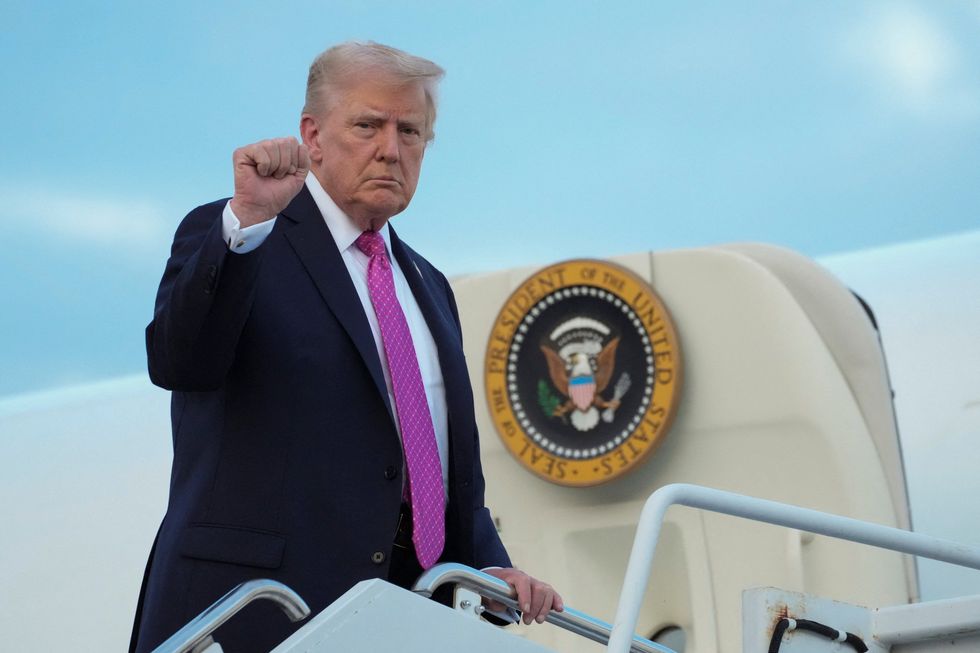
Trump ally drops bombshell claim GOP 'deliberately' sabotaging him with impeachment plot

Trump ally drops bombshell claim GOP 'deliberately' sabotaging him with impeachment plot

Right-wing conspiracy theorist and activist Laura Loomer unleashed a bombshell claim Friday night that members of the Republican Party are intentionally tanking
Share
Rawstory2026/01/24 09:35
IBM Qiskit v2.3 Adds C API Expansion for Quantum-HPC Integration

IBM Qiskit v2.3 Adds C API Expansion for Quantum-HPC Integration

The post IBM Qiskit v2.3 Adds C API Expansion for Quantum-HPC Integration appeared on BitcoinEthereumNews.com. Joerg Hiller Jan 23, 2026 18:06 IBM releases
Share
BitcoinEthereumNews2026/01/24 09:31
The Role of Blockchain in Building Safer Web3 Gaming Ecosystems

The Role of Blockchain in Building Safer Web3 Gaming Ecosystems

The gaming industry is in the midst of a historic shift, driven by the rise of Web3. Unlike traditional games, where developers and publishers control assets and dictate in-game economies, Web3 gaming empowers players with ownership and influence. Built on blockchain technology, these ecosystems are decentralized by design, enabling true digital asset ownership, transparent economies, and a future where players help shape the games they play. However, as Web3 gaming grows, security becomes a focal point. The range of security concerns, from hacking to asset theft to vulnerabilities in smart contracts, is a significant issue that will undermine or erode trust in this ecosystem, limiting or stopping adoption. Blockchain technology could be used to create security processes around secure, transparent, and fair Web3 gaming ecosystems. We will explore how security is increasing within gaming ecosystems, which challenges are being overcome, and what the future of security looks like. Why is Security Important in Web3 Gaming? Web3 gaming differs from traditional gaming in that players engage with both the game and assets with real value attached. Players own in-game assets that exist as tokens or NFTs (Non-Fungible Tokens), and can trade and sell them. These game assets usually represent significant financial value, meaning security failure could represent real monetary loss. In essence, without security, the promises of owning “something” in Web3, decentralized economies within games, and all that comes with the term “fair” gameplay can easily be eroded by fraud, hacking, and exploitation. This is precisely why the uniqueness of blockchain should be emphasized in securing Web3 gaming. How Blockchain Ensures Security in Web3 Gaming?
  1. Immutable Ownership of Assets Blockchain records can be manipulated by anyone. If a player owns a sword, skin, or plot of land as an NFT, it is verifiably in their ownership, and it cannot be altered or deleted by the developer or even hacked. This has created a proven track record of ownership, providing control back to the players, unlike any centralised gaming platform where assets can be revoked.
  2. Decentralized Infrastructure Blockchain networks also have a distributed architecture where game data is stored in a worldwide network of nodes, making them much less susceptible to centralised points of failure and attacks. This decentralised approach makes it exponentially more difficult to hijack systems or even shut off the game’s economy.
  3. Secure Transactions with Cryptography Whether a player buys an NFT or trades their in-game tokens for other items or tokens, the transactions are enforced by cryptographic algorithms, ensuring secure, verifiable, and irreversible transactions and eliminating the risks of double-spending or fraudulent trades.
  4. Smart Contract Automation Smart contracts automate the enforcement of game rules and players’ economic exchanges for the developer, eliminating the need for intermediaries or middlemen, and trust for the developer. For example, if a player completes a quest that promises a reward, the smart contract will execute and distribute what was promised.
  5. Anti-Cheating and Fair Gameplay The naturally transparent nature of blockchain makes it extremely simple for anyone to examine a specific instance of gameplay and verify the economic outcomes from that play. Furthermore, multi-player games that enforce smart contracts on things like loot sharing or win sharing can automate and measure trustlessness and avoid cheating, manipulations, and fraud by developers.
  6. Cross-Platform Security Many Web3 games feature asset interoperability across platforms. This interoperability is made viable by blockchain, which guarantees ownership is maintained whenever assets transition from one game or marketplace to another, thereby offering protection to players who rely on transfers for security against fraud. Key Security Dangers in Web3 Gaming Although blockchain provides sound first principles of security, the Web3 gaming ecosystem is susceptible to threats. Some of the most serious threats include:
Smart Contract Vulnerabilities: Smart contracts that are poorly written or lack auditing will leave openings for exploitation and thereby result in asset loss. Phishing Attacks: Unintentionally exposing or revealing private keys or signing transactions that are not possible to reverse, under the assumption they were genuine transaction requests. Bridge Hacks: Cross-chain bridges, which allow players to move their assets between their respective blockchains, continually face hacks, requiring vigilance from players and developers. Scams and Rug Pulls: Rug pulls occur when a game project raises money and leaves, leaving player assets worthless. Regulatory Ambiguity: Global regulations remain unclear; risks exist for players and developers alike. While blockchain alone won’t resolve every issue, it remediates the responsibility of the first principles, more so when joined by processes such as auditing, education, and the right governance, which can improve their contribution to the security landscapes in game ecosystems. Real Life Examples of Blockchain Security in Web3 Gaming Axie Infinity (Ronin Hack): The Axie Infinity game and several projects suffered one of the biggest hacks thus far on its Ronin bridge; however, it demonstrated the effectiveness of multi-sig security and the effective utilization of decentralization. The industry benefited through learning and reflection, thus, as projects have implemented changes to reduce the risks of future hacks or misappropriation. Immutable X: This Ethereum scaling solution aims to ensure secure NFT transactions for gaming, allowing players to trade an asset without the burden of exorbitant fees and fears of being a victim of fraud. Enjin: Enjin is providing a trusted infrastructure for Web3 games, offering secure NFT creation and transfer while reiterating that ownership and an asset securely belong to the player. These examples indubitably illustrate that despite challenges to overcome, blockchain remains the foundational layer on which to build more secure Web3 gaming environments. Benefits of Blockchain Security for Players and Developers For Players: Confidence in true ownership of assets Transparency in in-game economies Protection against nefarious trades/scams For Developers: More trust between players and the platform Less reliance on centralized infrastructure Ability to attract wealth and players based on provable fairness By incorporating blockchain security within the mechanics of game design, developers can create and enforce resilient ecosystems where players feel reassured in investing time, money, and ownership within virtual worlds. The Future of Secure Web3 Gaming Ecosystems As the wisdom of blockchain technology and industry knowledge improves, the future for secure Web3 gaming looks bright. New growing trends include: Zero-Knowledge Proofs (ZKPs): A new wave of protocols that enable private transactions and secure smart contracts while managing user privacy with an element of transparency. Decentralized Identity Solutions (DID): Helping players control their identities and decrease account theft risks. AI-Enhanced Security: Identifying irregularities in user interactions by sampling pattern anomalies to avert hacks and fraud by time-stamping critical events. Interoperable Security Standards: Allowing secured and seamless asset transfers across blockchains and games. With these innovations, blockchain will not only secure gaming assets but also enhance the overall trust and longevity of Web3 gaming ecosystems. Conclusion Blockchain is more than a buzzword in Web3; it is the only way to host security, fairness, and transparency. With blockchain, players confirm immutable ownership of digital assets, there is a decentralized infrastructure, and finally, it supports smart contracts to automate code that protects players and developers from the challenges of digital economies. The threats, vulnerabilities, and scams that come from smart contracts still persist, but the industry is maturing with better security practices, cross-chain solutions, and increased formal cryptographic tools. In the coming years, blockchain will remain the base to digital economies and drive Web3 gaming environments that allow players to safely own, trade, and enjoy their digital experiences free from fraud and exploitation. While blockchain and gaming alone entertain, we will usher in an era of secure digital worlds where trust complements innovation. The Role of Blockchain in Building Safer Web3 Gaming Ecosystems was originally published in Coinmonks on Medium, where people are continuing the conversation by highlighting and responding to this story
Share
Medium2025/09/18 14:40
