

US Lawmakers Probe Kalshi, Polymarket Insider Trading: Regulatory Risks
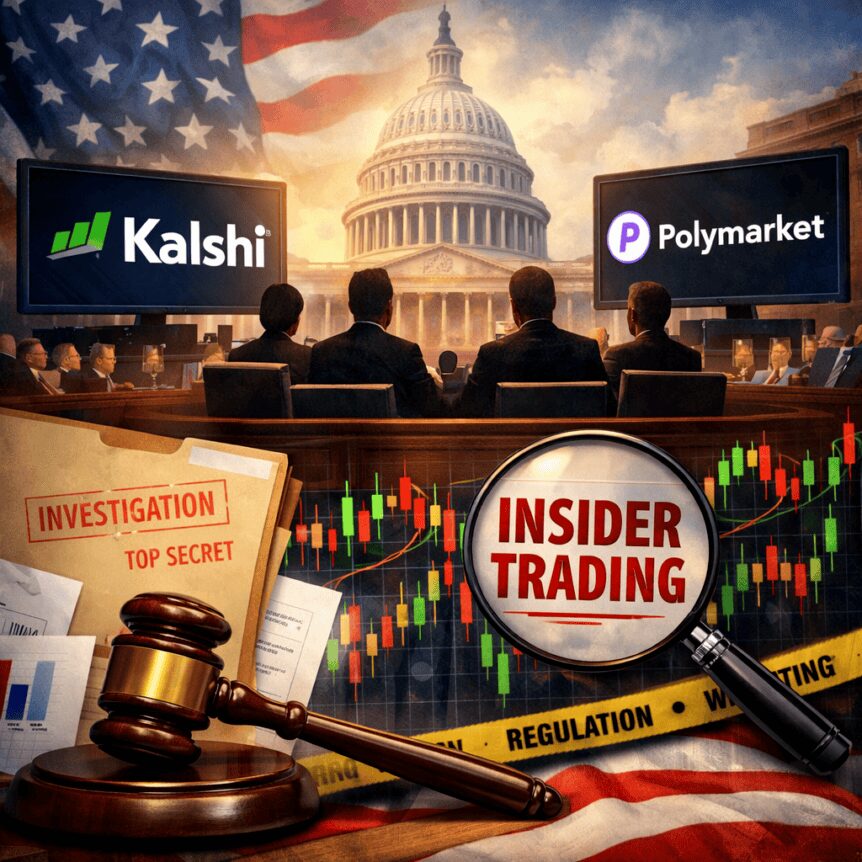
The chair of the U.S. House of Representatives’ Oversight and Government Reform Committee has escalated congressional scrutiny of prediction-market platforms by directing letters to the chief executives of Kalshi and Polymarket. The inquiries request internal records and governance details about how the platforms monitor and mitigate insider trading, underscoring growing congressional concern that public officials and private operators could leverage privileged information for financial gain.
In a Friday post on X, Committee Chair James Comer confirmed that he had sent correspondence to Polymarket CEO Shayne Coplan and Kalshi CEO Tarek Mansour. Comer’s remarks highlighted unresolved questions about whether elected officials are using “basic insider knowledge” to profit from government actions, raising the stakes for platforms that run event- and futures-like markets on real-world political and geopolitical events.
The focus on insider trading aligns with broader regulatory and enforcement themes surrounding crypto-enabled markets and the governance frameworks that govern them. A May 13 report by the New York Times detailed incidents in which users allegedly bet on events such as Israel–Iran hostilities, U.S. political developments, and other highly sensitive events, laying out concrete examples cited by policymakers as illustrative of the risks of unregulated predictive markets.
Polymarket said in March that it had updated its approach to potential insider trading, while Kalshi announced in April that it had banned three U.S. politicians from wagering on elections in which they were candidates. The two platforms have repeatedly defended their compliance programs and risk controls, but observers note that policy changes alone may not fully address the concerns raised by lawmakers. Cointelegraph has reached out to both companies for comment, but no immediate statements were provided.
The case is not limited to policy scrutiny. In April, the U.S. Department of Justice indicted Master Sergeant Gannon Ken Van Dyke in connection with an operation that led to the capture of Venezuelan President Nicolás Maduro. Prosecutors allege that Van Dyke leveraged Polymarket event contracts tied to Maduro’s status to generate more than $400,000 in profits using classified information. Van Dyke pleaded not guilty and remains subject to bail conditions as the legal proceedings proceed. This enforcement action underscores how tied-breaking information and public events can intersect with crypto-enabled markets and raises questions about the adequacy of existing safeguards in high-risk scenarios.
Key takeaways
- The U.S. House Oversight Committee has sought internal records from Kalshi and Polymarket to assess how the platforms handle insider trading and the role of governance controls in preventing abuse.
- Public officials and insiders are implicated in alleged “suspiciously timed” trades tied to geopolitical and political events, prompting congressional concerns about market integrity and misuse of privileged information.
- Polymarket and Kalshi have separately updated their internal policies: Polymarket refined its approach to potential insider trading, and Kalshi banned several U.S. politicians from betting on their own contests, signaling a move toward stricter governance standards.
- The inquiry sits within a broader regulatory backdrop that includes potential SEC/CFTC oversight, cross-border considerations, and ongoing AML/KYC/compliance expectations for crypto-enabled markets linked to real-world events.
- Separately, a DOJ prosecution involving an individual tied to Polymarket activity illustrates the potential for criminal enforcement when classified or privileged information is used for personal financial gain.
Congressional inquiry and the regulatory horizon for prediction markets
The letters sent by Comer signal a growing preference among lawmakers for transparency around the governance mechanisms that govern prediction-market platforms. By requesting internal records, Congress appears intent on understanding how these platforms screen for insider information, detect anomalous trading patterns, and enforce internal policies designed to deter misuse. The actions also reflect an ongoing effort to map how such platforms fit within the U.S. regulatory landscape, including considerations around licensing, anti-money-laundering controls, and consumer protections for institutional users.
From a policy perspective, the development matters because it could influence how prediction markets are treated under U.S. law. If regulators determine that these platforms operate in a manner that meaningfully facilitates insider trading or market manipulation, it could accelerate calls for stricter licensing regimes, enhanced surveillance requirements, or even limitations on the types of events that can be traded. The episodes cited by Comer—and the subsequent enforcement actions in related cases—may feed into ongoing regulatory dialogues about the boundaries between financial markets, gambling-like platforms, and information-sensitive operations.
Analysts note that the regulatory trajectory for crypto-enabled prediction markets remains unsettled. While some jurisdictions are moving toward frameworks akin to MiCA in Europe, others in the United States are weighing how existing securities and commodities laws apply to event contracts and related instruments. Insurers, banks, and institutional investors operating in this space are particularly sensitive to any shift that might affect licensing requirements, cross-border activity, or enforcement risk. The Letters to Kalshi and Polymarket therefore matter not only for the platforms but for their users, counterparties, and the broader ecosystem that relies on transparent governance and credible compliance programs.
Platform governance actions and compliance implications
Polymarket and Kalshi have taken discrete steps to address governance gaps and perceived risks. Polymarket’s policy updates, announced earlier in the year, aimed to tighten monitoring of privileged or insider information that could influence contract outcomes. Kalshi’s April action to ban certain U.S. politicians from betting on their own races represents a governance posture aimed at reducing conflicts of interest and preserving market integrity. While these steps are notable, they may not suffice in the eyes of lawmakers without comprehensive documentation of internal processes, data analytics capabilities, and independent oversight mechanisms.
For compliance teams and financial institutions engaging with prediction markets or similar instruments, the development underscores several practical considerations. First, robust trade surveillance is essential, including real-time monitoring for suspicious timing patterns around high-saliency events. Second, formal governance frameworks should be in place to govern who may participate, what events can be traded, and how conflicts of interest are mitigated. Third, clear incident-response protocols and audit trails are critical for demonstrating due diligence in regulatory examinations or potential enforcement actions. Finally, cross-border compliance implications, including alignment with AML/KYC standards and licensing regimes, become central when platforms operate beyond a single jurisdiction or handle material cross-border information flows.
These factors are particularly salient for institutional users and licensed financial entities that rely on predictable governance and enforceable controls to satisfy regulatory expectations. The ongoing congressional inquiry could catalyze enhanced disclosure requirements, more prescriptive policy standards, or even a recalibration of how such markets are integrated into the broader financial regulatory framework.
Enforcement signals and the broader market context
The DOJ’s case involving a U.S. service member’s alleged use of Polymarket data to gain more than $400,000 further highlights the legal risk landscape for participants and operators. While prosecutors framed the charges around commodities fraud and illicit use of confidential government information, the broader takeaway for the ecosystem is clear: authorities are increasingly scrutinizing the interaction between government action, sensitive information, and crypto-enabled prediction markets. Institutions must therefore incorporate tighter access controls, robust information barriers, and comprehensive training to minimize risk exposure and ensure adherence to applicable laws.
Regulators have long stressed the importance of compliance programs that incorporate AML/KYC protocols, identity verification, and transaction monitoring. As prediction markets intersect with political and military events—areas historically treated as sensitive—policymakers are likely to seek greater clarity on how platform operators classify and manage risk. The current developments thus fit into a broader historical arc of enhanced oversight of new market structures that blend information flows with financial instruments.
Closing perspective
As Congress requests internal governance data and platforms adjust their policies in response, the trajectory of regulatory oversight for prediction markets remains in focus. The coming months are likely to reveal the balance lawmakers strike between fostering innovation and ensuring market integrity, with compliance teams watching closely for any new licensing, reporting, or enforcement expectations that could reshape how these markets operate in the United States and beyond.
This article was originally published as US Lawmakers Probe Kalshi, Polymarket Insider Trading: Regulatory Risks on Crypto Breaking News – your trusted source for crypto news, Bitcoin news, and blockchain updates.


You May Also Like

Bitcoin, Gold, and U.S. Stocks Dive as Trump Pledges to Hit Iran ‘Extremely Hard’

South Korea Reviews Plan to Scrap 22% Crypto Tax After Petition Hits 50,000 Signatures

Q2 Market Insights: Bitcoin regains dominance in risk-averse environment, ETFs remain critical to market structure



