InfoFi Tokens Crash As X Blocks Reward-Based Posting Apps
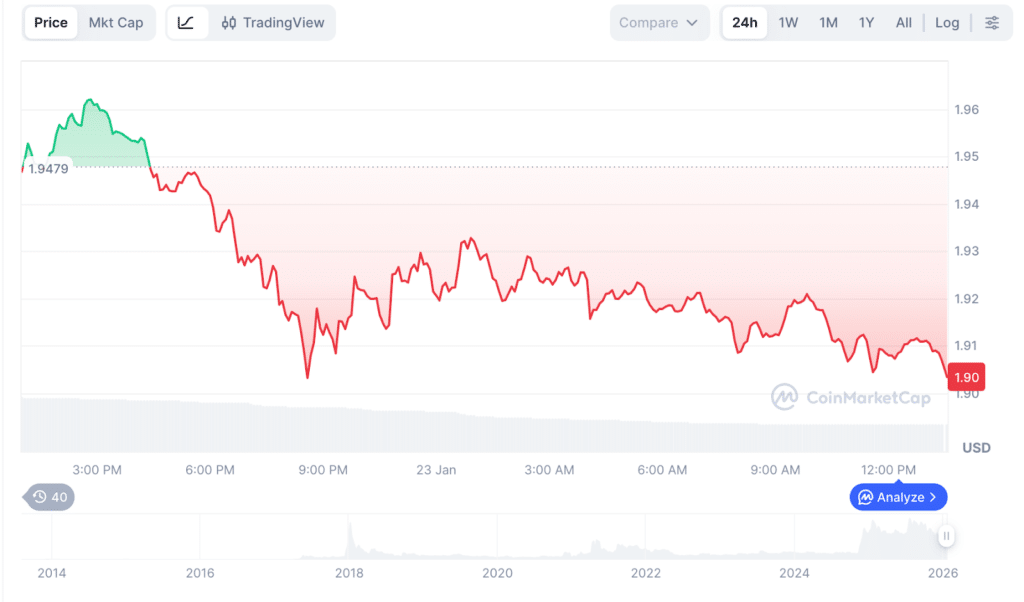
INFOFI-linked tokens are crashing sharply after X’s Head of Product, Nikita Bier, announced that the platform will no longer allow apps that reward users for posting on X.
The decision arrives after months of rising complaints about low-quality engagement farming, automated posting, and what X describes as an “influx of AI slop and reply spam.”
Bier revealed the update in a direct statement, reinforcing that X has revoked API access for apps connected to these models. The move instantly sent shockwaves across the ecosystem, especially among users who built entire communities, sometimes jokingly referred to as “yappers”, around posting for rewards.
The market reaction was swift and brutal. Several tokens associated with the “post-to-earn” narrative experienced heavy declines within hours, intensifying concerns about the sustainability of the model. As one user put it, “This is the day InfoFi and yapping died.”
However, a closer look at the charts tells a more complicated story.
Token Prices Reveal A Longer Downward Trend
While yesterday’s announcement triggered panic, the truth is that many of these tokens have been declining long before the API ban. Data from market trackers shows that the narrative had already entered a downward spiral. According to industry monitors such as CryptoRank, which highlighted the drop in a recent update, several tokens have lost significant value since their listings:
- $KAITO, down 55%
- $COOKIE, down 80%
- $LOUD, down 96%
- $ARBUS, down 84%
These figures reveal that although the ban accelerated the crash, the structural weaknesses within the reward-based posting ecosystem were already visible. Token incentives could not keep pace with the flood of new participants, especially automated ones, who contributed little beyond generating noise.
The market was propped up by speculation rather than sustained value creation. As trading volumes thinned, sell-offs grew more aggressive. Yesterday’s API block simply acted as the final trigger pulling the narrative downward.
The Rise And Fall Of The InfoFi Narrative
InfoFi, short for “Information Finance”, emerged months ago as a promising concept. The idea was simple: reward users for contributing content, discussions, and insights. Under ideal conditions, the model aimed to financially empower creators and transform the way attention is valued.
Initially, the narrative gained momentum because it seemed aligned with a broader movement pushing for decentralized creator economies. The promise was attractive: users could earn tokens simply for posting, reacting, or participating in conversations.
What started as a creator-driven movement quickly expanded into a speculative frenzy. Tokens launched with ambitious messaging, and users rushed in to capitalize on early opportunities. This rapid expansion made the system vulnerable to exploitation.
AI Slop, Spam, And The Automation Problem
The turning point arrived when the ecosystem became overrun by bots. Automated systems, AI-generated replies, and repetitive low-effort content flooded X timelines.
Users began to notice a rise in unnatural conversational patterns, identical replies, and accounts clearly optimized for extraction rather than engagement. Even ordinary users attempting to participate in good faith found their feeds drowning in repetitive noise.
X’s internal team described this phenomenon as “AI slop,” reflecting the overwhelming amount of automated, low-quality posts generated entirely to farm rewards.
The reward-based ecosystem gradually shifted from a vibrant creator environment into an extraction game dominated by scripts and content mills. Bots posted endlessly to accumulate tokens, draining the narrative of value. What should have empowered real voices instead incentivized quantity over quality.
Once the platform’s integrity became compromised, X had limited options. Blocking API access became inevitable.
Why The API Ban Changes Everything
Removing API access effectively disables the core mechanism of reward-based posting apps. These apps relied on automated verification, posting triggers, and integration with X’s data systems. Without these connections, the apps cannot track user activity or distribute rewards.
The move instantly cuts off the financial incentive loop. Tokens relying on such models no longer have a functional ecosystem to justify their value.
This disruption explains the immediate drop in token prices following the announcement. Markets recognized that the underlying utility of these tokens had evaporated overnight.
More importantly, it signals X’s shift toward stricter content quality control. By blocking reward-farm apps, the platform is clearly prioritizing authentic engagement over inflated metrics.
What Happens Next For InfoFi?
The collapse of the current reward-farm model does not necessarily mean the end of all InfoFi concepts. The idea of rewarding creators for attention is not new, and many believe it will evolve into more sustainable forms.
To survive, future iterations must:
- Prioritize quality over quantity
- Prevent automated exploitation
- Integrate stronger verification systems
- Build sustainable tokenomics not reliant on constant hype
- Offer real utility beyond posting incentives
X’s decision may even encourage more thoughtful innovation. The removal of spammy models opens space for healthier creator-focused solutions.
However, for now, the crash marks a major reset moment. The ecosystem must rebuild from fundamentals, not from hype cycles.
Disclosure: This is not trading or investment advice. Always do your research before buying any cryptocurrency or investing in any services.
Follow us on Twitter @nulltxnews to stay updated with the latest Crypto, NFT, AI, Cybersecurity, Distributed Computing, and Metaverse news!
You May Also Like

Is Doge Losing Steam As Traders Choose Pepeto For The Best Crypto Investment?

XLM Price Prediction: Targets $0.25-$0.27 by February 2026