You can feel the shift in healthcare. Advanced digital intelligence isn’t just a buzzword anymore—it’s changing the way doctors and dentists work every day. ArtificialYou can feel the shift in healthcare. Advanced digital intelligence isn’t just a buzzword anymore—it’s changing the way doctors and dentists work every day. Artificial

AI and the Future of Surgical Precision in Healthcare

You can feel the shift in healthcare. Advanced digital intelligence isn’t just a buzzword anymore—it’s changing the way doctors and dentists work every day. Artificial intelligence, which used to handle only paperwork and scheduling, is now a real partner in the operating room. It brings a level of accuracy nobody thought possible a decade ago. If you’re a patient in the area needing something like a wisdom tooth extraction Markham specialists perform, you’re seeing these technological changes firsthand. Dentists are using AI-powered imaging and robotic tools to map out and perform tricky surgeries with jaw-dropping precision. The odds of hitting a nerve or running into other complications drop dramatically.

Smarter Diagnostics and Planning

AI’s biggest impact? It’s how fast and reliably it reads diagnostic data. Surgeons once relied on their own eyes and a couple of flat X-rays. Now, deep learning tools can dig into 3D Cone Beam CT scans, turning them into detailed maps of your mouth.

Here’s what these systems do:

Spot Trouble Areas: They find the exact angle and depth of teeth hiding below the gum line.

Highlight Key Nerves: They trace out the inferior alveolar nerve, helping dentists avoid causing numbness or nerve damage.

Predict Surgical Challenges: They score each case, so the hardest ones get more attention and resources.

Robotic-Assisted Surgery Takes Over
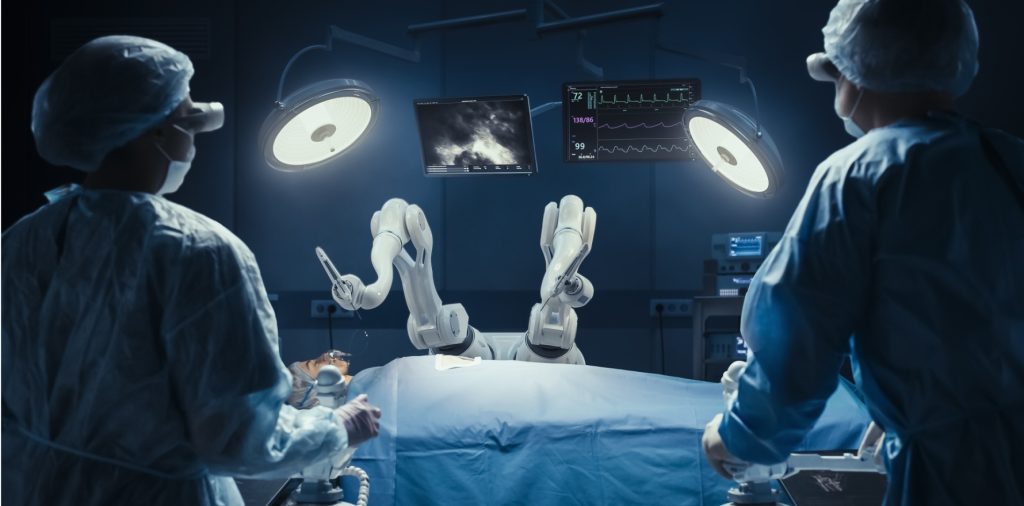
AISure, the dentist is still in charge, but AI-powered robotic arms are now the ultimate steady hand. They guide tools in real time, making cuts with microscopic accuracy. This matters most when there’s bone to remove—these robots help avoid damaging soft tissue or healthy teeth next door.

Because they can work through smaller openings, these tools make surgery less invasive. That means less blood, less trauma, and a smoother, faster recovery for you.

Better Recovery and Monitoring

The tech doesn’t stop working when you leave the clinic. New apps use image recognition, so you can snap a photo of your healing mouth at home. The app checks for early signs of infection or problems like dry socket before things get out of hand.

AI chatbots handle common questions—what you can eat, how to keep swelling down, that sort of thing—anytime, day or night.

Algorithms look at your recovery and suggest the best pain medication schedule, helping you heal comfortably without overdoing it on pills.

Some apps even give you a pretty accurate idea of when you’ll be back to normal life.

A New Level of Trust

At the end of the day, AI in healthcare is about building trust. When your dentist shows you a 3D model of your surgery and what to expect, it takes away the mystery and a lot of the fear. You see what’s coming, you know why it’s safe, and you feel more confident. With smart tech and expert care working together, medicine gets not just more effective, but more personal. And as these tools keep getting better, the focus stays the same: helping real people heal, with skill and heart.

Market Opportunity
Nobody Sausage Logo
Nobody Sausage Price(NOBODY)
$0.009807
$0.009807$0.009807
+8.46%
USD
Nobody Sausage (NOBODY) Live Price Chart
Disclaimer: The articles reposted on this site are sourced from public platforms and are provided for informational purposes only. They do not necessarily reflect the views of MEXC. All rights remain with the original authors. If you believe any content infringes on third-party rights, please contact service@support.mexc.com for removal. MEXC makes no guarantees regarding the accuracy, completeness, or timeliness of the content and is not responsible for any actions taken based on the information provided. The content does not constitute financial, legal, or other professional advice, nor should it be considered a recommendation or endorsement by MEXC.

You May Also Like

The Channel Factories We’ve Been Waiting For

The Channel Factories We’ve Been Waiting For

The post The Channel Factories We’ve Been Waiting For appeared on BitcoinEthereumNews.com. Visions of future technology are often prescient about the broad strokes while flubbing the details. The tablets in “2001: A Space Odyssey” do indeed look like iPads, but you never see the astronauts paying for subscriptions or wasting hours on Candy Crush.  Channel factories are one vision that arose early in the history of the Lightning Network to address some challenges that Lightning has faced from the beginning. Despite having grown to become Bitcoin’s most successful layer-2 scaling solution, with instant and low-fee payments, Lightning’s scale is limited by its reliance on payment channels. Although Lightning shifts most transactions off-chain, each payment channel still requires an on-chain transaction to open and (usually) another to close. As adoption grows, pressure on the blockchain grows with it. The need for a more scalable approach to managing channels is clear. Channel factories were supposed to meet this need, but where are they? In 2025, subnetworks are emerging that revive the impetus of channel factories with some new details that vastly increase their potential. They are natively interoperable with Lightning and achieve greater scale by allowing a group of participants to open a shared multisig UTXO and create multiple bilateral channels, which reduces the number of on-chain transactions and improves capital efficiency. Achieving greater scale by reducing complexity, Ark and Spark perform the same function as traditional channel factories with new designs and additional capabilities based on shared UTXOs.  Channel Factories 101 Channel factories have been around since the inception of Lightning. A factory is a multiparty contract where multiple users (not just two, as in a Dryja-Poon channel) cooperatively lock funds in a single multisig UTXO. They can open, close and update channels off-chain without updating the blockchain for each operation. Only when participants leave or the factory dissolves is an on-chain transaction…
Share
BitcoinEthereumNews2025/09/18 00:09
XRP Price Prediction: Ripple CEO at Davos Predicts Crypto ATHs This Year – $5 XRP Next?

XRP Price Prediction: Ripple CEO at Davos Predicts Crypto ATHs This Year – $5 XRP Next?

XRP has traded near $1.90 as Ripple CEO Brad Garlinghouse has predicted from Davos that the crypto market will reach new highs this year. Analysts have pointed
Share
Coinstats2026/01/22 04:49
Fed Decides On Interest Rates Today—Here’s What To Watch For

Fed Decides On Interest Rates Today—Here’s What To Watch For

The post Fed Decides On Interest Rates Today—Here’s What To Watch For appeared on BitcoinEthereumNews.com. Topline The Federal Reserve on Wednesday will conclude a two-day policymaking meeting and release a decision on whether to lower interest rates—following months of pressure and criticism from President Donald Trump—and potentially signal whether additional cuts are on the way. President Donald Trump has urged the central bank to “CUT INTEREST RATES, NOW, AND BIGGER” than they might plan to. Getty Images Key Facts The central bank is poised to cut interest rates by at least a quarter-point, down from the 4.25% to 4.5% range where they have been held since December to between 4% and 4.25%, as Wall Street has placed 100% odds of a rate cut, according to CME’s FedWatch, with higher odds (94%) on a quarter-point cut than a half-point (6%) reduction. Fed governors Christopher Waller and Michelle Bowman, both Trump appointees, voted in July for a quarter-point reduction to rates, and they may dissent again in favor of a large cut alongside Stephen Miran, Trump’s Council of Economic Advisers’ chair, who was sworn in at the meeting’s start on Tuesday. It’s unclear whether other policymakers, including Kansas City Fed President Jeffrey Schmid and St. Louis Fed President Alberto Musalem, will favor larger cuts or opt for no reduction. Fed Chair Jerome Powell said in his Jackson Hole, Wyoming, address last month the central bank would likely consider a looser monetary policy, noting the “shifting balance of risks” on the U.S. economy “may warrant adjusting our policy stance.” David Mericle, an economist for Goldman Sachs, wrote in a note the “key question” for the Fed’s meeting is whether policymakers signal “this is likely the first in a series of consecutive cuts” as the central bank is anticipated to “acknowledge the softening in the labor market,” though they may not “nod to an October cut.” Mericle said he…
Share
BitcoinEthereumNews2025/09/18 00:23