India’s competition regulator has given the green light to Emirates NBD’s proposed acquisition of a majority stake in RBL Bank. Dubai’s largest bank by assets agreedIndia’s competition regulator has given the green light to Emirates NBD’s proposed acquisition of a majority stake in RBL Bank. Dubai’s largest bank by assets agreed

India clears Emirates NBD to buy majority stake in RBL Bank

2026/01/21 14:53

India’s competition regulator has given the green light to Emirates NBD’s proposed acquisition of a majority stake in RBL Bank.

Dubai’s largest bank by assets agreed in October to take a 60 percent stake in the Indian private lender for $3 billion through a preferential issue.

NBD announced in December the launch of an open offer to purchase nearly 416 million shares, representing a 26 percent stake, from RBL Bank’s public shareholders. However, the Dubai-listed bank must ensure its shareholding does not exceed the 74 percent foreign investment limit, the Competition Commission of India said in a statement.

This month the Economic Times reported that RBL managing director and CEO R Subramaniakumar expected visibility on NBD’s capital infusion by the first quarter of the fiscal year 2027.

He said NBD will support RBL Bank’s next phase of growth by expanding its branch network.

Emirates NBD is 56 percent held by the Dubai government-owned Investment Corporation of Dubai and Dubai Holding Group.

The bank has operations in the UAE, Egypt, Turkey, Saudi Arabia, Singapore, the UK, Austria, Germany and Bahrain and has 826 branches.

NBD shares, which trade on the Dubai Financial Market, closed flat at AED30.15 on Tuesday but are up 8 percent in the year to date.

Further reading:

  • Emirates NBD buys 60% stake in India’s RBL Bank
  • Emirates NBD in ‘advanced talks’ for stake in India’s RBL Bank
  • Emirates NBD’s open offer for RBL Bank to be in December
Market Opportunity
Lorenzo Protocol Logo
Lorenzo Protocol Price(BANK)
$0.05295
$0.05295$0.05295
+1.14%
USD
Lorenzo Protocol (BANK) Live Price Chart
Disclaimer: The articles reposted on this site are sourced from public platforms and are provided for informational purposes only. They do not necessarily reflect the views of MEXC. All rights remain with the original authors. If you believe any content infringes on third-party rights, please contact service@support.mexc.com for removal. MEXC makes no guarantees regarding the accuracy, completeness, or timeliness of the content and is not responsible for any actions taken based on the information provided. The content does not constitute financial, legal, or other professional advice, nor should it be considered a recommendation or endorsement by MEXC.

You May Also Like

The Channel Factories We’ve Been Waiting For
The Channel Factories We’ve Been Waiting For

The post The Channel Factories We’ve Been Waiting For appeared on BitcoinEthereumNews.com. Visions of future technology are often prescient about the broad strokes while flubbing the details. The tablets in “2001: A Space Odyssey” do indeed look like iPads, but you never see the astronauts paying for subscriptions or wasting hours on Candy Crush.  Channel factories are one vision that arose early in the history of the Lightning Network to address some challenges that Lightning has faced from the beginning. Despite having grown to become Bitcoin’s most successful layer-2 scaling solution, with instant and low-fee payments, Lightning’s scale is limited by its reliance on payment channels. Although Lightning shifts most transactions off-chain, each payment channel still requires an on-chain transaction to open and (usually) another to close. As adoption grows, pressure on the blockchain grows with it. The need for a more scalable approach to managing channels is clear. Channel factories were supposed to meet this need, but where are they? In 2025, subnetworks are emerging that revive the impetus of channel factories with some new details that vastly increase their potential. They are natively interoperable with Lightning and achieve greater scale by allowing a group of participants to open a shared multisig UTXO and create multiple bilateral channels, which reduces the number of on-chain transactions and improves capital efficiency. Achieving greater scale by reducing complexity, Ark and Spark perform the same function as traditional channel factories with new designs and additional capabilities based on shared UTXOs.  Channel Factories 101 Channel factories have been around since the inception of Lightning. A factory is a multiparty contract where multiple users (not just two, as in a Dryja-Poon channel) cooperatively lock funds in a single multisig UTXO. They can open, close and update channels off-chain without updating the blockchain for each operation. Only when participants leave or the factory dissolves is an on-chain transaction…
Share
BitcoinEthereumNews2025/09/18 00:09
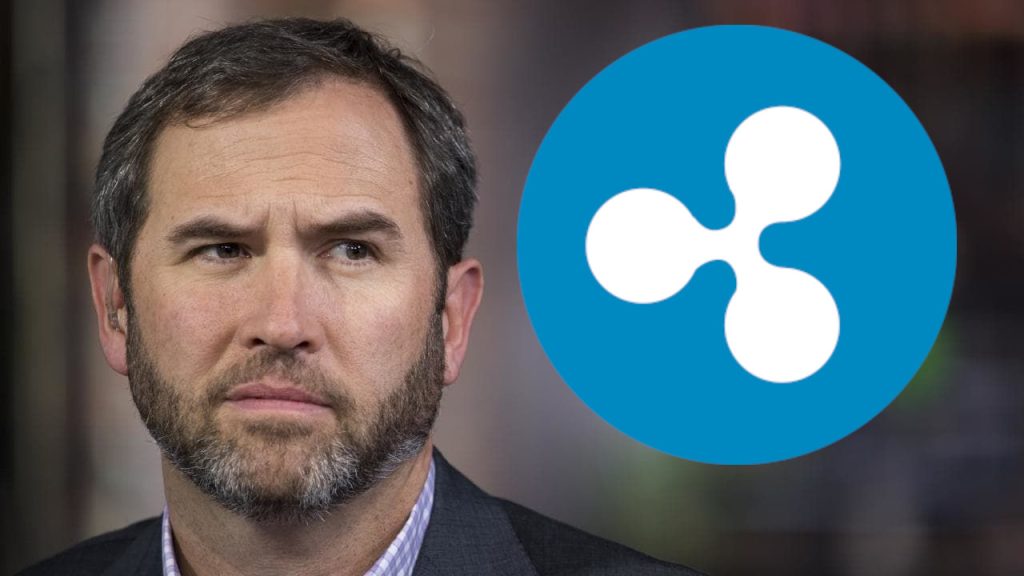
Ripple (XRP) CEO Brad Garlinghouse Makes Another Statement Regarding the Anticipated US Cryptocurrency Legislation

Ripple (XRP) CEO Brad Garlinghouse Makes Another Statement Regarding the Anticipated US Cryptocurrency Legislation

Ripple CEO Brad Garlinghouse, in his latest statement, once again expressed his support for the cryptocurrency legislation being debated in the US. Continue Reading
Share
Coinstats2026/01/22 05:30
Trump Dismisses Stock Market Dip as Minor While Solana and XRP Stand to Gain

Trump Dismisses Stock Market Dip as Minor While Solana and XRP Stand to Gain

Trump calls stock market dip “peanuts” and predicts big gains for Solana and XRP, despite recent market volatility and geopolitical tensions. President Donald Trump
Share
LiveBitcoinNews2026/01/22 06:00