Top RWA Tokenization Projects To Watch In 2026
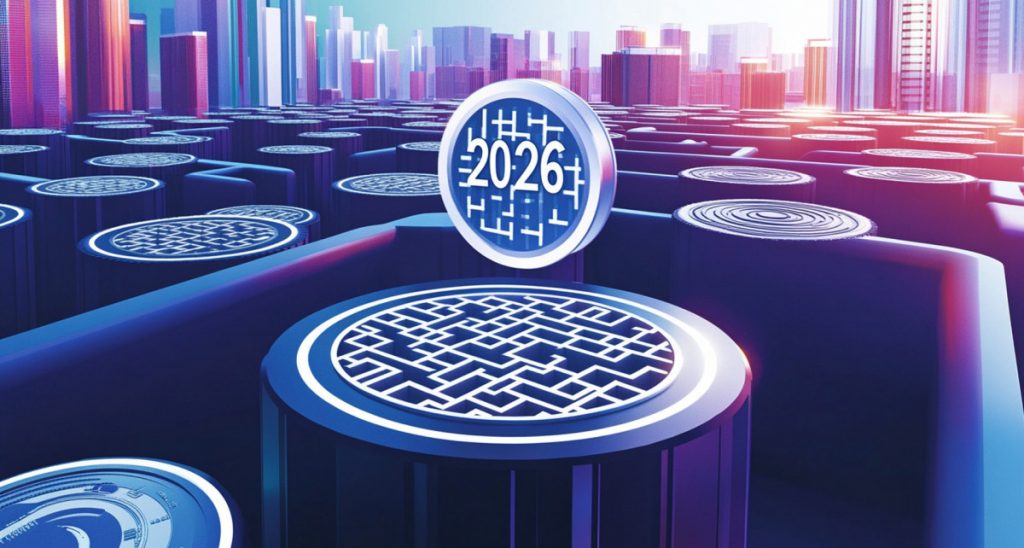
Tokenization of Real-World Assets (RWA) is the transformation of real-life assets, including real estate, bonds, commodities, or loans, into digital tokens. RWAs are stored in the blockchain and are quickly becoming a subject of practical and institutional interest within the cryptocurrency world in 2026.
What was mostly highly abstract, or niche, has become infrastructure and product deployment supported by traditional finance participants and DeFi innovators. Physical financial instruments are being on-chained more often, with an assurance of improved liquidity, fractional ownership, and 24 x 7 trading.
RWA Tokenization: From Experimentation to Institutional Adoption
Real-world assets are no longer just theoretical theories in the crypto subcultures or experimental DeFi protocols. Increasing statistics of market aggregators point to the fact that the metamorphosis of assets into tokens nearly quadrupled in scale to approximately $20 billion by the end of 2025, and that trend is likely to continue in 2026.
The difference between this cycle and the previous ones lies in the fact that the previous cycles were characterized by retail speculation, whereas now, the tokenization of utility is taking center stage. Repeatable and standardized financial products are being offered as the main products.
The logic behind such a trend is simple and easy to understand, as tokenized assets have the potential to enhance liquidity, reduce entry requirements, and increase the efficiency of settlement in comparison to conventional markets. In addition to that, leading representatives of the community, such as executives and analysts, underline that the growth of the year will be determined by RWA infrastructure and adoption, instead of being quite speculative and vague.
On crypto Twitter (X) a post shared by an account that is focused on RWA highlights the idea that all big asset classes, such as currency and ETFs, will be tokenized in a global settlement layer in the future.
This story is indicative of the growing optimism that tokenization is not far off but a reality in the continued adoption of crypto into the traditional finance sphere.
Chainlink (LINK)
Chainlink (LINK) is one of the most fundamental projects in the RWA environment. TIM LINK is not technically a token pegged to a particular kind of asset, but its decentralized oracle network is essential to onboard real-world information on-chain, such as the valuations of assets, proofs of reserve, and price feeds that are essential to the operation of tokenized markets.
Chainlink Proof of Reserve and NAVLink are reportedly in use by big institutions with their products, such as tokenized Treasuries and funds.
The role of Chainlink has been compared to that of a trust layer in tokenization processes, which forms the basis of issuing and compliant issuance by ensuring that the off-chain data of assets is correct and verifiable. Chainlink has become a critical component of the RWA story with this infrastructure, and the project remains one of the key focuses of developers who create tokenized financial products.
Ondo Finance (ONDO)
Ondo (ONDO) Finance is a new token that has gained a lot of hype in the briefest time possible as a pure RWA. The protocol focuses on on-chain tokenized U.S. Treasuries and yield-generating instruments and their combination of traditional fixed-income markets and blockchain liquidity.
Later in 2025, Ondo stated that it intended to roll out a stock token and ETF engine on the Solana blockchain in 2026, which represents its larger objectives than Treasuries per se. The project focuses on enabling users to trade on-chain with standard wallets and buy and sell traditional securities, including stocks and ETFs, bypassing certain constraints of the conventional brokerage systems.
ONDO has been an institutional target due to its emphasis on controlled and accredited token offerings and is set to make a major impact when tokenized securities go mainstream.
XDC Network
Another popular project that is gaining momentum among businesses to issue RWA in a compliant manner is the XDC Network (XDC). XDC is a hybrid blockchain aimed at trade finance optimisation and regulated asset issuance, and is intended to bring real-world assets and enterprise infrastructure together, particularly in supply chain finance and cross-border settlement.
With the heightened importance of regulatory clarity amongst institutional actors, the use of networks such as XDC, which focus on compliance and enterprise readiness, is likely to become more frequently used in the process of tokenizing structured financial products.
Centrifuge (CFG)
One of the most interesting protocols that introduces real-world assets to the chain and takes them as collateral in DeFi ecosystems is Centrifuge (CFG). It permits companies to make assets like invoices, receivables, and real estate tokenized so that traditionally illiquid financial instruments become tradable as digital tokens.
Among the fundamental innovations of Centrifuge is the conversion of real assets into NFTs, representing ownership or claims that can be further utilized as collateral in lending pools. The proposed mechanism directly links old-fashioned asset types and decentralized liquidity markets, enabling investors to obtain returns based on the actual economic activity.
Research by the firm indicates that RWA protocols may have a total value locked (TVL) approaching and possibly surpassing $ 100 billion by the end of 2026, as the market shifts from being speculative to protocol-agnostic financial products that are more practical than a protocol.
Goldfinch (GFI) and Maple Finance (MPL)
Not every RWA is a bond, real estate, or commodity. Other projects, such as the Goldfinch (GFI) project, are based on on-chain credit market creation, bringing real-world credit markets to the blockchain by under-collateralizing real business lending.
In this method, RWA tokenization is expanded past asset backing to credit flows and lending markets, which are essential elements of any financial system of the present day.
Equally, Maple Finance (MPL) allows institutional borrowers to receive on-chain liquidity over professionally managed lending pools.
The model proposed by Maple focuses on the subdivision of debt markets where traditional capital efficiency and institutional relationships are the most crucial, as the qualified institutions have access to tokenized credit, and on-chain liquidity providers gain their yield.
Polymesh, Quant, and Other Specialized Protocols
Protocols having specialized infrastructure roles are also part of RWA ecosystems. Polymesh (POLYX) is a compliance-based blockchain that targets controlled financial assets and security tokens, resolving one of the biggest impediments to institutions, regulatory demands concerning identity, custody, and governance.
Quant (QNT) is not a direct issuer of token assets, though it is one key supplier of the key cross-chain infrastructure in its Overledger technology, which lets RWAs move and interact between the different blockchain networks.
More comprehensive market and regulatory signals can support the growth trend of RWA tokenization in 2026.
The post Top RWA Tokenization Projects To Watch In 2026 appeared first on Metaverse Post.
You May Also Like
Trump-backed stablecoin hits $5 billion as first family cashes in
Will Ripple be publicly traded? — Will Ripple be publicly traded?