

What Happens If Someone’s Account Is Frozen After a Crypto P2P Trade in India?
BitcoinWorld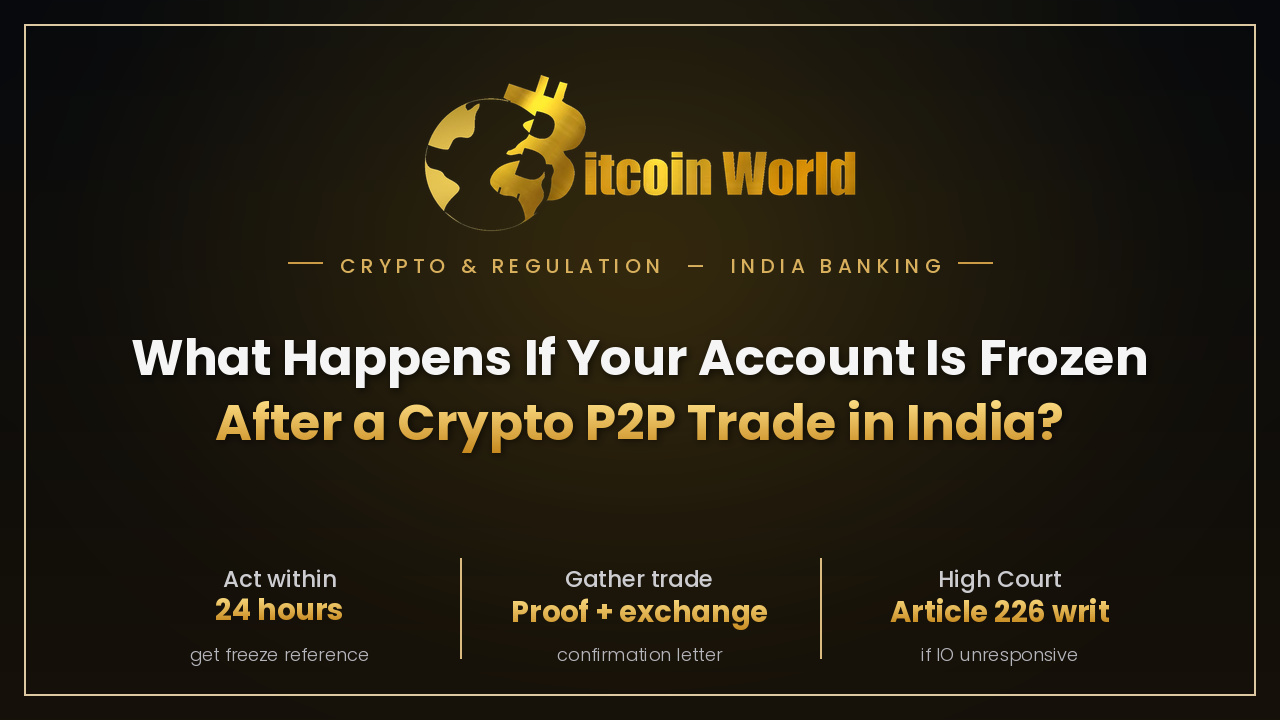
What Happens If Someone’s Account Is Frozen After a Crypto P2P Trade in India?
What Happens If Someone’s Account Is Frozen After a Crypto P2P Trade in India?
Having a bank account frozen after a crypto P2P trade in India is a real, documented crisis affecting thousands of Indian traders every year – not because they committed any crime, but because scammers routinely use innocent P2P sellers as unwitting intermediaries to launder stolen funds. When a fraud victim files an FIR, police trace the money trail, find it entered your account during a P2P trade, and instruct your bank to freeze the account under Section 106 of the BNSS (formerly Section 102 CrPC) – all before you receive any warning. This article explains exactly what happens when a P2P trade triggers a freeze, what your legal rights are, the step-by-step process to get your account unfrozen, and what to do differently in future trades. Verified against current sources; accurate as of June 2026.
Why Does a P2P Crypto Trade Lead to an Account Freeze in India?
Account freezes after P2P crypto trades in India are caused by a specific fraud pattern that innocent traders are drawn into without their knowledge.
- The triangular fraud mechanism: A scammer tricks a fraud victim into sending money, gives them your bank details (from your P2P sell listing), you receive the payment and release crypto thinking it is from your buyer – but the money is stolen. The victim reports the fraud, police trace it to your account, and the freeze follows.
- Tainted funds – no knowledge required: You sell USDT or Bitcoin on a platform like Binance P2P. You received the payment. You released the crypto. Everything seemed normal until the cyber cell flagged that the money used to buy your crypto was stolen from someone else through a phishing attack or an investment scam.
- Third-party payment – highest red flag: Receiving INR from anyone other than the registered P2P buyer on your trade almost guarantees a freeze – banks and cyber cells have a zero-tolerance policy for third-party payments in P2P crypto contexts.
- Volume triggers: Multiple rapid P2P deposits within a short period can be flagged as structuring by AML systems, triggering a freeze independent of any specific fraud complaint.
What Happens Immediately When an Account Is Frozen?
The immediate consequences of a P2P freeze are severe and often strike without advance notice.
- All debits suspended: You cannot make any payments – salary transfers, EMIs, rent, utility payments, and daily expenses are all blocked.
- No prior warning in most cases: The first sign is usually a failed transaction or a message from your bank stating “Account Debit Frozen” – you may not receive a formal notice until you contact the bank.
- Entire account frozen (not just the disputed amount): Despite court rulings requiring proportional freezes, cyber cells frequently instruct banks to freeze entire accounts – even if only a small portion is linked to a disputed transaction.
- Other accounts may be affected: Delays in acting can lead to a “marked as fraud” tag being shared with other banks, potentially affecting your other accounts.
- Duration: Without action, freezes can last weeks to months – but 90% of accounts are released within 30 days when traders follow the right steps.
What Is the Step-by-Step Process to Unfreeze the Account?
Unfreezing a P2P crypto-related bank account in India follows a documented process – acting fast and systematically is the most important factor.
Step 1 – Contact your bank immediately: Visit your branch in person within 24 hours. Ask for the freeze order reference number, the name of the cyber cell or police station that issued the order, the complaint ID, and the name of the Investigating Officer (IO). Banks are required under the Banking Regulation Act to provide this information in writing.
Step 2 – Gather all trade documentation: Compile the complete evidence package for the P2P trade in question:
- Exchange platform screenshots showing the P2P order, buyer details, amount, date, and time.
- Proof that payment came from the registered buyer – not a third party.
- Your exchange account KYC details confirming your identity.
- Bank statement showing the receipt.
- Any chat history from the exchange platform with the buyer.
Step 3 – Contact the exchange support team: Request an official trade confirmation letter from the exchange (Binance, CoinDCX, WazirX, etc.) confirming the specific trade, its legitimacy, and that it was conducted through a KYC-verified account. This letter significantly strengthens your representation to police.
Step 4 – File a representation with the Investigating Officer: Write a formal representation to the IO at the relevant cyber cell. The letter must state clearly: that you are not involved in fraud; the trade was conducted through a registered exchange; payment was received in accordance with a legitimate P2P order; and attach all documentation. Request that the officer issue a No Objection Certificate (NOC) to your bank to release the freeze.
Step 5 – If the freeze is not released:
- If the IO is unresponsive, escalate to the Superintendent of Police (SP) of the cyber cell.
- Contact the cybercrime helpline (1930) and file a complaint at cybercrime.gov.in documenting that you are an innocent third party.
- Consult a cybercrime advocate to file a Writ Petition under Article 226 in the High Court – courts in Delhi, Gujarat, and Karnataka have issued orders releasing proportional freezes promptly.
What Are Your Legal Rights When a P2P Account Is Frozen?
Indian law gives innocent P2P traders specific protections – knowing them enables you to challenge disproportionate freezes confidently.
- Right to proportional freeze only: The RBI and multiple High Courts have stated that a full account freeze should only be applied if the entire balance is suspected to be proceeds of crime. A single disputed P2P transaction should result in a lien on the disputed amount only, not a full freeze.
- Right to be heard: You are entitled to present your case to the investigating officer – a freeze does not mean you are guilty.
- Time-limited freeze: Courts have established that police cannot keep an account frozen indefinitely without filing a charge sheet. Extended freezes without charges can be challenged by writ petition.
- Constitutional protection: Article 21 (right to livelihood) and Article 226 (High Court writ jurisdiction) both support urgent judicial relief when a full account freeze prevents you from meeting basic living expenses.
Frequently Asked Questions
What is the first thing to do when your bank account is frozen after a P2P crypto trade in India?
Contact your bank within 24 hours – visit the branch in person and get the freeze order reference number, the cyber cell name, and the investigating officer’s contact. Simultaneously, download all P2P trade records from the exchange and request an official trade confirmation letter from the platform’s support team. Acting within the first 24–48 hours prevents the freeze tag from spreading to your other bank accounts and gives you the best chance of release within 30 days.
How long does it take to unfreeze a bank account frozen after a crypto P2P trade in India?
90% of accounts frozen due to P2P-linked crypto fraud are released within 30 days when traders follow the correct recovery steps – gathering trade documentation, presenting it to the investigating officer, obtaining an exchange confirmation letter, and filing a formal representation. Without proactive action, freezes can last months. If the cyber cell is unresponsive after two to three weeks of documented outreach, a High Court writ petition is the most effective escalation path.
How can someone avoid their bank account being frozen through P2P crypto trading in India?
The most effective preventions are: never accept payment from any third party other than the registered P2P buyer on your order; screenshot every stage of the trade at the time of execution; use only KYC-verified, FIU-registered exchange P2P platforms; avoid accepting payments marked as coming from a “relative” or “friend” of the buyer; and prefer selling crypto on FIU-registered exchange order books (with guaranteed counterparty) over anonymous P2P platforms wherever possible. Documentation at the time of each trade is the only protection that works after the fact.
Conclusion: Act Fast, Document Everything, Know Your Rights
Having a bank account frozen after a crypto P2P trade in India is distressing, disruptive, and – critically – not the same as being found guilty of anything. Thousands of innocent Indian traders face this situation each year because the fraud-response infrastructure treats everyone in a money trail as a suspect. The system is imperfect, but it is navigable: act within 24 hours, gather the complete trade documentation, obtain an official letter from the exchange, present everything to the investigating officer, and exercise your right to a proportional freeze if your entire account is blocked over a small disputed amount. P2P crypto trading is legal in India – but trading on anonymous platforms without documentation is the single highest-risk activity in the Indian crypto ecosystem. Trade only through KYC-verified channels, document every transaction, and you hold the evidence that makes resolution possible.
This post What Happens If Someone’s Account Is Frozen After a Crypto P2P Trade in India? first appeared on BitcoinWorld.


You May Also Like
‘My neighbor’s cat does this too’: Trump draws scorn for bizarre July 4 activity
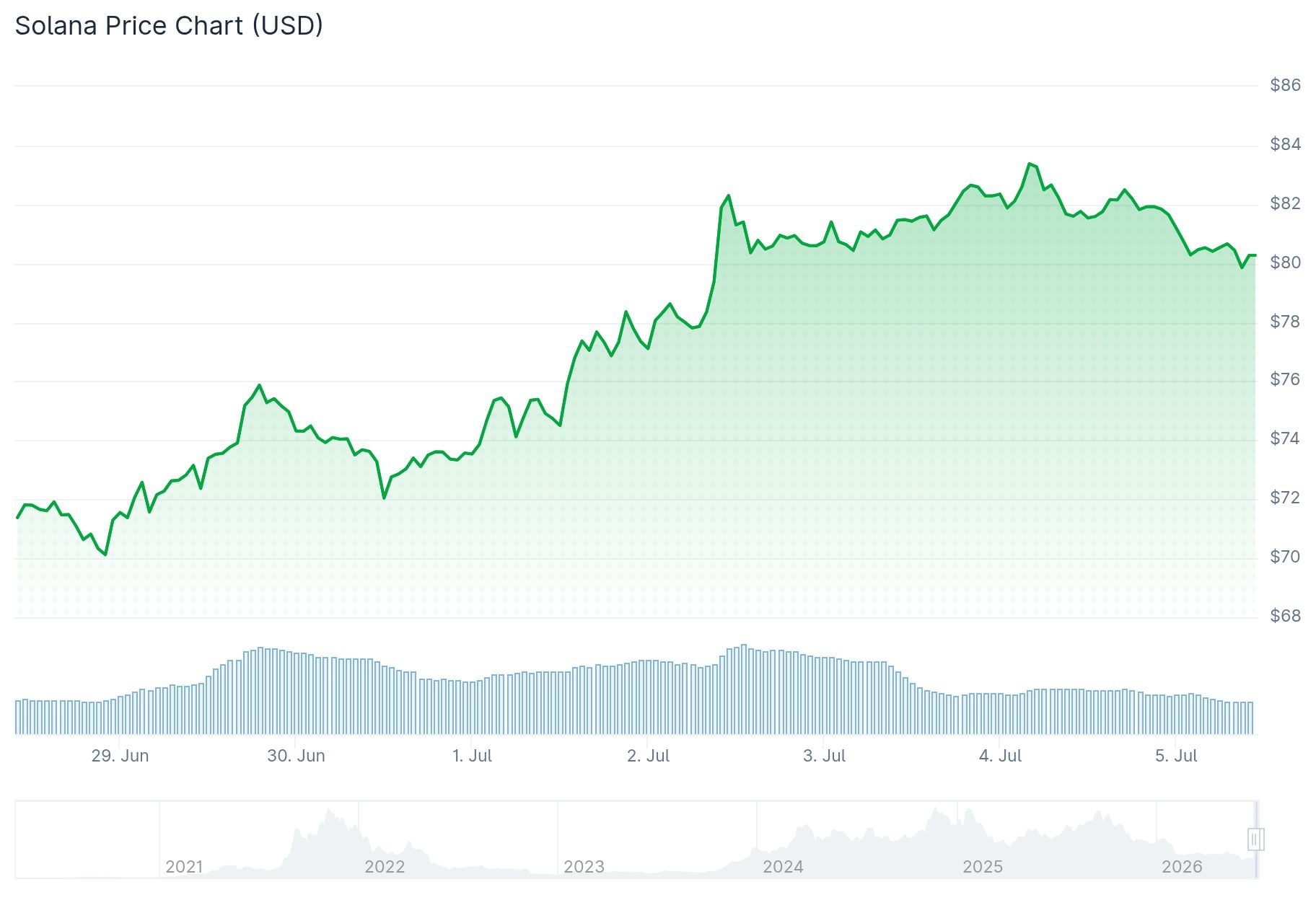
Solana (SOL) Price: Is SOL the Best Long-Term Crypto Bet Right Now

Jim Cramer Calls AST SpaceMobile (ASTS) Stock a “Great Speculative” Buy



