

Solana (SOL) Price: Why SOL Could Be the Strongest Crypto Play for the Long Haul
Key Takeaways
- Solana leads the industry in daily active addresses and on-chain transaction volume
- Extensive stablecoin infrastructure provides crucial liquidity for DeFi, payments, and trading operations
- Ecosystem applications demonstrate genuine revenue generation through sustainable fee structures
- Technical analysis reveals SuperTrend buy indicator activated on 3-day timeframe, first occurrence since October 10
- Token inflation through ongoing issuance requires sustained ecosystem expansion to offset dilution effects
Solana has evolved beyond its original positioning as merely a high-speed, low-cost blockchain network. Today, it represents one of the cryptocurrency market’s most vibrant ecosystems, characterized by substantial user engagement, significant trading activity, and continuous capital flows.
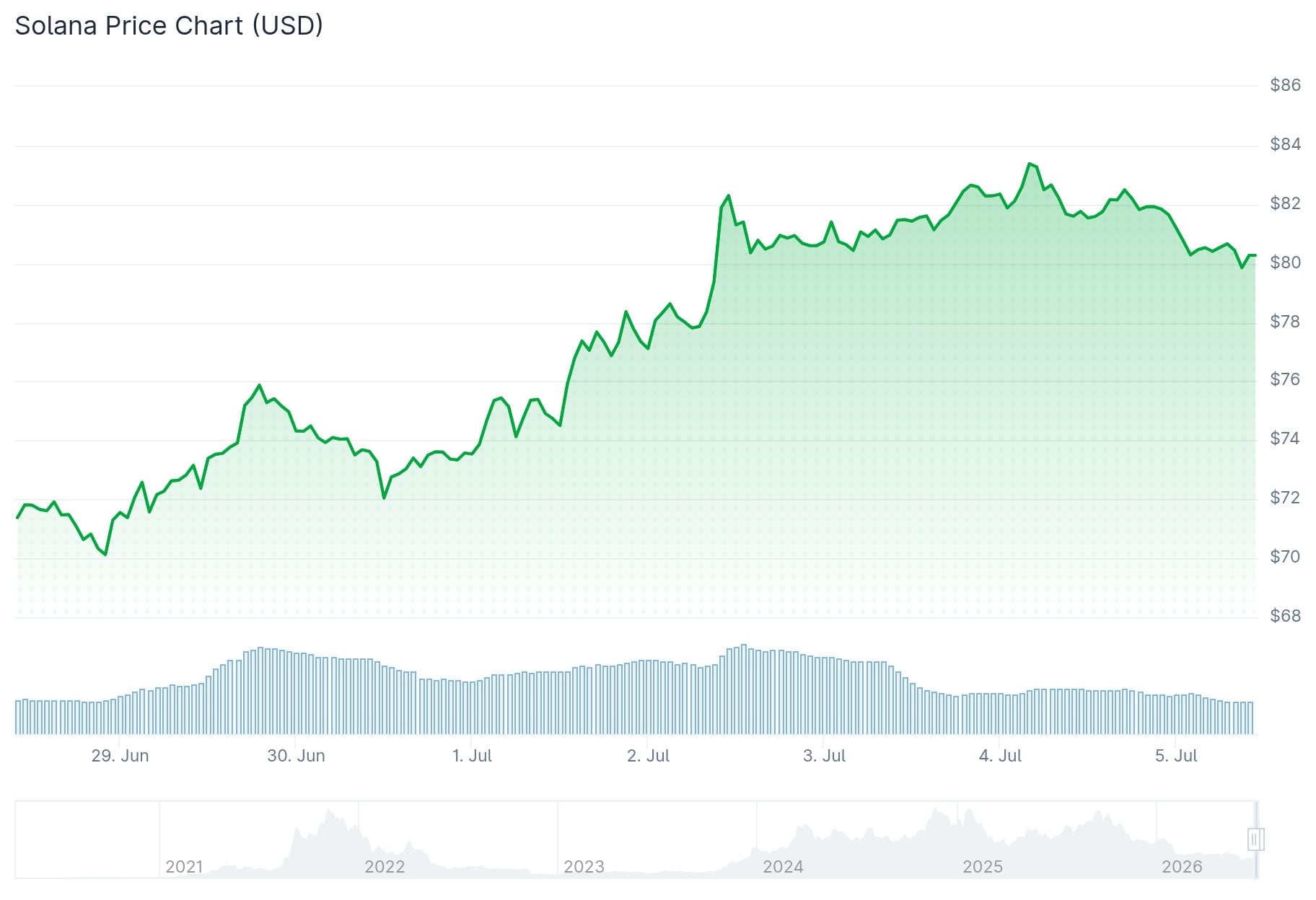 Solana (SOL) Price
The blockchain consistently ranks at the top tier for daily active wallet addresses and on-chain transaction throughput. This level of authentic user engagement distinguishes it from numerous alternative cryptocurrencies that remain primarily speculative in nature.
Stablecoin infrastructure represents a particularly compelling aspect of Solana’s value proposition. Solana has accumulated substantial and continuously expanding stablecoin reserves, which serve as essential infrastructure for payment systems, exchange activity, and decentralized financial services. This deep liquidity pool creates compelling incentives for both developers and users to commit to the platform long-term.
The application ecosystem has reached notable maturity. Decentralized exchanges, wallet services, and various protocols operating on Solana are producing significant fee revenue streams. This demonstrates that the network has transcended its role as simple infrastructure to become a comprehensive economic platform.
Solana has additionally established meaningful connections with traditional financial institutions and payment processing systems. These relationships open growth opportunities extending beyond purely crypto-native use cases, encompassing asset tokenization and integration with major financial platforms.
Economic Model and Token Structure
The counterpoint involves current valuation levels. Solana already commands significant market capitalization among digital assets. Much of its anticipated future growth may already be reflected in current pricing, potentially limiting the dramatic percentage appreciation that smaller-cap networks might achieve.
Tokenomics merit careful consideration. SOL provides genuine utility through transaction fees and staking mechanisms, with portions of network fees subject to burning mechanisms. However, Solana maintains an inflationary model, as staking rewards derive partially from new token creation. While the inflation schedule decreases progressively, it has not yet reached zero.
This dynamic requires continuous network expansion to counterbalance the dilutive effect on existing token holders.
Additionally, not all value creation within the ecosystem accrues directly to the SOL token itself. Substantial fee generation occurs at the application level rather than the protocol layer. While this doesn’t fundamentally undermine the SOL investment thesis, it represents an important distinction for informed investors.
Technical Breakout: SuperTrend Indicator Turns Positive
From a technical analysis perspective, market data indicates the SuperTrend indicator has generated a fresh buy signal on Solana’s 3-day chart. According to technical analysts, this marks the first such bullish signal since October 10. The preceding sell signal coincided with a 74% drawdown in price.
The Average True Range (ATR) trailing stop has now positioned below current price levels, confirming a trend reversal from bearish to bullish momentum. Analysts have identified $100 as a potential price objective following this technical development.
SOL currently trades with this constructive technical setup in place as market participants monitor whether the emerging uptrend can sustain momentum.
The post Solana (SOL) Price: Why SOL Could Be the Strongest Crypto Play for the Long Haul appeared first on Blockonomi.


You May Also Like

Stage set for historic Sara Duterte trial, with her 2028 dreams on the line
Bitcoin Price Bottom Signal Flashes as 43-Month Metric Hits Low

Homes for civil servants being built on idle govt land, says Anwar



