

CLARITY Act Faces a Long Road Ahead
Introduction
Goldman Sachs chief executive David Solomon signaled a measured but clear interest in shaping the regulatory framework for digital assets as the industry watches Congress on the Digital Asset Market Clarity Act. Speaking during the firm’s fourth-quarter 2025 earnings call, Solomon said a broad cohort within Goldman remains intensely focused on how tokenization, stablecoins and related innovations might be regulated in the United States. With a markup on the bill delayed amid industry pushback, the episode underscores the delicate balance policymakers face between fostering innovation and investor protection.
Key Takeaways
- Solomon highlighted strong internal focus at Goldman on the Digital Asset Market Clarity Act and its potential to shape tokenization and stablecoins.
- A markup of the bill was postponed after Coinbase signaled opposition to the legislation as written, illustrating the fault lines in regulatory drafting.
- Goldman Sachs is exploring business opportunities in prediction markets, signaling a potential expansion beyond traditional banking into crypto-native venues.
- Industry groups continue pressing for amendments to CLARITY to address how the SEC would oversee tokenized assets and stablecoin rewards.
Tickers mentioned: $BTC, $ETH, $COIN
Sentiment: Neutral
Price impact: Neutral. The stalled markup and gradual regulatory dialogue create a wait-and-see environment for crypto assets.
Trading idea (Not Financial Advice): Hold. Regulatory clarity could unlock new product structures, but policy risk remains as the process unfolds.
Market context: The evolving policy discussion sits amid broader macro risk-on sentiment and ongoing corporate crypto experimentation, underscoring the demand for clear regulatory guardrails.
Rewritten article body
Goldman Sachs has been closely watching Washington’s efforts to clarify the regulatory status of digital assets, a theme that surfaced again during the bank’s fourth-quarter 2025 results call. CEO David Solomon noted that many within the firm are “extremely focused” on the Digital Asset Market Clarity Act, recognizing its potential impact on tokenization and stablecoins. The commentary comes as policymakers debate how to tailor a comprehensive framework that could reduce ambiguity for institutions, exchanges and users engaging with tokenized securities and decentralized finance.
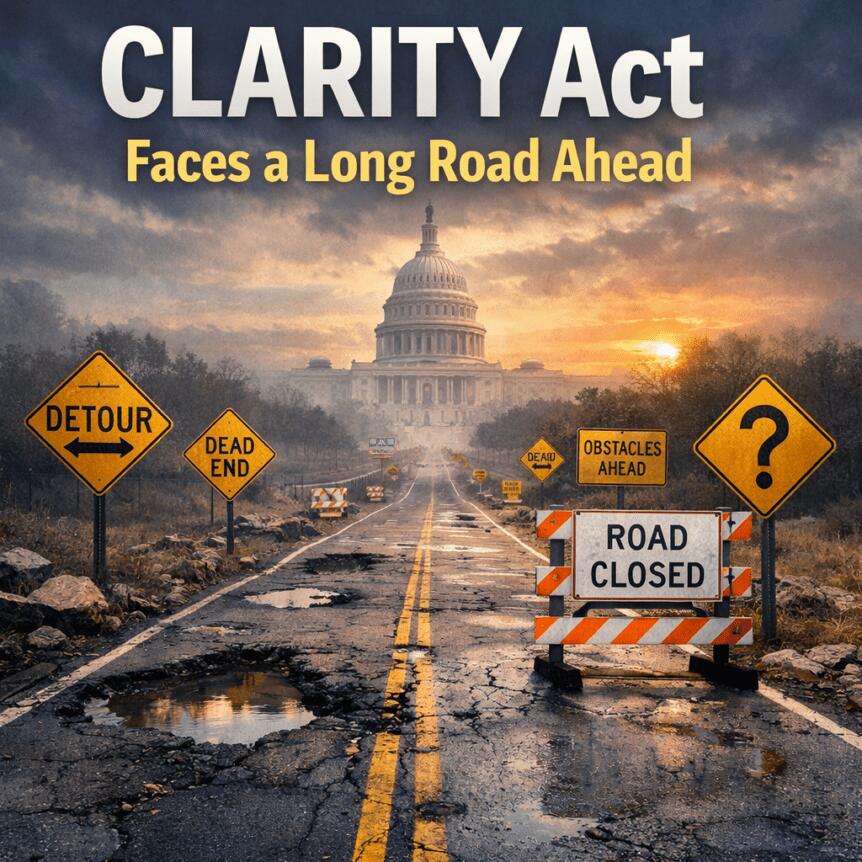
A recent markup session on the bill was postponed after Coinbase indicated it would not support the legislation in its current form. In the markup process, a congressional committee debates proposed amendments and decides whether the measure should move forward to a full chamber vote. Solomon observed that, based on the latest news, the bill has a long journey ahead before it gains momentum, but he stressed that the underlying innovations remain important for the financial system and the crypto ecosystem alike.
The dialogue around CLARITY has intensified as banks, crypto exchanges and DeFi platforms urge lawmakers to craft revisions that balance innovation with consumer protections. A central point of contention is how the U.S. Securities and Exchange Commission would treat tokenized equities and stablecoin rewards under the act. Industry participants argue for a coherent framework that would foster capital formation and reduce regulatory fragmentation, rather than a patchwork of rules that could hinder legitimate market activity.
Solomon’s remarks also touched on Goldman Sachs’s willingness to explore new business lines tied to prediction markets. In conversations with policymakers in the prior weeks, he indicated that the bank is examining opportunities in this space, aligning with a growing subset of the crypto community that has gravitated toward prediction platforms. The bank’s openness to such avenues mirrors the broader industry interest, with platforms that have gained traction among crypto users including Kalshi and Polymarket, which offer event- and outcome-based markets tied to asset prices and macro developments. An embedded video clip below underscores the bank’s proactive stance on engaging with lawmakers around the evolving policy framework.
Banks targeting stablecoin rewards in GENIUS Act, and now CLARITY?
Beyond CLARITY, the financial-services community has pressed for adjustments that would clarify how stablecoins may be treated, including debates over whether interest-bearing stablecoins should face additional restrictions. Earlier drafts suggested limiting passive returns on stablecoin holdings, while not entirely closing the door on rewards. Proponents argue that a clear set of rules could reduce ambiguity for banks and crypto firms, enabling more robust product development and consumer protections, while critics warn against overreach that could stifle innovation or restrict liquidity flows essential to stablecoin ecosystems.
As the Banking Committee’s calendar remains unsettled, lawmakers in other committees are preparing to weigh in. The Senate Agriculture Committee is scheduled to conduct its markup on its version of the market-structure bill on January 27, a signal that the policy clock continues to tick despite broader funding deadlines and the threat of a government shutdown. The regulatory path for digital assets, therefore, remains incremental and contingent on a series of committee-by-committee negotiations that could ultimately shape the trajectory of token markets and stablecoin use in the United States.
Industry observers note that progress is likely to hinge on balancing the needs of traditional financial institutions, crypto-native firms and retail users. While the CLARITY Act is not the final word, its evolution—coupled with the broader push for market structure clarity—could influence product design, risk controls and the pace at which institutions expand exposure to digital assets. In this environment, Goldman Sachs’s strategic emphasis on regulatory clarity and potential for new market mechanisms reflects a broader shift toward integrating traditional finance principles with the fast-evolving digital-asset landscape.
This article was originally published as CLARITY Act Faces a Long Road Ahead on Crypto Breaking News – your trusted source for crypto news, Bitcoin news, and blockchain updates.
You May Also Like

Is Putnam Global Technology A (PGTAX) a strong mutual fund pick right now?

US regulators move toward unified crypto oversight as sec project crypto gains CFTC support
