

Is Mt. Gox selling $739 million worth of Bitcoin?
Mt. Gox has transferred 10,422 BTC worth about $739 million in its first on-chain bitcoin movement since March, raising concerns among market watchers.
- Mt. Gox moved 10,422 BTC worth about $739 million in its first major bitcoin transfer since March, according to Arkham Intelligence.
- Blockchain data shows the bitcoin was sent to a new unmarked wallet rather than a known exchange address, leaving the purpose of the transfer unclear.
- The exchange still holds more than 34,500 BTC as creditor repayments continue under a deadline that runs through October 2026.
Arkham Intelligence data shows the defunct exchange moved 10,306 BTC, valued at roughly $730.8 million, from its cold wallets to an unmarked address identified as “14FE…c9eq” at approximately 4:47 a.m. UTC on Tuesday. During the same transaction batch, another 116.3 BTC was sent to a Mt. Gox hot wallet.
A few hours later, blockchain records tracked by Arkham Intelligence show the estate transferred an additional 116.3 BTC to the address “1A4x…QNj4” and sent a small bitcoin amount worth around $1.19 to a Bitstamp cold wallet.
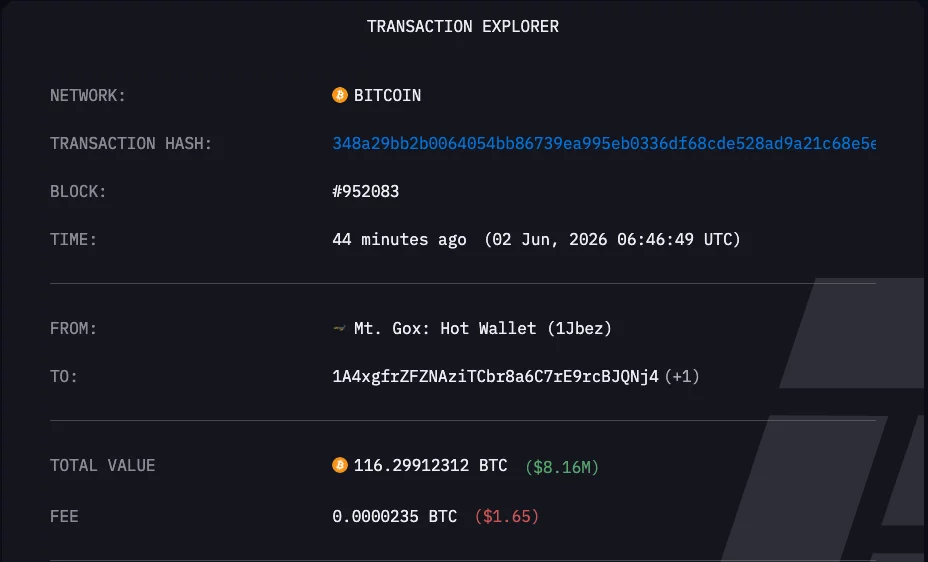
Despite the size of the transfers, Arkham Intelligence data indicates that the receiving wallet is not associated with a known centralized or decentralized exchange. The analytics platform currently labels the transferred bitcoin as “unspent,” leaving the purpose of the movement unclear.
Non-exchange destination eases immediate selling concerns
Because the destination address is not linked to a trading venue, the transaction does not provide direct evidence that Mt. Gox is preparing to sell bitcoin. Market observers have often watched large Mt. Gox wallet movements closely because previous transfers have preceded creditor distributions.
The receiving address appears to be a new wallet rather than an exchange-controlled address, suggesting the movement could be related to internal wallet management or preparations for future repayments.
For now, wallet data compiled by Arkham Intelligence shows Mt. Gox still controls 34,504 BTC worth roughly $2.43 billion following Tuesday’s transactions.
However, some market analysts remain concerned about the latest move’s impact on Bitcoin prices.
Interest in Mt. Gox claims has also attracted institutional attention. As previously reported by crypto.news, Strive Asset Management plans to build a bitcoin treasury of up to 75,000 BTC through purchases of approved but undistributed Mt. Gox claims, which the firm estimates are worth about $8 billion.
Under that scenario, some creditors could sell claims to buyers before receiving bitcoin, potentially reducing the amount of BTC entering the spot market immediately after distributions.
Credito repayment process remains active
Mt. Gox began repaying its creditors in July 2024 through partner exchanges including Kraken and Bitstamp. However, the rehabilitation process remains unfinished.
Last year, the rehabilitation trustee extended the repayment deadline to Oct. 31, 2026, after receiving approval from a Japanese court. According to the trustee’s statement, the extension was granted because a considerable number of creditors had not completed required procedures or faced issues during the repayment process.
Trustee disclosures previously stated that base repayments, early lump-sum repayments, and intermediate repayments had been completed for many eligible creditors, while approximately 19,500 creditors had already received funds.
Founded in Tokyo in 2010, Mt. Gox once handled about 70% of global bitcoin trading volume. The exchange collapsed in 2014 after losing approximately 850,000 BTC in a hack, an event that triggered one of the longest-running bankruptcy and rehabilitation proceedings in cryptocurrency history.


You May Also Like

Radiant Capital Shuts Down After 2024 Exploit

Cebu gives LGBTQ+ right to make healthcare decisions for partners

Crypto Market Drops as Fear Grows and Major Assets Decline



