Are card fees eating into your profits? When customers pay by card, the transaction runs through the card networks, and that’s where the big costs come in to eat into your profits. But it doesn’t have to stay that way – innovative open banking platforms like Noda can help you bring those transaction fees down […] The post Noda Payment Reviews: Cost Reduction & Better UX for Businesses appeared first on TechBullion.Are card fees eating into your profits? When customers pay by card, the transaction runs through the card networks, and that’s where the big costs come in to eat into your profits. But it doesn’t have to stay that way – innovative open banking platforms like Noda can help you bring those transaction fees down […] The post Noda Payment Reviews: Cost Reduction & Better UX for Businesses appeared first on TechBullion.

Noda Payment Reviews: Cost Reduction & Better UX for Businesses

2025/12/06 01:51

Are card fees eating into your profits? When customers pay by card, the transaction runs through the card networks, and that’s where the big costs come in to eat into your profits. But it doesn’t have to stay that way – innovative open banking platforms like Noda can help you bring those transaction fees down dramatically.

Cost Efficiency with Noda Payments

When businesses accept card payments, they face two core charges: the fee paid to the issuing bank and the fee charged by the card schemes. In Europe, the bank-side charge is legally restricted – usually around a quarter of a percent for consumer debit cards and slightly higher for credit. But these limits only apply within the EU. Once a payment crosses an international border, the transaction is treated as “interregional”, and the rate rises sharply to well above 1%.

Alongside this sits the card-scheme charge, which is the price merchants pay for using networks like Visa or Mastercard. These are standardised, can’t be negotiated, and usually consist of a small percentage plus a fixed pence amount.

Open banking works differently. Instead of travelling through card rails, the payment moves directly between bank accounts through regulated, secure APIs. This cuts out the card networks entirely, which is why the overall cost structure can be significantly lower for merchants.

According to Noda savings calculator and Noda reviews, a merchant can save up to £126,360 on an annual sales volume of £36,000,000. Imagine having these funds re-invested into your business.

Quick Facts about Noda

  • Noda is an online payment platform that uses open banking to make checkout faster and easier for businesses. It  connects with most major banks across the UK and EU, reaching more than 2,000 banks in 28 countries.
  • Entrepreneur Dmitry Volkov was an early investor in Noda 2020, but exited in 2023, so the Noda Volkov relationship ceased to exist.
  • Noda worked with many notable merchants, including Wargaming and TTN, and provides offline payments in the UK. Noda reviewsare overwhelmingly positive.

Better User Experience (UX)

A clunky checkout is one of the fastest ways to lose a customer. Research backs this up: PwC found that nearly a third of shoppers walk away from a brand after one frustrating moment, and Forrester’s data shows that better UX can multiply conversions several times over. Despite this, almost no one feels online stores consistently meet their expectations.

Pay-by-Bank streamlines the whole experience. Instead of entering long card numbers, customers move straight into their banking app, verify the payment, and finish within seconds.

Consumers value this simplified experience, and adoption is growing fast. In the UK alone, there are now 15 million active users.

Real Industry Case Studies & Noda Payment Reviews

Use cases are widespread as this payment method can be beneficial across many different industries.

Wargaming and Noda

Direct bank payments fit naturally into the gaming world, especially when players want quick, no-friction ways to top up or buy in-game items. Wargaming, for instance, added Pay-by-Bank through its partnership with Noda, giving players a faster checkout while helping the company reduce its payment costs, according to their Noda payment review.

Noda & TTN Network

The travel sector is adopting this payment method too. Tickets Travel Network (TTN), a major European booking platform, introduced pay-by-bank through its integration with Noda. This gives customers an easy way to pay for everything: from flights and trains to hotels and insurance, directly from their bank accounts.

Their Noda payment review noted that the integration sped up the entire booking journey for both customers and staff. Travellers move through checkout much quicker, and the internal team has far less manual admin to deal with.

Pay-by-Bank for Offline Businesses

You might think this payment option is only for online businesses, but it works seamlessly in-store too. For example, QR payments allow customers to scan with their phones and complete transactions in moments. It’s a convenient option that fits perfectly with the growing shift toward mobile payments.

For example, a Brazilian deli in London introduced QR codes, allowing customers to pay straight from their bank accounts in seconds. The fully mobile experience proved highly popular with their shoppers.

Another example is Barber Browns, a family-run barbershop in Scotland, which added QR code payments for its clients. In their Noda payment review, they said:

“Our customers really enjoy this smooth payment experience. It’s flexible, quick and easy, and the setup is minimal – we only need our phone and Noda’s dashboard to generate a QR code.”

– Donna Brown, owner of Barber Browns

Trust and Security in Open Banking Payments

Pay-by-bank comes with a higher level of security, largely because customers don’t hand over any card information at all. Everything moves through tightly regulated APIs, which cuts down on fraud risk and avoids the vulnerabilities associated with older screen-scraping techniques.

Each transaction must also pass Strong Customer Authentication. That means the user confirms the payment with two independent checks – often a biometric login plus approval inside their banking app.

Comments
Disclaimer: The articles reposted on this site are sourced from public platforms and are provided for informational purposes only. They do not necessarily reflect the views of MEXC. All rights remain with the original authors. If you believe any content infringes on third-party rights, please contact service@support.mexc.com for removal. MEXC makes no guarantees regarding the accuracy, completeness, or timeliness of the content and is not responsible for any actions taken based on the information provided. The content does not constitute financial, legal, or other professional advice, nor should it be considered a recommendation or endorsement by MEXC.

You May Also Like

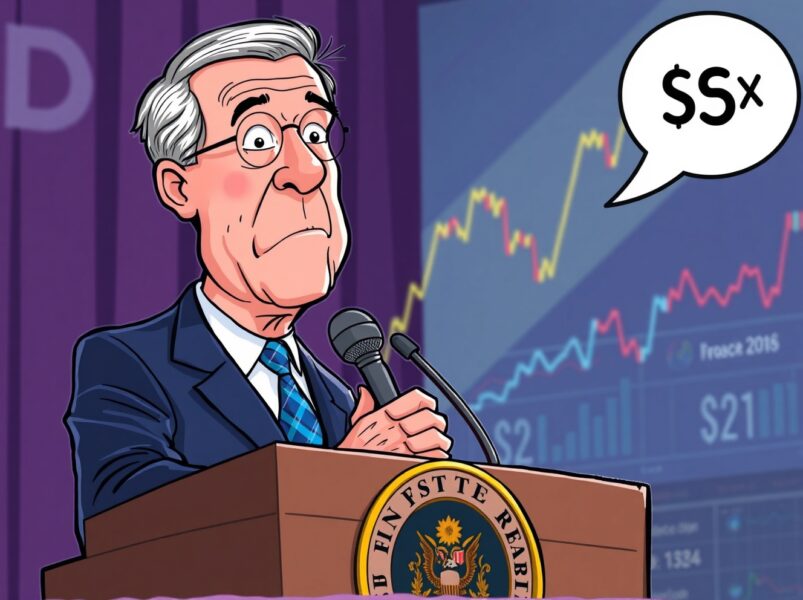
Jerome Powell’s Press Conference: Crucial Insights Unveiled for the Market’s Future

Jerome Powell’s Press Conference: Crucial Insights Unveiled for the Market’s Future

BitcoinWorld Jerome Powell’s Press Conference: Crucial Insights Unveiled for the Market’s Future The financial world, including the dynamic cryptocurrency market, often hangs on every word from the Federal Reserve. Recently, Jerome Powell’s press conference following the Federal Open Market Committee (FOMC) meeting concluded, leaving investors and analysts dissecting his remarks for clues about the future economic direction. This event is always a pivotal moment, shaping expectations for inflation, interest rates, and the overall stability of global markets. What Were the Key Takeaways from Jerome Powell’s Press Conference? During Jerome Powell’s press conference, the Fed Chair provided an update on the central bank’s monetary policy decisions and its economic outlook. His statements often reiterate the Fed’s dual mandate: achieving maximum employment and stable prices. This time was no different, with a strong emphasis on managing persistent inflation. Key points from the recent discussion included: Inflation Control: Powell emphasized the Fed’s unwavering commitment to bringing inflation back down to its 2% target. He reiterated that the fight against rising prices remains the top priority, even if it entails some economic slowdown. Interest Rate Policy: While the Fed’s stance on future interest rate adjustments was discussed, the path remains data-dependent. Powell indicated that decisions would continue to be made meeting-by-meeting, based on incoming economic data. Economic Projections: The updated Summary of Economic Projections (SEP) offered insights into the Fed’s forecasts for GDP growth, unemployment, and inflation. These projections help market participants gauge the central bank’s expectations for the economy’s trajectory. Quantitative Tightening (QT): The ongoing process of reducing the Fed’s balance sheet, known as quantitative tightening, was also a topic. This reduction in liquidity in the financial system has broad implications for asset prices. How Did Jerome Powell’s Remarks Impact Cryptocurrency Markets? The conclusion of Jerome Powell’s press conference often sends ripples through traditional financial markets, and cryptocurrencies are increasingly sensitive to these macroeconomic shifts. Digital assets, once thought to be uncorrelated, now frequently react to the Fed’s monetary policy signals. Higher interest rates, for instance, tend to make riskier assets like cryptocurrencies less attractive. This is because investors might prefer safer, interest-bearing investments. Consequently, we often see increased volatility in Bitcoin (BTC) and Ethereum (ETH) prices immediately following such announcements. The tightening of financial conditions, driven by the Fed, reduces overall liquidity in the system, which can put downward pressure on asset valuations across the board. However, some argue that this growing correlation signifies crypto’s increasing integration into the broader financial ecosystem. It suggests that institutional investors and mainstream finance are now paying closer attention to digital assets, treating them more like other risk-on investments. Navigating the Economic Landscape After Jerome Powell’s Press Conference For cryptocurrency investors, understanding the implications of Jerome Powell’s press conference is crucial for making informed decisions. The Fed’s policy trajectory directly influences the availability of capital and investor sentiment, which are key drivers for crypto valuations. Here are some actionable insights for navigating this environment: Stay Informed: Regularly monitor Fed announcements and economic data releases. Understanding the macroeconomic backdrop is as important as analyzing individual crypto projects. Assess Risk Tolerance: In periods of economic uncertainty and tighter monetary policy, a reassessment of personal risk tolerance is wise. Diversification within your crypto portfolio and across different asset classes can mitigate potential downsides. Focus on Fundamentals: While market sentiment can be swayed by macro news, projects with strong fundamentals, clear use cases, and robust development teams tend to perform better in the long run. Long-Term Perspective: Cryptocurrency markets are known for their volatility. Adopting a long-term investment horizon can help weather short-term fluctuations driven by macro events like Fed meetings. The challenges include potential continued volatility and reduced liquidity. However, opportunities may arise from market corrections, allowing strategic investors to accumulate assets at lower prices. In summary, Jerome Powell’s press conference provides essential guidance on the Fed’s economic strategy. Its conclusions have a profound impact on financial markets, including the dynamic world of cryptocurrencies. Staying informed, understanding the nuances of monetary policy, and maintaining a strategic investment approach are paramount for navigating the evolving economic landscape. The Fed’s actions underscore the interconnectedness of traditional finance and the burgeoning digital asset space. Frequently Asked Questions (FAQs) Q1: What is the Federal Open Market Committee (FOMC)? A1: The FOMC is the monetary policy-making body of the Federal Reserve System. It sets the federal funds rate target and directs open market operations, influencing the availability of money and credit in the U.S. economy. Q2: How do the Fed’s interest rate decisions typically affect cryptocurrency markets? A2: Generally, when the Fed raises interest rates, it makes borrowing more expensive and reduces liquidity in the financial system. This often leads investors to shy away from riskier assets like cryptocurrencies, potentially causing prices to decline. Conversely, lower rates can stimulate investment in riskier assets. Q3: What does “data-dependent” mean in the context of Fed policy? A3: “Data-dependent” means that the Federal Reserve’s future monetary policy decisions, such as interest rate adjustments, will primarily be based on the latest economic data. This includes inflation reports, employment figures, and GDP growth, rather than a predetermined schedule. Q4: Should I change my cryptocurrency investment strategy based on Jerome Powell’s press conference? A4: While it’s crucial to be aware of the macroeconomic environment shaped by Jerome Powell’s press conference, drastic changes to a well-researched investment strategy may not always be necessary. It’s recommended to review your portfolio, assess your risk tolerance, and consider if your strategy aligns with the current economic outlook, focusing on long-term fundamentals. If you found this analysis helpful, please consider sharing it with your network! Your insights and shares help us reach more readers interested in the intersection of traditional finance and the exciting world of cryptocurrencies. Spread the word! To learn more about the latest crypto market trends, explore our article on key developments shaping Bitcoin price action. This post Jerome Powell’s Press Conference: Crucial Insights Unveiled for the Market’s Future first appeared on BitcoinWorld.
Share
Coinstats2025/09/18 16:25