

South Korea Prepares to Hold Crypto Exchanges Fully Liable Like Banks
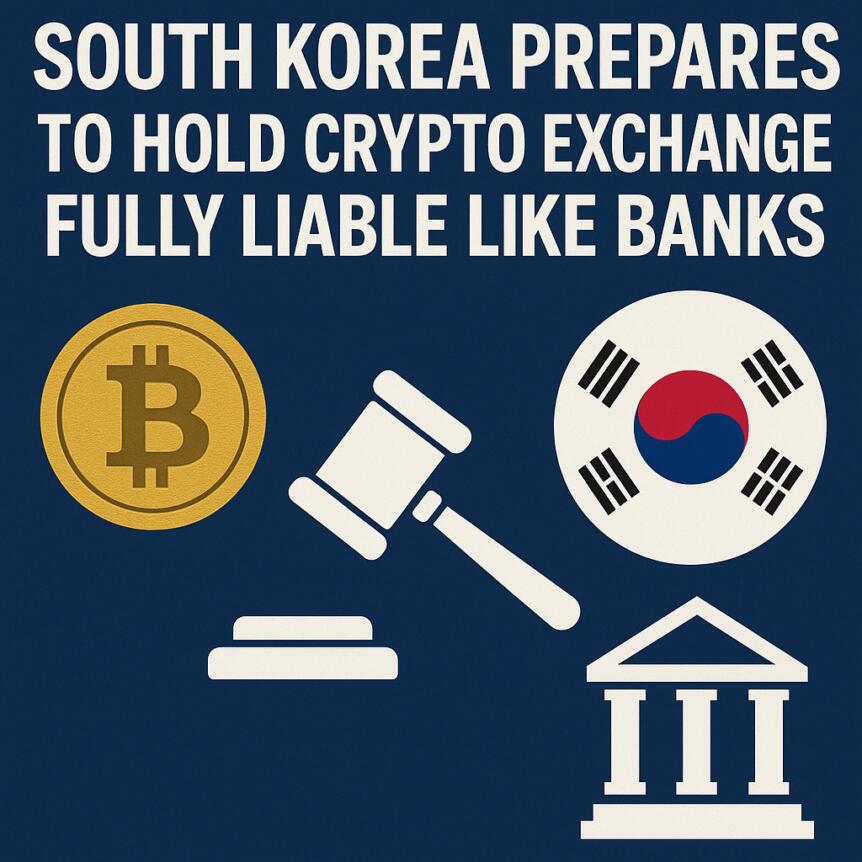
South Korea Enhances Regulatory Oversight on Crypto Exchanges Following Major Breach
South Korea is moving towards imposing bank-level, no-fault liability rules on cryptocurrency exchanges, aligning regulations with those traditionally applied to financial institutions. This push comes in response to the recent security breach at Upbit, one of the country’s largest crypto platforms, which has amplified calls for stronger consumer protections within the digital asset sector.
Key Takeaways
- Regulators are evaluating new rules requiring exchanges to compensate clients for losses due to hacks or system failures, regardless of fault.
- The proposed legislation seeks to elevate crypto exchange standards, enforce stricter IT security, and impose higher penalties for violations.
- The recent Upbit breach involved a transfer of over 104 billion Solana tokens worth approximately $30 million, which the platform reported swiftly, yet faced criticism over delayed notification.
- lawmakers are increasingly scrutinizing exchange outages and delays, with some proposing fines of up to 3% of annual revenue for security lapses.
Tickers mentioned: None
Sentiment: Neutral
Price impact: Neutral. The regulatory reforms aim to bolster consumer confidence but may temporarily disrupt market operations as compliance standards tighten.
Market context: As South Korea tightens its crypto regulations, the broader Asian market observes similar moves to balance innovation with consumer protection amidst rising security concerns.
Regulatory Evolution in South Korea’s Crypto Sector
Following the high-profile breach at Upbit, operated by Dunamu (NASDAQ: KRX), regulators in South Korea are contemplating significant legislative reforms. The recent incident, in which more than 104 billion Solana tokens—valued at roughly $30 million—were moved offshore within an hour, has accelerated political discourse on safeguarding user assets.
The Financial Services Commission (FSC) is reviewing proposals that would hold exchanges financially responsible for hacking incidents or system failures, even when they are not at fault. Currently, the no-fault compensation model applies mainly to banks and electronic payments under the Electronic Financial Transactions Act, but the adaptation to crypto exchanges signals a move towards elevating industry standards.
The government also aims to tighten cybersecurity requirements and introduce harsher penalties, with fines potentially reaching 3% of a platform’s annual revenue—paralleling the regulatory approach for banks. Moreover, the incident has spotlighted concerns over delayed reporting, with some lawmakers alleging that the breach notification, made nearly six hours after detection, was intentionally delayed in the wake of Dunamu’s merger with Naver Financial.
Legislative Efforts and Broader Policy Goals
In addition to strengthening exchange oversight, Seoul is pushing for a draft bill on stablecoins, with a deadline set for December 10. The government has signaled that it may proceed independently if legislative consensus cannot be reached in time, aiming to introduce the law during the upcoming session in January 2026.
The move reflects Seoul’s broader strategy to regulate digital assets more robustly, combining consumer protection with progressive development of the local crypto industry. These efforts set a precedent that could influence regional standards and encourage other nations to tighten oversight amid increasing security threats and market maturity concerns.
This article was originally published as South Korea Prepares to Hold Crypto Exchanges Fully Liable Like Banks on Crypto Breaking News – your trusted source for crypto news, Bitcoin news, and blockchain updates.
You May Also Like

Fed Decides On Interest Rates Today—Here’s What To Watch For

SEC approves new exchange listing standards fast-tracking crypto ETF listings
