BitcoinWorld Unlocking Growth: Why Asset Tokenization Desperately Needs Liquidity to Succeed Imagine turning your rare collectibles or property shares into digital tokens. Sounds revolutionary, right? However, Securitize CEO Carlos Domingo delivers a crucial reality check. The true challenge for asset tokenization isn’t just creating digital versions—it’s ensuring those tokens can actually trade. Without liquidity, even the most innovative tokenized assets remain stuck in digital limbo. What’s […] This post Unlocking Growth: Why Asset Tokenization Desperately Needs Liquidity to Succeed first appeared on BitcoinWorld.BitcoinWorld Unlocking Growth: Why Asset Tokenization Desperately Needs Liquidity to Succeed Imagine turning your rare collectibles or property shares into digital tokens. Sounds revolutionary, right? However, Securitize CEO Carlos Domingo delivers a crucial reality check. The true challenge for asset tokenization isn’t just creating digital versions—it’s ensuring those tokens can actually trade. Without liquidity, even the most innovative tokenized assets remain stuck in digital limbo. What’s […] This post Unlocking Growth: Why Asset Tokenization Desperately Needs Liquidity to Succeed first appeared on BitcoinWorld.

Unlocking Growth: Why Asset Tokenization Desperately Needs Liquidity to Succeed
2025/12/08 06:40
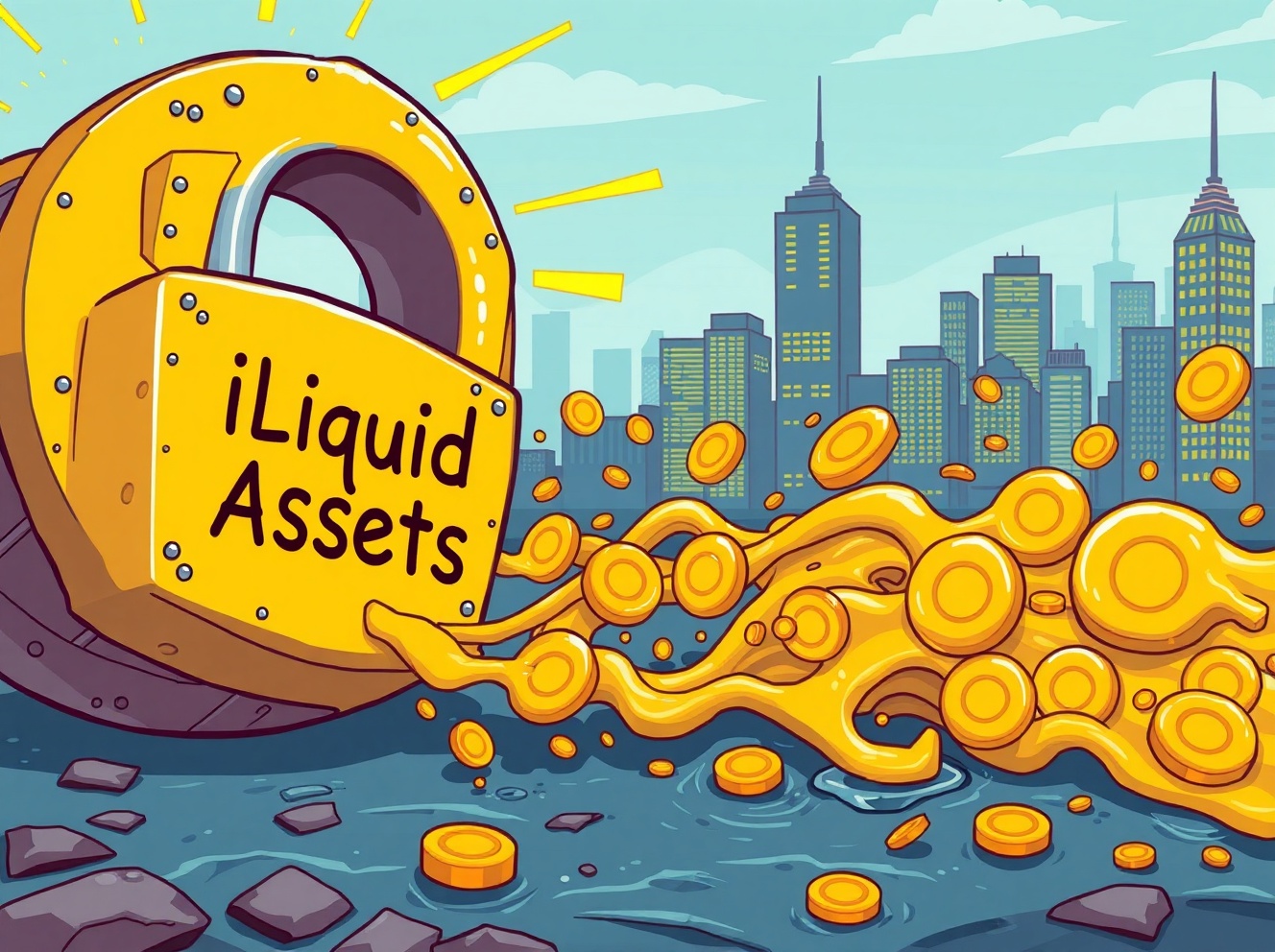
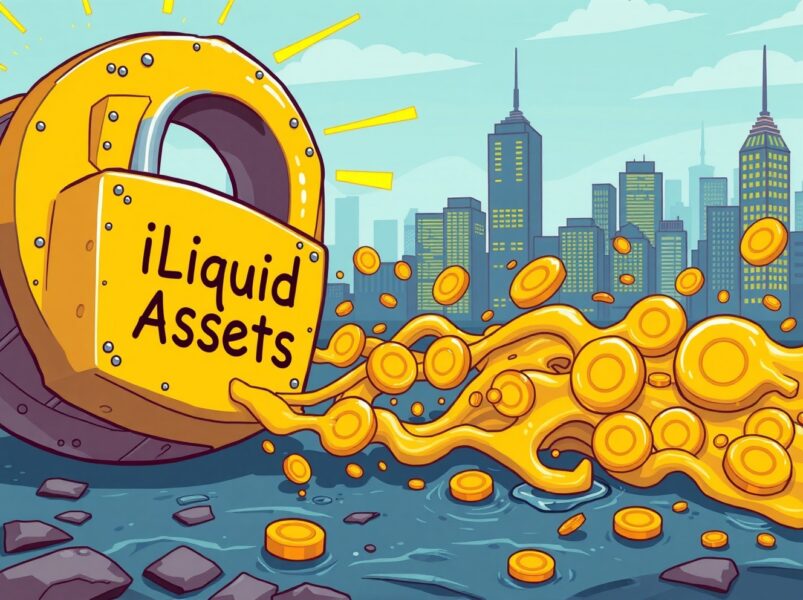
Cartoon illustration showing asset tokenization transforming locked assets into flowing liquidity

BitcoinWorld

Unlocking Growth: Why Asset Tokenization Desperately Needs Liquidity to Succeed

Imagine turning your rare collectibles or property shares into digital tokens. Sounds revolutionary, right? However, Securitize CEO Carlos Domingo delivers a crucial reality check. The true challenge for asset tokenization isn’t just creating digital versions—it’s ensuring those tokens can actually trade. Without liquidity, even the most innovative tokenized assets remain stuck in digital limbo.

What’s the Real Barrier for Asset Tokenization Growth?

In a recent interview, Domingo highlighted a common misconception. Many believe that tokenizing an asset automatically makes it liquid. This is fundamentally incorrect. He uses clear examples to make his point.

  • Tokenizing shares in a Manhattan building doesn’t magically create buyers.
  • Digitizing a rare Pokémon card collection won’t build a trading market.

The token is simply a new form of ownership. The underlying asset’s market demand determines its liquidity. Therefore, the current expansion in asset tokenization focuses on assets that already possess deep markets.

Which Assets Are Leading the Tokenization Charge?

The market is growing smartly by starting with what works. Domingo notes that platforms are prioritizing highly liquid traditional assets. This strategic approach builds credibility and infrastructure.

Major examples include:

  • Cash and Cash Equivalents: Stablecoins and tokenized money market funds.
  • U.S. Treasurys: Government bonds with established, global demand.

By tokenizing these assets first, the industry proves the technology’s reliability for settlement and ownership. It creates a foundation of trust. This foundation is essential before tackling more complex, illiquid assets.

Can Technology Eventually Solve the Liquidity Puzzle?

Domingo remains optimistic about the future. He suggests that technological advancements could gradually improve liquidity for a wider range of tokenized assets. However, this won’t happen overnight.

Potential solutions on the horizon include:

  • Advanced decentralized exchanges (DEXs) with better price discovery.
  • Automated market makers (AMMs) designed for unique assets.
  • Improved interoperability between different trading platforms.

The key insight is that technology can enhance market efficiency, but it cannot create demand where none exists. The success of asset tokenization hinges on marrying innovative tech with fundamentally desirable assets.

What Are the Actionable Insights for Investors and Builders?

Domingo’s analysis provides crucial guidance for anyone involved in the digital asset space. The focus must shift from mere digitization to market creation.

For investors, this means looking beyond the tokenization headline. Scrutinize the underlying asset’s existing market depth. For developers and entrepreneurs, the mandate is clear: build tools and platforms that specifically enhance trading and price discovery for tokenized real-world assets.

The journey of asset tokenization is just beginning. While transforming illiquid assets into digital tokens is a powerful concept, Carlos Domingo rightly points out that liquidity is the non-negotiable fuel for growth. The industry’s current path—tokenizing liquid assets first—is a pragmatic strategy to build a sustainable future. The ultimate promise of a fully tokenized world depends on solving this core challenge.

Frequently Asked Questions (FAQs)

Q: What does ‘liquidity’ mean in asset tokenization?
A: Liquidity refers to how easily and quickly a tokenized asset can be bought or sold in the market without significantly affecting its price. High liquidity means many buyers and sellers.

Q: Does tokenizing an asset automatically increase its value?
A: No. Tokenization changes the form of ownership, not the intrinsic value. The asset’s value is still determined by its underlying fundamentals and market demand.

Q: Why are U.S. Treasurys a popular choice for tokenization?
A> They are already highly liquid, trusted globally, and have a massive existing market. Tokenizing them adds efficiency (like 24/7 settlement) to an already successful asset.

Q: Can a tokenized illiquid asset ever become liquid?
A> It’s possible but difficult. Technology can improve market access, but liquidity ultimately requires a broad base of willing buyers and sellers, which depends on the asset’s perceived value.

Q: What’s the main benefit of tokenizing an already liquid asset?
A> It introduces blockchain efficiencies—such as faster settlement, reduced intermediaries, and programmable features—to traditional finance, potentially lowering costs and increasing accessibility.

Did this breakdown of the liquidity challenge in asset tokenization help you? Share this article on Twitter or LinkedIn to spark a conversation with your network about the future of digital assets.

To learn more about the latest digital asset trends, explore our article on key developments shaping blockchain technology and institutional adoption.

This post Unlocking Growth: Why Asset Tokenization Desperately Needs Liquidity to Succeed first appeared on BitcoinWorld.

Disclaimer: The articles reposted on this site are sourced from public platforms and are provided for informational purposes only. They do not necessarily reflect the views of MEXC. All rights remain with the original authors. If you believe any content infringes on third-party rights, please contact service@support.mexc.com for removal. MEXC makes no guarantees regarding the accuracy, completeness, or timeliness of the content and is not responsible for any actions taken based on the information provided. The content does not constitute financial, legal, or other professional advice, nor should it be considered a recommendation or endorsement by MEXC.

You May Also Like

Short-Term Bitcoin Profits Dominate For The First Time Since 2023

Short-Term Bitcoin Profits Dominate For The First Time Since 2023

The post Short-Term Bitcoin Profits Dominate For The First Time Since 2023 appeared on BitcoinEthereumNews.com. Bitcoin is making another attempt to break the downtrend that has kept the crypto king capped since late October. Price is hovering near $91,000 as investors watch a rare shift in market structure unfold.  For the first time in more than two and a half years, short-term holders have surpassed long-term holders in realized profits, creating both opportunities and risks for BTC. Sponsored Sponsored Bitcoin Sees Some Shift The MVRV Long/Short Difference highlights a notable change in Bitcoin’s profit distribution. A positive reading usually signals long-term holders hold more unrealized gains, while a negative value indicates short-term holders are ahead. In Bitcoin’s case, the difference has dipped into negative territory for the first time since March 2023. This marks 30 months since short-term holders last led in profits. Such dominance raises concerns because short-term holders tend to sell aggressively when volatility increases. Their profit-taking behavior could add pressure on BTC’s price if the broader market weakens, especially during attempts to break the downtrend. Want more token insights like this? Sign up for Editor Harsh Notariya’s Daily Crypto Newsletter here. Bitcoin MVRV Long/Short Difference. Source: Santiment Sponsored Sponsored Despite this shift, Bitcoin’s broader momentum shows encouraging signs. Exchange net position change data confirms rising outflows across major platforms, signaling a shift in investor accumulation. BTC leaving exchanges is often treated as a bullish indicator, reflecting confidence in long-term appreciation. This trend suggests that many traders view the $90,000 range as a reasonable bottom zone and are preparing for a potential recovery. Sustained outflows support price stability and strengthen the probability of BTC breaking above immediate resistance levels. Bitcoin Exchange Net Position Change. Source: Glassnode BTC Price Is Trying Its Best Bitcoin is trading at $91,330 at the time of writing, positioned just below the $91,521 resistance. Reclaiming this level and flipping it into support…
Share
BitcoinEthereumNews2025/12/08 05:57
OKX founder responds to Moore Threads co-founder 1,500 BTC debt

OKX founder responds to Moore Threads co-founder 1,500 BTC debt

The post OKX founder responds to Moore Threads co-founder 1,500 BTC debt appeared on BitcoinEthereumNews.com. The successful stock market debut of Moore Threads, a company that’s being touted as China’s answer to Nvidia, has been overshadowed by resurfaced allegations that link one of its co-founders to an unpaid cryptocurrency debt that has been lingering for roughly a decade. Shares in the GPU maker skyrocketed to as much as 470% on Thursday following its initial public offering (IPO) on the Shanghai Stock Exchange, valuing the company at around RMB 282 billion ($39.9 billion). However, as the success was being celebrated online, a social media post revived claims that Moore Threads’ co-founder Li Feng borrowed 1,500 Bitcoins from Mingxing “Star” Xu, founder and CEO of cryptocurrency exchange OKX, and never repaid the loan. Crypto past with OKX founder resurfaces In an X post, AB Kuai.Dong referenced Feng’s involvement in a 2017 initial coin offering that raised 5,000 ETH alongside controversial angel investor Xue Manzi. Feng allegedly dismissed the Bitcoin loan, stating, “It was just that Xu Mingxing’s investment in me had failed.” Xu responded to the post with a conciliatory message, writing, “People cannot always remain in the shadow of negative history. Face the future and contribute more positive energy.” He added, “Let the legal system handle the debt issue,” and offered blessings to every entrepreneur. Feng reportedly partnered with Xue Manzi and Li Xiaolai in 2017 to launch Malego Coin, which was later renamed Alpaca Coin MGD. The project reportedly raised approximately 5,000 ETH, but it was around this period that China banned ICOs, allowing regulators to crack down on what they viewed as speculative excess and potential fraud in the cryptocurrency sector. The Bitcoin loan dispute appears separate from the ICO controversy. According to sources familiar with the matter, the original loan agreement was dated December 17, 2014, with an expiry of December 16, 2016.…
Share
BitcoinEthereumNews2025/12/08 06:13
Solana Foundation calls out Kamino and Jupiter rivalry, directs focus on growth

Solana Foundation calls out Kamino and Jupiter rivalry, directs focus on growth

The post Solana Foundation calls out Kamino and Jupiter rivalry, directs focus on growth appeared on BitcoinEthereumNews.com. Lily Liu, the president of the Solana Foundation, has entered the growing feud between Kamino Finance, an established player in Solana’s lending market, and Jupiter Lend, a more recent entrant into the lending space.  Jupiter launched Jupiter Lend in August, and it has already grown to $1 billion in TVL. The Solana lending market is currently valued at around $5 billion, a number that is significantly dwarfed by Ethereum’s $50 billion and the trillions in TradFi collateral markets. Solana Foundation’s president does not mind the competition Lily Liu, president of the Solana Foundation, referenced the current valuation of Solana’s lending market in her post. That gap is what is fueling the competitive landscape in Solana’s lending sector. While it has led to rapid innovation, tensions have been rising between protocols vying for dominance. “Hey @kamino @jup_lend, Love you both,” she wrote. “…We can snipe at one another (one click lending position conversion; dunking on sloppy remarks; etc) or we can focus on capturing market share from all of crypto and then Tradfi beyond that.” As the Solana Foundation executive is concerned, competition has always been healthy for the space, but it is crucial not to lose sight of the main goal, which is capturing more market share from Ethereum and TradFi. Why are Kamino Finance and Jupiter Lend feuding? Jupiter Lend had had to contend with accusations that the protocol misled users about the platform’s risk isolation and rehypothecation practices, with critics (mostly founders from rival protocols like Kamino and Fluid) claiming that Jupiter Lend falsely advertised its vaults as completely isolated, an act that could potentially expose the broader DeFi space to contagion during market stress. While Kash Dhanda, Jupiter Lend’s co-founder, admitted that the initial “zero contagion” assertion was not 100% accurate, the executive insisted that rehypothecation occurs…
Share
BitcoinEthereumNews2025/12/08 06:40