BitcoinWorld US Stocks Close Lower: What Sparked the Sudden Sell-Off? If you watched the markets today, you saw a sea of red. The major US stock indices couldn’t hold their ground, closing the session in negative territory. For investors and traders, especially those with exposure to crypto assets which often correlate with broader risk sentiment, understanding why US stocks close lower is crucial. Let’s break […] This post US Stocks Close Lower: What Sparked the Sudden Sell-Off? first appeared on BitcoinWorld.BitcoinWorld US Stocks Close Lower: What Sparked the Sudden Sell-Off? If you watched the markets today, you saw a sea of red. The major US stock indices couldn’t hold their ground, closing the session in negative territory. For investors and traders, especially those with exposure to crypto assets which often correlate with broader risk sentiment, understanding why US stocks close lower is crucial. Let’s break […] This post US Stocks Close Lower: What Sparked the Sudden Sell-Off? first appeared on BitcoinWorld.

US Stocks Close Lower: What Sparked the Sudden Sell-Off?
2025/12/09 05:25
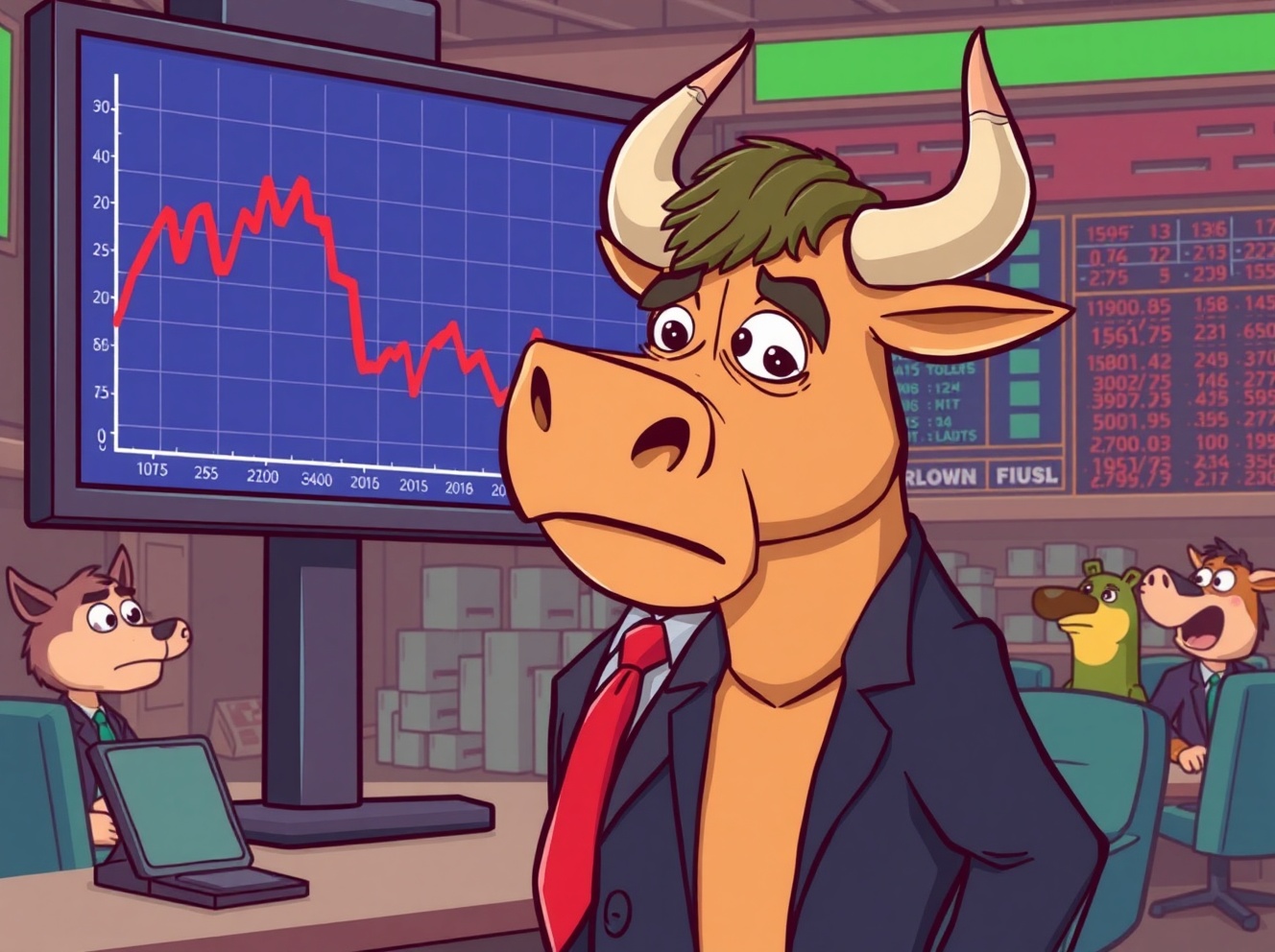
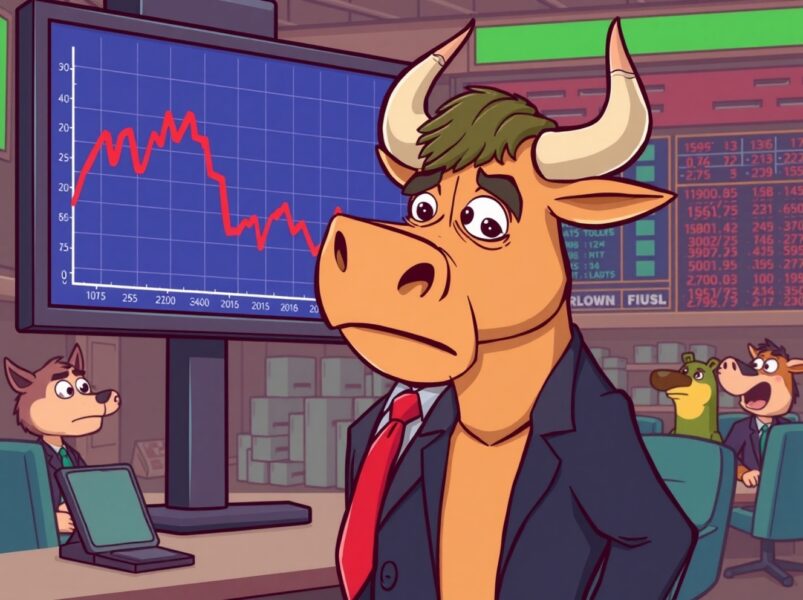
Cartoon illustration of a worried bull watching US stocks close lower on a vibrant trading floor.

BitcoinWorld

US Stocks Close Lower: What Sparked the Sudden Sell-Off?

If you watched the markets today, you saw a sea of red. The major US stock indices couldn’t hold their ground, closing the session in negative territory. For investors and traders, especially those with exposure to crypto assets which often correlate with broader risk sentiment, understanding why US stocks close lower is crucial. Let’s break down the numbers and the narrative behind today’s pullback.

Why Did US Stocks Close Lower Today?

The trading session ended with all three major benchmarks down. The Dow Jones Industrial Average fell 0.45%, the S&P 500 dropped 0.35%, and the tech-heavy Nasdaq Composite declined a more modest 0.14%. This wasn’t a market crash, but a broad-based retreat that suggests investors are hitting the pause button. The primary question on everyone’s mind is simple: what triggered this shift in sentiment?

Several factors likely contributed to the pressure. First, renewed concerns about the pace of interest rate cuts from the Federal Reserve can spook the market. Second, mixed earnings reports from key sectors create uncertainty. Finally, geopolitical tensions often lead to a ‘risk-off’ environment, where money flows out of stocks. When US stocks close lower, it’s rarely due to a single event, but a combination of these headwinds.

Breaking Down the Index Moves

Not all declines are created equal. The varied performance of the indices tells a deeper story about sector rotation and investor focus.

  • The Dow’s Drop (0.45%): This 30-stock blue-chip index, heavy with industrial and financial companies, is often sensitive to economic growth fears. Its larger decline suggests worries about the traditional economy.
  • The S&P 500’s Slide (0.35%): As the broadest benchmark, its move indicates a widespread, though not panicked, sell-off across large-cap America.
  • The Nasdaq’s Relative Resilience (0.14%): The smaller decline here hints that mega-cap tech stocks, which have driven much of the recent rally, showed some defensive strength.

This pattern shows that while selling was broad, it wasn’t a uniform stampede. The fact that US stocks close lower across the board, however, is a clear signal of caution.

What Does This Mean for Your Portfolio?

A single down day is not a trend. However, it serves as a powerful reminder of market volatility. For long-term investors, days like these are normal fluctuations. For active traders, they present both risk and opportunity. The key is to avoid making emotional decisions.

Consider these actionable insights:

  • Review Your Asset Allocation: Ensure your portfolio is diversified across different asset classes to weather downturns.
  • Look for Quality: Market pullbacks can be a chance to invest in strong companies at better prices.
  • Monitor Correlation: Remember, when traditional US stocks close lower, crypto markets can sometimes follow suit as investors reduce overall risk.

Therefore, staying informed and sticking to your strategy is more important than reacting to daily noise.

The Final Tally: A Day of Healthy Caution

In conclusion, the session where US stocks close lower reflects a market digesting complex information. It was a day of measured profit-taking and repositioning rather than outright fear. The underlying economic data and corporate earnings will determine if this is a brief stumble or the start of a deeper correction. For now, investors should view it as a reminder that markets don’t move in a straight line. Staying disciplined and focused on fundamentals is the best response to these inevitable down days.

Frequently Asked Questions (FAQs)

Q: Is it time to sell my stocks because they closed lower?
A> Not necessarily. A one-day decline is normal volatility. Base selling decisions on your long-term investment goals and the fundamentals of your holdings, not daily price movements.

Q: Do crypto prices always drop when US stocks close lower?
A> While not always, there is often a correlation. Both are considered ‘risk-on’ assets. When investors become risk-averse, they may sell both stocks and cryptocurrencies.

Q: Which sectors were hit the hardest today?
A> While specific data varies daily, on days of broad declines, cyclical sectors like industrials, financials, and materials often underperform more defensive sectors like utilities or consumer staples.

Q: Should I “buy the dip” when stocks close lower?
A> “Buying the dip” can be a strategy, but it requires research. Ensure you are investing in fundamentally sound companies or ETFs, and avoid trying to catch a falling knife without a clear plan.

Q: How can I stay updated on market movements?
A> Follow reputable financial news sources, monitor key economic calendars for data releases, and consider setting up alerts for your major holdings.

Found this breakdown of why US stocks close lower helpful? Market knowledge is power. Share this article on your social media to help your network navigate these volatile times with more insight!

To learn more about the latest financial market trends and their impact on digital assets, explore our article on key developments shaping cryptocurrency price action amid traditional market fluctuations.

This post US Stocks Close Lower: What Sparked the Sudden Sell-Off? first appeared on BitcoinWorld.

Disclaimer: The articles reposted on this site are sourced from public platforms and are provided for informational purposes only. They do not necessarily reflect the views of MEXC. All rights remain with the original authors. If you believe any content infringes on third-party rights, please contact service@support.mexc.com for removal. MEXC makes no guarantees regarding the accuracy, completeness, or timeliness of the content and is not responsible for any actions taken based on the information provided. The content does not constitute financial, legal, or other professional advice, nor should it be considered a recommendation or endorsement by MEXC.

You May Also Like

Crypto News: Donald Trump-Aligned Fed Governor To Speed Up Fed Rate Cuts?

Crypto News: Donald Trump-Aligned Fed Governor To Speed Up Fed Rate Cuts?

The post Crypto News: Donald Trump-Aligned Fed Governor To Speed Up Fed Rate Cuts? appeared on BitcoinEthereumNews.com. In recent crypto news, Stephen Miran swore in as the latest Federal Reserve governor on September 16, 2025, slipping into the board’s last open spot right before the Federal Open Market Committee kicks off its two-day rate discussion. Traders are betting heavily on a 25-basis-point trim, which would bring the federal funds rate down to 4.00%-4.25%, based on CME FedWatch Tool figures from September 15, 2025. Miran, who’s been Trump’s top economic advisor and a supporter of his trade ideas, joins a seven-member board where just three governors come from Democratic picks, according to the Fed’s records updated that same day. Crypto News: Miran’s Background and Quick Path to Confirmation The Senate greenlit Miran on September 15, 2025, with a tight 48-47 vote, following his nomination on September 2, 2025, as per a recent crypto news update. His stint runs only until January 31, 2026, stepping in for Adriana D. Kugler, who stepped down in August 2025 for reasons not made public. Miran earned his economics Ph.D. from Harvard and worked at the Treasury back in Trump’s first go-around. Afterward, he moved to Hudson Bay Capital Management as an economist, then looped back to the White House in December 2024 to head the Council of Economic Advisers. There, he helped craft Trump’s “reciprocal tariffs” approach, aimed at fixing trade gaps with China and the EU. He wouldn’t quit his White House gig, which irked Senator Elizabeth Warren at the September 7, 2025, confirmation hearings. That limited time frame means Miran gets to cast a vote straight away at the FOMC session starting September 16, 2025. The full board now features Chair Jerome H. Powell (Trump pick, term ends 2026), Vice Chair Philip N. Jefferson (Biden, to 2036), and folks like Lisa D. Cook (Biden, to 2028) and Michael S. Barr…
Share
BitcoinEthereumNews2025/09/18 03:14
Missed Bitcoin’s ICO? BullZilla’s Explosive Stage 13 Surge Is Your Second Shot

Missed Bitcoin’s ICO? BullZilla’s Explosive Stage 13 Surge Is Your Second Shot

The post Missed Bitcoin’s ICO? BullZilla’s Explosive Stage 13 Surge Is Your Second Shot appeared on BitcoinEthereumNews.com. Crypto Projects Bitcoin early believers made millions, and BullZilla Stage 13 is giving a new chance for those hunting the best crypto presales to buy with explosive ROI potential. Do cryptocurrency opportunities really come twice, or does lightning only strike once for those hunting the best crypto presales to buy? The world still talks about Bitcoin’s earliest days when the price hovered near pennies, and only a small circle of curious technophiles understood what was coming. Those early believers stacked thousands of coins when the market barely noticed them. Today, that tiny window sits in history as proof that early entries can build life-changing gains. Bitcoin’s rise from cents to tens of thousands of dollars remains the most prominent example of missed fortunes in the digital asset world. The story now moves into a new chapter as BullZilla climbs through its presale with a setup that feels familiar to anyone who watched Bitcoin explode long after ignoring it at the bottom. With the presale live, BullZilla brings a structure that pulls in traders searching for the best crypto presales to buy while regret-filled communities ask whether this could be their redemption moment. Stage 13 Zilla Sideways Smash shows the project heating up and attracting attention from those who once wished for a second chance at early prices before the next massive wave takes off. BullZilla Presale at a glance Stage: Stage 13 (Zilla Sideways Smash) Phase: 3 Current Price: $0.00033905 Presale Tally: Over $1M+ Raised  Token Holders: Over 3700 Tokens Sold: Over 32 B  Current ROI: ($1,454.75% ) from Stage 13C to the Listing Price of $0.00527 ROI until Stage 13C for the Earliest Joiners: $5,796.52% $1000 Investment =2.949 million $BZIL Tokens Upcoming Price Surge = 1.96% increase in 13D from 0.00033905 to 0.00034572 Join the BullZilla presale now while…
Share
BitcoinEthereumNews2025/12/10 07:15
US SEC Chairman: Many types of cryptocurrency ICOs are not under the SEC's jurisdiction.

US SEC Chairman: Many types of cryptocurrency ICOs are not under the SEC's jurisdiction.

PANews reported on December 10th, citing The Block, that SEC Chairman Paul Atkins stated at the Blockchain Association's annual policy summit on Tuesday that many types of Initial Coin Offerings (ICOs) should be considered non-securities transactions and are outside the jurisdiction of Wall Street regulators. He explained that this is precisely what the SEC wants to encourage, as these types of transactions, by their definition, do not fall under the category of securities. Atkins specifically mentioned the token taxonomy he introduced last month, which divides the crypto industry into four categories of tokens. He pointed out last month that network tokens, digital collectibles, and digital instruments should not be considered securities in themselves. On Tuesday, he further stated that ICOs involving these three types of tokens should also be considered non-securities transactions, meaning they are not subject to SEC regulation. Atkins also mentioned that, regarding initial coin offerings (ICOs), the SEC believes the only type of token it should regulate is tokenized securities, which are tokenized forms of securities already under SEC regulation and traded on-chain. He further explained that ICOs span four themes, three of which fall under the jurisdiction of the CFTC. The SEC will delegate these matters to the CFTC, while focusing on regulating tokenized securities.
Share
PANews2025/12/10 07:16