TLDR Lemonade launched new insurance cutting rates by 50% for Tesla vehicles when Full Self-Driving (FSD) is active, starting January 26 in Arizona The discountTLDR Lemonade launched new insurance cutting rates by 50% for Tesla vehicles when Full Self-Driving (FSD) is active, starting January 26 in Arizona The discount

Tesla (TSLA) Stock: Lemonade Cuts Insurance Rates 50% for Full Self-Driving Miles

TLDR

  • Lemonade launched new insurance cutting rates by 50% for Tesla vehicles when Full Self-Driving (FSD) is active, starting January 26 in Arizona
  • The discount reflects data showing FSD reduces risk during autonomous operation compared to human driving
  • Tesla CEO Elon Musk endorsed the move, stating FSD increases safety substantially
  • Lemonade gained access to Tesla vehicle telemetry data to distinguish between FSD-led and human driving
  • LMND stock jumped 8% on the announcement while TSLA traded 3% higher

Lemonade introduced a new insurance product on Wednesday that cuts per-mile rates in half for Tesla vehicles operating with Full Self-Driving technology engaged. The move came after data analysis showed reduced risk during autonomous operation.


TSLA Stock Card
Tesla, Inc., TSLA

Tesla CEO Elon Musk posted on X that the insurance rate cut reflects how much FSD enhances safety. The digital insurance company’s new Autonomous Car insurance starts rolling out in Arizona on January 26.

The product launches in Oregon one month later. Lemonade designed the offering specifically for self-driving vehicles, beginning with Tesla’s FSD system.

The rate reduction stems from a collaboration between Lemonade and Tesla. The partnership gave Lemonade access to vehicle telemetry data from Tesla’s fleet.

This data allows Lemonade to separate FSD-led driving from human driving. The company uses this distinction to price insurance more accurately.

Data-Driven Pricing Model

Lemonade co-founder Shai Wininger explained that traditional insurers treat Tesla vehicles like any other car. They also treat AI like any other driver.

Wininger pointed out that a car seeing 360 degrees, never getting drowsy, and reacting in milliseconds differs from human capabilities. Traditional insurance pricing doesn’t account for these differences.

The company expects prices to drop further as Tesla releases FSD software updates. Wininger stated rates will decrease as the technology becomes safer.

Tesla’s FSD technology handles certain driving tasks but doesn’t make vehicles fully autonomous. Drivers must stay alert and ready to take control when needed.

The system has faced regulatory scrutiny over traffic violations and accidents. Some incidents occurred during adverse weather conditions.

Market Response and Business Impact

LMND shares climbed 8% following the announcement while TSLA stock rose 3%. Lemonade stock has gained 163% over the past year.

Analysts expect Lemonade’s revenue to grow 54.18% in 2026. The company uses AI bots instead of human agents to process claims and sales.

The AI system gathers thousands of data points to price policies more accurately. This approach reduces costs compared to traditional insurance models.

Lemonade provides instant quotes and processes claims rapidly. Customers have switched to the platform for convenience and affordability.

The partnership gives Lemonade access to Tesla’s customer base. Tesla owners will save approximately 50% on insurance when using FSD.

The third-party data from Lemonade supports Tesla’s safety claims about FSD. This validation from an independent insurance company carries more weight than Tesla’s own claims.

The collaboration marks a shift in how insurance companies calculate risk for autonomous vehicles. Lemonade’s AI-centric model positions the company to price these new technologies accurately.

The product begins rolling out in Arizona on January 26 and expands to Oregon in February.

The post Tesla (TSLA) Stock: Lemonade Cuts Insurance Rates 50% for Full Self-Driving Miles appeared first on CoinCentral.

Disclaimer: The articles reposted on this site are sourced from public platforms and are provided for informational purposes only. They do not necessarily reflect the views of MEXC. All rights remain with the original authors. If you believe any content infringes on third-party rights, please contact service@support.mexc.com for removal. MEXC makes no guarantees regarding the accuracy, completeness, or timeliness of the content and is not responsible for any actions taken based on the information provided. The content does not constitute financial, legal, or other professional advice, nor should it be considered a recommendation or endorsement by MEXC.

You May Also Like

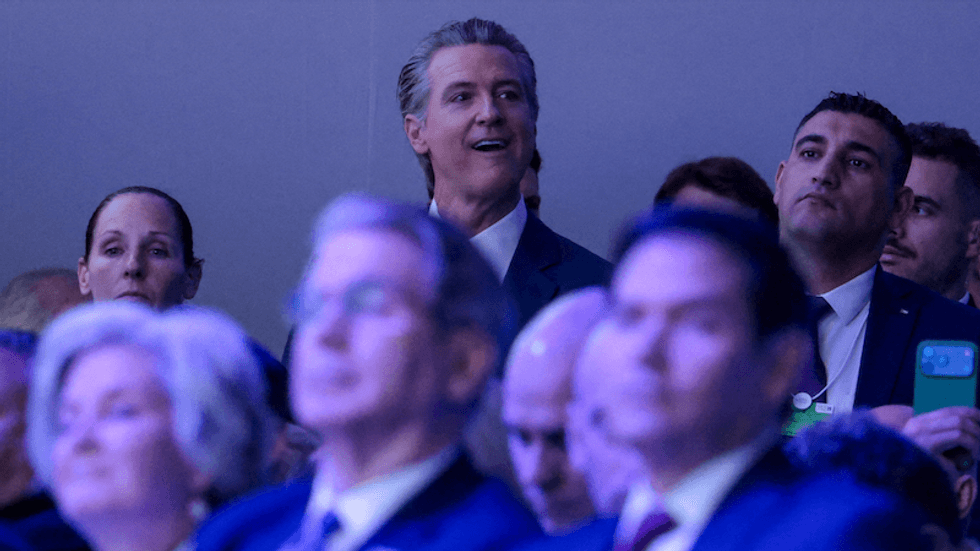
Trump and Newsom seen engaging in 'friendly banter' backstage: 'Gavin, we're good'

Trump and Newsom seen engaging in 'friendly banter' backstage: 'Gavin, we're good'

President Donald Trump and California Gov. Gavin Newsom engaged in a public war of words this week in Davos, Switzerland, but a Washington, D.C., insider revealed
Share
Rawstory2026/01/23 19:55
Visa Direct Enhances Mercuryo’s Real-Time Crypto-to-Fiat Conversions

Visa Direct Enhances Mercuryo’s Real-Time Crypto-to-Fiat Conversions

TLDR Mercuryo has partnered with Visa to offer near real-time crypto-to-fiat conversions through Visa Direct. The integration enables users to off-ramp cryptocurrency
Share
Coincentral2026/01/23 20:10
Vitalik Buterin lays out new Ethereum roadmap at EDCON

Vitalik Buterin lays out new Ethereum roadmap at EDCON

The post Vitalik Buterin lays out new Ethereum roadmap at EDCON appeared on BitcoinEthereumNews.com. At EDCON 2025 in Osaka, Ethereum co-founder Vitalik Buterin delivered fresh details of Ethereum’s technical roadmap, delineating both short-term scaling goals and longer-term protocol transformations. The immediate priority, according to slides from the presentation, is scaling at the L1 level by raising the gas limit while maintaining decentralization. Tools such as block-level access lists, ZK-EVMs, gas repricing, and slot optimization were highlighted as means to improve throughput and efficiency. A central theme of the presentation was privacy, divided into protections for on-chain “writes” (transactions, voting, DeFi operations) and “reads” (retrieving blockchain state). Write privacy could be achieved through client-side zero-knowledge proofs, encrypted voting, and mixnet-based transaction relays. Read privacy efforts include trusted execution environments, private information retrieval techniques, dummy queries to obscure access patterns, and partial state nodes that reveal only necessary data. These measures aim to reduce information leakage across both ends of user interaction. In the medium term, Ethereum’s focus shifts to cross-Layer-2 interoperability. Vitalik described trustless L2 asset transfers, proof aggregation, and faster settlement mechanisms as key milestones toward a seamless rollup ecosystem. Faster slots and stronger finality, supported by techniques like erasure coding and three-stage finalization (3SF), are also in scope to enhance responsiveness and security. The roadmap also includes Stage 2 rollup advancements to strengthen verification efficiency, alongside a call for broader community participation to help build and maintain these improvements. The long-term “Lean Ethereum” blueprint emphasizes security, simplicity and optimization, with ambitions for quantum-resistant cryptography, formal verification of the protocol, and adoption of ideal primitives for hashing, signatures, and zero-knowledge proofs. Buterin stressed that these improvements are not just for scalability but to make Ethereum a stable, trustworthy foundation for the broader decentralized ecosystem. This is a developing story. This article was generated with the assistance of AI and reviewed by editor Jeffrey Albus before publication.…
Share
BitcoinEthereumNews2025/09/18 03:22