

For years, the biggest names in banking treated stablecoins the way a cat treats a bathtub, with deep suspicion and a healthy distance. That era just ended. On September 1, 2026, a coalition of 21 gloFor years, the biggest names in banking treated stablecoins the way a cat treats a bathtub, with deep suspicion and a healthy distance. That era just ended. On September 1, 2026, a coalition of 21 glo

For years, the biggest names in banking treated stablecoins the way a cat treats a bathtub, with deep suspicion and a healthy distance. That era just ended. On September 1, 2026, a coalition of 21 global financial institutions, including Bank of America, Citi, Goldman Sachs, Wells Fargo, UBS, Deutsche Bank, Santander, and Fidelity Investments, confirmed they’re teaming up to build a company whose sole purpose is issuing a U.S. dollar-backed stablecoin. It’s not a whitepaper or a “we’re exploring options” press release. It’s a real venture, with a real roadmap, and a launch window in the first half of 2027.
What makes this moment worth paying attention to isn’t just the size of the names involved, it’s what their arrival signals about where the money is actually going.
1.How We Got Here
This isn’t a sudden pivot. The project quietly began back in October 2025 as a research effort among ten banks. Over the following months, membership nearly doubled to 21 institutions spanning North America, Europe, East Asia, the Middle East, and Africa. That slow build matters, because it shows this wasn’t a knee-jerk reaction to a single headline, it was banks methodically testing whether a jointly-owned stablecoin made sense before committing real capital and reputational weight to it.
The formal announcement turns that year-long feasibility study into something concrete: a company is expected to be established in the second half of 2026, pending standard closing conditions, with the dollar stablecoin solution going to market sometime in the first half of 2027. If that timeline holds, it would put the launch in the same broader period as the new U.S. stablecoin regulatory framework. The consortium says the initiative intends to be compliant with the GENIUS Act and MiCA, as applicable.
2.What Is Driving Banks Into Stablecoins?
For most of the crypto era, stablecoins were something banks watched from the sidelines, mildly alarmed. Tether and Circle built enormous businesses moving dollar-pegged tokens across public blockchains, largely without banks getting a cut. That dynamic has started to look less like a niche crypto product and more like a genuine threat to core banking revenue.
Bank of America’s own CEO has pointed out that trillions of dollars in deposits could eventually migrate toward stablecoin-based alternatives if banks don’t offer something competitive. That’s the defensive half of the story, and it’s why many of these same institutions are also pushing tokenized deposit products to keep existing customers locked into their own ecosystems.
But the joint stablecoin venture is a different animal, it’s offensive, not defensive. Tokenized deposits are useful, but they’re siloed within each bank’s own infrastructure, which limits how freely that money can move. Stablecoins on public blockchains don’t have that limitation; they’re built to travel. By building a shared, interoperable dollar token, the consortium is trying to compete directly with Tether and Circle on their own turf, using the trust, compliance infrastructure, and client relationships that traditional banks have spent decades building.
3.The Notable Holdout
Not every major bank is on board, and the absence is telling. JPMorgan, one of the largest banks in the world, isn’t part of this consortium. Rather than joining the shared public-blockchain venture, JPMorgan has continued investing in its own proprietary infrastructure, including Kinexys and JPM Coin. That’s a fundamentally different bet: instead of joining a shared, interoperable rail that other banks and platforms can plug into, JPMorgan appears to be betting that a closed, bank-controlled system offers more value and control over the long run.
Whether that turns out to be the smarter strategic move or an expensive miscalculation will likely take years to play out, but it does illustrate that even the biggest players in finance aren’t in agreement on how digital dollars should actually work.
4.What’s Actually at Stake
The most interesting part of this story isn’t the stablecoin itself, plenty of dollar-pegged tokens already exist. It’s the fight over who controls the plumbing underneath digital money. Right now, that infrastructure is dominated by crypto-native firms like Tether and Circle, alongside Visa building out payment rails and BlackRock moving into tokenized cash and reserve management.
If stablecoins become a mainstream part of how money moves globally, whoever controls issuance, backing, settlement, and compliance stands to gain enormous leverage over the future of payments. That’s precisely why the market reaction is worth watching: Circle’s stock fell following the announcement, reflecting investor concern that a bank-backed alternative could potentially chip away at USDC’s position.
This consortium also isn’t operating in a vacuum. A separate 37-institution group called Qivalis is working on a euro-denominated stablecoin, and a broader alliance of more than 140 companies is developing something called Open USD. The digital dollar space, in other words, is quickly becoming crowded, and increasingly institutional.
Conclusion
Twenty-one of the world’s largest financial institutions stepping into the stablecoin arena marks a genuine shift in tone from traditional finance. What was once viewed as a threat to be monitored is now being treated as a market to be won. Whether this consortium successfully challenges Tether and Circle, or simply adds another player to an already crowded field, its launch will be a real test of whether banks can bring their scale and regulatory credibility to a space built by crypto-native companies, and whether customers actually want their dollars there.
Disclaimer: This article is for informational purposes only and does not constitute financial or investment advice. Cryptocurrency and digital assets involve risks, and readers should conduct their own research before making any investment decisions.
市場の機会
Major価格(MAJOR)
--
----
USD
Major (MAJOR) ライブ価格チャート
このページで共有されている記事は公開プラットフォームから収集したものであり、参考情報としてのみ提供されています。MEXCの立場や見解を代表するものではありません。すべての権利は Mubashir に帰属します。第三者の権利を侵害するコンテンツがあると思われる場合は、service@support.mexc.com までご連絡いただければ速やかに削除いたします。MEXCはいかなるコンテンツの正確性、完全性、適時性も保証せず、提供された情報に基づいて取られたいかなる行動についても責任を負いません。本コンテンツは、金融、法律、またはその他の専門的なアドバイスを構成するものではなく、MEXCによる推奨または支持として解釈されるべきものでもありません。専門家の洞察と詳細な分析については、MEXC 学ぶ をご覧ください。
Major についてもっと知る
もっと見る
イーロン・マスク氏率いるX、ステーブルコインによるクリエイター支払いを検討:USDCでの支払いがどのように機能するか
概要 Elon MuskのXは、CircleのUSDCなどのステーブルコインがインフルエンサーやその他のコンテンツ提供者への報酬に使用できるかどうかを検討している。 CoinDeskは8月20日、計画に詳しい人物の話として、協議が進行中であると報じた。Xは報道時点で、最終的なステーブルコイン決済商品を公に確認していなかった。 この動きは特に重要です。なぜなら、Xはクリエイターの収益化モデルも変更し
2026/08/25
OCCidentalのカーボンキャプチャー解説:1PointFive、STRATOS、そしてOXYの低炭素チャンス
Summary Occidental Petroleum is unusual among large U.S. oil producers because it is attempting to build a commercial carbon-management business alongside conventional oil and gas. The strategy is pri
2026/08/14
OXY vs XOM vs CVX:Occidental、ExxonMobil、Chevronの比較
Summary Occidental Petroleum (OXY), Exxon Mobil (XOM) and Chevron (CVX) all provide exposure to the global energy industry, but their business models are significantly different. A simplified comparis
2026/08/14
Major の最新情報
もっと見る
MEXCオンチェーンデイリーレポート:USDTの時価総額が1,870億ドルに達し、ETHを超えて第2位にランクイン
機関投資家の参入と規制の動向が引き続き暗号資産市場を形成している。TetherはETHを抜いて時価総額が1,870億ドルに達し、時価総額ベースで第2位のデジタル資産となった。米国の議員らが暗号資産課税法案を推進する一方、大手銀行はトークン化の取り組みを拡大した。また、イーサリアムのリーダーシップは長期戦略を再確認し、プレディクション市場は新たな裁定取引機会を求めるクオンツ系トレーディング会社からの関心を集めている。
2026/06/08

MEXCオンチェーンデイリーレポート:英国FCAが小売ファンドに対し暗号資産10%上限を提案
機関投資家によるデジタル資産の採用は加速し続けており、大手銀行、決済プロバイダー、規制当局が暗号資産エコシステムへの関与を拡大している。日本の主要銀行は共同ステーブルコイン構想を準備しており、CircleはcirBTCでBitcoin分散型金融セクターに参入し、Coinbaseはステーブルコイン担保クレジットカードを発行する。一方、AIの統合は企業の主要トレンドであり続けており、SamsungはAIを全事業に展開し、規制当局は拡大するデジタル資産市場を監督するためにリソースを増強している。
2026/06/10
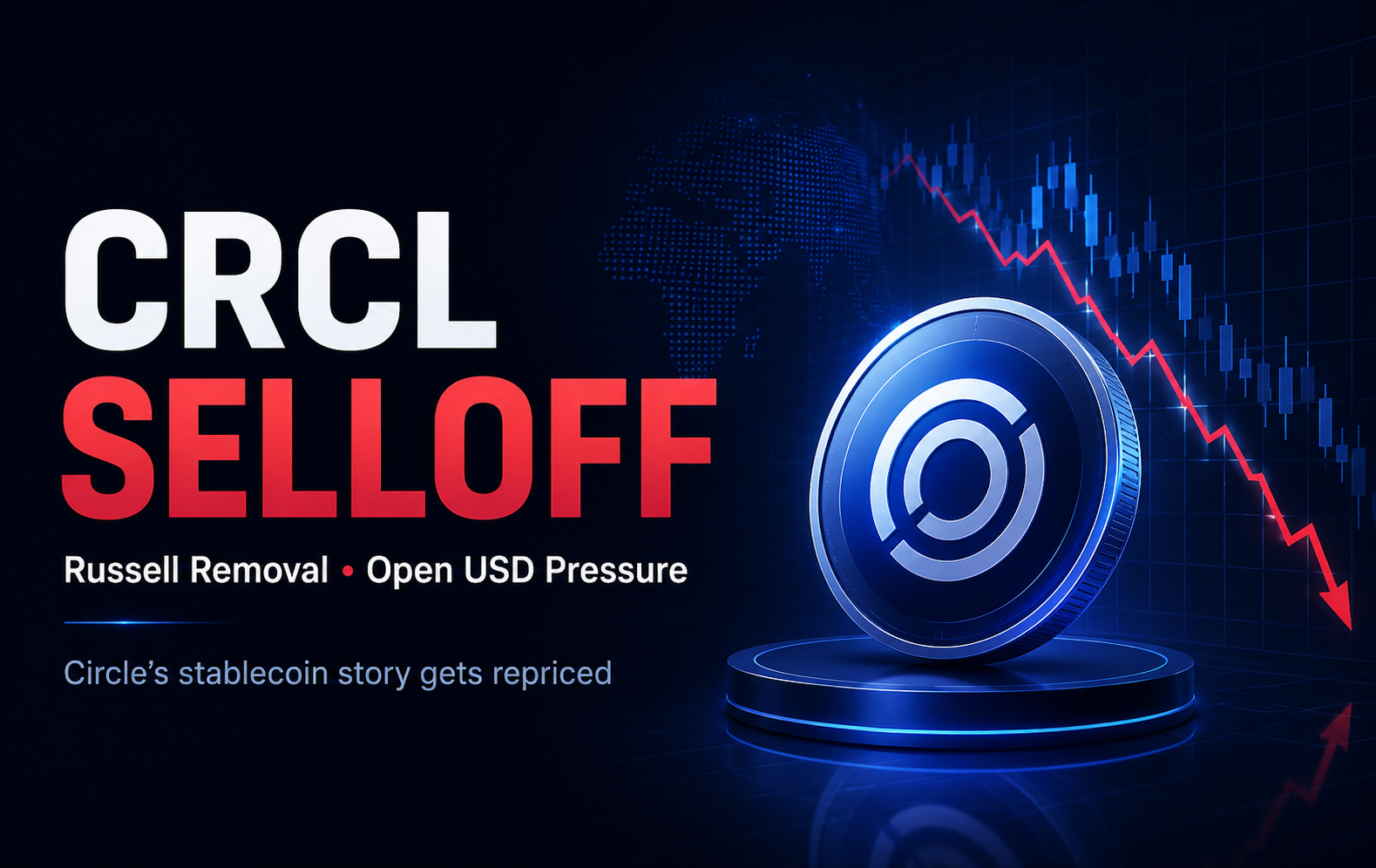
CRCL下落の背景:Russell Growthからの除外とOpen USDの圧力がCircleのステーブルコインの物語を再評価
Circle Internet Group($CRCL)は、最新のRussellインデックス再構成において、複数のRussell Growth関連ベンチマークから除外されたことで売り圧力に直面しました。このインデックスの変更が重要な理由は、多くのパッシブファンドや機関投資家がポートフォリオ構築の一部としてRussellインデックスを使用しているためです。銘柄が広くフォローされているベンチマークから外れると、企業に対する長期的な見方が変わっていなくても、リバランスのために売却されることがあります。
しかし、Russellの調整は物語の一部に過ぎません。より深い問題は、市場がCircleの公開企業としてのアイデンティティを再評価していることです。CRCLは依然として高成長の暗号資産インフラリーダーとして評価されているのか、それとも金利、準備金収入、ステーブルコインの流通、そして競争圧力に依存する金融インフラ企業として扱われ始めているのでしょうか。
Visa、Mastercard、Coinbaseなどの大手企業が関与する新しいステーブルコイン構想「Open USD」の立ち上げにより、この議論はさらに緊急性を増しました。トレーダーにとって重要な問題は、最近のCRCLの売りが主にインデックス関連の技術的な圧力なのか、それともステーブルコイン関連株の広範なバリュエーションのリセットを意味するのかということです。
2026/07/02


ホット
現在、市場で大きな注目を集めているトレンドの暗号資産
暗号資産価格
取引高が最も多い暗号資産