

Over the past few years, one of the biggest theses surrounding the convergence of AI and blockchain has been that AI Agents will become a new category of crypto users.An AI can independently search foOver the past few years, one of the biggest theses surrounding the convergence of AI and blockchain has been that AI Agents will become a new category of crypto users.An AI can independently search fo
MoonPay Integrates Kamino: When AI Begins Moving From Payments to On-Chain Financial Management

Over the past few years, one of the biggest theses surrounding the convergence of AI and blockchain has been that AI Agents will become a new category of crypto users.
An AI can independently search for data, call APIs, use compute resources, or purchase online services. But to truly operate independently on the Internet, an agent needs another important capability:
the ability to interact with money.
Most early experiments focused on small-value payments. AI could automatically pay stablecoins for APIs, data, or online services without requiring a human to approve every individual transaction.
The new integration between MoonPay PayBox and Kamino on Solana takes this model to another level.
On August 27, 2026, MoonPay announced that Kamino had been integrated into PayBox, allowing eligible users to ask AI assistants such as ChatGPT or Claude to perform lending operations using natural language. Users can supply tokens to Kamino to earn yield or use crypto as collateral for a USDC loan.
The important point is that AI does not directly own the money, and Kamino remains the protocol executing the lending activity on-chain. PayBox acts as a permission layer, determining what the AI is allowed to do with the user’s assets.
Therefore, the larger story is not simply:
“ChatGPT can borrow USDC.”
It is:
AI is beginning to become an orchestration layer for on-chain financial activity.
If this model develops further, the way people use DeFi in the future could change significantly.
Key Takeaways
MoonPay has integrated Kamino into PayBox, bringing lending on Solana into the conversational interfaces of ChatGPT and Claude.
Kamino had approximately $1.3 billion in TVL and $1 billion in active loans when the integration was announced.
AI does not directly hold private keys or assets; PayBox operates as a permission/control layer.
Users can require approval for every operation or allow agents to act autonomously within predefined limits.
This represents an expansion of agentic crypto from payments into capital allocation and collateralized credit.
Lending is more complex than payments because a position continues to exist and can change as collateral prices move.
Natural-language interfaces could significantly reduce the complexity of using DeFi.
But AI does not eliminate smart-contract, collateral, liquidation, or execution risk.
A notable long-term trend is the emergence of a new stack: User → AI → Permission Layer → DeFi Protocol → Blockchain.
From AI Payments to AI Finance
One of the blockchain use cases most naturally suited to AI Agents from the beginning has been payments.
An agent may need:
Data
API
Compute
Storage
Digital services.
If every service interaction requires a human to open a wallet and manually approve a transaction, the agent is not truly autonomous.
Stablecoins and blockchain solve part of this problem.
An agent can perform:
Service request → payment → service delivered
without relying on traditional banking infrastructure to process every microtransaction.
CoinDesk noted that earlier agentic crypto tools focused heavily on small, high-frequency payments for data, computing, or online tools.
But lending is completely different.
A payment usually ends once the transaction is settled.
A lending position does not.
Lending Turns AI From a Transaction Agent Into a Position Agent
Suppose a user makes a payment.
The process may be simple:
10 USDC → Recipient → Done.
After the transaction is completed, the agent has almost nothing left to manage.
But lending creates a persistent state.
Conceptually:
Collateral
↓
Borrow
↓
Collateral value changes
↓
Risk parameters change
↓
Position needs ongoing monitoring.
This means AI is not simply executing a transaction.
It is interacting with a financial position.
This is why the Kamino integration is more significant than a typical payment integration.
Agentic finance is moving from:
transaction execution
to:
position interaction.
CoinDesk also described this transition as agentic tools expanding from payments into capital allocation and collateralized credit.
How Does the Kamino Integration Actually Work?
One point that can easily be misunderstood is:
“ChatGPT becomes a crypto lending bank.”
That is not what is happening.
There are several different layers.
ChatGPT/Claude
→ understands the user’s request.
PayBox
→ checks whether the agent has permission to perform that request.
Kamino
→ provides the lending infrastructure.
Solana
→ handles settlement and stores the on-chain state.
It can be visualized as:
User Intent
↓
AI Agent
↓
PayBox Permission
↓
Kamino
↓
Solana
This architecture is more important than the borrowing command itself.
PayBox May Be the Most Important Part of the Model
AI can understand a sentence such as:
“Perform operation X.”
But the real question is:
Is AI allowed to perform operation X?
If a private key is given directly to an AI, the agent could theoretically gain very broad control over the assets.
That creates significant risk.
MoonPay designed PayBox to address this problem by acting as a control plane between the agent and credentials.
MoonPay says an agent can receive a Grant defining its scope, limits, and permissions. PayBox only allows operations that fall within the Grant or have been explicitly approved by the user.
Therefore:
AI intelligence ≠ AI authority.
AI can suggest many different actions.
But its ability to execute them is limited by the permission layer.
AI Does Not Need to Know the Private Key
This is an important architectural shift.
According to PayBox documentation, for wallet operations the system attempts to return limited outputs such as:
signature
or
signed message / transaction hash
instead of exposing the original credential to the agent. Wallets used with PayBox are described as non-custodial.
The model therefore aims for:
Agent asks for action
↓
Policy verifies action
↓
Credential layer signs
↓
Agent receives result
instead of:
Agent receives private key
↓
Agent has full control over the wallet.
If AI Agents truly become a major financial layer, the separation between intelligence and authority could become an important design principle.
Permissions Could Become the “Smart Contracts” of AI Agents
PayBox supports multiple approval levels.
Users can require confirmation for every operation.
Or they can require approval only when an operation exceeds a certain limit.
Or they can allow an agent to operate autonomously inside a predefined Grant.
This creates an interesting concept:
Programmable financial authority.
Humans do not simply say:
“AI can use my wallet.”
They can instead define:
“AI can only act within scope X.”
At a broader level, this could become the way AI Agents interact with money in the future:
Identity + Wallet + Permission + Policy + Agent.
The agent does not own the money.
The agent holds temporary authority over the money.
That is a major distinction.
Natural Language Could Become the New Interface for DeFi
One of DeFi’s biggest barriers has always been UX.
To interact with a lending protocol, users usually need to understand many concepts such as:
Wallet
Network
Collateral
Borrowing
Interest rate
LTV
Liquidation
Gas
Transaction signing.
Even when the protocol itself works well, the interface remains complicated for mainstream users.
AI can potentially turn many technical steps into an abstraction layer.
Instead of:
Open dApp → Connect wallet → Select market → Configure operation → Review → Sign
the future model could become:
Describe intent → AI prepares operation → User approves → Execute.
MoonPay describes PayBox in this direction: users describe what they want in natural language, while the agent handles the interaction behind the scenes within the permissions it has been granted.
AI Could Become a New Abstraction Layer for Blockchain
Blockchain has gone through several layers of abstraction.
Initially:
Private key → raw transaction.
Then:
Wallet → blockchain.
Next:
dApp → wallet → blockchain.
Agentic finance could add another layer:
User → AI → dApp/protocol → blockchain.
If this happens, users may not even care which protocol is being used.
They simply express an intent.
For example:
“Find a way to perform X within the limits I set.”
The agent could handle the rest.
This is where AI Agents could have a much larger impact than chatbots.
AI becomes a transaction orchestration layer.
DeFi Protocols May Then Compete to Be Chosen by AI
This creates an important consequence.
Today, DeFi protocols compete to attract humans.
They invest in:
Brand
UI
Community
Marketing
Incentives.
But if most user intent begins flowing through AI Agents, protocols may need to compete on another front:
Agent discoverability.
An AI could evaluate multiple protocols based on:
Liquidity
Fees
Risk
Yield
Execution quality
Chain
Permission compatibility.
In that world, the best protocol may not necessarily be the one with the best-looking interface.
It may be the protocol that is easiest for machines to use.
This could become a major change in how DeFi products are built.
Blockchain May Also Be Better Suited to AI Than Closed Financial Systems
AI Agents face a particular problem with traditional financial systems.
Many systems are designed around:
human identity + human interface + business hours + centralized permissions.
Blockchain, by contrast, is:
API-like
24/7
programmable
globally accessible
machine-verifiable.
A smart contract does not need to know whether a request comes from a human or a software agent.
If the transaction is valid:
Rules → execute.
This is one reason blockchain could become natural financial infrastructure for certain types of AI Agents.
But AI Does Not Automatically Make DeFi Safer
This is the other side of the story.
A conversational interface may make DeFi look simple.
But the protocol underneath still follows the same rules.
A collateralized position still has:
Collateral risk
Liquidation risk
Smart-contract risk
Oracle risk
Liquidity risk.
CoinDesk notes that if collateral prices fall far enough, a position on Kamino can still cross its liquidation threshold.
AI cannot make that disappear.
It only changes the interface.
AI Even Introduces an Additional Layer of Risk
Previously:
User → Protocol.
Now:
User → AI → Permission Layer → Protocol.
Adding another abstraction layer also means adding another potential failure layer.
An agent may:
misunderstand the user’s intent
or:
prepare an operation that does not match what the user expected.
This is particularly important because MoonPay states in PayBox’s terms that it does not evaluate the logic, intent, or correctness of an Agent Client; operations valid under a Grant are treated as authorized by the user.
Therefore, permission architecture is not merely a feature.
It is part of the security model.
“Human-in-the-Loop” May Remain Very Important
Agentic finance is often described using the word:
autonomous.
But not every financial activity needs, or should have, the same level of autonomy.
A more realistic model may be:
AI researches
↓
AI prepares
↓
AI proposes
↓
Policy checks
↓
Human approves when needed
↓
Execution.
For small and repetitive operations, automation may be useful.
For operations with significant financial consequences, human approval may remain an important control layer.
PayBox reflects this hybrid model by allowing users to choose between per-operation approval and autonomous execution within a Grant.
Kamino Is Only the First Step in a Larger Strategy
The Kamino integration should not be viewed in isolation.
When MoonPay introduced PayBox in July, it described the ability for agents to make payments and interact with crypto through natural-language prompts.
MoonPay also said it wanted to expand PayBox deeper into decentralized finance, including swaps, liquidity management, and other market activities under the same permission system.
Kamino is therefore one step in a broader roadmap:
AI Payments
↓
AI Swaps
↓
AI DeFi
↓
AI Capital Allocation.
If this roadmap is implemented broadly, PayBox could become a financial permission layer for AI rather than simply a payment product.
But Regulatory Barriers May Be Larger Than Technical Barriers
One particularly notable detail is that the Kamino integration is currently unavailable in the United States, United Kingdom, European Union, and Australia, and access may differ depending on the asset and jurisdiction.
This suggests technology may advance faster than regulatory distribution.
There is a major difference between:
AI paying for an API
and:
AI interacting with collateralized credit.
The deeper AI moves into financial services, the more complicated issues of compliance, responsibility, and consumer protection become.
Therefore, the agentic finance race may not only be:
Who builds the best AI?
It may also be:
Who builds the best permission + compliance infrastructure?
Who Is Responsible When AI Makes a Mistake?
This will become one of the biggest questions.
Suppose an agent performs an operation within the authority granted by the user.
But the operation does not produce the result the user expected.
Who is responsible?
AI provider?
Permission provider?
Protocol?
Or the user who granted the authority?
PayBox’s current terms place significant responsibility on the user for configuring and granting access to the Agent Client. MoonPay also states that PayBox does not establish an advisory or fiduciary relationship and that MoonPay is not responsible for evaluating the agent’s logic.
This could become a major legal issue if autonomous finance reaches significant scale.
DeFi Could Shift From an “App Economy” to an “Agent Economy”
In crypto today, much of the user experience revolves around applications.
Users choose:
Uniswap
Aave
Kamino
or other protocols.
But in an agent economy, users may only choose:
AI Agent.
The agent then selects the appropriate infrastructure to execute the user’s intent.
This could move DeFi from:
User chooses application
to:
Agent chooses execution venue.
If that happens, the strategic position of protocols could change significantly.
Liquidity, APIs, execution reliability, and machine-readable data may become more important than branding to end users.
AI Agents Could Become an Entirely New Category of “Blockchain Users”
Until now, blockchain has primarily served:
Humans
and
Smart contracts.
AI Agents create a third category:
Autonomous/semi-autonomous software actors.
An agent can operate 24/7.
It can read data, execute operations, and interact with multiple protocols.
This naturally fits blockchain because blockchain is also:
24/7 + programmable + permissionless at the protocol level + machine-readable.
If millions of agents begin operating on-chain, part of future blockchain activity may no longer come directly from humans.
It may come from software acting according to human intent.
But “AI Managing Money” Will Need Stronger Limits Than “AI Managing Information”
This is a very important distinction.
If AI incorrectly summarizes an article, the user can verify it.
If AI incorrectly executes an on-chain operation, blockchain may not have an Undo button.
Therefore:
AI information
and
AI financial execution
cannot use the same security model.
Agentic finance will require mechanisms such as:
Scoped permissions
Spending limits
Human approval
Revocation
Kill switches
Transaction simulation
Audit logs.
PayBox already implements part of this philosophy through Grants, approval modes, and the ability to revoke agent access.
This could become one of the most important infrastructure layers if AI Agents truly become part of the on-chain economy.
Conclusion
MoonPay’s integration of Kamino into PayBox is not simply about adding another DeFi protocol to a chatbot.
It represents a broader transition in agentic crypto:
AI Payments → AI Transactions → AI Financial Operations.
Previously, AI was mainly tested with small payments that existed only briefly.
Kamino moves agents into a more complex category of activity: collateralized lending, where a financial position can continue to exist and change with the market.
More importantly, PayBox’s architecture shows that AI finance may not require giving an AI private keys or unlimited authority.
Instead:
User defines intent
↓
AI processes it
↓
Permission layer controls it
↓
Protocol executes
↓
Blockchain settlement.
If this model develops, AI could become a new abstraction layer above blockchain.
Users may not need to understand every detail about networks, smart contracts, or individual protocol interfaces. They simply describe their objective, while the agent handles the technical work underneath within the permissions it has been granted.
But that simplicity also introduces new risks.
DeFi risk does not disappear just because the interface becomes a conversation.
Collateral can still lose value. Positions can still be liquidated. Smart contracts still carry risk. And AI adds execution risk if it misunderstands or incorrectly executes user intent.
Therefore, the AI + Crypto race may ultimately not be only about building the smartest agent.
It may be about building the safest permission infrastructure that allows agents to interact with money.
MoonPay + Kamino is an early signal of that shift.
If payments were the first step that allowed AI to spend money, lending and DeFi are the next step that allows AI to interact with financial positions.
And if this trend continues, the most common DeFi interface of the future may no longer begin with:
“Connect Wallet.”
It may begin with a simpler question:
“What would you like to do?”
FAQ
Has MoonPay Integrated Kamino Into PayBox?
Yes. MoonPay announced the integration on August 27, 2026, bringing lending on Solana into PayBox.
Do ChatGPT and Claude Directly Hold Users’ Funds?
No. The AI only performs operations within the scope of permissions granted by the user.
Can AI Automatically Borrow or Lend?
Yes, if the user allows it. PayBox supports both per-operation approval and automatic execution within predefined limits.
Does AI Eliminate Liquidation Risk?
No. If the value of the collateral falls sharply, a position on Kamino can still be liquidated.
Why Is This Integration Notable?
It shows that AI Agents are moving beyond simple payments and beginning to interact with more complex on-chain financial activities such as lending and collateralized borrowing.
Disclaimer: The information provided here is for informational purposes only and should not be considered financial, investment, legal, or professional advice. Always conduct your own research, consider your financial situation, and, if necessary, consult with a licensed professional before making any decisions.
市場の機会
Gensyn価格(AI)
--
----
USD
Gensyn (AI) ライブ価格チャート
このページで共有されている記事は公開プラットフォームから収集したものであり、参考情報としてのみ提供されています。MEXCの立場や見解を代表するものではありません。すべての権利は Nguyen Rin Hoang に帰属します。第三者の権利を侵害するコンテンツがあると思われる場合は、service@support.mexc.com までご連絡いただければ速やかに削除いたします。MEXCはいかなるコンテンツの正確性、完全性、適時性も保証せず、提供された情報に基づいて取られたいかなる行動についても責任を負いません。本コンテンツは、金融、法律、またはその他の専門的なアドバイスを構成するものではなく、MEXCによる推奨または支持として解釈されるべきものでもありません。専門家の洞察と詳細な分析については、MEXC 学ぶ をご覧ください。
Gensyn についてもっと知る
もっと見る
AIトークンに最適な取引所:9つの暗号資産プラットフォーム、4銘柄のAIコイン、4銘柄すべてを網羅したのは2社だけ
この9プラットフォーム比較において、AIトークン向けの最有力候補はMEXCです。 MEXCは、当社のAIサンプル銘柄4つすべてで出来高上位10市場に入った、わずか2つの取引所のうちの1社であり、公式手数料ページで現物テイカー手数料の標準レートを0.0500%と公表しています。 Gateも同じ網羅率を達成しました。 残る7社は届きませんでした。 Key Takeaways この9プラットフォーム比較
2026/08/27
エヌビディア株価予想:AI ブームはエヌビディア自身の利益を削り始めたのか?
エヌビディアは、3 四半期連続で粗利益率を 75% 近くに維持しました。 そして同じプレスリリースの中で、同社はその数値のガイダンスを引き下げています。 売上高は依然として加速しており、2026 年 7 月 26 日に終了した四半期で 962 億ドルと、1 年前の 2 倍を超えました。次の四半期のガイダンスは 1,080 億ドルです。 つまり同社は、成長を加速させながら同時に 1 ドルあたりの稼ぎ
2026/08/27
OKLO 株価予測 2026–2030:Aurora、Meta、AI電力需要とOKLOONの見通し
要約 Oklo (NYSE: OKLO) について2030年までを予測することは、成熟したユーティリティ企業を予測することとは根本的に異なります。 現在の収益は、投資家がOkloに期待するビジネス規模をまだ反映していません。 より適切なフレームワークは次のとおりです: 展開成功確率 × 稼働する原子力容量 × 1MWあたりの経済性 燃料価値 同位体価値 − 将来の資本要件 ↓ 将来の株式価値 ÷
2026/08/18
Gensyn の最新情報
もっと見る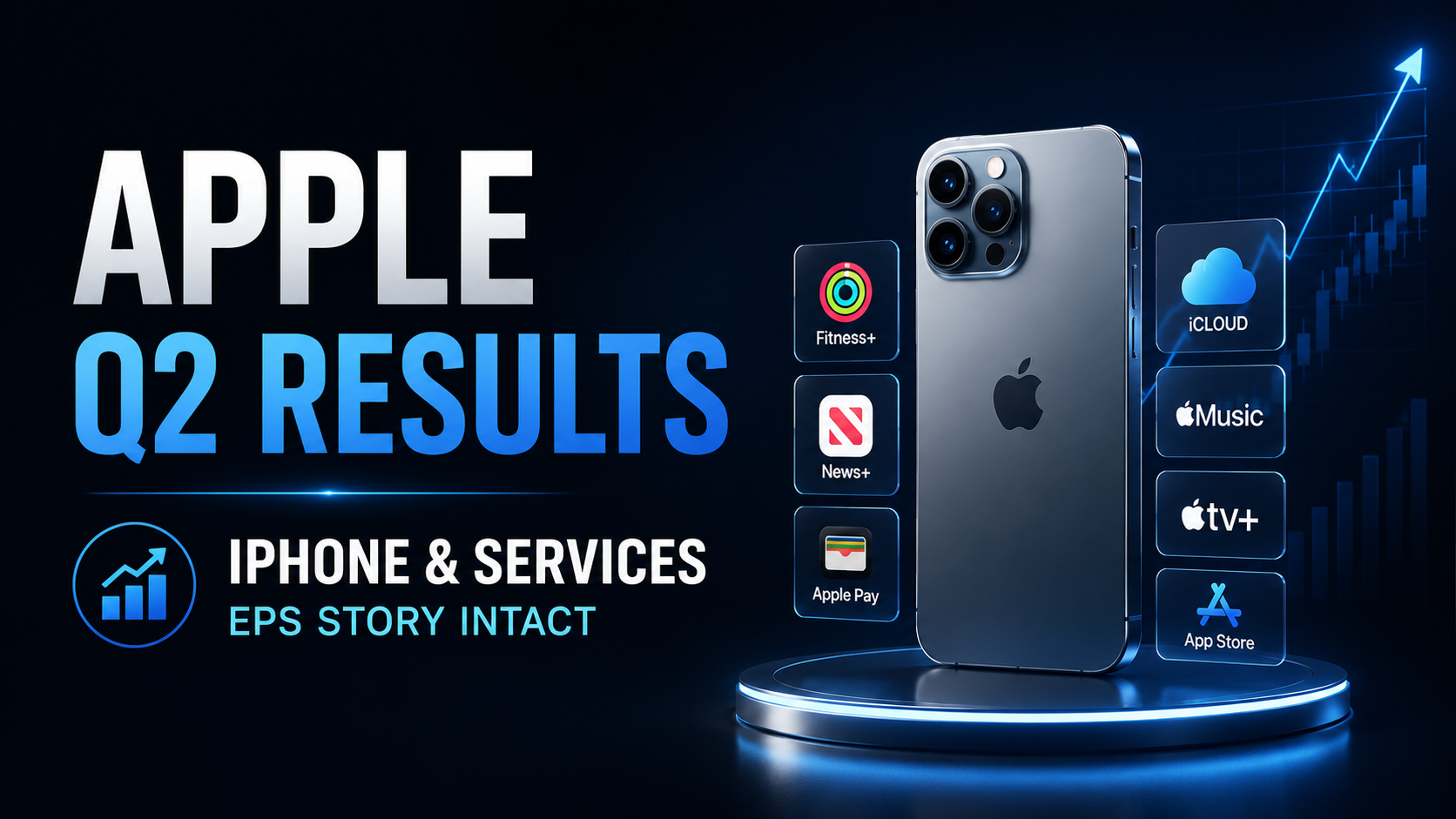
Apple 2026年度第2四半期決算レビュー:iPhoneの収益とサービスの成長がEPSのストーリーを維持
Appleは2026年4月30日、2026年3月28日に終了した四半期を対象とする2026年度第2四半期決算を発表しました。売上高は前年同期比17%増の1,112億ドルに達し、希薄化後1株当たり利益(EPS)は22%増の2.01ドルとなりました。Appleによると、当四半期は会社全体の総売上高、iPhone売上高、およびEPSにおいて3月期としての過去最高記録を樹立し、サービス部門の売上高も過去最高を更新しました。
この結果は、単なるハードウェアサイクルの決算報告に留まりません。Appleの第2四半期実績は、iPhone需要、サービス部門の成長、そして株主還元プログラムが三位一体となり、同社の力強いEPS成長ストーリーを強固に支え続けていることを実証しました。Appleの決算発表、AAPLの業績、あるいは次の決算発表時期を追う投資家にとって、第2四半期後の最大の焦点は、市場がより強力なAIの進展や製品サイクルの起爆剤を待つ間、Appleがそのプレミアムなバリュエーションを維持し防衛できるかどうかにあります。
2026/07/09

MEXC オンチェーン日報:Robinhood Chainの日次DEX取引量が5億6,000万ドルを突破
Robinhood Chainのエコシステムは、1日の分散型取引所の取引量が5億6,000万ドルを超えたことで急拡大し、DeFiおよびクロスチェーンインフラの機関投資家の導入が加速しました。一方で、規制当局は暗号資産関連の法整備を進め、取引所のBTC/ETH準備高は数年ぶりの低水準に落ち込み、AIインフラへの投資は引き続き市場の主要なテーマとなっています。
2026/07/10

AI jailbreak新手法、攻撃文を推論として扱う脆弱性
研究者が、攻撃者の文章をAI自身の推論として扱わせる新たなjailbreak手法と安全対策の弱点を指摘しました。
2026/07/31


ホット
現在、市場で大きな注目を集めているトレンドの暗号資産
暗号資産価格
取引高が最も多い暗号資産