

Why Does a Blockchain Transaction Stay “Pending” for So Long?
BitcoinWorld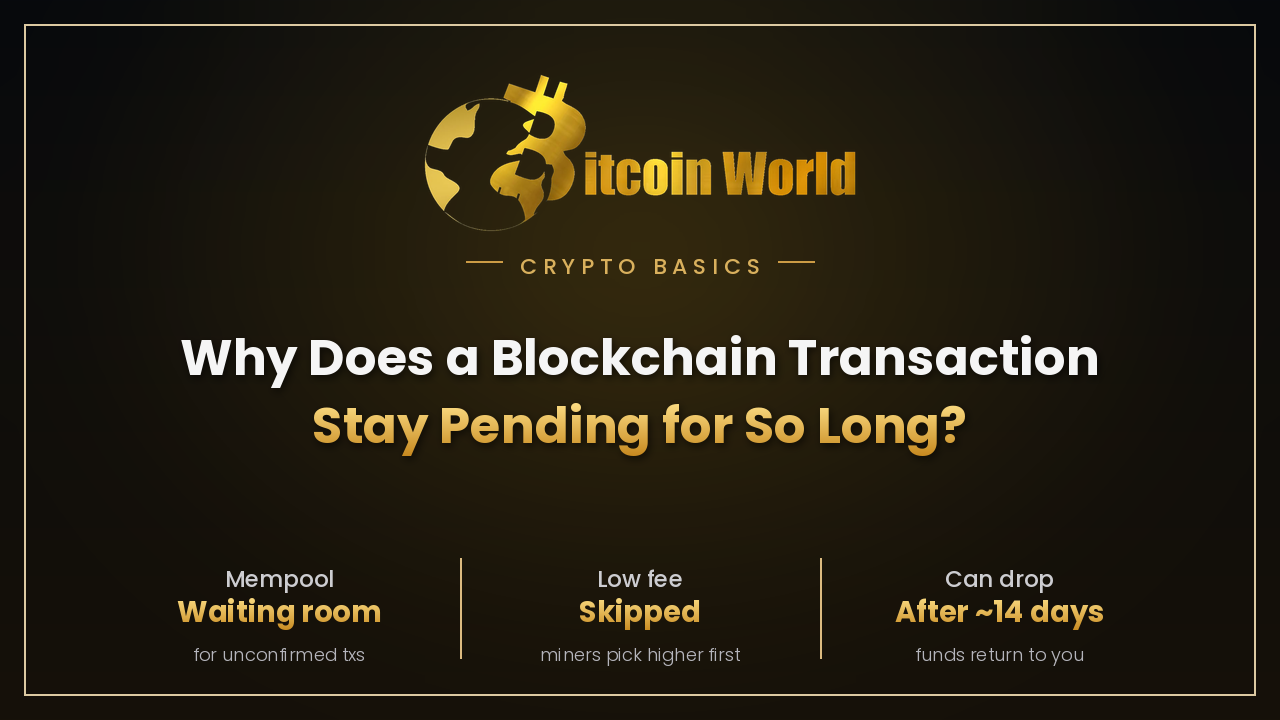
Why Does a Blockchain Transaction Stay “Pending” for So Long?
Why Does a Blockchain Transaction Stay “Pending” for So Long?
A blockchain transaction staying pending for so long is one of the most anxious experiences in crypto – you’ve sent the transfer, the funds have left your balance, and nothing is happening. Understanding what “pending” actually means and why it happens turns that anxiety into informed waiting. This article explains what the pending state is, where the transaction sits while waiting, the specific reasons transfers get stuck, when a pending transaction might be dropped entirely, and what Indian users can do.
Why Does a Blockchain Transaction Stay “Pending” for So Long?
A blockchain transaction stays pending because it has been broadcast to the network but hasn’t yet been included in a confirmed block. It’s queued and waiting, not lost.
- The mempool: Every unconfirmed transaction enters the memory pool (mempool) – a holding area maintained by network nodes.
- Miners choose the queue: Miners and validators select which pending transactions to process, almost always picking highest-fee ones first.
- Low fee = long wait: A below-market fee means your transfer sits at the back of the queue indefinitely.
- Funds are safe: A pending transaction is not lost – it’s simply waiting for its turn.
What Are the Specific Reasons a Transaction Gets Stuck?
Several distinct causes keep a transfer in the pending state longer than expected.
- Fee set too low: The most common cause – the gas or network fee is below what miners are currently accepting.
- Network congestion: Sudden spikes in activity flood the mempool, pushing out low-fee transfers.
- Nonce gap (Ethereum): A transaction with a skipped nonce can’t confirm until all prior nonces complete, freezing the entire queue.
- Zero-fee or dust transactions: Some wallets allow very low fees that virtually no miner will process.
Can a Pending Transaction Disappear From the Mempool?
Yes – transactions don’t stay in the mempool forever, and a stuck one can eventually be dropped.
- Mempool expiry: Most Bitcoin nodes drop unconfirmed transactions after about 14 days if they haven’t confirmed.
- Dropped ≠ confirmed: If dropped, the funds return to your available balance as if the send never happened.
- Not guaranteed to drop: Different nodes have different policies; some may hold transactions longer.
- Check your explorer: A TXID that disappears from a block explorer usually means it was dropped.
What Should Indian Users Do With a Long-Pending Transaction?
For users in India, a stuck transfer has a few practical paths forward.
- Check the TXID: Paste it into a block explorer to confirm it’s still pending and hasn’t been dropped.
- Use Replace-By-Fee (RBF) on Bitcoin: If enabled, replace it with a higher-fee version to jump the queue.
- Cancel on Ethereum: Submit a new transaction with the same nonce and higher gas to override the stuck one.
- Wait it out: If the fee is reasonable, most transactions confirm on their own once congestion eases.
Frequently Asked Questions
Is my crypto lost if a blockchain transaction stays pending for a long time?
No – a transaction staying pending means it’s waiting in the mempool, not that the funds are gone. If the transfer never confirms and eventually gets dropped from the mempool, your balance returns to normal as if the send didn’t happen. Your crypto is only at risk if the transaction confirms and was sent incorrectly.
How long can a transaction stay pending before it’s dropped?
On Bitcoin, most nodes drop unconfirmed transactions after roughly 14 days of not confirming, though the exact timing varies by node. On Ethereum, stuck transactions typically require a manual override with a cancel transaction on the same nonce. A dropped transaction returns funds to your wallet; it doesn’t confirm and send the funds away.
How can you speed up a pending crypto transaction in India?
The most effective option is fee bumping – on Bitcoin via Replace-By-Fee to rebroadcast with a higher fee, or on Ethereum by submitting a cancel transaction with the same nonce and higher gas. If your wallet doesn’t support these, waiting for congestion to ease often works too. Choosing the right fee when sending in the first place avoids the problem entirely.
Conclusion: Why the Mempool Is a Queue, Not a Black Hole
Understanding why a blockchain transaction stays pending for so long removes the most frightening part – the funds aren’t gone, they’re simply waiting in the mempool’s priority queue. For Indian users, the routine is clear: check the TXID, replace the fee if possible, and wait with the knowledge that a dropped transaction returns to your wallet cleanly. Next time, set a sensible fee and the queue will take care of itself.
This post Why Does a Blockchain Transaction Stay “Pending” for So Long? first appeared on BitcoinWorld.


추천 콘텐츠
In 3-6 Days, Bitcoin Enters Its Last Dip Before the Next Leg Higher – Watch This Level

200+ Firms Urge Senate to Enact CLARITY Act for Crypto Regulation

Gold continues to hit new highs. How to invest in gold in the crypto market?



