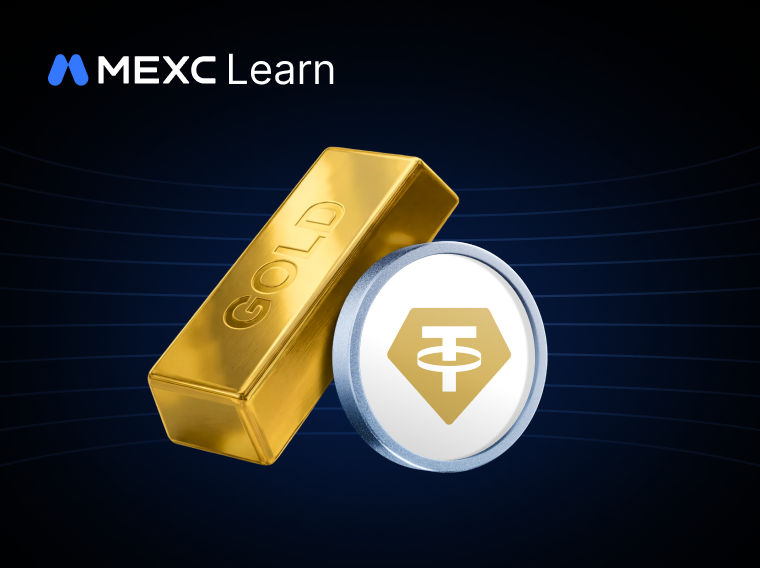
Gold-Backed Crypto: How Tokenized Gold Works in 2026
Gold-backed crypto is one of the clearest examples of real-world asset tokenization. The idea is simple: a digital token represents a claim or exposure linked to physical gold held by an issuer or custodian. For crypto users, it offers a way to access gold-like exposure without storing bullion, opening a brokerage account, or trading traditional futures.
The concept sounds conservative, but it is not risk-free. Gold-backed crypto can reduce some risks associated with unbacked speculative tokens, yet it adds risks around issuers, vaults, redemption rules, liquidity, and regulation. The best way to understand it is as tokenized gold exposure, not as a guaranteed safe asset.
What Is Gold-Backed Crypto?
Gold-backed crypto refers to digital tokens designed to track or represent physical gold. In many cases, one token represents one fine troy ounce of gold, although the exact structure depends on the issuer.
Examples include PAXG and XAUT. Paxos says each PAXG token represents one fine troy ounce of a London Good Delivery gold bar. Tether Gold says each XAU₮ represents one fine troy ounce of gold on a London Good Delivery bar. Those structures make gold-backed crypto different from ordinary cryptocurrencies that are valued mainly by supply mechanics, network adoption, speculation, or protocol revenue.
| Feature | Gold-Backed Crypto |
|---|---|
| Main asset anchor | Physical gold |
| Common token model | One token linked to one fine troy ounce of gold |
| Typical use case | Gold exposure inside crypto markets |
| Main examples | PAXG, XAUT |
| Key benefit | Easier digital access to gold exposure |
| Key risk | Issuer, custody, liquidity, redemption, and gold price risk |
How Does Tokenized Gold Work?
Tokenized gold usually works through a three-part structure.
First, an issuer creates a digital token. Second, physical gold is held with a custodian or vault provider. Third, the token trades on supported blockchains or exchanges, giving users digital access to gold exposure.
The core promise is that the token is backed by or linked to real gold. But the details matter. Users should ask where the gold is stored, who controls it, how often reserves are reported, whether redemption is possible, what fees apply, and whether the token has enough liquidity on the trading venue they plan to use.
| Step | What Happens | What Users Should Check |
|---|---|---|
| Issuance | A company issues gold-linked tokens | Issuer reputation and legal terms |
| Custody | Gold is stored with vault or custody providers | Vault location, audits, and reporting |
| Trading | Tokens trade on exchanges or blockchains | Liquidity, spreads, and network support |
| Redemption | Some issuers allow physical redemption | Minimum size, fees, eligibility, and timing |
For MEXC users, gold-backed crypto can sit alongside broader crypto market tools and RWA education, especially for traders who want macro exposure without leaving digital-asset markets.
Why Do Traders Use Gold-Backed Crypto?
The main reason is access. Traditional gold products can be inconvenient depending on the user’s location, account setup, and trading needs. Physical gold requires storage and insurance. Gold ETFs require brokerage access. Futures require margin knowledge and can involve rollover complexity.
Gold-backed crypto offers a different route. It can allow users to move between stablecoins, crypto assets, and gold-linked exposure within the same digital-asset environment.
Common use cases include:
| Use Case | Why It Matters |
|---|---|
| Portfolio hedge | Gold may behave differently from high-beta crypto assets |
| Stablecoin rotation | Users can move from USDT or other assets into gold exposure |
| Macro trading | Traders can express views on dollar, inflation, rates, and risk sentiment |
| RWA exposure | Tokenized gold is one of the more intuitive real-world asset categories |
| Cross-market flexibility | Users can access gold-linked exposure without using traditional brokerage rails |
The appeal is not that gold-backed crypto will necessarily outperform Bitcoin or altcoins. Its appeal is that it gives crypto users a different kind of asset exposure.
Gold-Backed Crypto vs Physical Gold
Gold-backed crypto is not the same as holding a gold bar. That distinction matters.
Physical gold gives direct possession if the buyer stores it personally. But it also creates storage, security, authenticity, and resale challenges. Gold-backed crypto removes some of those frictions, but users rely on issuer terms and custody structures instead.
| Comparison | Physical Gold | Gold-Backed Crypto |
|---|---|---|
| Possession | Direct if self-custodied physically | Tokenized claim or exposure |
| Storage | User must arrange storage and security | Issuer/custodian handles storage |
| Trading speed | Slower and less convenient | Faster on supported venues |
| Minimum size | Can vary by product | Can be smaller depending on token and venue |
| Main risk | Storage, theft, resale, authenticity | Issuer, custody, liquidity, redemption, blockchain risk |
In practice, gold-backed crypto is more useful for market access than for replacing all forms of physical ownership.
Gold-Backed Crypto vs Gold ETF
Gold ETFs are familiar to traditional investors. They often have deep liquidity and fit easily into brokerage accounts. Gold-backed crypto serves a different audience: users who prefer crypto rails, stablecoin liquidity, and 24/7 market access.
| Comparison | Gold ETF | Gold-Backed Crypto |
|---|---|---|
| Access | Brokerage account | Crypto exchange or wallet |
| Trading hours | Usually market hours | Often 24/7, depending on venue |
| Settlement | Traditional finance rails | Blockchain and exchange infrastructure |
| User base | Traditional investors | Crypto users and RWA-focused traders |
| Key risk | Fund structure and brokerage dependence | Issuer, custody, liquidity, and token infrastructure |
Neither is automatically better. A gold ETF may suit a traditional portfolio. Gold-backed crypto may suit users who already operate in crypto markets and want gold exposure without leaving that environment.
Key Examples: PAXG and XAUT
PAXG and XAUT are two of the most recognized gold-backed crypto assets.
PAXG is issued by Paxos and is designed to represent one fine troy ounce of gold. XAUT is issued through the Tether Gold structure and is also designed around one fine troy ounce of gold exposure. Both are tied to gold, but users compare them by issuer trust, reserve disclosure, redemption rules, liquidity, and exchange support.
| Token | Issuer Structure | Core Idea | Main User Question |
|---|---|---|---|
| PAXG | Paxos | Tokenized ownership linked to gold bars | How strong are the reserves, custody, and liquidity? |
| XAUT | Tether Gold / TG Commodities | Gold-linked token issued by Tether-related structure | How transparent are reserves and redemption rules? |
For both assets, the key driver is still gold. If gold falls, gold-backed crypto can fall. If gold rises, gold-backed crypto may benefit, subject to liquidity and market conditions.
What Are the Main Risks?
Gold-backed crypto has a cleaner value anchor than many speculative tokens, but it is not immune to losses.
| Risk | What It Means |
|---|---|
| Gold price risk | If gold declines, the token may decline |
| Issuer risk | Users rely on the company issuing and managing the token |
| Custody risk | Gold must be stored, safeguarded, and accounted for correctly |
| Redemption friction | Physical redemption may require large minimums, fees, and eligibility checks |
| Liquidity risk | Thin order books can create slippage and temporary price gaps |
| Blockchain risk | Transfers depend on supported networks, wallets, and smart-contract infrastructure |
| Regulatory risk | Rules for commodity-backed tokens may change across jurisdictions |
The common mistake is assuming that “backed by gold” means “safe like cash.” It does not. Gold itself moves, and tokenized structures add operational layers.
How to Evaluate a Gold-Backed Crypto Token
Before using any gold-backed crypto, traders should check five areas.
| Checklist | Why It Matters |
|---|---|
| Reserve disclosure | Shows whether backing is visible and regularly reported |
| Issuer terms | Defines user rights, restrictions, and redemption rules |
| Trading liquidity | Determines spreads, slippage, and exit quality |
| Token network | Affects transfer fees, wallet support, and settlement risk |
| Price vs spot gold | Reveals whether the token trades near, above, or below gold value |
A good gold-backed crypto product should be understandable. If a user cannot find basic details about backing, custody, redemption, fees, or market liquidity, that is a warning sign.
Is Gold-Backed Crypto a Good Fit in 2026?
Gold-backed crypto may remain relevant in 2026 because it connects two themes: macro uncertainty and real-world asset tokenization. Gold continues to attract attention when investors worry about inflation, rates, currency weakness, or geopolitical risk. At the same time, crypto markets are increasingly interested in tokenized versions of traditional assets.
That does not make every gold-backed token attractive. The better reading is that tokenized gold has a clear use case, but users should be selective. Strong backing, clear disclosures, reliable venues, and sufficient liquidity matter more than marketing language.
Conclusion
Gold-backed crypto is best understood as a digital access layer for gold exposure. It can be useful for crypto users who want a tokenized asset linked to physical gold, especially when they already trade with stablecoins or follow macro-driven markets.
Its advantage is convenience. Its weakness is dependency: users depend on issuers, custodians, redemption rules, trading venues, and blockchain infrastructure. For MEXC users, gold-backed crypto belongs in the broader conversation around RWA, macro hedging, and diversified crypto market tools, but it should be evaluated with the same discipline as any other financial product.
FAQ
1. What is gold-backed crypto?
Gold-backed crypto is a digital token designed to represent or track physical gold. Many gold-backed tokens are structured around one token representing one fine troy ounce of gold, depending on the issuer.
2. Is gold-backed crypto the same as owning physical gold?
No. It provides tokenized gold exposure, but users still rely on issuer terms, custody arrangements, redemption rules, and trading venue liquidity.
3. What are examples of gold-backed crypto?
Two widely known examples are PAXG and XAUT. Both are designed to represent gold exposure, though they differ by issuer structure, transparency model, redemption rules, and liquidity.
4. Can gold-backed crypto lose value?
Yes. If the gold price falls, gold-backed crypto can fall. It can also face temporary premiums, discounts, spreads, or liquidity issues during market stress.
5. Who should consider gold-backed crypto?
It may suit crypto users who want gold exposure inside digital-asset markets, but it is not risk-free and should be compared with physical gold, gold ETFs, and futures.
Popular Articles
View More
Microsoft Stock Guide: Azure, Copilot, Cloud Growth and AI CapEx Explained
Microsoft stock trades as MSFT on the Nasdaq. Azure and Microsoft 365 generate most of its value, and Copilot is turning AI into paid revenue. In fiscal Q4 2026 revenue reached $90.0 billion, up 18%

Anthropic vs OpenAI IPO: What's Confirmed, What's Rumor, and Who Lists First
Two of the largest private companies in artificial intelligence entered the SEC's review queue within seven days of each other. Anthropic went first on June 1, 2026, and OpenAI confirmed its own
Apple Stock Guide: iPhone Sales, Services Revenue, Apple Intelligence and Margins Explained
Microsoft stock, traded as MSFT on the Nasdaq, is one of the world's largest software and cloud companies. Its Azure cloud platform and Microsoft 365 software drive most of its value, and its AI
Hot Crypto Updates
View More
What Is Concrete (CT)? An In-Depth Look at the Newly Launched DeFi Project
DeFi is one of the most difficult sectors to break into. Established protocols such as Aave and Morpho already have deep liquidity and large user bases. Yet a differentiated product can still attract

Applied Digital (APLD) Earnings Preview: Will 250MW of Live AI Capacity Fuel the Next Growth Surge?
Overview Applied Digital (Nasdaq: APLD) said on October 2 that the second phase of Building 2 at its Polaris Forge 1 campus in Ellendale, North Dakota had reached Ready for Service, adding three 25

What Is Concrete (CT)? An In-Depth Look at the Newly Launched DeFi Project
DeFi is one of the most difficult sectors to break into. Established protocols such as Aave and Morpho already have deep liquidity and large user bases. Yet a differentiated product can still attract

Trending News
View More
Can Bitcoin Return to $100,000 by the End of 2026?
Bitcoin needs a gain of about 22% to return to $100,000 by year-end. ETF flows, inflation and Fed policy will determine whether it can get there.
Do You Have to Pay Tax on Crypto Trading in South Korea?
Crypto trading profits may become taxable in South Korea from 2027. Learn who may pay the 22% tax and why another delay remains possible.


Related Articles
View More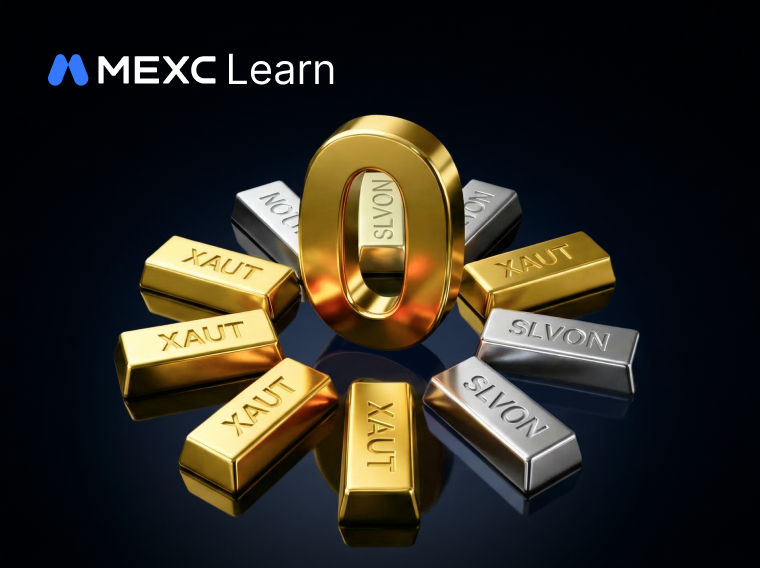
Gold Price Prediction H2 2026: Institutional Target Revisions vs. The $4,100 Structural Floor
The global precious metals market completed a massive, high-leverage clearing cycle in the first half of 2026. After reaching an unprecedented record-breaking all-time high of $5,594.82 on January 29,
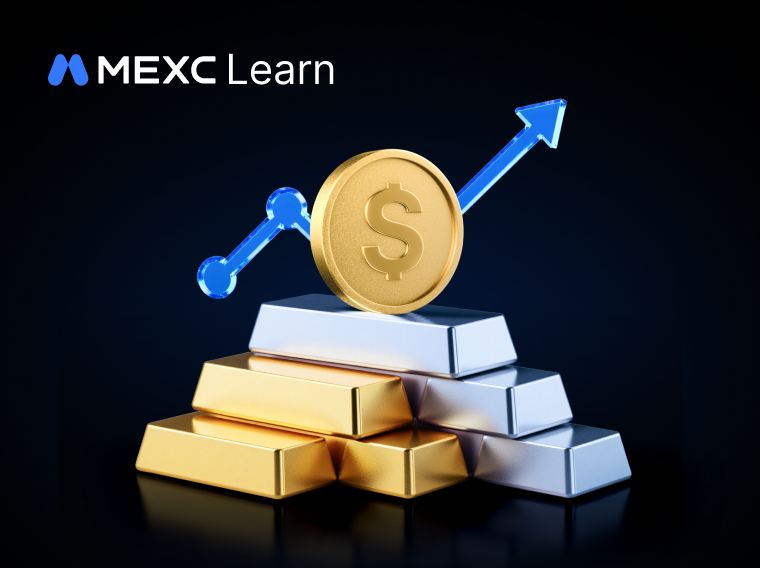
Gold Sits on the $4,000 Threshold: Deconstructing the World Gold Council’s H2 2026 Valuation Moat
The global gold market is currently executing one of its most aggressive technical adjustments in modern financial history. After printing an unprecedented, record-breaking all-time high of $5,594.82
How CPI Data Impacts Gold Prices and XAU Trading
Why CPI Matters for GoldCPI data is one of the most important macro indicators for gold traders. When CPI rises faster than expected, markets usually reassess inflation pressure, Federal Reserve polic