NVIDIA Customer Concentration Explained: Hyperscalers, AI Clouds and the Risk Behind Data Center Growth
Summary
NVIDIA's growth story is usually told through GPUs, Blackwell and AI.
Its customer structure receives less attention.
That structure deserves a closer look.
In fiscal 2026, NVIDIA disclosed that two direct customers represented 22% and 14% of total annual revenue. In the first quarter of fiscal 2027, concentration rose further: three direct customers represented 21%, 17% and 16% of revenue, respectively. Together, those three direct customers accounted for more than half of quarterly revenue. NVIDIA did not identify them by name in the filing.
That does not automatically mean NVIDIA depends on only three end users.
A direct customer can be an ODM, OEM, distributor, cloud service provider, AI model maker or systems integrator buying equipment that ultimately goes elsewhere. NVIDIA explicitly distinguishes direct customers from indirect/end customers.
Understanding that distinction is crucial before treating customer concentration as either harmless or catastrophic.
The Headline Number Is Striking
In NVIDIA's first-quarter fiscal 2027 filing:
- Direct Customer 1: 21%
- Direct Customer 2: 17%
- Direct Customer 3: 16%
That is a very concentrated purchasing structure.
But those percentages tell us who NVIDIA invoices directly, not necessarily which final organization consumes every GPU or system.
Direct Customer Does Not Always Mean End Customer
A hyperscaler can buy NVIDIA products directly.
But it can also procure systems through an ODM or systems integrator.
Likewise, an AI laboratory can rent NVIDIA-based compute from a cloud provider rather than purchasing GPUs directly from NVIDIA.
That means one large direct customer's invoice can ultimately represent demand from multiple end users.
NVIDIA specifically says indirect customers include cloud service providers, AI Clouds, AI model makers, enterprises and public-sector organizations.
This Is Why Guessing the Customer Names Is Risky
Investors frequently try to map “Customer A” or “Customer B” to Microsoft, Amazon, Meta, Google or another major buyer.
The SEC filing does not provide those names.
Unless NVIDIA or the counterparty confirms the relationship, presenting a guessed identity as fact creates false precision.
The economically useful question is not necessarily:
Who is Customer A?
It is:
How diversified is the demand behind Customer A?
NVIDIA's New Reporting Helps Answer Part of That Question
Beginning in fiscal Q1 2027, NVIDIA introduced a new market-platform presentation.
Data Center was divided into:
Hyperscale
and
AI Clouds, Industrial & Enterprise (ACIE).
In Q1, Data Center revenue was $75.25 billion. Hyperscale contributed $37.87 billion, while AI Clouds, Industrial & Enterprise contributed $37.38 billion.
That is an important piece of context.
NVIDIA's Data Center business is not simply “four U.S. cloud companies buying GPUs.”
Hyperscalers Are Still Enormously Important
Nearly half of Q1 Data Center revenue came from the Hyperscale category.
NVIDIA defines this group as public clouds and the world's largest consumer-internet companies.
These customers have several advantages for NVIDIA:
- Large capital budgets;
- ability to deploy huge clusters;
- recurring infrastructure needs;
- strong demand from downstream AI users.
They can turn a new architecture into billions of dollars of revenue quickly.
The Same Scale Creates Risk
Large customers also have bargaining power.
If a handful of major buyers slow capital expenditure, extend server replacement cycles or shift workloads toward internal accelerators, NVIDIA can feel the effect quickly.
NVIDIA explicitly notes that some customers are developing their own ASICs and other workload-specific products.
This is why customer concentration is not merely an accounting footnote.
AI Clouds Are Changing the Mix
The other half of Q1 Data Center revenue came from NVIDIA's broader ACIE category.
That includes AI Clouds, industrial users and enterprises.
The growth of specialized AI infrastructure providers matters because it potentially broadens demand beyond the traditional cloud giants.
It also introduces another risk: some smaller infrastructure companies have less access to capital than hyperscalers.
Capital Availability Is Now Part of NVIDIA Demand Analysis
NVIDIA's own Q1 filing says the availability of data centers, energy and capital is crucial to AI infrastructure buildout.
The company warns that less-capitalized customers can face difficulty financing large projects, potentially delaying deployments or reducing their scale.
This creates an unusual dynamic.
NVIDIA can have enormous end-user AI demand while still seeing revenue delayed because customers cannot build the physical infrastructure fast enough.
One AI Lab Can Influence Revenue Without Buying Directly From NVIDIA
NVIDIA also disclosed that one AI research and deployment company contributed a meaningful amount of fiscal 2026 revenue by purchasing cloud services from NVIDIA's customers.
That is a useful example of why the demand chain is more complicated than the direct-customer table.
The real chain can look like:
AI lab demand
→ cloud capacity demand
→ hyperscaler/AI cloud capex
→ ODM/system orders
→ NVIDIA revenue
What Would Healthy Diversification Look Like?
It does not necessarily require the largest customers to shrink.
A stronger structure could come from faster growth elsewhere:
- More sovereign AI projects;
- enterprise AI factories;
- industrial computing;
- additional AI Clouds;
- inference demand from new model developers.
If these segments grow faster, NVIDIA can reduce dependence on any one buyer even while total hyperscaler revenue continues rising.
What Could Make Concentration Worse?
The opposite scenario would be:
- Fewer frontier labs drive most AI demand.
- Only a few hyperscalers can fund new clusters.
- Internal accelerators gain share.
- Smaller AI Clouds struggle to finance infrastructure.
- GPU purchases become increasingly concentrated in a few procurement channels.
That would make NVIDIA's growth more sensitive to the capital-spending decisions of a small group of organizations.
Why This Matters for NVDA and NVDAON
Customer concentration is not a separate token issue.
It is a NVIDIA equity issue.
If investors become more concerned about concentrated demand, the valuation of NVDA can change.
NVDAON then inherits that change because it is linked economically to NVDA.
Readers who need the product structure can use What Is NVDAON?.
For the broader connection between AI infrastructure spending and markets, MEXC has separately covered the capital-expenditure cycle in AI Stocks, Data Centers and Crypto: Why the AI Trade Is Becoming a Capital Expenditure Cycle.
FAQ
How concentrated is NVIDIA's revenue?
In fiscal Q1 2027, three direct customers accounted for 21%, 17% and 16% of total revenue.
Who are those three customers?
NVIDIA did not identify them by name in the filing.
Does a direct customer equal the final user of NVIDIA GPUs?
Not necessarily.
How much Q1 Data Center revenue came from hyperscalers?
NVIDIA reported $37.87 billion of Hyperscale revenue out of $75.25 billion of Data Center revenue.
Why can customer concentration be positive?
Large customers can deploy infrastructure quickly and support very large orders.
Why is it a risk?
A spending slowdown or shift toward competing/internal chips at a few major buyers can have an outsized effect.
Risk Disclaimer
Customer concentration is only one factor affecting NVIDIA. High revenue concentration does not by itself predict future performance, and end-customer exposure can differ materially from direct-customer billing relationships.
Popular Articles
View More
Tesla Stock Guide: Deliveries, Margins, Robotaxi and EV Demand Explained
Tesla trades as TSLA on the Nasdaq. Most of its revenue comes from selling electric vehicles, so quarterly deliveries and automotive gross margin drive its results — Tesla delivered 480,126 vehicles

What Is MEMEROBINHOOD? When Robinhood Chain Meets Meme Culture
Overview A Meme Coin (MEMEROBINHOOD) is a meme coin on Robinhood Chain, an Ethereum-compatible Layer 2 blockchain built for onchain financial infrastructure. The project takes a deliberately simple

SEC Blockchain Securities Rules Explained: Why Tokenized Stocks Could Change After a 50-Year Regulatory Update
The U.S. Securities and Exchange Commission is preparing to modernize one of the less visible but most important parts of America's securities infrastructure — and blockchain is now explicitly part

Hot Crypto Updates
View More
Bitwise NEAR ETF Launches in the U.S.: How Staking Could Differentiate NRR
Bitwise Asset Management has officially launched the Bitwise NEAR ETF (NRR), the first U.S. spot-traded product providing direct exposure to NEAR, bringing the NEAR Protocol token into an investment

Masonglory Limited (MSGY) Technical Analysis: Support, Resistance and Price Outlook After a 309% Surge
Introduction Masonglory Limited (NASDAQ: MSGY) went from a sleepy $1.97 to a regular session close of $8.07, a gain of $6.10 or 309.64%, in a single day. Traders love a move like that. Chart readers

MEXC Earn Plus: How It Works, Interest Calculation, Liquidity, and Risks
USDT balances are not always deployed immediately. Some traders hold USDT while waiting for a more attractive entry price, preparing margin for future positions, or keeping part of their portfolio in

MEXC Bolivia Bitcoin Pizza Day Concludes Successfully: First P2P Offline Event Debuts, Merchant Participation Hits New Quarterly High in LATAM
On May 22, 2026, as an important part of Bolivia Blockchain Week 2026, MEXC held its first P2P offline event in Latin America in Santa Cruz, Bolivia. The private gathering, held at the Santa Cruz
Trending News
View More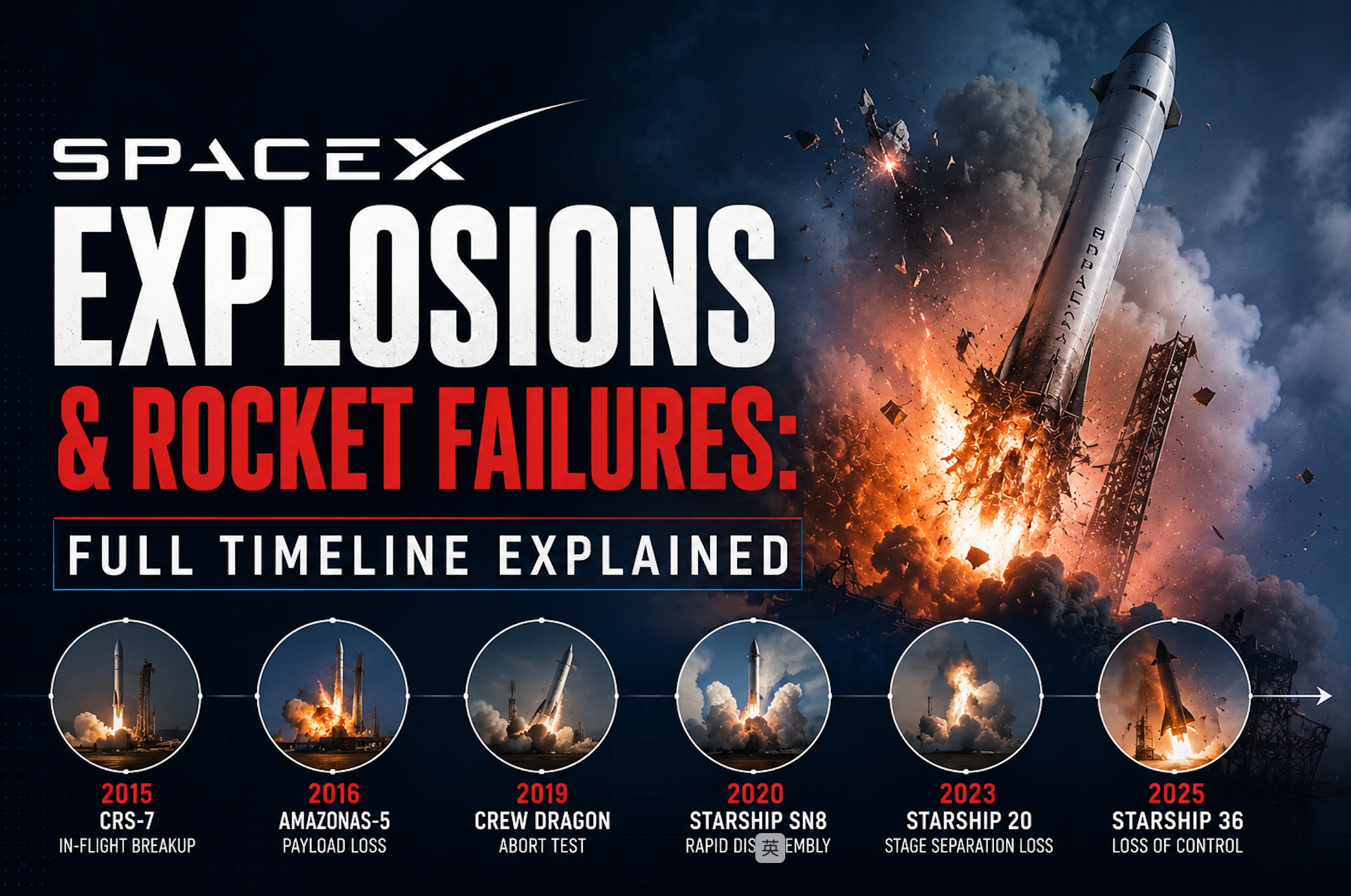
SpaceX Explosions and Rocket Failures: Full Timeline Explained
SpaceX rocket explosions attract huge search interest, but not every explosion means the same thing. Some were mission failures, some were test failures, and some were expected-risk events inside Spac

CRCL Selloff Explained: Russell Growth Removal and Open USD Pressure Reprice Circle’s Stablecoin Story
Circle Internet Group ($CRCL) came under pressure after being removed from several Russell Growth-related benchmarks during the latest Russell reconstitution. The index move matters because many passi


Related Articles
View More
Meta Earnings Date: When Does Meta Report Earnings? Time, Results History and Stock Reaction
Meta Platforms will report its Q3 2026 results (July–September 2026) after the US market closes on Wednesday, October 21, 2026. The earnings call starts at 4:30 p.m. ET (1:30 p.m. PT), which is 4:30 a

Tesla Earnings Date: When Does Tesla Report Earnings? Time, Results History and Stock Reaction
Tesla will report its Q3 2026 results (July–September 2026) after the US market closes on Wednesday, October 21, 2026. The earnings webcast starts at 5:30 p.m. ET (4:30 p.m. CT), which is 5:30 a.m. Be

Nvidia (NVDA) and AMD After TSMC's Q3 2026 Earnings: What the 2nm Ramp and HPC Surge Mean for Both Stocks
TSMC beat on Q3 2026 revenue, profit and Q4 guidance, but the read-through for GPU stocks is in the mix: 2nm at 8% of revenue confirms AMD's MI450 ramp, HPC up 22% confirms Nvidia's demand, and CoWoS