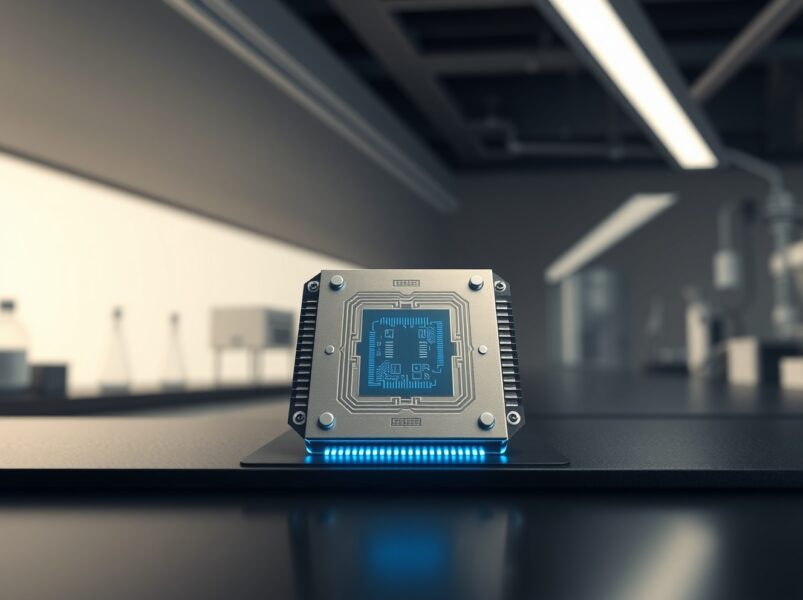
TLDR China instructs major firms to cancel orders for Nvidia’s RTX Pro 6000D chip. Nvidia shares drop 1.5% after China’s ban on key AI hardware. China accelerates development of domestic AI chips, reducing U.S. tech reliance. Crypto and AI sectors may seek alternatives due to limited Nvidia access in China. China has taken a bold [...] The post China Bans Nvidia’s RTX Pro 6000D Chip Amid AI Hardware Push appeared first on CoinCentral.TLDR China instructs major firms to cancel orders for Nvidia’s RTX Pro 6000D chip. Nvidia shares drop 1.5% after China’s ban on key AI hardware. China accelerates development of domestic AI chips, reducing U.S. tech reliance. Crypto and AI sectors may seek alternatives due to limited Nvidia access in China. China has taken a bold [...] The post China Bans Nvidia’s RTX Pro 6000D Chip Amid AI Hardware Push appeared first on CoinCentral.

China Bans Nvidia’s RTX Pro 6000D Chip Amid AI Hardware Push

2025/09/18 01:09

TLDR

  • China instructs major firms to cancel orders for Nvidia’s RTX Pro 6000D chip.
  • Nvidia shares drop 1.5% after China’s ban on key AI hardware.
  • China accelerates development of domestic AI chips, reducing U.S. tech reliance.
  • Crypto and AI sectors may seek alternatives due to limited Nvidia access in China.

China has taken a bold step by instructing major companies to stop purchasing Nvidia’s RTX Pro 6000D chip. This move is part of the country’s broader effort to reduce reliance on U.S.-made AI hardware. The ban comes after the U.S. imposed restrictive export rules on advanced AI chips. The decision has led to concerns over Nvidia’s market share, particularly in one of its largest markets.

The Ban on Nvidia’s RTX Pro 6000D

China’s Cyberspace Administration (CAC) has ordered major firms like Alibaba and ByteDance to cancel orders for Nvidia’s RTX Pro 6000D chip. The ban is part of China’s ongoing effort to cut its dependency on U.S. technology, especially in the AI sector. The RTX Pro 6000D had been specifically tailored for China to meet some U.S. export requirements, but the country now sees even these “compliant” chips as unacceptable.

The CAC’s directive is part of a broader trend in which China has made clear its intentions to reduce reliance on U.S. technology in critical areas like artificial intelligence. The latest decision marks an intensification of efforts to push domestic solutions and boost local chip production.

Nvidia’s Market Response

Following the news of the ban, Nvidia’s stock saw a drop of approximately 1.5% in premarket trading. Investors are concerned that reduced demand in China, a key market, could negatively impact Nvidia’s business. China has long been an important market for high-end GPUs, which are used in AI research, gaming, and crypto mining.

The company has faced several hurdles in recent months. In August, Chinese authorities urged firms to avoid Nvidia’s H20 chip over concerns about security and international export control rules. These ongoing regulatory issues could further affect Nvidia’s position in China.

The Push for Domestic AI Hardware

China has already started shifting towards domestic chip solutions. Companies like Alibaba and Baidu are increasing their reliance on locally produced AI chips as part of China’s broader goal to strengthen its semiconductor industry. China has been heavily investing in AI and chip-making technology, aiming to reduce its dependence on foreign suppliers.

This shift is also evident in the growing interest in Chinese-made GPUs. Firms such as Huawei, Baidu, and Cambricon are producing chips that compete with foreign counterparts like Nvidia’s. The emphasis on local technology is a direct response to the trade tensions and export restrictions placed by the U.S. on advanced technologies.

Impact on AI and Cryptocurrency Sectors

The ban on Nvidia’s RTX Pro 6000D chip could have a ripple effect on the AI and cryptocurrency industries. High-performance GPUs are essential for AI training, blockchain operations, and crypto mining. With China’s move, these industries may seek alternatives from local suppliers or even shift operations outside the country.

The cryptocurrency sector, in particular, relies heavily on GPUs for tasks like proof-of-work mining and zero-knowledge (ZK) proof generation. If access to Nvidia hardware becomes more restricted in China, it could prompt a shift towards local GPU makers or lead to the relocation of mining and node operations.

Moreover, the development of domestic AI chips in China is likely to increase competition in the global AI chip market. As local firms improve their chip offerings, there could be a shift in investment towards these companies. This competition may also spur innovation in both the AI and blockchain industries, especially in areas reliant on high-performance computing.

In summary, the ban on Nvidia’s RTX Pro 6000D chip reflects China’s ongoing push to strengthen its own semiconductor industry. The decision has significant implications for Nvidia and the global AI and crypto industries, which could face new challenges as they adapt to a more fragmented supply chain.

The post China Bans Nvidia’s RTX Pro 6000D Chip Amid AI Hardware Push appeared first on CoinCentral.

Disclaimer: The articles reposted on this site are sourced from public platforms and are provided for informational purposes only. They do not necessarily reflect the views of MEXC. All rights remain with the original authors. If you believe any content infringes on third-party rights, please contact service@support.mexc.com for removal. MEXC makes no guarantees regarding the accuracy, completeness, or timeliness of the content and is not responsible for any actions taken based on the information provided. The content does not constitute financial, legal, or other professional advice, nor should it be considered a recommendation or endorsement by MEXC.

You May Also Like

Soluna Holdings Announces $32 Million Equity Offering

Soluna Holdings Announces $32 Million Equity Offering

The post Soluna Holdings Announces $32 Million Equity Offering appeared on BitcoinEthereumNews.com. Key Points: Soluna Holdings initiates $32 million offering for Bitcoin and AI projects. Funds targeted at expanding Bitcoin mining infrastructure. Soluna positions itself at the intersection of renewable energy and computing power. Soluna Holdings announced a $32 million registered direct offering, involving the issuance of 18,079,144 shares and Series C warrants at $1.77 each, as per Nasdaq regulations. This funding supports Bitcoin mining and AI infrastructure, potentially impacting related markets by expanding Soluna’s renewable energy-driven computing capacity. Equity Offering Fuels Bitcoin and AI Growth Soluna Holdings has entered into definitive agreements to issue 18,079,144 shares and Series C warrants at $1.77 per share. The $32 million raised will be directed at enhancing Bitcoin mining capabilities and advancing artificial intelligence initiatives, emphasizing Soluna’s strategic positioning in green energy sectors. “We strategically co-locate our data centers with renewable power sources to support Bitcoin mining, generative AI, and other compute-intensive applications.” – Soluna Press Release Bitcoin Market Faces Volatility Amid Funding News Did you know? Soluna’s funding strategy mirrors trends seen in other data-center companies supporting cryptos and AI, highlighting a shift towards sustainable tech infrastructure. Bitcoin (BTC) currently trades at $89,257.47 with a market cap of approximately $1.78 trillion. Recent declines include a -2.79% drop over the past 24 hours, according to CoinMarketCap. Bitcoin(BTC), daily chart, screenshot on CoinMarketCap at 00:01 UTC on December 7, 2025. Source: CoinMarketCap Insights from the Coincu research team suggest that Soluna’s strategy may catalyze further investments in technology that thrives on renewable energy, reinforcing its practical application in cryptocurrency and AI sectors. DISCLAIMER: The information on this website is provided as general market commentary and does not constitute investment advice. We encourage you to do your own research before investing. Source: https://coincu.com/bitcoin/soluna-holdings-raises-32-million/
Share
BitcoinEthereumNews2025/12/07 08:08
The Psychology Behind Why People Stay, Leave, Or Tune Out At Work

The Psychology Behind Why People Stay, Leave, Or Tune Out At Work

The post The Psychology Behind Why People Stay, Leave, Or Tune Out At Work appeared on BitcoinEthereumNews.com. The Psychology Behind Why People Stay, Leave, Or Tune Out At Work getty Leaders spend a lot of time wondering why some employees stay loyal, why others leave quickly, and why so many slip into disengagement long before they walk out the door. People often assume the main reason employees leave is pay or promotion. Those things matter, but they only scratch the surface. The bigger explanation is based in psychology. Employees make decisions based on how they feel, what they fear, what they assume, and whether their daily experiences reinforce a sense of meaning and connection. That is the part leaders overlook. The clues are always there, but they are often hidden in everyday interactions that seem small and routine. What Does The Psychology Of Daily Work Reveal About Why People Stay? getty What Does The Psychology Of Daily Work Reveal About Why People Stay? People stay in workplaces where they feel understood. Any organization can offer flexibility or better benefits, but those are not what keep people committed long term. Employees stay when they believe their voice matters, when support feels steady instead of controlling, and when their manager shows genuine interest in how they experience the workday. Microsoft’s Satya Nadella has talked about this often. He highlights how people perform at a higher level when leaders approach conversations with a learning mindset instead of an answer mindset. That shift changes the tone of the relationship. When employees sense curiosity from leaders, it lowers defensiveness, builds trust, and strengthens commitment. Curiosity also signals interest, and interest signals value. When people feel valued, they stay. When they do not, they begin to explore other options. This is why the tone of daily interactions matters so much. A single moment where someone feels dismissed can outweigh months of positive intentions.…
Share
BitcoinEthereumNews2025/12/07 07:45