South Korea’s Crypto Industry Warns AML Proposal Risks Overreach
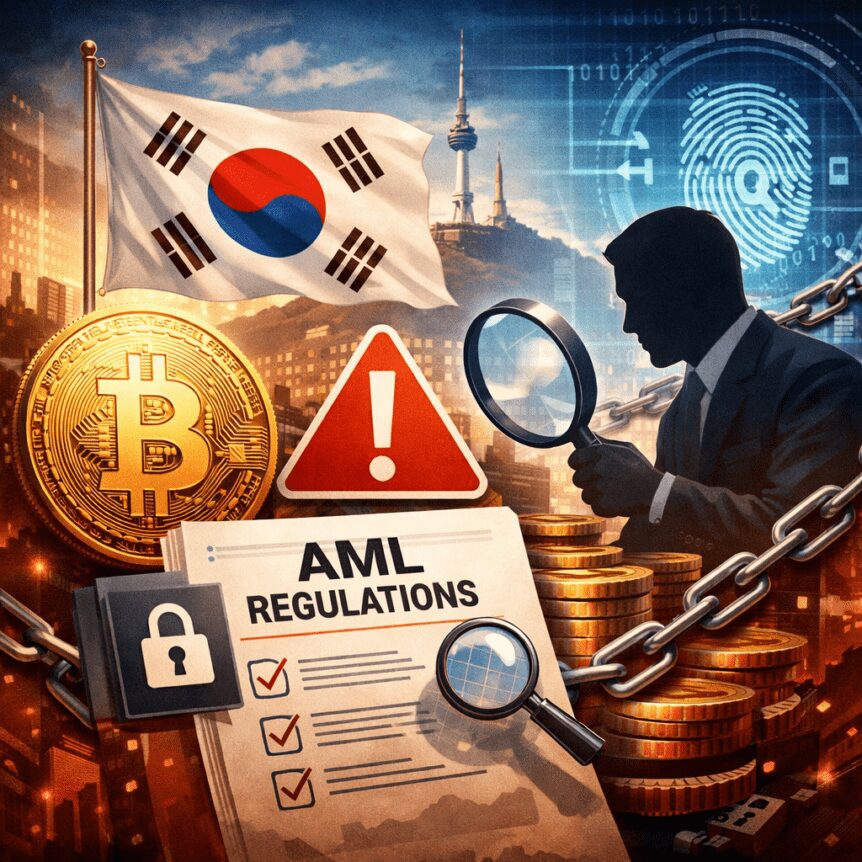
South Korea’s crypto sector is bracing for tighter AML supervision, as the Financial Services Commission (FSC) and the Financial Intelligence Unit (FIU) circulate amendments that would compel domestic virtual asset service providers (VASPs) to classify overseas-linked transfers of 10 million won (about $6,800) or more as suspicious transactions, regardless of perceived risk. Industry group Digital Asset eXchange Alliance (DAXA) argues the changes could overwhelm compliance systems and flood regulators with reports, highlighting a clash between ambition for stronger oversight and real-world operational hurdles.
According to Yonhap News and industry sources, DAXA—representing 27 registered VASPs, including Korea’s five largest exchanges Upbit, Bithumb, Coinone, Korbit and Gopax—submitted comments on the proposed amendments to the Enforcement Decree of the Specific Financial Information Act and related supervisory rules. The group warned that the proposal could drive an exponential rise in suspicious activity reports (SARs) across the country’s top platforms, complicating day-to-day compliance while offering little clarity on how lower-tier rules should translate the underlying law into practice.
Key takeaways
- The proposed rule would require reporting all overseas-linked VASP transfers of 10 million won or more as suspicious, regardless of risk assessment, potentially amplifying SARs dramatically.
- DAXA estimates reporting could surge from roughly 63,000 cases last year to more than 5.4 million, an 85-fold increase that regulators acknowledge would strain compliance workflows.
- The public consultation runs through May 11, with finalization expected in July after regulatory and legal review.
- Industry pushback centers on the practicality of verifying customer information and the risk of overreporting, with exchanges warning of unclear obligations beyond the letter of the law.
- Separately, exchanges are navigating ongoing AML sanctions in court, with several wins and appeals shaping how enforcement will unfold in the months ahead.
South Korea tightens AML rules: what’s changing and who’s affected
The FSC and FIU proposed amendments in late March that would redefine what constitutes a reportable event in the realm of cross-border crypto transfers. Under the current approach, domestic VASPs would need to escalate certain overseas transfers into the regulatory radar by marking them as suspicious transactions when they meet the 10 million won threshold, regardless of any risk indicators. The changes would apply to transactions between domestic VASPs and overseas counterparts, expanding the scope of SARs to cover a broader spectrum of international activity.
Supporters of stronger AML rules argue that a higher standard of scrutiny is essential as the crypto market becomes increasingly global and opaque. However, DAXA’s critique centers on the sheer volume and ambiguity of the mandated reporting. By presenting every overseas-linked transfer of this size as suspicious, the rules could force exchanges to process a deluge of SARs that may be counterproductive or difficult to adjudicate efficiently. The alliance stressed that lower-tier guidance accompanying the decree does not clearly set out practical obligations beyond the statute itself.
Industry pushback and operational concerns
DAXA’s comments underline a broader concern within Korea’s regulated crypto market: the need for rules that are both robust and workable. The alliance notes that the proposed framework could compel exchanges to rework customer due diligence (CDD) processes and transaction screening in ways that may not align with current capabilities. With 27 VASPs represented in the alliance, the group argues that a disproportionate compliance burden could disproportionately affect smaller players, even as the five largest platforms—Upbit, Bithumb, Coinone, Korbit and Gopax—bear the brunt of the operational load.
Beyond reporting thresholds, the industry also challenged themes around customer information verification. DAXA indicated that requiring additional verification steps—without clear statutory backing—adds obligations that could complicate compliance programs and blur lines between regulatory expectations and what the law actually requires. The result, according to the alliance, could be less about targeted risk mitigation and more about generating a higher count of regulatory flags without a commensurate increase in risk-control effectiveness.
Regulatory timeline and ongoing enforcement battles
The amendments were published for public notice on March 30, with a 6-week window running through May 11. If finalized in July, the changes would become part of South Korea’s ongoing AML regime for virtual assets, guiding how domestic VASPs report cross-border transfers and how regulators correlate these reports with other risk signals. The proposed changes come amid a broader tightening of crypto controls in Korea, including tightening withdrawal-delay exemptions as authorities pursue stricter oversight of the sector.
The row over AML measures comes as exchanges confront existing sanctions levied by the FIU, with several high-profile rulings shaping the enforcement landscape. In April, Upbit operator Dunamu secured a first-instance ruling that canceled a three-month partial suspension tied to alleged due diligence and transactions with unregistered foreign VASPs. The regulator appealed the decision, signaling that the clash between enforcement and due process will continue to unfold in the courts.
Meanwhile, Bithumb received temporary relief when the Seoul Administrative Court suspended enforcement of a six-month partial business suspension while the main case proceeds. Coinone also obtained a temporary reprieve from its sanctions, after challenging the FIU’s findings related to AML controls and customer verification. The cases center on payments with unregistered overseas VASPs and other alleged AML deficiencies, illustrating the regulatory knot that exchanges navigate as authorities seek to tighten supervision while courts assess due process and proportionality.
These legal challenges underscore a broader tension: regulators aim to deter illicit activity and improve global standards for crypto compliance, while exchanges argue that enforcement actions must be targeted, transparent, and consistent with the underlying law. The outcomes of these cases will influence how aggressively Korea systematizes cross-border reporting and how market participants calibrate their compliance programs in a rapidly evolving regulatory environment.
Implications for investors, users, and builders
From an investor and user perspective, the rules could mean heightened scrutiny around cross-border transfers and potentially longer wait times for certain types of cross-border activity as exchanges implement stricter screening. For builders and operators, the shift signals a need to invest in more advanced KYC/CDD tooling, better data interoperability with partner platforms, and clearer internal guidelines to translate regulatory requirements into day-to-day processes. The risk is a higher cost of compliance that may influence exchange pricing, service levels, or even market participation for smaller firms that struggle to scale with stricter reporting demands.
For regulators, the debate illustrates the balance between strong AML safeguards and practical enforceability. The 85-fold SAR projection cited by DAXA—while a stark figure—highlights the risk of overwhelming both the industry’s compliance teams and the FIU’s investigative capacity if thresholds are not carefully calibrated. Market observers will be watching how the public feedback translates into final wording, and whether prosecutors and regulators adjust thresholds, clarifications, or exemptions to prevent unintended operational bottlenecks.
As the consultation period closes and the legal cases against FIU sanctions proceed, readers should watch for updates on the finalized language of the amendments and any modifications that clarify responsibilities for verification, risk-based reporting, and cross-border data sharing. The next few months will reveal whether Korea stabilizes its AML framework with sharper definitions or navigates a period of regulatory refinement prompted by industry pushback and court verdicts.
Readers should stay tuned for further coverage as the FSC and FIU publish final guidelines, and as courts decide how aggressively sanctions will be enforced in light of new AML expectations. The outcome will set a critical tone for crypto compliance not only in Korea but potentially as a reference point for regional regulators debating similar thresholds and reporting standards.
This article was originally published as South Korea’s Crypto Industry Warns AML Proposal Risks Overreach on Crypto Breaking News – your trusted source for crypto news, Bitcoin news, and blockchain updates.


You May Also Like

Arbor Explains Why Summer Electricity Bills Spike and How Households Can Prepare

Battalion Oil (BATL) Plunges Over 50% Following Mass Insider Sales and Quarterly Losses