

👨🏿🚀TechCabal Daily – Zenith eyes Cameroon entry
Wazzup.
Naira Life Conference, Zikoko’s annual money-themed event, will gather over 2,000 attendees on August 22, in Lagos, for a day of unfiltered wealth strategies, personal financial management tips from speakers who live the talk, and high-level networking.
If you haven’t secured a ticket to Naira Life, there’s still a chance. Get 15% off when you click this link.
Let’s dive in.
Get smarter about Francophone Africa—the startups, tech policies, and institutions building the pipelines for ecosystem growth.
- Zenith Bank plans Cameroon entry
- Yoco has a new CEO
- Paymenow, PayCurve merge
- Airtel Zambia to open 45 stores
- World Wide Web 3
- Events
Banking
Nigerian lender Zenith Bank is coming to Central Africa
 Image Source: Tenor
Zenith Bank, Nigeria’s second-largest commercial lender by assets, has plans to expand into the Central African Economic and Monetary Community (CEMAC) region, with Cameroon set to become its headquarters.
Zenith Bank disclosed the move at the launch of its Côte d’Ivoire subsidiary last week. The Côte d’Ivoire entry marked its second expansion this year, entering Kenya in the same month, and kicked off its operations in the West African Economic and Monetary Union (WAEMU) region.
The choice of Cameroon is not arbitrary. In 2025, Cameroon accounted for 46.5% of bank deposits in the CEMAC zone and remained the largest contributor to the region’s banking profits. Setting up there gives Zenith access to the deepest financial activity in the region and a position from which the lender can easily expand into neighbouring Central African markets.
We still don’t know how Zenith plans to enter Cameroon: When banks want to enter a new territory, they either get a licence and establish a subsidiary or acquire an existing institution. While Zenith has not disclosed its entry plan into Cameroon, its Francophone Africa ambition was never hidden.
In October 2025, after it acquired an Ivorian licence, the bank said it was going to expand to eight other Francophone African countries. That licence could allow Zenith to expand into all eight member states of the WAEMU, including Benin, Mali, and Togo, after the region unified a banking framework in 2023.
Nigerian banks are becoming continental banks: Access Bank and United Bank for Africa (UBA), other Nigerian tier-1 lenders, are already active in Cameroon, and across several African markets, building networks that support trade.
For banks like Zenith, expansion has become a growth strategy and a competitive necessity to claw market share away from home.
3i Africa Summit 2026

Doing business in African markets? Fincra’s financial infrastructure gives your business reliable payment rails across 20+ markets. Start here.
companies
South African fintech Yoco names a new CEO
 Carsten Höltkemeyer. Image Source: LinkedIn
From June 1, Yoco will have a new person at the wheel.
Carsten Höltkemeyer will be stepping into a new role as the chief executive officer (CEO) of the South African digital payments startup that helps small businesses accept digital payments through card machines and software.
His appointment ends the nine-month period during which Yoco’s co-founders, Bradley Wattrus and Lungisa Matshoba, served as co-CEOs after founding executive Katlego Maphai exited the company in September 2025.
Who is Yoco’s new CEO? Höltkemeyer comes from the world of European banking and embedded finance companies. Before joining Yoco, he served as CEO of Solaris, the Berlin-based embedded finance company, and before that led auxmoney, one of Europe’s largest digital lending platforms. He also held executive roles at Barclays Bank and the Royal Bank of Scotland, with roots in audit at PwC, a pedigree that suggests Yoco is in capable hands.
What happens to Yoco now? Yoco was launched in 2013 to make card machines accessible to small businesses and has since expanded into online payments and financial software, now carrying a valuation of around $700 million.
Once Höltkemeyer settles in, Wattrus will move into a chief financial officer (CFO) role, while Matshoba will take up a chief product and technology officer (CPTO) position. The company says its next decade will focus heavily on AI and integrated software tools that help independent businesses compete more effectively.
What this means: Bringing in someone with deep experience in regulated finance, payments, and scaling infrastructure suggests that Yoco sees itself entering a growth phase. The startup now wants to operate like a serious financial institution.
PalmPay – Built for Ambition. Built for You.

PalmPay is Built for Ambition. Built for Nigeria. Built for You. With over 35 million users and a 99.9% transaction success rate, PalmPay is making digital banking safer, simpler, and more reliable for everyday Nigerians. Download the app to learn more.
companies
South African fintechs Paymenow and PayCurve merge
 Image Source: Tenor
Getting paid before payday sounds like a fix. For many workers, it quietly becomes a cycle they struggle to exit. Two South African fintechs are betting they can close that loop.
Paymenow and PayCurve have merged to create what they describe as a full‑stack financial wellness platform, combining earned wage access (EWA) with debt‑intervention tools under a single brand.
Paymenow, founded in 2019, lets employees tap a portion of their earned salaries ahead of payday, alongside savings and voucher products. PayCurve, launched in 2020, focuses on prevention. The fintech spots financially stressed workers early and routes them into debt‑repayment and coaching plans. The merged entity now says it reaches more than 750,000 employees across four markets, including South Africa, Namibia, Zambia, and Pakistan.
State of play: EWA has grown quickly as an alternative to payday loans, especially in markets where short‑term credit is both expensive and pervasive. Paymenow says that 94% of its users reported improved quality of life, while three in four said they no longer rely on payday lenders. Its new play is to swap high‑interest borrowing for controlled access to wages already earned, and claim a wellness dividend.
Between the lines: The model only works if early access does not harden into dependency or shrink take‑home pay at month‑end. This is where PayCurve’s data‑led monitoring and intervention becomes central. Employers matter here, too. They plug these tools straight into payroll, and they care because money stress shows up as missed work, higher staff turnover, and lower productivity.
Zoom out: The merger underlines a broader shift in fintech from single‑feature apps to bundled financial services built around the payslip. It also shows how crowded the category is becoming, with banks, payroll providers, and startups all circling the same problem: workers need liquidity, but they also need a way out of needing it every month.
Moonshot is back!

Moonshot 2026 is coming! Join us at the National Theatre, Lagos on October 28 & 29 for two days of tech and innovation. Grab your early bird tickets now and get 15% off.
TECHCABAL 4.0
TC Insiders are reading something you’re not. Gated exclusives and deeper analysis—available only to Insiders. Free to join.
telecoms
Airtel Zambia to open 45 physical stores by September
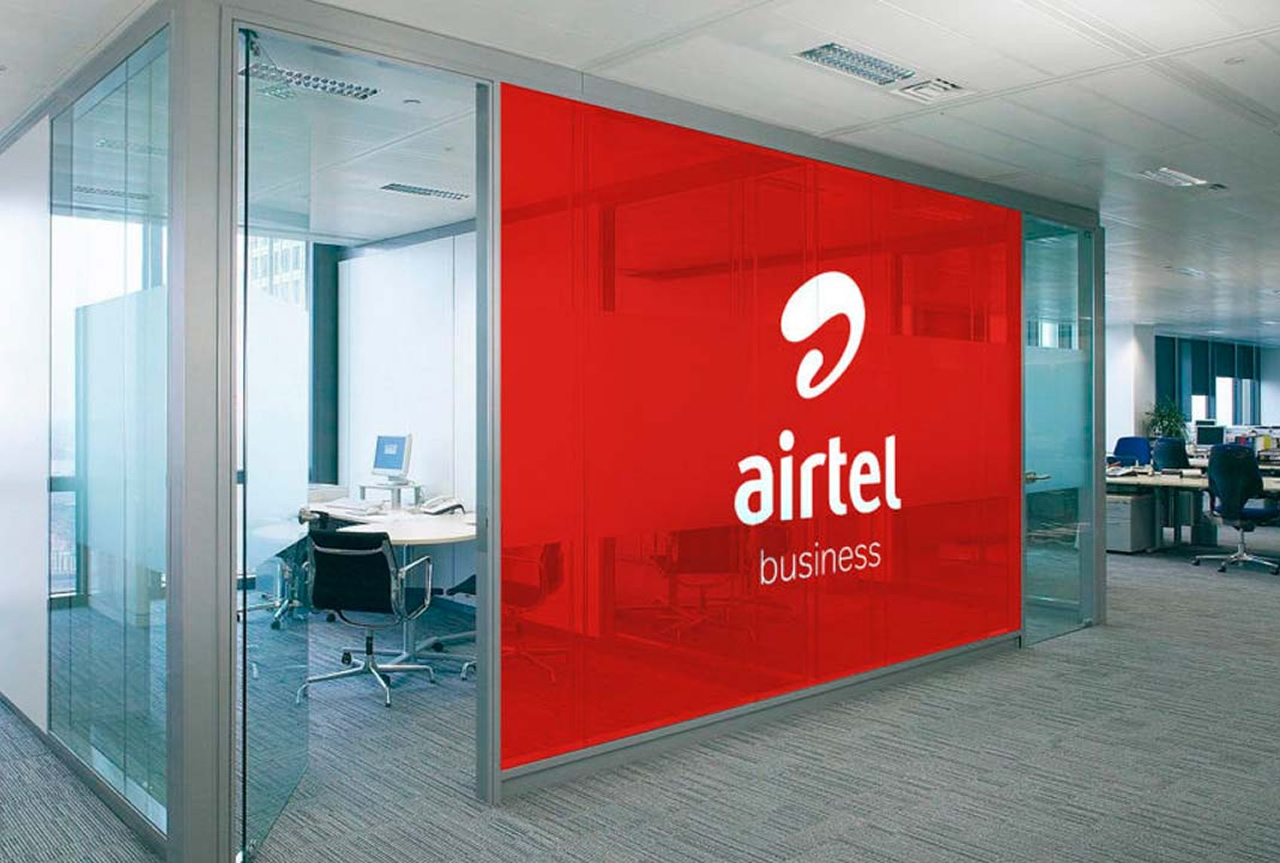 Image Source: Airtel
Airtel Zambia is doubling down on physical retail at a time when telecom operators keep pushing customers online.
The country’s largest operator plans to open 45 new retail outlets by September 2026, bringing its total footprint to 98 stores. The expansion is meant to improve customer support and widen access as demand for mobile and Internet services grows.
Zambia is still an early-stage telecom market. Mobile penetration stood at 47.4% and Internet usage at 17.1% in 2024, according to the International Telecommunication Union. Retail stores serve as a distribution play for the remote and underserved areas of the country that cannot access telecom help services.
Airtel, which controls about 48% of the market, is ahead of MTN and Zamtel, but the gap is narrowing as competitors target specific customer segments. Expanding its physical footprint is both a growth strategy and a hedge.
The shift to digital hasn’t removed the need for human touchpoints. SIM registration, mobile money support, device setup, and onboarding still happen offline. For many first-time users, a retail agent is the internet.
Stores also serve a commercial purpose. They act as conversion points for higher-margin products, including data bundles, smartphones, and fintech services, where customer education directly drives uptake.
Zoom out: Telecoms like to frame the future as app-first; several players like MTN have launched Pi, Vodacom, MyVodacom App, and recently, Safaricom pushed My OneApp. But markets like Zambia suggest a different reality. When half the population is still offline, scaling a digital business can look a lot like opening more shops.
Naira Life 2026 is here!

Join 2,000+ in Lagos on August 22 for unfiltered wealth strategies, investment clinics, pitch competitions, and real talk about building long-term financial power. Get 15% off early bird tickets.
CRYPTO TRACKER
The World Wide Web3
Source:

|
Coin Name |
Current Value |
Day |
Month |
|---|---|---|---|
| Bitcoin | $81,098 |
– 0.14% |
+ 18.07% |
| Ether | $2,332 |
– 1.35% |
+ 10.72% |
| XRP | $1.41 |
– 0.36% |
+ 7.55% |
| Solana | $88.61 |
+ 1.85% |
+ 11.17% |
* Data as of 06.33 AM WAT, May 7, 2026.
Events
- All roads lead to Nairobi on May 7, 2026. Gathered at the Sarit Expo Centre, senior leaders from across Africa’s fintech and payments ecosystem will gather for a day of meaningful connections, market insights, and cross-border collaboration. The focus of the Africa Fintech Live event is on driving real engagement, bringing together industry leaders and emerging innovators to spark strategic conversations that will shape the future of finance on the continent. Secure your early bird ticket now at 50% off.
- On May 6–8, 2026, policy, capital, and innovation in Africa will take centre stage at the 3i Africa Summit. Happening at the Destiny Arena, Accra, Ghana, it will pack operators, investors, and policymakers in one room to answer questions about the continent’s integrated fintech future, and what it’s still missing. Register here to attend.
- The Africa Tech Summit London 2026 is back for its 10th edition. Held at the London Stock Exchange building in London on May 29, the event will feature 350 attendees from over 200 companies in a small, high-impact gathering of founders, investors, and global partners driving the future of tech in Africa. Use the code TC10 to get 10% off tickets. Apply to attend.
- My Life In Tech: Nahla Gamil was once unsure of her future. She now heads a tech team.
- Over 13,000 Nigerian bank employees earn $526/month as salaries climb in 2025
- Fincra expands Ghana presence with new payments licence approval
Written by: Opeyemi Kareem and Emmanuel Nwosu
Edited by: Emmanuel Nwosu and Ganiu Oloruntade
Want more of TechCabal?
Sign up for our insightful newsletters on the business and economy of tech in Africa.
- The Next Wave: futuristic analysis of the business of tech in Africa.
- Francophone Weekly by TechCabal: insider insights and analysis of Francophone’s tech ecosystem
P:S If you’re often missing TC Daily in your inbox, check your Promotions folder and move any edition of TC Daily from “Promotions” to your “Main” or “Primary” folder and TC Daily will always come to you.



You May Also Like

TAP, Inc. Launches TAP Pay, a Verified Payments Layer for Peer and SMB Payments

Ruby red state Republicans fear new White House map would accidentally help Dems




