

👨🏿🚀TechCabal Daily – MTN’s AI cables
Good morning 
Happy Monday. A moment of silence for the dearly departed weekend. It’s a new week to lock in and bring shareholder value. Let’s dive in.
—Zia
Get smarter about Francophone Africa with our newsletter, Francophone Weekly—the startups, tech policies, and institutions building the pipelines for ecosystem growth.
- The DRC is building a stock exchange
- WapiPay is in Canada
- Zimbabwe eases crypto restrictions
- MTN is turning its cables into ears
- World Wide Web 3
- Opportunities
countries
The DRC takes its first step towards building a stock exchange
 Image source: Tenor
The Democratic Republic of Congo (DRC) has signed a partnership with the International Finance Corporation (IFC), the private-sector investment arm of the World Bank Group, to support the creation of the Kinshasa Stock Exchange, which would become the country’s first stock market. A stock exchange allows businesses or the government to raise money beyond traditional bank loans and development finance.
Who is supposed to list on this exchange? A stock exchange is only as interesting as the companies on it. Some African countries have struggled with limited listings and low trading activity, including Kenya, which had an 11-year initial public offering (IPO) drought on its exchange. While South Africa’s Johannesburg Stock Exchange has spent recent years battling a stream of delistings, the DRC will need enough businesses willing and able to meet the governance and reporting standards required of public companies.
Before anyone starts ringing any opening bells, there is still work to do. A bill that would create the legal framework for the DRC’s financial markets is still making its way through the Senate. A functioning exchange needs laws, regulators, settlement systems, depositories, listing requirements, brokers, auditors, and companies willing to disclose their finances to the public. The DRC’s proposed law intends to create that plumbing, including a market regulator, a securities depository, settlement banks, and the legal framework needed for stocks and bonds to trade.
Why this matters: Instead of relying solely on banks or venture capital fundraising, businesses can raise money directly from investors or the public to finance expansion plans or large-scale projects. The DRC is betting that a domestic exchange could attract both local and international capital into the country.
Fincra Thought Leadership article
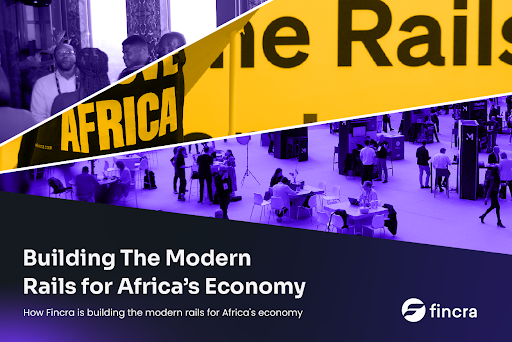
Modern Rails for Africa’s Economy: How Fincra is helping businesses collect, pay out, convert, and settle across African markets. Read more here.
companies
WapiPay just got a Canadian entry
 Image: Tenor
WapiPay, a Nairobi-founded fintech, hassecured a Money Services Business (MSB) licence from Canada’s Financial Transactions and Reports Analysis Centre (FINTRAC), giving it its first regulated North American hub for foreign exchange, money transfers, payments, and virtual currency transactions.
Another licence in the bag: The licence is the latest in a deliberate run of regulatory wins. In February, WapiPaylaunched a Remittance Credit Score tool helping Kenyan banks use diaspora remittance flows to assess borrowers with no formal credit history. In April, itentered Jamaica through a partnership with JN Money Services, opening Africa-Asia-Caribbean payment corridors. Canada is the third regulated market in three months.
How did we get here: Founded in 2019 by twins Eddie and Paul Ndichu, WapiPay initially focused on payments between Africa and Asia, targeting Kenyan importers paying Chinese suppliers through a slow, expensive banking system. In its first 18 months after receiving its Kenyan licence, it said it processed $500 million in remittances for over one million customers. Remittances to Kenya surpassed $5 billion in 2025 for the first time, and WapiPay is now positioning itself as the rail connecting multiple corridors in that flow.
What else? The Canadian licence also covers virtual currency and digital asset transactions, quietly future-proofing WapiPay for a world where stablecoins become a standard settlement layer. Given that Tether, the fintech that issues the Tether stablecoin (USDT), recently invested in LemFi, the remittance fintech, for exactly that reason, the timing is not accidental.
Naira Life 2026 is here!

The theme for this year’s Naira Life Conference by Zikoko is “All About Wealth.”
Join 2,000+ in Lagos on August 22 for a day of practical money conversations and workshops designed to move you from simply earning an income to building lasting wealth. Get 15% off early bird tickets.
crypto
Zimbabwe eases crypto restrictions
 Image source: Tenor
In 2018, Zimbabwe’s central bank cut cryptocurrency businesses off from the banking system by directing financial institutions to stop facilitating cryptocurrency transactions. Exchanges and crypto firms have been unable to operate legally, but crypto trading activity moved underground to peer-to-peer channels and informal networks. This is about to change.
What has happened now? Zimbabwe has introduced a new registration framework for cryptocurrency companies, requiring businesses that buy, sell, transfer, or safeguard digital assets to register with the Financial Intelligence Unit (FIU), the country’s anti-money-laundering agency. Under the new rules, crypto companies will pay a registration fee and renew their licences annually, while operating without approval could attract penalties.
Could it be an African thing? Crypto arrives, operates in a regulatory grey area, gets threatened with restrictions or outright banned, and then gets regulated. This has played out across other African countries, including Nigeria, South Africa, and Kenya. Nigeria moved from restricting banks’ involvement in crypto transactions to creating licensing frameworks for digital asset companies. South Africa now requires crypto firms to obtain licences from financial regulators, and Kenya is also advancing legislation to regulate Virtual Asset Service Providers (VASPs) after years of operating without a dedicated framework.
Why it matters: Cryptocurrency conversations in Africa are now shifting towards oversight and regulations rather than restrictions. Governments are recognising that crypto has become too large and too useful to too many people to remain entirely outside the financial system or in a grey area.
telecoms
MTN is turning its cables into ears
 Image Source: Guillem Sartorio/Bloomberg
Every time someone digs illegally near an MTN fibre cable in South Africa, the cable now hears it coming. MTN isdeploying fibre-cut sensing technology that turns its underground cables into sensors, detecting micro-vibrations from digging activity before a spade actually severs the line.
The goal is to collapse repair windows that currently run eight hours or more. Alongside this,autonomous network agents are triaging network incidents in South Africa and adjusting parameters automatically, with human approval required before changes go live.
The bigger picture: This is one piece of MTN’s Capital Markets Day AI strategy. MTN is targeting R30 billion ($1.8 billion) in AI value creation over the next three to five years, using AI to run MTN itself, as the most confident near-term bet. Network and IT operations account for roughly 55% of MTN’s operating expenses and nearly 80% of its capital expenditure, making every efficiency gain here financially significant at scale.
What this means in practice: Nigeria is the most advanced deployment market. MTN Nigeria has replaced over 200 SIM registration employees with 13 AI agents using computer vision, and the same AI infrastructure is being used to detect fibre cuts and automate fault management. MTN also plans to install GPUs at base stations across Africa, converting its tower estate into a distributed AI inference grid, so the same hardware runs both the cellular network and edge AI workloads simultaneously.
Showcase Your Brand at Moonshot by TechCabal

Founders. Investors. Policymakers. Enterprise leaders. Moonshot 2026 brings together the people shaping Africa’s technology ecosystem across AI, commerce, climate, enterprise, and culture. Spotlight your brand today.
CRYPTO TRACKER
The World Wide Web3
Source:

|
Coin Name |
Current Value |
Day |
Month |
|---|---|---|---|
| Bitcoin | $64,134 |
– 0.13% |
– 14.94% |
| Ether | $1,735 |
+ 0.09% |
– 15.83% |
| XRP | $1.13 |
– 0.77% |
– 14.62% |
| Solana | $73.96 |
+ 1.11% |
– 12.11% |
* Data as of 06.31 AM WAT, June 22, 2026.
Opportunities
- The Stellar Development Foundation has launched its first accelerator programme targeting Europe, the Middle East, and Africa, partnering with blockchain venture firm CV Labs to back ten early-stage startups building payments infrastructure, tokenised assets, and decentralised finance applications. The 12-week programme, beginning August 2026, will run primarily remotely but includes an on-site component in Cape Town and concludes with a demo day at Stellar’s Meridian conference in Lisbon in October. Each selected startup can receive up to $150,000 in XLM, Stellar’s native token, in initial funding. Apply by July.
- Accelerate Africa is investing between $250,000 and $500,000 in early-stage African startups through its founder-focused programme, with no upfront equity commitments required or application fees to apply. Built by the team that advised Andela, Flutterwave, and Moove, the initiative selects 12 founders per cohort. Applications open until July 25.
- The Female Founders Growth Programme is accepting applications from Nigerian women-led businesses. The investment readiness programme provides strategic support, investor preparation, and access to a network of funders, with qualifying participants eligible for up to $2 million in combined debt and equity financing. Selected businesses will also pitch to investors and financial institutions at a flagship Demo Day. Applications are open until June 22, 2026..
- Digital Nomads: Alma Asinobi learned to build mobility by confronting her own immobility
- Top South Africa tech investor says it is no longer just a Tencent story
- Why Africa’s workforce, not just its startups, must be AI-ready
Written by: Opeyemi Kareem and Zia Yusuf
Edited by: Ganiu Oloruntade
Want more of TechCabal?
Sign up for our insightful newsletters on the business and economy of tech in Africa.
- The Next Wave: futuristic analysis of the business of tech in Africa.
- Francophone Weekly by TechCabal: insider insights and analysis of Francophone’s tech ecosystem
P:S If you’re often missing TC Daily in your inbox, check your Promotions folder and move any edition of TC Daily from “Promotions” to your “Main” or “Primary” folder and TC Daily will always come to you.



You May Also Like

The latest smelly episode in Trump’s embarrassing Reflecting Pool saga

Mexican Peso Slides as Dollar Strengthens on Fed Repricing Ahead of Banxico Decision

Best Cryptos to Buy Now: Jamie Dimon Signals JPMorgan Entry Into Prediction Markets and Pepeto Might Shock Traders This Year While BNB and TRX Hold Steady


Trending News
More24/7 Live News
MoreQuick Reads
More
