The post Cardano News in Q3: Major Milestones Place ADA Price on Path to $1 appeared on BitcoinEthereumNews.com. Cardano news recorded important milestones in Q3 2025 that may guide ADA price in the push to $1. A new governance election, technical work on Bitcoin integration, and steady activity in tokens and exchanges all shaped the quarter. Price records from past years also showed patterns that traders are watching closely. Cardano News: Governance Election and New Technical Steps Cardano’s most notable change in Q3 was the first onchain Constitutional Committee election. Messari reported that this was carried out under CIP-1694. The vote shifted part of Cardano’s governance to an elected body, making decisions less dependent on founding groups. This was seen as a move toward stronger community involvement. Alongside governance, there were new technical efforts recorded. Input Output Hong Kong (IOHK) and FairGate Labs gave a demo during Bitcoin 2025. They showed how Cardano contracts could run on Bitcoin using BitVMX and a UPLC-to-RISC-V compiler. Cardano Q2 Report | Source: Messari This created a pathway for Bitcoin users to access Cardano-based tools. It also added to the wider debate on linking blockchains together. Messari also pointed out that decentralized exchanges (DEXs), stablecoins, and NFTs still played a central role in Cardano’s network. New names like CswapDEX and Strike came into the ecosystem during the quarter. These additions gave users more options to trade and build projects, which supported Cardano’s wider activity. Cardano Token Model and Community Views It is worth noting that Cardano’s approach to tokens was also discussed publicly. Unlike some other chains, Cardano does not use smart contracts for issuing tokens. Instead, it uses a native token model that runs directly on the chain. This point was raised when a Korean user asked whether Cardano tokens relied on contracts. Dori, a known community voice, replied that they did not. He explained that since tokens are handled at… The post Cardano News in Q3: Major Milestones Place ADA Price on Path to $1 appeared on BitcoinEthereumNews.com. Cardano news recorded important milestones in Q3 2025 that may guide ADA price in the push to $1. A new governance election, technical work on Bitcoin integration, and steady activity in tokens and exchanges all shaped the quarter. Price records from past years also showed patterns that traders are watching closely. Cardano News: Governance Election and New Technical Steps Cardano’s most notable change in Q3 was the first onchain Constitutional Committee election. Messari reported that this was carried out under CIP-1694. The vote shifted part of Cardano’s governance to an elected body, making decisions less dependent on founding groups. This was seen as a move toward stronger community involvement. Alongside governance, there were new technical efforts recorded. Input Output Hong Kong (IOHK) and FairGate Labs gave a demo during Bitcoin 2025. They showed how Cardano contracts could run on Bitcoin using BitVMX and a UPLC-to-RISC-V compiler. Cardano Q2 Report | Source: Messari This created a pathway for Bitcoin users to access Cardano-based tools. It also added to the wider debate on linking blockchains together. Messari also pointed out that decentralized exchanges (DEXs), stablecoins, and NFTs still played a central role in Cardano’s network. New names like CswapDEX and Strike came into the ecosystem during the quarter. These additions gave users more options to trade and build projects, which supported Cardano’s wider activity. Cardano Token Model and Community Views It is worth noting that Cardano’s approach to tokens was also discussed publicly. Unlike some other chains, Cardano does not use smart contracts for issuing tokens. Instead, it uses a native token model that runs directly on the chain. This point was raised when a Korean user asked whether Cardano tokens relied on contracts. Dori, a known community voice, replied that they did not. He explained that since tokens are handled at…

Cardano News in Q3: Major Milestones Place ADA Price on Path to $1

Cardano news recorded important milestones in Q3 2025 that may guide ADA price in the push to $1.

A new governance election, technical work on Bitcoin integration, and steady activity in tokens and exchanges all shaped the quarter.

Price records from past years also showed patterns that traders are watching closely.

Cardano News: Governance Election and New Technical Steps

Cardano’s most notable change in Q3 was the first onchain Constitutional Committee election. Messari reported that this was carried out under CIP-1694.

The vote shifted part of Cardano’s governance to an elected body, making decisions less dependent on founding groups.

This was seen as a move toward stronger community involvement. Alongside governance, there were new technical efforts recorded.

Input Output Hong Kong (IOHK) and FairGate Labs gave a demo during Bitcoin 2025.

They showed how Cardano contracts could run on Bitcoin using BitVMX and a UPLC-to-RISC-V compiler.

Cardano Q2 Report | Source: Messari

This created a pathway for Bitcoin users to access Cardano-based tools. It also added to the wider debate on linking blockchains together.

Messari also pointed out that decentralized exchanges (DEXs), stablecoins, and NFTs still played a central role in Cardano’s network.

New names like CswapDEX and Strike came into the ecosystem during the quarter.

These additions gave users more options to trade and build projects, which supported Cardano’s wider activity.

Cardano Token Model and Community Views

It is worth noting that Cardano’s approach to tokens was also discussed publicly. Unlike some other chains, Cardano does not use smart contracts for issuing tokens.

Instead, it uses a native token model that runs directly on the chain.

This point was raised when a Korean user asked whether Cardano tokens relied on contracts.

Dori, a known community voice, replied that they did not. He explained that since tokens are handled at the base level, they do not face risks that come from contract errors or hacks.

Cardano Contracts and Token Models | Source: dori

This has often been described as one of Cardano’s safer design choices.

In another comment, Kyle Yuk shared his view of Cardano. He said the chain gave the feeling of a long-term blue-chip stock.

He also noted that technical terms like UTXO are linked to Cardano’s structure, which is designed to process many transactions in parallel.

That design is aimed at improving scale and efficiency for users and developers.

These exchanges showed how Cardano’s community continues to explain its model to new audiences, especially as interest has grown in places like Korea.

Cardano ADA Price History and Current Outlook

Cardano price performance in October over the last five years showed mixed results.

In 2020, ADA price fell by 8.10%. In 2021, it dropped by 7.25%, while in 2022, the figure came in at 6.65%.

The Cardano news trend shifted in 2023, when price gained 15.4%. In October 2024, the price of the altcoin closed lower at 8.29%.

In addition to 2025, ADA’s October record currently shows a gain of 3.59%. As of now, Cardano is trading at $0.8361, up by 5.7%.

This placed the month on a positive track compared to several of the past cycles.

It also showed how ADA price continues to swing between losses and gains.

The figures underline the Cardano price volatility. They also highlight that periods of decline are often followed by seasons of recovery.

It is important to mention that this cycle remains a key focus for traders who watch for shifts each quarter.

Notably, Messari’s review concluded that governance changes, technical progress, and growing activity on the chain give Cardano’s price a stronger base

If adoption rises and trading stays steady, ADA could move closer to the $1 mark in the months ahead. The coming quarters will reveal if these steps are enough to sustain the momentum.

Source: https://www.thecoinrepublic.com/2025/10/01/cardano-news-in-q3-major-milestones-place-ada-price-on-path-to-1/

Market Opportunity
Major Logo
Major Price(MAJOR)
$0.08223
$0.08223$0.08223
+1.29%
USD
Major (MAJOR) Live Price Chart
Disclaimer: The articles reposted on this site are sourced from public platforms and are provided for informational purposes only. They do not necessarily reflect the views of MEXC. All rights remain with the original authors. If you believe any content infringes on third-party rights, please contact service@support.mexc.com for removal. MEXC makes no guarantees regarding the accuracy, completeness, or timeliness of the content and is not responsible for any actions taken based on the information provided. The content does not constitute financial, legal, or other professional advice, nor should it be considered a recommendation or endorsement by MEXC.

You May Also Like

Gold Hits $3,700 as Sprott’s Wong Says Dollar’s Store-of-Value Crown May Slip

Gold Hits $3,700 as Sprott’s Wong Says Dollar’s Store-of-Value Crown May Slip

The post Gold Hits $3,700 as Sprott’s Wong Says Dollar’s Store-of-Value Crown May Slip appeared on BitcoinEthereumNews.com. Gold is strutting its way into record territory, smashing through $3,700 an ounce Wednesday morning, as Sprott Asset Management strategist Paul Wong says the yellow metal may finally snatch the dollar’s most coveted role: store of value. Wong Warns: Fiscal Dominance Puts U.S. Dollar on Notice, Gold on Top Gold prices eased slightly to $3,678.9 […] Source: https://news.bitcoin.com/gold-hits-3700-as-sprotts-wong-says-dollars-store-of-value-crown-may-slip/
Share
BitcoinEthereumNews2025/09/18 00:33
Crucial ETH Unstaking Period: Vitalik Buterin’s Unwavering Defense for Network Security

Crucial ETH Unstaking Period: Vitalik Buterin’s Unwavering Defense for Network Security

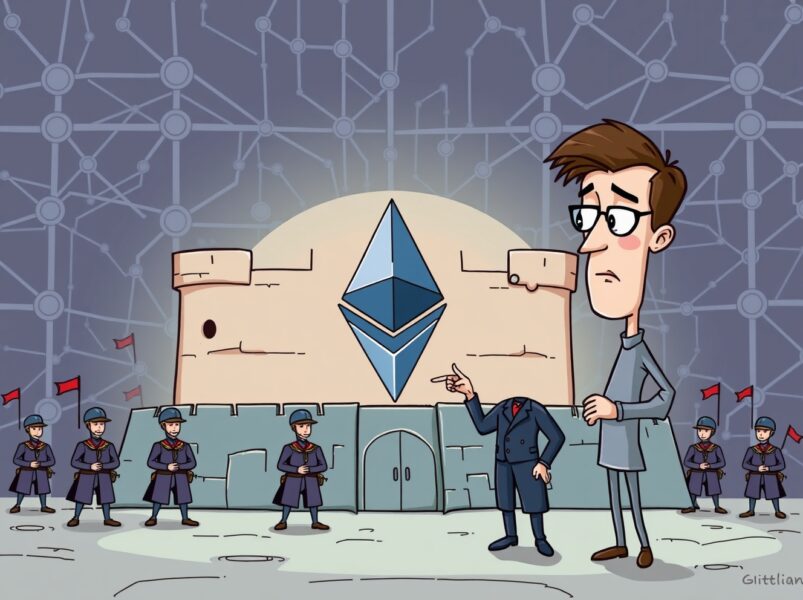
BitcoinWorld Crucial ETH Unstaking Period: Vitalik Buterin’s Unwavering Defense for Network Security Ever wondered why withdrawing your staked Ethereum (ETH) isn’t an instant process? It’s a question that often sparks debate within the crypto community. Ethereum founder Vitalik Buterin recently stepped forward to defend the network’s approximately 45-day ETH unstaking period, asserting its crucial role in safeguarding the network’s integrity. This lengthy waiting time, while sometimes seen as an inconvenience, is a deliberate design choice with profound implications for security. Why is the ETH Unstaking Period a Vital Security Measure? Vitalik Buterin’s defense comes amidst comparisons to other networks, like Solana, which boast significantly shorter unstaking times. He drew a compelling parallel to military operations, explaining that an army cannot function effectively if its soldiers can simply abandon their posts at a moment’s notice. Similarly, a blockchain network requires a stable and committed validator set to maintain its security. The current ETH unstaking period isn’t merely an arbitrary delay. It acts as a critical buffer, providing the network with sufficient time to detect and respond to potential malicious activities. If validators could instantly exit, it would open doors for sophisticated attacks, jeopardizing the entire system. Currently, Ethereum boasts over one million active validators, collectively staking approximately 35.6 million ETH, representing about 30% of the total supply. This massive commitment underpins the network’s robust security model, and the unstaking period helps preserve this stability. Network Security: Ethereum’s Paramount Concern A shorter ETH unstaking period might seem appealing for liquidity, but it introduces significant risks. Imagine a scenario where a large number of validators, potentially colluding, could quickly withdraw their stake after committing a malicious act. Without a substantial delay, the network would have limited time to penalize them or mitigate the damage. This “exit queue” mechanism is designed to prevent sudden validator exodus, which could lead to: Reduced decentralization: A rapid drop in active validators could concentrate power among fewer participants. Increased vulnerability to attacks: A smaller, less stable validator set is easier to compromise. Network instability: Frequent and unpredictable changes in validator numbers can lead to performance issues and consensus failures. Therefore, the extended period is not a bug; it’s a feature. It’s a calculated trade-off between immediate liquidity for stakers and the foundational security of the entire Ethereum ecosystem. Ethereum vs. Solana: Different Approaches to Unstaking When discussing the ETH unstaking period, many point to networks like Solana, which offers a much quicker two-day unstaking process. While this might seem like an advantage for stakers seeking rapid access to their funds, it reflects fundamental differences in network architecture and security philosophies. Solana’s design prioritizes speed and immediate liquidity, often relying on different consensus mechanisms and validator economics to manage security risks. Ethereum, on the other hand, with its proof-of-stake evolution from proof-of-work, has adopted a more cautious approach to ensure its transition and long-term stability are uncompromised. Each network makes design choices based on its unique goals and threat models. Ethereum’s substantial value and its role as a foundational layer for countless dApps necessitate an extremely robust security posture, making the current unstaking duration a deliberate and necessary component. What Does the ETH Unstaking Period Mean for Stakers? For individuals and institutions staking ETH, understanding the ETH unstaking period is crucial for managing expectations and investment strategies. It means that while staking offers attractive rewards, it also comes with a commitment to the network’s long-term health. Here are key considerations for stakers: Liquidity Planning: Stakers should view their staked ETH as a longer-term commitment, not immediately liquid capital. Risk Management: The delay inherently reduces the ability to react quickly to market volatility with staked assets. Network Contribution: By participating, stakers contribute directly to the security and decentralization of Ethereum, reinforcing its value proposition. While the current waiting period may not be “optimal” in every sense, as Buterin acknowledged, simply shortening it without addressing the underlying security implications would be a dangerous gamble for the network’s reliability. In conclusion, Vitalik Buterin’s defense of the lengthy ETH unstaking period underscores a fundamental principle: network security cannot be compromised for the sake of convenience. It is a vital mechanism that protects Ethereum’s integrity, ensuring its stability and trustworthiness as a leading blockchain platform. This deliberate design choice, while requiring patience from stakers, ultimately fortifies the entire ecosystem against potential threats, paving the way for a more secure and reliable decentralized future. Frequently Asked Questions (FAQs) Q1: What is the main reason for Ethereum’s long unstaking period? A1: The primary reason is network security. A lengthy ETH unstaking period prevents malicious actors from quickly withdrawing their stake after an attack, giving the network time to detect and penalize them, thus maintaining stability and integrity. Q2: How long is the current ETH unstaking period? A2: The current ETH unstaking period is approximately 45 days. This duration can fluctuate based on network conditions and the number of validators in the exit queue. Q3: How does Ethereum’s unstaking period compare to other blockchains? A3: Ethereum’s unstaking period is notably longer than some other networks, such as Solana, which has a two-day period. This difference reflects varying network architectures and security priorities. Q4: Does the unstaking period affect ETH stakers? A4: Yes, it means stakers need to plan their liquidity carefully, as their staked ETH is not immediately accessible. It encourages a longer-term commitment to the network, aligning staker interests with Ethereum’s stability. Q5: Could the ETH unstaking period be shortened in the future? A5: While Vitalik Buterin acknowledged the current period might not be “optimal,” any significant shortening would likely require extensive research and network upgrades to ensure security isn’t compromised. For now, the focus remains on maintaining robust network defenses. Found this article insightful? Share it with your friends and fellow crypto enthusiasts on social media to spread awareness about the critical role of the ETH unstaking period in Ethereum’s security! To learn more about the latest Ethereum trends, explore our article on key developments shaping Ethereum’s institutional adoption. This post Crucial ETH Unstaking Period: Vitalik Buterin’s Unwavering Defense for Network Security first appeared on BitcoinWorld.
Share
Coinstats2025/09/18 15:30
ChatGPT Predicts Bitcoin’s Next Move – Here’s Why $HYPER Could Be the Biggest Winner

ChatGPT Predicts Bitcoin’s Next Move – Here’s Why $HYPER Could Be the Biggest Winner

The post ChatGPT Predicts Bitcoin’s Next Move – Here’s Why $HYPER Could Be the Biggest Winner appeared on BitcoinEthereumNews.com. That’s because historically, September has been Bitcoin’s worst-performing month, with an average return of -4.44% over the last 15 years. So, with a positive September, Bitcoin is showing early signs of an explosive Q4. Speaking of Q4, Bitcoin has delivered an average return of nearly 80% in this quarter over the last 15 years of recorded data. This time around, the return percentage could be even greater, thanks to strong fundamental tailwinds such as pro-crypto policy shifts from the Trump administration, multiple expected Federal Reserve rate cuts before year-end, and crypto’s growing adoption and awareness among everyday users. To arrive at an objective Bitcoin price prediction, we turned to ChatGPT. Thanks to its access to real-time crypto-related data – from social media chatter and company updates to on-chain metrics and policy announcements – ChatGPT has its finger on the pulse of the market. Unlike human analysts, it can detach from emotions and biases, which is important because, let’s face it, most people online want crypto to skyrocket, creating an unavoidable bias. By using ChatGPT, we can cut through that noise and rely on objective analysis. So read on to find out what ChatGPT predicts for Bitcoin’s future – and how you can ride digital gold’s bullishness by buying Bitcoin Hyper ($HYPER), a new BTC-themed altcoin currently in presale and poised for potential gains of up to 9,100% in the coming years. Bitcoin Setting Up for New Highs The first thing ChatGPT noted on Bitcoin’s chart was how neatly its weekly price action has been setting up for an upward move. Sure, Bitcoin fell for three straight weeks in August, but ChatGPT was quick to analyze that this was, in all likelihood, a healthy price correction as it pulled the token toward the important 0.5-0.618 Fibonacci zone, which is considered the…
Share
BitcoinEthereumNews2025/09/30 16:19