

Lebanon says Israeli gunfire kills 2 in south
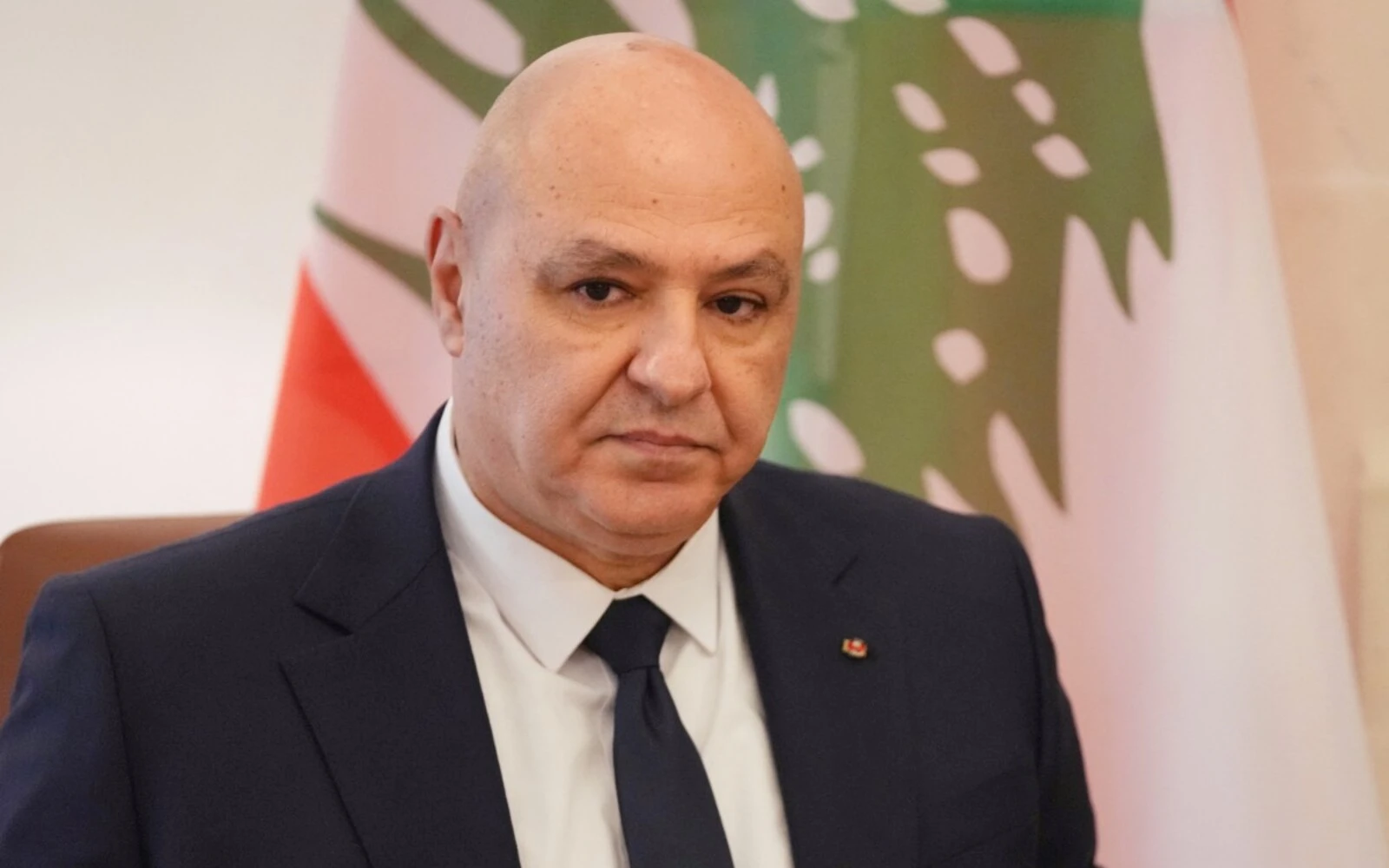 The latest deaths came as Lebanese president Joseph Aoun rejected Israel’s occupation of south Lebanon and foreign interference in his country’s affairs. (AFP pic)
BEIRUT: Lebanon said Israeli gunfire killed two people in the south on Tuesday and Israel’s military reported targeting “terrorists” there, in the first deadly incident in days under a fragile ceasefire with Iran-backed Hezbollah.
The latest deaths came as Lebanese President Joseph Aoun rejected Israel’s occupation of south Lebanon and foreign interference in his country’s affairs — an allusion to Iran — as a fifth round of Israel-Lebanon talks began in Washington.
On Monday, mediators Pakistan and Qatar said that Tehran and Washington had agreed to set up a “de-confliction cell” to limit flare-ups in Lebanon following talks in Switzerland on ending the wider Middle East war, which Tehran has linked to halting the parallel conflict in Lebanon.
Lebanon’s National News Agency (NNA) said that two men were killed Tuesday when Israeli soldiers “opened fire with their machine-guns in their direction while they were standing near an excavator that was unblocking a road” in Nabatieh al-Fawqa.
The health ministry later confirmed the toll.
Hezbollah slammed it as a “blatant” Israeli truce violation and a “treacherous attack”.
Israel’s military said its forces fired warning shots at four alleged Hezbollah militants on a bulldozer and a motorcycle, before “additional fire was conducted in order to remove the threat”.
It also said in another statement that it “identified a cell of armed terrorists operating” near soldiers in an Israeli-declared security zone running around 10km deep inside Lebanon, adding it “struck the terrorists… to remove the threat”.
Separately, the NNA reported that “an enemy drone targeted a parked car” on the outskirts of the town of Baraasheet, without immediately reporting casualties.
‘Decisive’
Deadly clashes between Israel and Hezbollah on Friday and Saturday had rattled the fledgling US-Iran deal, which provides for a cessation of hostilities on all fronts, including Lebanon.
The fighting in Lebanon has largely paused since Saturday evening.
Under US pressure, Lebanese officials began direct talks with Israel in April in Washington, with Lebanese authorities seeking to separate the negotiations from the US-Iran deal.
“We accept nothing less than an end to the Israeli occupation and at the same time, the fall of foreign tutelage,” Aoun said, according to his office.
Both Aoun and Prime Minister Nawaf Salam have lashed out at what they describe as Iranian interference via its ally Hezbollah, accusing Tehran of using their country as a “bargaining chip”.
Aoun expressed hope that the new round of talks would be “decisive” in helping achieve “the full restoration of Lebanon’s sovereignty”.
The UN peacekeeping force in Lebanon, Unifil, had said earlier on Tuesday that it had not observed any launches, strikes or interceptions “since Sunday, marking more than two days without such activity”.
‘Stop attacks’
Aoun’s office said he received a call from French President Emmanuel Macron to discuss the current situation “in light of the results of the US-Iran negotiations”, as well as possible plans for what happens after Unifil’s mandate ends this year.
Iran’s ambassador to the United Nations in Geneva, Ali Bahreini, told journalists on Tuesday that Washington “should use all its leverages against Israel to make it to stop attacks against Lebanon”.
But Israeli Prime Minister Benjamin Netanyahu said a day earlier that Israeli forces in Lebanon retained “full freedom of action to thwart any direct or developing threat”.
Hezbollah drew Lebanon into the Middle East on March 2 war with rocket fire at Israel to avenge the killing of Iran’s supreme leader in US-Israeli strikes.
Israel responded with heavy airstrikes and a ground offensive.
Lebanon says Israeli attacks since March have killed more than 4,100 people.


You May Also Like

Dow Jones futures plunge as risk aversion increases after Trump’s comments

Ozak AI Drops $100K Ambassador Program as $OZ Token Listing Date Nears
Chegubard’s acquittal in royal insult case overturned



