

How Multi-Chain Wallets Are Shaping the Future of Blockchain Adoption
The blockchain industry has evolved far beyond the era of single-network ecosystems. What began as a landscape dominated by a handful of blockchain platforms has transformed into a rapidly expanding ecosystem of specialized networks, each designed to address specific challenges related to scalability, transaction costs, interoperability, security, and user experience.
Today, users interact with a growing number of blockchain networks, including Ethereum, Solana, Polygon, BNB Chain, Avalanche, Arbitrum, Optimism, and many others. Each network offers unique advantages and supports a diverse range of decentralized applications, digital assets, and Web3 experiences.
While this growth has accelerated innovation, it has also introduced a significant challenge: fragmentation.
Managing assets, applications, and transactions across multiple blockchain ecosystems can quickly become complicated for users and businesses alike. As blockchain adoption moves toward mainstream audiences, simplifying this complexity is becoming a critical priority.
This is where multi-chain wallets are emerging as one of the most important innovations in the Web3 ecosystem.
By providing seamless access to multiple blockchain networks through a unified interface, multi-chain wallets are helping bridge fragmented ecosystems and creating a more accessible foundation for the future of blockchain adoption.
The Growing Complexity of Blockchain Ecosystems
Blockchain innovation has led to the creation of numerous independent networks, each with its own strengths and communities.
For example:
- Ethereum continues to dominate decentralized application development.
- Solana offers high-speed transaction processing.
- Polygon focuses on scalability and lower transaction costs.
- Avalanche provides flexible blockchain infrastructure.
- Arbitrum and Optimism enhance Ethereum scalability through Layer-2 solutions.
While these networks contribute significantly to blockchain innovation, they also create challenges for users.
Many participants find themselves managing:
- Multiple wallets
- Multiple recovery phrases
- Various token standards
- Different blockchain explorers
- Separate application ecosystems
For experienced users, these complexities may be manageable. For newcomers, they often represent a major barrier to entry.
As blockchain technology seeks broader adoption, reducing friction is becoming essential.
What Is a Multi-Chain Wallet?
A multi-chain wallet is a digital wallet that supports assets, transactions, and decentralized applications across multiple blockchain networks from a single platform.
Unlike traditional wallets that are limited to a specific blockchain ecosystem, multi-chain wallets provide a unified experience for managing digital assets and interacting with various blockchain environments.
Modern multi-chain wallets typically support:
- Multiple cryptocurrencies
- Cross-chain asset management
- NFT storage
- Decentralized application connectivity
- Token swaps
- Staking functionality
- Portfolio tracking
By simplifying access to diverse blockchain ecosystems, these wallets are becoming a foundational component of the Web3 experience.
Why Blockchain Adoption Depends on Simplicity
Technology adoption rarely depends solely on innovation.
History has repeatedly shown that widespread adoption occurs when technology becomes simple enough for everyday users.
Most internet users do not understand how data packets travel across networks. Similarly, future blockchain users should not need extensive technical knowledge to participate in decentralized ecosystems.
One of the biggest barriers to blockchain adoption remains user experience.
New users often struggle with:
- Wallet setup
- Network switching
- Token management
- Cross-chain interactions
- Transaction fees
- Security considerations
Multi-chain wallets help address these challenges by creating a more intuitive and streamlined experience.
By reducing complexity, they make blockchain technology more accessible to mainstream audiences.
Breaking Down Ecosystem Silos
One of the most important benefits of multi-chain wallets is their ability to connect previously isolated blockchain ecosystems.
Historically, users often needed separate wallets to interact with different networks.
This approach created:
- Operational inefficiencies
- Fragmented user experiences
- Increased security risks
- Greater onboarding challenges
Multi-chain wallets enable users to access multiple ecosystems from a single platform, helping break down barriers between networks.
This interoperability contributes to a more connected blockchain environment where users can engage with diverse applications and assets more easily.
As the industry continues to mature, ecosystem connectivity will become increasingly important.
Supporting the Growth of Decentralized Finance
Decentralized Finance (DeFi) has emerged as one of blockchain’s most transformative innovations.
Today, DeFi opportunities exist across multiple networks.
Users frequently engage with:
- Decentralized exchanges
- Lending protocols
- Yield farming platforms
- Staking systems
- Liquidity pools
However, these opportunities are often distributed across different blockchain ecosystems.
Multi-chain wallets simplify participation by allowing users to:
- Manage assets across networks
- Monitor portfolios in one place
- Access multiple DeFi protocols
- Move between ecosystems more efficiently
As DeFi adoption continues to expand, seamless multi-chain access is becoming increasingly valuable.
Enabling the Next Generation of Web3 Applications
The future of Web3 is inherently multi-chain.
Emerging applications increasingly span multiple blockchain ecosystems in order to optimize performance, reduce costs, and improve accessibility.
Examples include:
- NFT marketplaces
- Blockchain games
- Social platforms
- Metaverse environments
- Tokenized asset platforms
Users expect seamless interactions regardless of the underlying blockchain infrastructure.
Multi-chain wallets provide the connectivity necessary to support these experiences.
By serving as universal access points, they enable users to engage with Web3 applications without navigating the complexities of multiple wallet systems.
Improving User Retention and Engagement
For businesses building blockchain-based products, user retention is a critical success factor.
Complicated onboarding processes often lead to:
- User frustration
- Reduced engagement
- Higher abandonment rates
Multi-chain wallets improve user experiences by minimizing unnecessary complexity.
Benefits include:
- Simplified onboarding
- Unified asset management
- Greater convenience
- Reduced learning curves
These improvements can significantly enhance user adoption and long-term platform engagement.
As competition within the blockchain industry increases, user experience will become a key differentiator.
Security Considerations in a Multi-Chain World
As blockchain ecosystems expand, security remains one of the most important considerations for wallet providers.
Users expect secure solutions capable of protecting assets across multiple networks.
Modern multi-chain wallets increasingly incorporate:
- Multi-factor authentication
- Biometric verification
- Hardware wallet compatibility
- Secure key management
- Transaction monitoring
- Advanced recovery mechanisms
The ability to combine convenience with strong security practices will be critical for long-term adoption.
Trust remains one of the most valuable assets within any blockchain ecosystem.
Why Businesses Are Investing in Multi-Chain Wallet Development
Businesses across industries are recognizing the strategic importance of multi-chain wallet infrastructure.
Organizations developing blockchain products increasingly require solutions capable of supporting diverse ecosystems.
Multi-chain wallets help businesses:
- Reach broader audiences
- Support multiple blockchain networks
- Improve customer experiences
- Increase user engagement
- Future-proof digital products
As blockchain adoption accelerates, demand for flexible wallet infrastructure is expected to grow significantly.
This trend is driving substantial investment in wallet technologies across fintech, gaming, Web3, and digital asset sectors.
The Rise of Smart Wallets and Account Abstraction
The future of wallet technology extends beyond simple asset management.
Emerging innovations such as account abstraction are transforming how users interact with blockchain networks.
These advancements enable features including:
- Social recovery
- Gasless transactions
- Flexible authentication
- Automated account management
- Improved onboarding experiences
Combined with multi-chain capabilities, these technologies are creating smarter and more accessible wallet solutions.
The result is a user experience that increasingly resembles traditional digital applications while preserving the benefits of decentralized infrastructure.
The Future of Blockchain Adoption
The future of blockchain will not be defined by a single dominant network.
Instead, it will be shaped by interconnected ecosystems working together to deliver seamless experiences.
Users will increasingly expect:
- Cross-chain functionality
- Unified asset management
- Simplified onboarding
- Enhanced interoperability
- Frictionless application access
Multi-chain wallets represent one of the most important building blocks supporting this vision.
By reducing complexity and improving accessibility, they are helping transform blockchain technology from a specialized innovation into a more practical and mainstream digital infrastructure.
Conclusion
The blockchain industry is entering a new phase of maturity where user experience, interoperability, and accessibility are becoming just as important as technological innovation.
Multi-chain wallets address one of the industry’s most significant challenges by simplifying interactions across diverse blockchain ecosystems.
Through unified asset management, improved interoperability, enhanced user experiences, and broader access to Web3 applications, these wallets are helping accelerate the next wave of blockchain adoption.
As decentralized technologies continue to evolve, multi-chain wallets are likely to become a foundational component of the digital economy.
The future of blockchain will depend not only on powerful networks but also on the tools that make those networks accessible to everyone.
How Multi-Chain Wallets Are Shaping the Future of Blockchain Adoption was originally published in Coinmonks on Medium, where people are continuing the conversation by highlighting and responding to this story.


You May Also Like

This Whale Just Opened a $30.9 Million XRP Long Position. What’s Coming?

Trump Cancels Housing Bill Signing Over CBDC Ban Provision, Demands Voting Legislation First
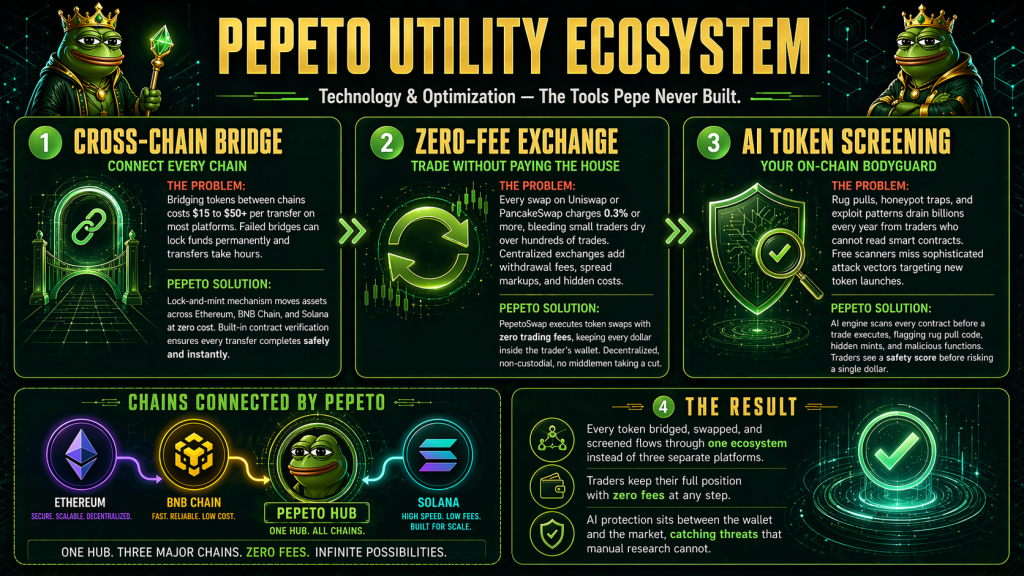
Next Crypto to Explode as Morgan Stanley’s SOL ETF Stuns at 0.14%, While Pepeto Targets 100x Before the Binance Listing Opens



