

400% surges, then trading halts: can the Chinese AI chip IPO rebound last?
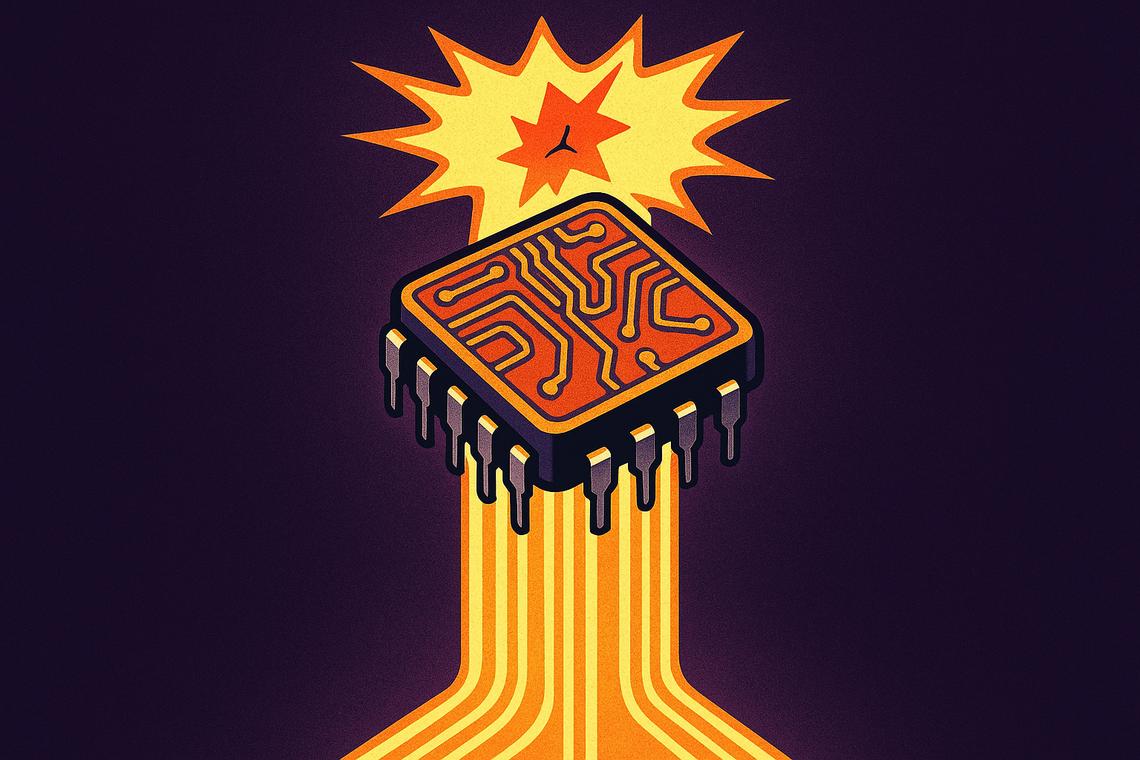
Something unusual has been happening in the Chinese semiconductor market. The Moore Threads Technology IPO, which raised roughly $1.1 billion on the Shanghai STAR Market in December 2025, saw its shares surge more than 400% on the first day of trading — a gain that would look extraordinary even by the standards of the most frenzied tech bull markets. And it wasn’t even the most dramatic debut of the month.
Key takeaways
- Moore Threads Technology raised $1.1B in its Shanghai IPO, with shares surging over 400% on day one.
- MetaX Integrated Circuits posted a nearly 700% first-day gain in mid-December 2025, with thousands-fold oversubscription.
- Six Chinese AI and chip firms raised a combined $3.6B in Hong Kong in January 2026 alone — 60% more than all Hong Kong IPOs in Q1 2025.
- South Korea’s KOSPI index has roughly tripled year-on-year, driven almost entirely by Samsung Electronics and SK Hynix, which together make up 40% of the index.
- Sharp pullbacks of 8–10% and trading halts in June 2026 highlight how concentrated and volatile this AI chip rally has become.
Chinese AI and Semiconductor IPO Surge
The wave of listings coming out of China’s AI and semiconductor sector over the past several months represents one of the most concentrated bursts of IPO activity in recent memory. First-day gains that would be considered extreme in any other context have become almost routine, raising a genuine question: is this the early stage of a structural technology boom, or a speculative frenzy wearing the clothes of one?
Moore Threads and MetaX Set the Tone
When Moore Threads Technology went public in Shanghai, the market’s reaction was immediate and violent — in the best possible sense for investors who got in at the offer price. Shares more than quintupled on day one, a move that reflects both genuine investor enthusiasm and a supply-demand imbalance driven by limited float and enormous retail appetite.
MetaX Integrated Circuits, debuting on the same exchange in mid-December, managed to outdo even that. Its shares jumped nearly 700% on the first day, backed by thousands-fold oversubscription. To put that in perspective: for every share available, there were thousands of investors competing for it. That kind of pressure doesn’t emerge from sober financial analysis alone.
Hong Kong Listings and the January 2026 Flood
The momentum didn’t slow heading into the new year. In January 2026, six Chinese AI and chip firms listed in Hong Kong, collectively pulling in $3.6 billion. That single month represented nearly 60% more capital raised than all Hong Kong IPOs combined during the entire first quarter of 2025 — a comparison that underscores just how dramatically the market has shifted.
Biren Technology was the standout among those January debuts. The AI chip designer raised approximately $717 million — HK$5.58 billion — when it began trading on January 2, 2026. Shares closed up 76% on the first day after touching an intraday high of 119% above the offer price. Retail subscription for the listing exceeded 2,300 times. That figure alone tells you something important: this is not institutional capital quietly accumulating a position. Individual investors, locked out of the domestic U.S. chip supply chain, are chasing exposure wherever they can find it.
US Export Controls Spur Domestic AI Chip Innovation
The geopolitical backdrop is impossible to separate from the financial story. US export restrictions targeting China’s access to advanced semiconductor technology have, somewhat paradoxically, accelerated the very development they were designed to contain. By cutting off China’s major tech companies from leading-edge chips made abroad, Washington effectively mandated a domestic chip industry into existence — or at least into rapid maturation.
The result has been a wave of policy support and investor capital flowing toward homegrown AI chip designers. Companies like Moore Threads, MetaX, and Biren have stepped into the gap, and markets are valuing them accordingly. The pipeline of future candidates reflects just how broad this dynamic has become: robotics firm Unitree, memory chip manufacturers CXMT and YMTC, and Baidu‘s Kunlunxin chip unit — estimated at roughly $3 billion — are all reportedly preparing for public listings.
Whether these companies can deliver the earnings to justify the valuations investors are assigning them at IPO is a separate question entirely. For now, the political imperative of tech self-sufficiency is functioning as a substitute for conventional financial logic.
South Korea’s KOSPI Market Rally Led by AI Chip Giants
The AI chip trade isn’t only reshaping China’s IPO market. South Korea’s stock market has become one of the most dramatic equity stories of the year, and the mechanism is strikingly concentrated.
Market Capitalization and Stock Performance
The KOSPI index broke above 7,000 points for the first time in May 2026, posting year-to-date gains in the range of 90–100% before pushing past 8,000 and approaching 9,000. Measured year-on-year, the index has roughly tripled in value. Two companies are responsible for nearly all of that movement.
SK Hynix shares have surged more than 340% during this rally, powered by explosive global demand for high-bandwidth memory chips — the specialized semiconductors that sit at the heart of AI training and inference workloads. Samsung Electronics has crossed a market capitalization of over $1 trillion, joining a very short list of companies globally to reach that threshold.
Investor Participation and Market Concentration Risk
Retail investors have driven a significant portion of this move. South Korean retail traders — nicknamed “ants” during the pandemic-era 2020–2021 rally for their collective market-moving power — have returned in force, joined this time by substantial foreign capital inflows chasing the AI semiconductor narrative.
The structural problem is hiding in plain sight. Samsung Electronics and SK Hynix together account for roughly 40% of the entire KOSPI index’s weighting. That level of concentration doesn’t describe a diversified market rally. It describes a semiconductor bet packaged inside a national stock index. When Wedbush Securities analyst Dan Ives characterized the South Korean selloff as “more likely a pause after a near 100% rally” rather than a sign of weakening fundamentals, he was offering reassurance — but also inadvertently confirming how extended the trade has become.
Volatility and Correction Risks
In June 2026, the KOSPI suffered sharp pullbacks of 8–10%, severe enough to trigger trading halts. The selloff spread globally: Micron and Sandisk tumbled 13% in a single session, the Nasdaq Composite fell 2.2%, and the Philadelphia Semiconductor Index dropped sharply as investors unwound crowded positions. Samsung and SK Hynix both plunged over 12% before partially recovering the following day, with Samsung adding 10% and SK Hynix gaining roughly 1%.
Craig Johnson of Piper Sandler noted the gains had become “parabolic,” while Morgan Stanley’s Andrew Slimmon described the pullback as “healthy” given how crowded the AI trade had grown. Bret Kenwell of eToro flagged a “perfect storm” for a selloff, warning that weakness could persist for weeks. These are not bearish calls — they are acknowledging that markets this extended require new catalysts to keep moving, and that momentum alone is not a durable foundation.
Investment Implications and Market Uncertainties
The bull case for both Chinese AI chip companies and South Korean memory manufacturers rests on the same foundation: AI infrastructure spending from global hyperscalers — Google, Microsoft, Amazon — shows no signs of slowing, and those buildouts require precisely the kind of advanced memory and processing chips that these companies produce. That is a real and durable demand story.
What’s harder to model is whether current valuations have already priced in years of that growth. SK Hynix is up over 340%. Samsung has crossed a trillion-dollar valuation. Chinese AI chip IPOs are printing first-day gains of 400% to 700%. At some point, these prices need to be validated by actual earnings, not by the narrative that AI demand is infinite.
For investors watching both traditional and digital asset markets, there’s another angle worth tracking. South Korean retail traders have historically been among the most active participants in both equity and crypto markets. When domestic stocks are delivering triple-digit annual returns, that capital tends to stay in traditional markets. The current KOSPI rally may be quietly redirecting retail flows that might otherwise find their way into digital assets.
The June trading halts and the global chip selloff that followed are a useful reference point. Markets as concentrated and as extended as this one don’t correct gradually — they correct sharply, and then recover, and then possibly correct again. Whether the KOSPI’s AI-driven gains represent a genuine structural repricing of South Korean technology or a momentum trade inflated by retail enthusiasm is precisely the kind of question that tends to get answered only after the fact, when the answer is no longer actionable.
FAQ
Why have Chinese AI chip companies seen a surge in IPO activity?
US export restrictions on advanced semiconductor technology have pushed China to build domestic alternatives, funneling both policy support and investor capital toward homegrown AI chip designers. The result has been a wave of high-profile listings on the Shanghai STAR Market and Hong Kong Exchange, with companies like Moore Threads Technology, MetaX Integrated Circuits, and Biren Technology raising billions and posting extraordinary first-day gains driven by massive retail oversubscription.
What has driven the recent rally in South Korea’s stock market?
Surging global demand for AI infrastructure — particularly high-bandwidth memory chips used in AI training and inference — has propelled Samsung Electronics and SK Hynix to outsized gains, pulling the broader KOSPI index roughly triple its year-ago level. Foreign capital inflows and returning retail “ants” have amplified the move.
What risks should investors be aware of in South Korea’s AI chip driven rally?
The KOSPI is highly concentrated, with Samsung Electronics and SK Hynix together representing approximately 40% of the index. Sharp pullbacks of 8–10% and trading halts in June 2026 demonstrated how quickly momentum trades can unwind when crowded positions begin to unravel. Sustaining these valuations will require continued earnings growth, not just narrative momentum.
Are the IPO surges and stock rallies sustainable or speculative bubbles?
There is genuine uncertainty. First-day gains of 400–700% and retail subscription rates exceeding 2,300 times suggest speculative excess alongside real demand. Analysts are divided: some see the pullbacks as healthy consolidation within a structural AI bull market, while others warn that parabolic gains and extreme market concentration are historically associated with corrections rather than continued appreciation.
Article produced with the assistance of artificial intelligence and reviewed by the editorial team.


You May Also Like

XRP fell below the key $1.09 support, analyst says further decline to $0.87–$0.90 possible before next rally
Chams founder Demola Aladekomo retires from board after 40 years
Ethereum koers toont zeldzaam dubbel koopsignaal en richt zich op $4.550



