Author: hitesh.eth , Crypto KOL Compiled by Felix, PANews This article delves into Bittensor, explaining why it is not a decentralized OpenAI, but rather a decentralized AI economy; it also explains how dTAO reshapes incentive mechanism design, how subnet economies work, and why TAO represents a cultural resistance to centralized AI. What changed after dTAO? Many may be wondering what Bittensor is trying to achieve. Is it trying to create a decentralized OpenAI, or is there something deeper at play? In fact, the crypto community generally believed that it could be a decentralized OpenAI, but confusion arose when it removed subnet restrictions and introduced the dTAO (which also involved subnet tokens) to make it more competitive. This shift was crucial because it shifted the network's reward distribution from centralized voting by a small number of validators to a fully market-driven system. The introduction of dynamic TAOs (dTAOs) fundamentally changed the ecosystem's operating mechanisms. The allocation of daily TAO issuance shifted entirely from the root validator (Subnet 0, which critics called an oligarchic voting system) to the market price of each subnet's alpha token. Each mining subnet received its own alpha (α) token and its own automated market maker (AMM) pool. This enabled each subnet to develop an independent, capital-driven economy. Staking shifted from delegating TAOs to a single validator (Subnet 0 staking) to purchasing and staking subnet-specific alpha tokens (α). Stakers now bear market risk but can directly influence resource allocation. The previously rigid 50/50 reward split between miners and validators evolved to the current 41/41/18 split to better fund subnet owners (18%) and encourage continued innovation in the subnet's core incentive mechanisms. Grand Vision Today, Bittensor competes with centralized AI development and distribution platforms, providing developers with the infrastructure to build diverse AI use cases across various industries. This is crucial to understanding Bittensor's total addressable market (TAM). While companies like OpenAI compete in the multi-billion dollar immediate market, selling finished AI products like subscriptions or API access, Bittensor targets the multi-trillion dollar market for the entire AI value chain—including computing infrastructure, data validation, model training, and the peer-reviewed intelligence layer. If successful, Bittensor, as the foundational, permissionless platform for all decentralized AI, will have a TAM far exceeding that of any single proprietary AI company. Bittensor is developing and deploying diverse AI models, building a coordination engine for a distributed and decentralized AI ecosystem while simultaneously incentivizing the provision of funding and computing resources to achieve the highest levels of quality, efficiency, and trust in outcomes across decentralized AI projects for diverse use cases. This is more like building a decentralized AI value chain in which anyone can participate with capital, knowledge, and computing power. Bittensor is for everyone, not just the 0.000001% of the world who can participate in OpenAI. Bittensor's overall vision is to build a neural internet. Over the past four years, Bittensor has built a loyal community that brings together top VCs like DCG, crypto researchers like Sami Kasab, and many talented people who work every day to advance this vision. They create content, do podcasts, develop products, and are starting a movement. Bittensor has also built a subnet ecosystem, with approximately 126 subnets currently active. The current cost of a subnet is approximately 1,600 TAOs ($640,000 USD), and this cost is dynamic and will change based on the frequency of new subnet registrations. After a few months of suspension, new subnet registrations are now open again. Grayscale, founded in 2013 by Barry Silbert, one of the earliest Bitcoin pioneers, aimed to attract institutional investors to Bitcoin. Now, Grayscale is creating a similar fund for subnet tokens. The fund, called the Yuma Subnet Composite Fund, will invest in the top subnet tokens by market capitalization. Subnet Tokens Subnet tokens are currently one of the most overlooked assets on crypto Twitter. 99% of users are completely unaware of this space. The core concept behind subnet token prices is that they are denominated in TAO, rather than simply pegged, and are determined by the liquidity ratio in their automated market maker (AMM) pools. The higher the value of a subnet token relative to TAO, the more it is issued. More issuance attracts more miners to host and run AI models and provide computing resources. Miners compete to optimize the output of subnet models, and better results lead to higher prices. More precisely, better service attracts more staking demand, which drives up prices, ensuring the overall output quality of AI models used in different subnets for different use cases. Validators ensure that miners maintain quality. Their job is to verify the miners' work and assign a score to it. Based on this score, the miners receive issuance from the subnet. Approximately 7,200 TAOs are issued daily, and this number will be halved over the next two months, with the first Bittensor halving event in December. This means there's currently intense competition within the mining ecosystem for the highest returns. Most miners will stick to mining on the best-performing subnets, and if they mine on top subnets, the price of those subnet tokens will rise accordingly. Increased mining demand driven by high issuance always leads to higher subnet token prices. Initial demand for mining on a subnet often comes from speculation about the use case it's building, the team behind it, its track record, and the backing of a major corporation. Currently, the top subnet tokens with the highest issuance volume include Chutes, Ridges, and Gradient. Some of these subnets are also venture-backed. For example, Gradient is building the AI Trains platform. It was built by Rayon Labs, which also operates Chutes, the leading subnet by issuance volume. Many of these subnets are collaborating with each other to exchange services. For example, Ridges is a Chutes client; Sportstensor is building AI models for sports betting and prediction; and there are subnets like OpenKaito, which powers Kaito's InfoFi Pioneer. Taofi is also part of Bittensor. They have launched a DEX that allows you to easily bridge and exchange subnet tokens from the Base network. Trust TAO If you're asking which subnet tokens will attract demand, you need to track the growth of the subnet token's price relative to TAO. The more growth you see over different timeframes, the higher the demand. Then, you need to look at the ADR (alpha distribution ratio). It should be less than 1, as token withdrawals are now permitted. The worst-performing subnets are withdrawn weekly. If the ADR ratio is above 1, the community may lose a portion of the value of the TAO collateral staked to acquire that token due to the liquidation discount upon withdrawal. You can also track staking pools for different subnets. The more TAO is staked to acquire subnet tokens, the more likely the price will rise. Therefore, the value of subnet tokens depends largely on how long they can maintain high issuance. If they maintain high issuance and the businesses surrounding the subnet generate revenue from the services and products they provide, the price of the subnet token is likely to continue to rise. The overall market capitalization growth surrounding the subnet will directly drive TAO price increases. However, it's recommended to stay away from things you don't understand. Subnet tokens aren't like your average altcoin or junk coin. They require a deeper logical understanding, so if you believe in their vision, invest in TAO. TAO isn't meant to be traded, but rather a cultural symbol against AI centralization. The question isn’t whether decentralized AI will exist, but who will own it. Bittensor has made its choice, and others will too. Related Reading: Bittensor Subnet Investment Guide: Seizing the Next AI TrendAuthor: hitesh.eth , Crypto KOL Compiled by Felix, PANews This article delves into Bittensor, explaining why it is not a decentralized OpenAI, but rather a decentralized AI economy; it also explains how dTAO reshapes incentive mechanism design, how subnet economies work, and why TAO represents a cultural resistance to centralized AI. What changed after dTAO? Many may be wondering what Bittensor is trying to achieve. Is it trying to create a decentralized OpenAI, or is there something deeper at play? In fact, the crypto community generally believed that it could be a decentralized OpenAI, but confusion arose when it removed subnet restrictions and introduced the dTAO (which also involved subnet tokens) to make it more competitive. This shift was crucial because it shifted the network's reward distribution from centralized voting by a small number of validators to a fully market-driven system. The introduction of dynamic TAOs (dTAOs) fundamentally changed the ecosystem's operating mechanisms. The allocation of daily TAO issuance shifted entirely from the root validator (Subnet 0, which critics called an oligarchic voting system) to the market price of each subnet's alpha token. Each mining subnet received its own alpha (α) token and its own automated market maker (AMM) pool. This enabled each subnet to develop an independent, capital-driven economy. Staking shifted from delegating TAOs to a single validator (Subnet 0 staking) to purchasing and staking subnet-specific alpha tokens (α). Stakers now bear market risk but can directly influence resource allocation. The previously rigid 50/50 reward split between miners and validators evolved to the current 41/41/18 split to better fund subnet owners (18%) and encourage continued innovation in the subnet's core incentive mechanisms. Grand Vision Today, Bittensor competes with centralized AI development and distribution platforms, providing developers with the infrastructure to build diverse AI use cases across various industries. This is crucial to understanding Bittensor's total addressable market (TAM). While companies like OpenAI compete in the multi-billion dollar immediate market, selling finished AI products like subscriptions or API access, Bittensor targets the multi-trillion dollar market for the entire AI value chain—including computing infrastructure, data validation, model training, and the peer-reviewed intelligence layer. If successful, Bittensor, as the foundational, permissionless platform for all decentralized AI, will have a TAM far exceeding that of any single proprietary AI company. Bittensor is developing and deploying diverse AI models, building a coordination engine for a distributed and decentralized AI ecosystem while simultaneously incentivizing the provision of funding and computing resources to achieve the highest levels of quality, efficiency, and trust in outcomes across decentralized AI projects for diverse use cases. This is more like building a decentralized AI value chain in which anyone can participate with capital, knowledge, and computing power. Bittensor is for everyone, not just the 0.000001% of the world who can participate in OpenAI. Bittensor's overall vision is to build a neural internet. Over the past four years, Bittensor has built a loyal community that brings together top VCs like DCG, crypto researchers like Sami Kasab, and many talented people who work every day to advance this vision. They create content, do podcasts, develop products, and are starting a movement. Bittensor has also built a subnet ecosystem, with approximately 126 subnets currently active. The current cost of a subnet is approximately 1,600 TAOs ($640,000 USD), and this cost is dynamic and will change based on the frequency of new subnet registrations. After a few months of suspension, new subnet registrations are now open again. Grayscale, founded in 2013 by Barry Silbert, one of the earliest Bitcoin pioneers, aimed to attract institutional investors to Bitcoin. Now, Grayscale is creating a similar fund for subnet tokens. The fund, called the Yuma Subnet Composite Fund, will invest in the top subnet tokens by market capitalization. Subnet Tokens Subnet tokens are currently one of the most overlooked assets on crypto Twitter. 99% of users are completely unaware of this space. The core concept behind subnet token prices is that they are denominated in TAO, rather than simply pegged, and are determined by the liquidity ratio in their automated market maker (AMM) pools. The higher the value of a subnet token relative to TAO, the more it is issued. More issuance attracts more miners to host and run AI models and provide computing resources. Miners compete to optimize the output of subnet models, and better results lead to higher prices. More precisely, better service attracts more staking demand, which drives up prices, ensuring the overall output quality of AI models used in different subnets for different use cases. Validators ensure that miners maintain quality. Their job is to verify the miners' work and assign a score to it. Based on this score, the miners receive issuance from the subnet. Approximately 7,200 TAOs are issued daily, and this number will be halved over the next two months, with the first Bittensor halving event in December. This means there's currently intense competition within the mining ecosystem for the highest returns. Most miners will stick to mining on the best-performing subnets, and if they mine on top subnets, the price of those subnet tokens will rise accordingly. Increased mining demand driven by high issuance always leads to higher subnet token prices. Initial demand for mining on a subnet often comes from speculation about the use case it's building, the team behind it, its track record, and the backing of a major corporation. Currently, the top subnet tokens with the highest issuance volume include Chutes, Ridges, and Gradient. Some of these subnets are also venture-backed. For example, Gradient is building the AI Trains platform. It was built by Rayon Labs, which also operates Chutes, the leading subnet by issuance volume. Many of these subnets are collaborating with each other to exchange services. For example, Ridges is a Chutes client; Sportstensor is building AI models for sports betting and prediction; and there are subnets like OpenKaito, which powers Kaito's InfoFi Pioneer. Taofi is also part of Bittensor. They have launched a DEX that allows you to easily bridge and exchange subnet tokens from the Base network. Trust TAO If you're asking which subnet tokens will attract demand, you need to track the growth of the subnet token's price relative to TAO. The more growth you see over different timeframes, the higher the demand. Then, you need to look at the ADR (alpha distribution ratio). It should be less than 1, as token withdrawals are now permitted. The worst-performing subnets are withdrawn weekly. If the ADR ratio is above 1, the community may lose a portion of the value of the TAO collateral staked to acquire that token due to the liquidation discount upon withdrawal. You can also track staking pools for different subnets. The more TAO is staked to acquire subnet tokens, the more likely the price will rise. Therefore, the value of subnet tokens depends largely on how long they can maintain high issuance. If they maintain high issuance and the businesses surrounding the subnet generate revenue from the services and products they provide, the price of the subnet token is likely to continue to rise. The overall market capitalization growth surrounding the subnet will directly drive TAO price increases. However, it's recommended to stay away from things you don't understand. Subnet tokens aren't like your average altcoin or junk coin. They require a deeper logical understanding, so if you believe in their vision, invest in TAO. TAO isn't meant to be traded, but rather a cultural symbol against AI centralization. The question isn’t whether decentralized AI will exist, but who will own it. Bittensor has made its choice, and others will too. Related Reading: Bittensor Subnet Investment Guide: Seizing the Next AI Trend

Bittensor (TAO) Explained: A Trillion-Dollar Market Opportunity

2025/10/14 10:56
7 min read

Author: hitesh.eth , Crypto KOL

Compiled by Felix, PANews

This article delves into Bittensor, explaining why it is not a decentralized OpenAI, but rather a decentralized AI economy; it also explains how dTAO reshapes incentive mechanism design, how subnet economies work, and why TAO represents a cultural resistance to centralized AI.

What changed after dTAO?

Many may be wondering what Bittensor is trying to achieve. Is it trying to create a decentralized OpenAI, or is there something deeper at play? In fact, the crypto community generally believed that it could be a decentralized OpenAI, but confusion arose when it removed subnet restrictions and introduced the dTAO (which also involved subnet tokens) to make it more competitive. This shift was crucial because it shifted the network's reward distribution from centralized voting by a small number of validators to a fully market-driven system.

The introduction of dynamic TAOs (dTAOs) fundamentally changed the ecosystem's operating mechanisms. The allocation of daily TAO issuance shifted entirely from the root validator (Subnet 0, which critics called an oligarchic voting system) to the market price of each subnet's alpha token. Each mining subnet received its own alpha (α) token and its own automated market maker (AMM) pool. This enabled each subnet to develop an independent, capital-driven economy. Staking shifted from delegating TAOs to a single validator (Subnet 0 staking) to purchasing and staking subnet-specific alpha tokens (α). Stakers now bear market risk but can directly influence resource allocation. The previously rigid 50/50 reward split between miners and validators evolved to the current 41/41/18 split to better fund subnet owners (18%) and encourage continued innovation in the subnet's core incentive mechanisms.

Grand Vision

Today, Bittensor competes with centralized AI development and distribution platforms, providing developers with the infrastructure to build diverse AI use cases across various industries. This is crucial to understanding Bittensor's total addressable market (TAM). While companies like OpenAI compete in the multi-billion dollar immediate market, selling finished AI products like subscriptions or API access, Bittensor targets the multi-trillion dollar market for the entire AI value chain—including computing infrastructure, data validation, model training, and the peer-reviewed intelligence layer.

If successful, Bittensor, as the foundational, permissionless platform for all decentralized AI, will have a TAM far exceeding that of any single proprietary AI company. Bittensor is developing and deploying diverse AI models, building a coordination engine for a distributed and decentralized AI ecosystem while simultaneously incentivizing the provision of funding and computing resources to achieve the highest levels of quality, efficiency, and trust in outcomes across decentralized AI projects for diverse use cases. This is more like building a decentralized AI value chain in which anyone can participate with capital, knowledge, and computing power.

Bittensor is for everyone, not just the 0.000001% of the world who can participate in OpenAI.

Bittensor's overall vision is to build a neural internet. Over the past four years, Bittensor has built a loyal community that brings together top VCs like DCG, crypto researchers like Sami Kasab, and many talented people who work every day to advance this vision. They create content, do podcasts, develop products, and are starting a movement. Bittensor has also built a subnet ecosystem, with approximately 126 subnets currently active. The current cost of a subnet is approximately 1,600 TAOs ($640,000 USD), and this cost is dynamic and will change based on the frequency of new subnet registrations. After a few months of suspension, new subnet registrations are now open again.

Grayscale, founded in 2013 by Barry Silbert, one of the earliest Bitcoin pioneers, aimed to attract institutional investors to Bitcoin. Now, Grayscale is creating a similar fund for subnet tokens. The fund, called the Yuma Subnet Composite Fund, will invest in the top subnet tokens by market capitalization.

Subnet Tokens

Subnet tokens are currently one of the most overlooked assets on crypto Twitter. 99% of users are completely unaware of this space. The core concept behind subnet token prices is that they are denominated in TAO, rather than simply pegged, and are determined by the liquidity ratio in their automated market maker (AMM) pools. The higher the value of a subnet token relative to TAO, the more it is issued. More issuance attracts more miners to host and run AI models and provide computing resources. Miners compete to optimize the output of subnet models, and better results lead to higher prices. More precisely, better service attracts more staking demand, which drives up prices, ensuring the overall output quality of AI models used in different subnets for different use cases. Validators ensure that miners maintain quality.

Their job is to verify the miners' work and assign a score to it. Based on this score, the miners receive issuance from the subnet. Approximately 7,200 TAOs are issued daily, and this number will be halved over the next two months, with the first Bittensor halving event in December.
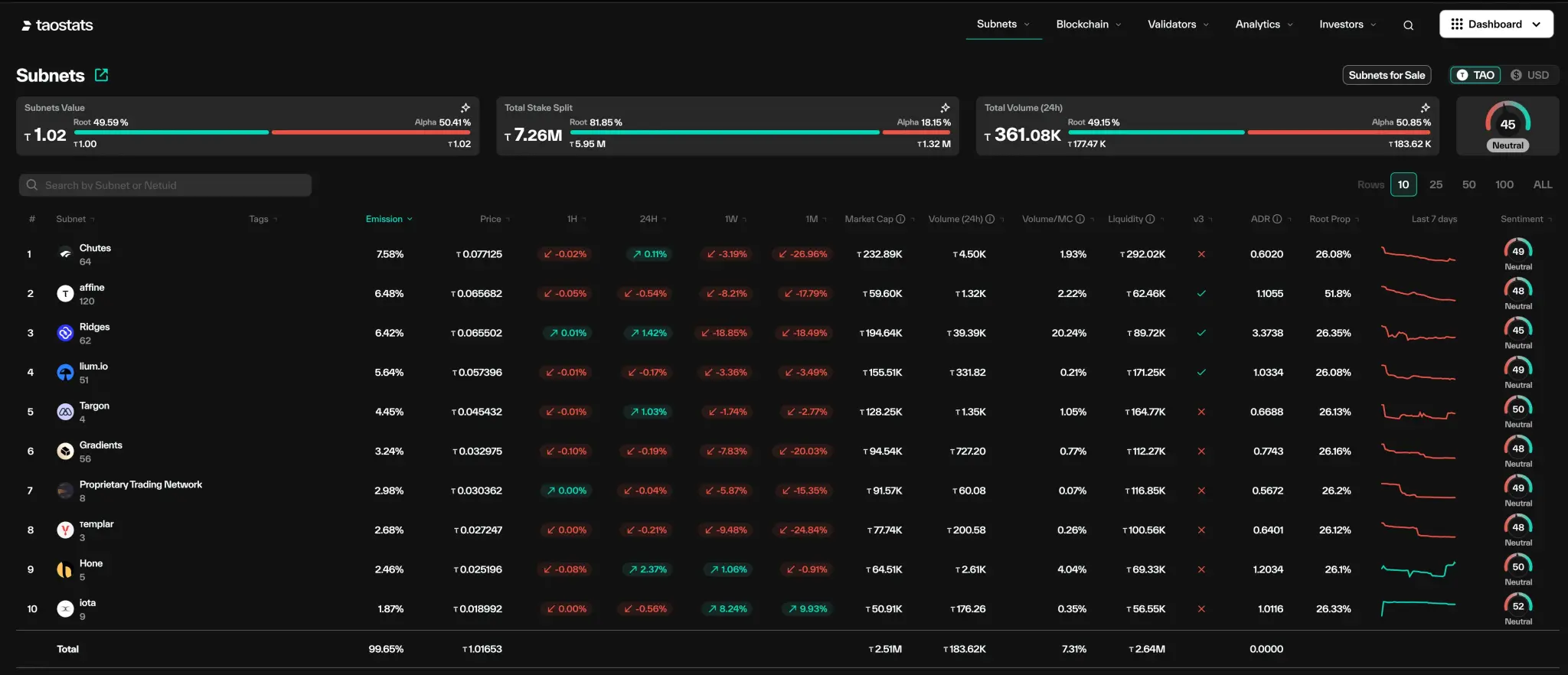
This means there's currently intense competition within the mining ecosystem for the highest returns. Most miners will stick to mining on the best-performing subnets, and if they mine on top subnets, the price of those subnet tokens will rise accordingly. Increased mining demand driven by high issuance always leads to higher subnet token prices. Initial demand for mining on a subnet often comes from speculation about the use case it's building, the team behind it, its track record, and the backing of a major corporation.

Currently, the top subnet tokens with the highest issuance volume include Chutes, Ridges, and Gradient. Some of these subnets are also venture-backed. For example, Gradient is building the AI Trains platform. It was built by Rayon Labs, which also operates Chutes, the leading subnet by issuance volume. Many of these subnets are collaborating with each other to exchange services. For example, Ridges is a Chutes client; Sportstensor is building AI models for sports betting and prediction; and there are subnets like OpenKaito, which powers Kaito's InfoFi Pioneer. Taofi is also part of Bittensor. They have launched a DEX that allows you to easily bridge and exchange subnet tokens from the Base network.

Trust TAO

If you're asking which subnet tokens will attract demand, you need to track the growth of the subnet token's price relative to TAO. The more growth you see over different timeframes, the higher the demand. Then, you need to look at the ADR (alpha distribution ratio). It should be less than 1, as token withdrawals are now permitted. The worst-performing subnets are withdrawn weekly. If the ADR ratio is above 1, the community may lose a portion of the value of the TAO collateral staked to acquire that token due to the liquidation discount upon withdrawal.
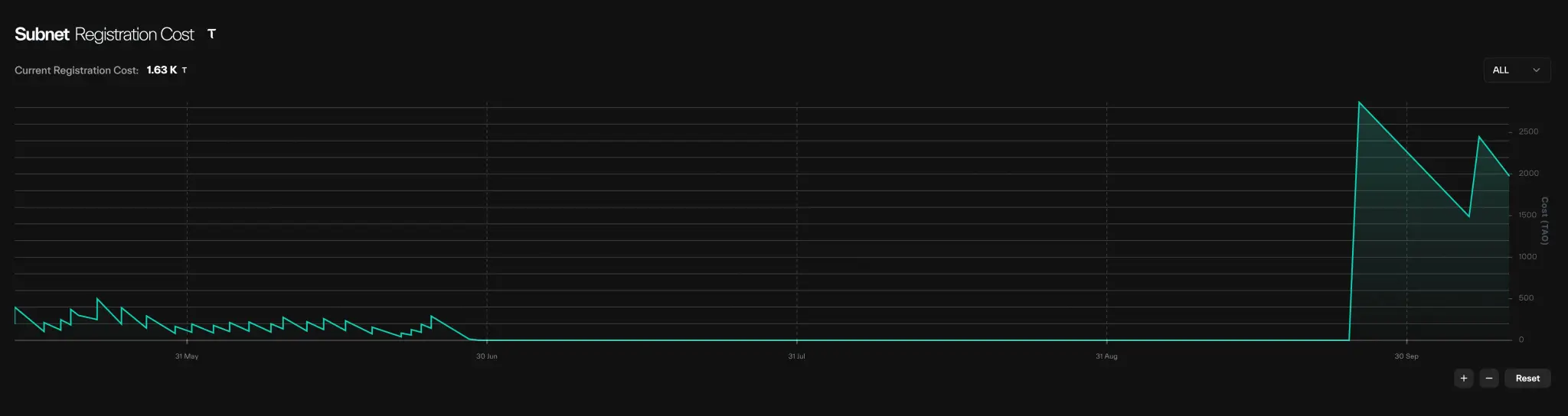
You can also track staking pools for different subnets. The more TAO is staked to acquire subnet tokens, the more likely the price will rise. Therefore, the value of subnet tokens depends largely on how long they can maintain high issuance. If they maintain high issuance and the businesses surrounding the subnet generate revenue from the services and products they provide, the price of the subnet token is likely to continue to rise. The overall market capitalization growth surrounding the subnet will directly drive TAO price increases.

However, it's recommended to stay away from things you don't understand. Subnet tokens aren't like your average altcoin or junk coin. They require a deeper logical understanding, so if you believe in their vision, invest in TAO. TAO isn't meant to be traded, but rather a cultural symbol against AI centralization.

The question isn’t whether decentralized AI will exist, but who will own it. Bittensor has made its choice, and others will too.

Related Reading: Bittensor Subnet Investment Guide: Seizing the Next AI Trend

Market Opportunity
Bittensor Logo
Bittensor Price(TAO)
$164.53
$164.53$164.53
-1.88%
USD
Bittensor (TAO) Live Price Chart
Disclaimer: The articles reposted on this site are sourced from public platforms and are provided for informational purposes only. They do not necessarily reflect the views of MEXC. All rights remain with the original authors. If you believe any content infringes on third-party rights, please contact service@support.mexc.com for removal. MEXC makes no guarantees regarding the accuracy, completeness, or timeliness of the content and is not responsible for any actions taken based on the information provided. The content does not constitute financial, legal, or other professional advice, nor should it be considered a recommendation or endorsement by MEXC.

You May Also Like

HitPaw API is Integrated by Comfy for Professional Image and Video Enhancement to Global Creators

HitPaw API is Integrated by Comfy for Professional Image and Video Enhancement to Global Creators

SAN FRANCISCO, Feb. 7, 2026 /PRNewswire/ — HitPaw, a leader in AI-powered visual enhancement solutions, announced Comfy, a global content creation platform, is
Share
AI Journal2026/02/08 09:15
Journalist gives brutal review of Melania movie: 'Not a single person in the theater'
Journalist gives brutal review of Melania movie: 'Not a single person in the theater'

A Journalist gave a brutal review of the new Melania documentary, which has been criticized by those who say it won't make back the huge fees spent to make it,
Share
Rawstory2026/02/08 09:08
Jerome Powell’s Press Conference: Crucial Insights Unveiled for the Market’s Future

Jerome Powell’s Press Conference: Crucial Insights Unveiled for the Market’s Future

BitcoinWorld Jerome Powell’s Press Conference: Crucial Insights Unveiled for the Market’s Future The financial world, including the dynamic cryptocurrency market, often hangs on every word from the Federal Reserve. Recently, Jerome Powell’s press conference following the Federal Open Market Committee (FOMC) meeting concluded, leaving investors and analysts dissecting his remarks for clues about the future economic direction. This event is always a pivotal moment, shaping expectations for inflation, interest rates, and the overall stability of global markets. What Were the Key Takeaways from Jerome Powell’s Press Conference? During Jerome Powell’s press conference, the Fed Chair provided an update on the central bank’s monetary policy decisions and its economic outlook. His statements often reiterate the Fed’s dual mandate: achieving maximum employment and stable prices. This time was no different, with a strong emphasis on managing persistent inflation. Key points from the recent discussion included: Inflation Control: Powell emphasized the Fed’s unwavering commitment to bringing inflation back down to its 2% target. He reiterated that the fight against rising prices remains the top priority, even if it entails some economic slowdown. Interest Rate Policy: While the Fed’s stance on future interest rate adjustments was discussed, the path remains data-dependent. Powell indicated that decisions would continue to be made meeting-by-meeting, based on incoming economic data. Economic Projections: The updated Summary of Economic Projections (SEP) offered insights into the Fed’s forecasts for GDP growth, unemployment, and inflation. These projections help market participants gauge the central bank’s expectations for the economy’s trajectory. Quantitative Tightening (QT): The ongoing process of reducing the Fed’s balance sheet, known as quantitative tightening, was also a topic. This reduction in liquidity in the financial system has broad implications for asset prices. How Did Jerome Powell’s Remarks Impact Cryptocurrency Markets? The conclusion of Jerome Powell’s press conference often sends ripples through traditional financial markets, and cryptocurrencies are increasingly sensitive to these macroeconomic shifts. Digital assets, once thought to be uncorrelated, now frequently react to the Fed’s monetary policy signals. Higher interest rates, for instance, tend to make riskier assets like cryptocurrencies less attractive. This is because investors might prefer safer, interest-bearing investments. Consequently, we often see increased volatility in Bitcoin (BTC) and Ethereum (ETH) prices immediately following such announcements. The tightening of financial conditions, driven by the Fed, reduces overall liquidity in the system, which can put downward pressure on asset valuations across the board. However, some argue that this growing correlation signifies crypto’s increasing integration into the broader financial ecosystem. It suggests that institutional investors and mainstream finance are now paying closer attention to digital assets, treating them more like other risk-on investments. Navigating the Economic Landscape After Jerome Powell’s Press Conference For cryptocurrency investors, understanding the implications of Jerome Powell’s press conference is crucial for making informed decisions. The Fed’s policy trajectory directly influences the availability of capital and investor sentiment, which are key drivers for crypto valuations. Here are some actionable insights for navigating this environment: Stay Informed: Regularly monitor Fed announcements and economic data releases. Understanding the macroeconomic backdrop is as important as analyzing individual crypto projects. Assess Risk Tolerance: In periods of economic uncertainty and tighter monetary policy, a reassessment of personal risk tolerance is wise. Diversification within your crypto portfolio and across different asset classes can mitigate potential downsides. Focus on Fundamentals: While market sentiment can be swayed by macro news, projects with strong fundamentals, clear use cases, and robust development teams tend to perform better in the long run. Long-Term Perspective: Cryptocurrency markets are known for their volatility. Adopting a long-term investment horizon can help weather short-term fluctuations driven by macro events like Fed meetings. The challenges include potential continued volatility and reduced liquidity. However, opportunities may arise from market corrections, allowing strategic investors to accumulate assets at lower prices. In summary, Jerome Powell’s press conference provides essential guidance on the Fed’s economic strategy. Its conclusions have a profound impact on financial markets, including the dynamic world of cryptocurrencies. Staying informed, understanding the nuances of monetary policy, and maintaining a strategic investment approach are paramount for navigating the evolving economic landscape. The Fed’s actions underscore the interconnectedness of traditional finance and the burgeoning digital asset space. Frequently Asked Questions (FAQs) Q1: What is the Federal Open Market Committee (FOMC)? A1: The FOMC is the monetary policy-making body of the Federal Reserve System. It sets the federal funds rate target and directs open market operations, influencing the availability of money and credit in the U.S. economy. Q2: How do the Fed’s interest rate decisions typically affect cryptocurrency markets? A2: Generally, when the Fed raises interest rates, it makes borrowing more expensive and reduces liquidity in the financial system. This often leads investors to shy away from riskier assets like cryptocurrencies, potentially causing prices to decline. Conversely, lower rates can stimulate investment in riskier assets. Q3: What does “data-dependent” mean in the context of Fed policy? A3: “Data-dependent” means that the Federal Reserve’s future monetary policy decisions, such as interest rate adjustments, will primarily be based on the latest economic data. This includes inflation reports, employment figures, and GDP growth, rather than a predetermined schedule. Q4: Should I change my cryptocurrency investment strategy based on Jerome Powell’s press conference? A4: While it’s crucial to be aware of the macroeconomic environment shaped by Jerome Powell’s press conference, drastic changes to a well-researched investment strategy may not always be necessary. It’s recommended to review your portfolio, assess your risk tolerance, and consider if your strategy aligns with the current economic outlook, focusing on long-term fundamentals. If you found this analysis helpful, please consider sharing it with your network! Your insights and shares help us reach more readers interested in the intersection of traditional finance and the exciting world of cryptocurrencies. Spread the word! To learn more about the latest crypto market trends, explore our article on key developments shaping Bitcoin price action. This post Jerome Powell’s Press Conference: Crucial Insights Unveiled for the Market’s Future first appeared on BitcoinWorld.
Share
Coinstats2025/09/18 16:25
