Leading stablecoin issuer Tether is positioning itself to compete with banks in commodity trade lending after deploying approximately $1.5 billion in credit to the market, according to a Bloomberg report. Tether CEO Paolo Ardoino revealed on November 14 that the firm intends to scale up its lending activities across multiple commodity markets, ranging from oil and cotton to wheat and various agricultural goods. The company has provided loans in both US dollars and its USDT stablecoin, which is backed by U.S. Treasury bills and precious metals like gold. While Tether remains a minority player compared to the most active banks in commodities lending, the income it generates from its nearly $200 billion in reserves gives the company significant firepower to compete. Last October, Cryptonews covered Tether’s preliminary conversations with multiple companies regarding dollar-denominated lending ventures. At that time, Ardoino noted: “We’re unlikely to publicly share specific investment figures for commodity trading. Our strategy is still taking shape.” He emphasized that future prospects are “enormous,” with Tether keen to pursue diverse opportunities within commodity markets. The Current Commodity Lending Model Commodity trade lending is essentially short-term credit that helps commodity producers, traders, and buyers manage the timing and costs associated with purchasing, transporting, and selling physical goods. Banks have historically filled this role by helping merchants manage cash flow gaps between upstream payments to suppliers and downstream collections from customers. However, the process tends to be documentation-heavy and time-consuming, though banks bring decades of operational know-how, regulatory frameworks, and a longstanding partnership with major commodity firms. How Tether’s Approach Differs Tether’s commodity lending model operates in a simpler, faster manner; instead of relying solely on bank wires or letters of credit, it lends either U.S. dollars or USDT directly to commodity traders. Because USDT transfers settle near instantly across borders, it is already widely used in emerging markets, particularly in commodity-exporting regions. Tether can offer quicker access to working capital when traders need liquidity most. Where Tether could also rival banks is in speed of settlement and access to liquidity in markets where traditional financing is slow or expensive. A trader who might wait days for a bank to process a loan or verify documents could receive funds in minutes via USDT, enabling them to move cargo or secure a shipment before prices shift. Tether’s commodities finance push arrives several years after traditional banks reduced their exposure to this sector following multiple high-profile failures and fraud allegations that damaged lender confidence.Source: X/APM Research This has led to a growing market for private credit, especially for financing deals in riskier locations where banks are less willing to lend. For Tether and other private lenders, commodities finance is also attractive because credit facilities typically cycle through multiple uses within compressed timeframes, generating frequent and consistent interest payments. Tether’s Financial Position Tether appears unstoppable right now, with the world’s largest stablecoin issuer on track to generate approximately $15 billion this year. Bitwise’s chief investment officer, Matt Houga, recently predicted that Tether could become the world’s most profitable company, potentially overtaking Saudi Aramco. It’s the world’s third-largest digital asset with a market capitalization of $183.8 billion, up 50% compared to this time last year. Although Tether maintains strong cash reserves, recent reports suggest that the company may seek $20 billion in new capital for a 3% ownership stake. Such a transaction would establish a valuation near $500 billion, eclipsing Netflix and Samsung while approaching iconic financial services brands like Mastercard. The firm has simultaneously expanded its precious metals holdings, with its gold reserves now exceeding $12 billion. To support this expansion, Tether recently brought on board leadership from HSBC’s metals division to strengthen its bullion infrastructureLeading stablecoin issuer Tether is positioning itself to compete with banks in commodity trade lending after deploying approximately $1.5 billion in credit to the market, according to a Bloomberg report. Tether CEO Paolo Ardoino revealed on November 14 that the firm intends to scale up its lending activities across multiple commodity markets, ranging from oil and cotton to wheat and various agricultural goods. The company has provided loans in both US dollars and its USDT stablecoin, which is backed by U.S. Treasury bills and precious metals like gold. While Tether remains a minority player compared to the most active banks in commodities lending, the income it generates from its nearly $200 billion in reserves gives the company significant firepower to compete. Last October, Cryptonews covered Tether’s preliminary conversations with multiple companies regarding dollar-denominated lending ventures. At that time, Ardoino noted: “We’re unlikely to publicly share specific investment figures for commodity trading. Our strategy is still taking shape.” He emphasized that future prospects are “enormous,” with Tether keen to pursue diverse opportunities within commodity markets. The Current Commodity Lending Model Commodity trade lending is essentially short-term credit that helps commodity producers, traders, and buyers manage the timing and costs associated with purchasing, transporting, and selling physical goods. Banks have historically filled this role by helping merchants manage cash flow gaps between upstream payments to suppliers and downstream collections from customers. However, the process tends to be documentation-heavy and time-consuming, though banks bring decades of operational know-how, regulatory frameworks, and a longstanding partnership with major commodity firms. How Tether’s Approach Differs Tether’s commodity lending model operates in a simpler, faster manner; instead of relying solely on bank wires or letters of credit, it lends either U.S. dollars or USDT directly to commodity traders. Because USDT transfers settle near instantly across borders, it is already widely used in emerging markets, particularly in commodity-exporting regions. Tether can offer quicker access to working capital when traders need liquidity most. Where Tether could also rival banks is in speed of settlement and access to liquidity in markets where traditional financing is slow or expensive. A trader who might wait days for a bank to process a loan or verify documents could receive funds in minutes via USDT, enabling them to move cargo or secure a shipment before prices shift. Tether’s commodities finance push arrives several years after traditional banks reduced their exposure to this sector following multiple high-profile failures and fraud allegations that damaged lender confidence.Source: X/APM Research This has led to a growing market for private credit, especially for financing deals in riskier locations where banks are less willing to lend. For Tether and other private lenders, commodities finance is also attractive because credit facilities typically cycle through multiple uses within compressed timeframes, generating frequent and consistent interest payments. Tether’s Financial Position Tether appears unstoppable right now, with the world’s largest stablecoin issuer on track to generate approximately $15 billion this year. Bitwise’s chief investment officer, Matt Houga, recently predicted that Tether could become the world’s most profitable company, potentially overtaking Saudi Aramco. It’s the world’s third-largest digital asset with a market capitalization of $183.8 billion, up 50% compared to this time last year. Although Tether maintains strong cash reserves, recent reports suggest that the company may seek $20 billion in new capital for a 3% ownership stake. Such a transaction would establish a valuation near $500 billion, eclipsing Netflix and Samsung while approaching iconic financial services brands like Mastercard. The firm has simultaneously expanded its precious metals holdings, with its gold reserves now exceeding $12 billion. To support this expansion, Tether recently brought on board leadership from HSBC’s metals division to strengthen its bullion infrastructure

Stablecoin Issuer Tether Set to Rival Banks in Commodity Trade Lending

2025/11/14 22:44
4 min read

Leading stablecoin issuer Tether is positioning itself to compete with banks in commodity trade lending after deploying approximately $1.5 billion in credit to the market, according to a Bloomberg report.

Tether CEO Paolo Ardoino revealed on November 14 that the firm intends to scale up its lending activities across multiple commodity markets, ranging from oil and cotton to wheat and various agricultural goods.

The company has provided loans in both US dollars and its USDT stablecoin, which is backed by U.S. Treasury bills and precious metals like gold.

While Tether remains a minority player compared to the most active banks in commodities lending, the income it generates from its nearly $200 billion in reserves gives the company significant firepower to compete.

Last October, Cryptonews covered Tether’s preliminary conversations with multiple companies regarding dollar-denominated lending ventures.

At that time, Ardoino noted: “We’re unlikely to publicly share specific investment figures for commodity trading. Our strategy is still taking shape.”

He emphasized that future prospects are “enormous,” with Tether keen to pursue diverse opportunities within commodity markets.

The Current Commodity Lending Model

Commodity trade lending is essentially short-term credit that helps commodity producers, traders, and buyers manage the timing and costs associated with purchasing, transporting, and selling physical goods.

Banks have historically filled this role by helping merchants manage cash flow gaps between upstream payments to suppliers and downstream collections from customers.

However, the process tends to be documentation-heavy and time-consuming, though banks bring decades of operational know-how, regulatory frameworks, and a longstanding partnership with major commodity firms.

How Tether’s Approach Differs

Tether’s commodity lending model operates in a simpler, faster manner; instead of relying solely on bank wires or letters of credit, it lends either U.S. dollars or USDT directly to commodity traders.

Because USDT transfers settle near instantly across borders, it is already widely used in emerging markets, particularly in commodity-exporting regions.

Tether can offer quicker access to working capital when traders need liquidity most.

Where Tether could also rival banks is in speed of settlement and access to liquidity in markets where traditional financing is slow or expensive.

A trader who might wait days for a bank to process a loan or verify documents could receive funds in minutes via USDT, enabling them to move cargo or secure a shipment before prices shift.

Tether’s commodities finance push arrives several years after traditional banks reduced their exposure to this sector following multiple high-profile failures and fraud allegations that damaged lender confidence.
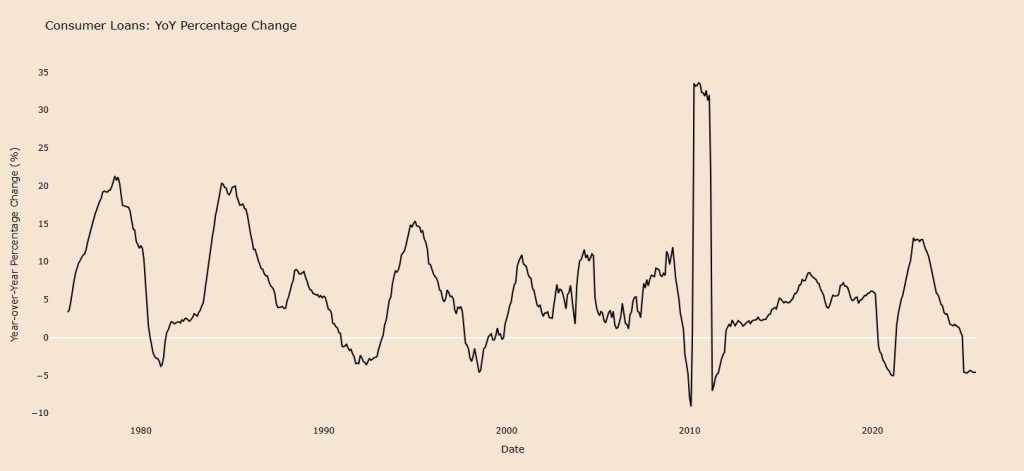
Stablecoin Issuer Tether Set to Rival Banks in Commodity Trade LendingSource: X/APM Research

This has led to a growing market for private credit, especially for financing deals in riskier locations where banks are less willing to lend.

For Tether and other private lenders, commodities finance is also attractive because credit facilities typically cycle through multiple uses within compressed timeframes, generating frequent and consistent interest payments.

Tether’s Financial Position

Tether appears unstoppable right now, with the world’s largest stablecoin issuer on track to generate approximately $15 billion this year.

Bitwise’s chief investment officer, Matt Houga, recently predicted that Tether could become the world’s most profitable company, potentially overtaking Saudi Aramco.

It’s the world’s third-largest digital asset with a market capitalization of $183.8 billion, up 50% compared to this time last year.

Although Tether maintains strong cash reserves, recent reports suggest that the company may seek $20 billion in new capital for a 3% ownership stake.

Such a transaction would establish a valuation near $500 billion, eclipsing Netflix and Samsung while approaching iconic financial services brands like Mastercard.

The firm has simultaneously expanded its precious metals holdings, with its gold reserves now exceeding $12 billion.

To support this expansion, Tether recently brought on board leadership from HSBC’s metals division to strengthen its bullion infrastructure.

Disclaimer: The articles reposted on this site are sourced from public platforms and are provided for informational purposes only. They do not necessarily reflect the views of MEXC. All rights remain with the original authors. If you believe any content infringes on third-party rights, please contact service@support.mexc.com for removal. MEXC makes no guarantees regarding the accuracy, completeness, or timeliness of the content and is not responsible for any actions taken based on the information provided. The content does not constitute financial, legal, or other professional advice, nor should it be considered a recommendation or endorsement by MEXC.

You May Also Like

XRP Tests 12-Year Support as ETF AUM Tops $1B

XRP Tests 12-Year Support as ETF AUM Tops $1B

XRP has hit a 12-year trendline with an inflow of institutional capital, which may cause a trend reversal in the long run.
Share
Tronweekly2026/02/15 22:00
Coinbase Issues Cryptocurrency Call to US Justice Department: “Solve Urgent Problems!”

Coinbase Issues Cryptocurrency Call to US Justice Department: “Solve Urgent Problems!”

The post Coinbase Issues Cryptocurrency Call to US Justice Department: “Solve Urgent Problems!” appeared on BitcoinEthereumNews.com. Coinbase, the largest cryptocurrency exchange in the United States, stated that there should be uniform cryptocurrency regulation in the country. At this point, Coinbase sent a letter to the US Department of Justice requesting that federal regulators prevent state regulations from conflicting with national crypto policies and ensure uniform regulatory clarity. Coinbase’s request comes after the state of Oregon filed a lawsuit against Coinbase for unregistered securities, despite the SEC withdrawing its lawsuit against the cryptocurrency exchange. Coinbase states that although the country’s top regulator, the SEC, withdrew its lawsuit, states are filing lawsuits in defiance of the SEC’s decision. In the letter, addressed by Coinbase Legal Counsel Paul Grewal, he stated: “Despite the Trump administration’s positive regulatory efforts, crypto companies are being negatively impacted by states’ flawed interpretations of securities laws and their divergent actions. If Oregon can sue us for services that are legal under federal law, we have a problem. It has long been clear that the current patchwork of state laws is not only inefficient, but also slows innovation and harms consumers. At this point, the Justice Department should take steps to address the pressing issues by calling on Congress to step in and enact comprehensive and uniform regulations.” Oregon Attorney General Dan Rayfield filed a lawsuit against Coinbase last April, alleging that Coinbase was promoting the sale of unregistered cryptocurrencies to individuals in Oregon. *This is not investment advice. Follow our Telegram and Twitter account now for exclusive news, analytics and on-chain data! Source: https://en.bitcoinsistemi.com/coinbase-issues-cryptocurrency-call-to-us-justice-department-solve-urgent-problems/
Share
BitcoinEthereumNews2025/09/18 05:06
Study suggests WLFI could act as an ‘early warning signal’ in crypto

Study suggests WLFI could act as an ‘early warning signal’ in crypto

Trump-linked WLFI dropped more than five hours before a $6.9 billion crypto liquidation event, raising questions about early market stress signals.World Liberty
Share
Coinstats2026/02/15 21:04