How Spacecoin Broke Into the $1 Trillion Space Race With a Successful Satellite Launch
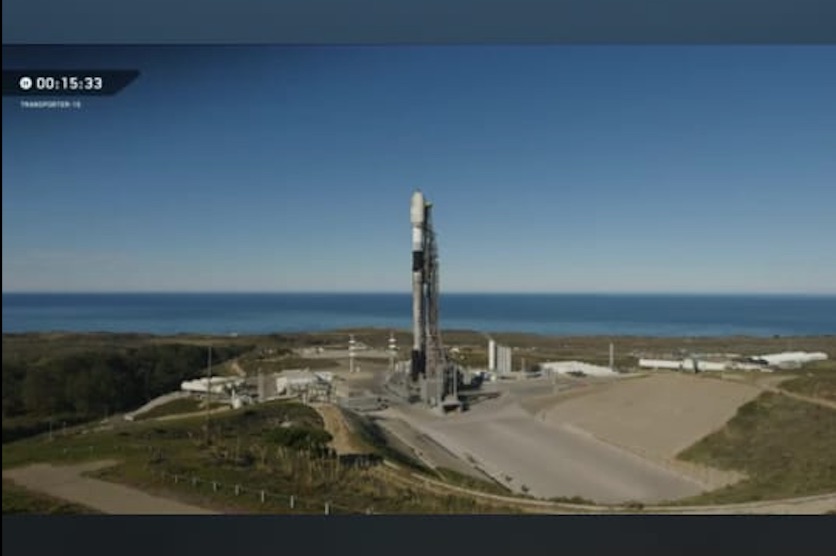
\ Now picture something different: three Spacecoin satellites successfully lifting off aboard a Falcon 9 rocket at Vandenberg Space Force Base on November 20. Over a year of engineering, millions in capital, and partnerships culminated in 90 seconds of controlled chaos as 1.7 million pounds of thrust pushed hardware into orbit and the mission succeeded.
\ These aren’t mockups or test renders. They’re real satellites. Satellites that cost real money to design, manufacture, test, and launch. While blockchain projects debate tokenomics and announce surface-level partnerships, Spacecoin booked SpaceX rideshare capacity over a year ago, signed contracts with aerospace manufacturers and governments, and delivered flight-ready units to Vandenberg.
\ Where others announce strategic partnerships, Spacecoin signed actual contracts and launched satellites into orbit.
\ 
The company proved viability in October 2025, transmitting the first end-to-end blockchain transaction through space via its first satellite called CTC-0. Chile to Portugal, 7,000 kilometers, cryptographic signatures intact. No terrestrial internet. Just satellites, radio waves, and proof that decentralized infrastructure can operate beyond Earth's surface.
\ You can track CTC-0’s live location right now. Real-time satellite monitoring shows it transmitting data every 90 minutes, 500 kilometers above Earth. And no, it’s not a demo or "coming soon." It’s a working hardware in the orbit - launched by a Web3 company.
\ Spacecoin’s successful November 20 launch now scales this effort. The three satellites will test inter-satellite communication, mesh networking, and throughput capacity needed to serve the 3 billion people without affordable internet access. Spacecoin has now entered the phase where it will validate functional satellite internet infrastructure in real time or fail publicly. No middle ground exists in orbital mechanics.
\
The $33 Billion Market Blockchain Companies Theorize About
\ Satellite internet will grow from $14.56 billion in 2025 to $33.44 billion by 2030, expanding at 18.1% annually. The broader space economy approaches $1 trillion by 2030, with connectivity infrastructure representing the fastest growth segment. SpaceX's Starlink generates billions in revenue with 8,000 satellites serving millions of customers. Amazon's Project Kuiper plans 3,236 satellites. OneWeb operates hundreds more.
\ While giants compete for wealthy consumers, Spacecoin spotted what everyone else missed: 3 billion people in developing markets with zero affordable access. Not charity, untapped market share in a $33.44 billion industry growing faster than almost any other sector.
\ Spacecoin is also preparing to launch its Open Protocol, which will open-source both its satellite and protocol designs. This approach allows governments, telecoms, and private operators to launch compatible satellites and participate freely. By distributing infrastructure across multiple operators, the network aims to reduce connectivity costs to just a few dollars per user per month in initial key markets such as Nigeria, Indonesia, and India. Centralized networks cannot achieve this level of affordability because they need to recover billions in capital.
\ Spacecoin has already invested millions in researching, developing, and launching its first round of blockchain-enabled satellites, and will invest millions more as the constellation size grows. This is infrastructure spending, not software development. Hardware does not iterate with git commits and continuous deployment pipelines.
\
The Infrastructure Play Crypto Companies Miss
Countless Web3 startups claim they’ll change the world, but only a handful ever take the leap to actually do it. While Bitcoin set out to bank the unbanked, Spacecoin’s mission is to bring internet access to the places the world still hasn’t reached. Three billion people lack affordable internet. Most live in developing regions where infrastructure economics prohibit traditional buildout. Laying fiber to rural villages in sub-Saharan Africa or Southeast Asia costs more than subscriber revenue justifies. Cellular towers face similar economics in low-density areas.
\ Satellite coverage ignores geography. A constellation in low Earth orbit covers continents without terrestrial infrastructure. The business model shifts from direct consumer sales to wholesale capacity. Telecom operators, governments, NGOs, educational institutions buy connectivity and resell locally. A government connects rural hospitals and schools. A mobile carrier extends coverage where towers fail economically. An NGO enables distance learning in refugee camps.
\ Spacecoin targets $1 to $2 monthly access pricing in emerging markets, 50-100x cheaper than Starlink's $50-120 consumer plans. This price point requires different architecture. Instead of competing with fiber in developed markets, Spacecoin becomes Layer 1 infrastructure for regions where alternatives do not exist.
Two totally different plays for two totally different markets.
\ The Decentralized Physical Infrastructure Network model enables this. Ground station operators, bandwidth providers, and network participants earn tokens for contributing capacity. Users build verifiable digital identities through network access, creating financial inclusion in regions where traditional banking systems remain inaccessible.
\ Spacecoin filed for U.S. patent approval on Proof of Location and Velocity mechanisms, validating that transmissions originated from specific satellites at specific times. This creates audit trails for network activity, security against spoofing attacks, and cryptographic verification without centralized authorities.
\ The technical validation matters. CTC-0 remains operational, trackable via real-time satellite monitoring, transmitting data on 90-minute orbits 500 kilometers above Earth. Anyone can verify position, velocity, and operational status.
The Team That Chose Hardware Over Hype
Founder Tae Oh built Creditcoin, targeting real-world credit access through blockchain infrastructure. And instead of leaving his past work behind, Tae chose to build on it. Spacecoin runs on the Creditcoin ecosystem, extending the same foundation into a new frontier.
\ General Wesley Clark, retired four-star U.S. Army general and former Supreme Allied Commander Europe of NATO, advises on strategy. Decades of managing global infrastructure security and large-scale deployment operations translate directly to satellite constellation logistics. Don’t mistake this for a celebrity advisory role. It’s the kind of hands-on experience that comes from years of leading real-world operations, now being applied to build and scale Spacecoin across jurisdictions.
\ Moreover, over the years, Tae and his team have poured their time, energy & personal savings into bringing Spacecoin to life. What began as an idea has evolved into a hands-on mission filled with late nights, trial runs, and moments of doubt that turned into breakthroughs. Every satellite they launch and every system they refine carries a piece of that effort. Their journey is still unfolding, driven by the same belief that real change takes persistence, patience, and heart.
\
Why Hardware Accountability Changes Everything
Blockchain thrives on iteration. Deploy, test, fix, redeploy. Software allows mistakes. Hardware doesn't. Satellites cannot be patched after launch. A failed component ends the mission. Launch failures destroy millions in seconds. No git commits fix orbital mechanics.
\ The satellites launched running the Spacecoin protocol will either work or become debris. Ground stations either connect or don't. The binary nature of hardware forces accountability software projects never face. The $33.44 billion satellite internet market attracts aerospace giants, telecom operators, and tech companies. Blockchain projects announce space partnerships. Few build satellites.
\ Spacecoin spent millions on engineering, manufacturing, and SpaceX bookings. The company will spend millions more reaching operational scale. This separates infrastructure from marketing.
\ Now that the launch has succeeded, the answers are beginning to emerge. Spacecoin’s satellites will either establish mesh networking and validate the model in the coming weeks, or any failures will force reevaluation. Unlike whitepapers, hardware provides clear results and the first major step, the launch itself, has already succeeded.
\ The question was never whether blockchain works in space?
Multiple projects proved that. The real question is whether crypto companies will keep hitching rides on others’ hardware or start building their own.
\ Don’t forget to like and share the story!
\n
You May Also Like

Wormhole Unveils W Token 2.0 with Enhanced Tokenomics

Hacker behind the UXLINK attack loses $48 million to a phishing scam