The L1 blockchain Quai Network, which was officially launched on its mainnet not long ago, has created a cryptographic infrastructure driven by both technology and applications, which can help unlock more potential for PayFi. Its innovative design can break the efficiency bottleneck of traditional payments and the scalability problem of blockchain, thus paving the way for seamless connection between the crypto economy and the real world.The L1 blockchain Quai Network, which was officially launched on its mainnet not long ago, has created a cryptographic infrastructure driven by both technology and applications, which can help unlock more potential for PayFi. Its innovative design can break the efficiency bottleneck of traditional payments and the scalability problem of blockchain, thus paving the way for seamless connection between the crypto economy and the real world.

Crypto infrastructure that drives both technology and applications, how does Quai Network open up the PayFi highway?

2025/03/12 16:30

Author: Nancy, PANews

Crypto assets are accelerating their penetration into the real world. As a new financial paradigm that integrates traditional payments and DeFi, PayFi can free payment flows from the lengthy paths of financial institutions and reshape the way of financial interaction in the real world. In response to this market trend, L1 blockchain Quai Network, which officially launched its mainnet not long ago, has created a crypto infrastructure driven by both technology and applications, which can help unlock more potential for PayFi. Its innovative design can break the efficiency bottleneck of traditional payments and the scalability problem of blockchain, thus paving the way for seamless connection between the crypto economy and the real world.

Challenging the “Impossible Triangle” and paving a technological highway for PayFi

Bitcoin has evolved from a niche consensus among geeks to a global mainstream asset, marking the gradual maturity of crypto technology and its integration into traditional finance. As an emerging crypto narrative, PayFi challenges the traditional financial framework with the innovative model of "Buy Now Pay Never". It should be noted that the traditional payment system is limited by high fees, long settlement cycles and geographical restrictions, while the existing crypto payment solutions face problems such as cost fluctuations, insufficient throughput and narrow application scenarios, making it difficult to meet large-scale commercial needs.

PayFi aims to achieve instant settlement, low-cost cross-border payment and seamless linkage with RWA through blockchain, solve the pain points of traditional finance and give practical value to crypto assets. However, its large-scale application needs to find a balance between transaction efficiency, cost control and ecological compatibility, which places extremely high demands on infrastructure. As a scalable and programmable L1 blockchain, Quai Network provides support for PayFi with its technological advantages.

PoEM and Dynamic Sharding: Quai Network combines the innovative consensus mechanism PoEM with dynamic sharding architecture to provide an efficient, scalable and secure blockchain solution.

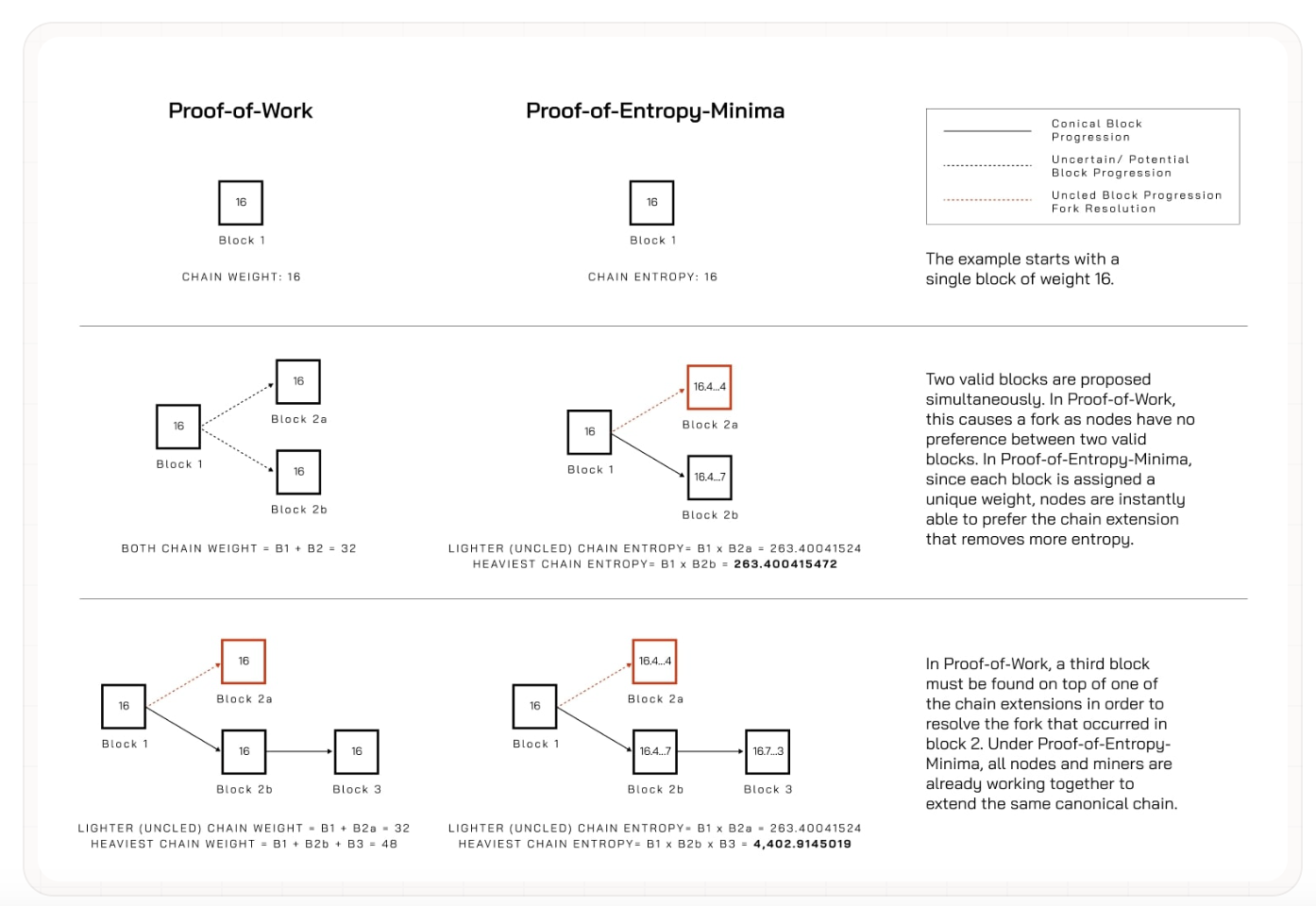
Specifically, Quai Network's sharding architecture uses a dynamic sharding algorithm that can process transactions in parallel based on transaction needs, increasing throughput without sacrificing security. Unlike the single-chain recording method of traditional blockchains (such as Bitcoin or Ethereum), Quai Network processes transactions concurrently through multiple independently executed shards to achieve higher performance. However, as the number of shards increases, cross-shard coordination and consensus speed become expansion bottlenecks. PoEM optimizes PoW consensus and introduces entropy (i.e. randomness) removed from blocks to give block weights. Nodes prioritize blocks with the most entropy removed as chain heads, thereby eliminating fork disputes, quickly reaching consensus, and reducing the impact of network delays.
Crypto infrastructure that drives both technology and applications, how does Quai Network open up the PayFi highway?

It can also be understood that dynamic sharding is a multi-lane highway, which can dynamically adjust lanes according to transaction volume, allowing transactions to be processed in parallel to avoid congestion; PoEM is like an intelligent navigation system, giving priority to "least troublesome" transactions to pass first, ensuring smooth cross-shard transactions without conflicts. This allows Quai Network to maintain high throughput and security in high-load scenarios, becoming a super highway designed for future payments.
Crypto infrastructure that drives both technology and applications, how does Quai Network open up the PayFi highway?

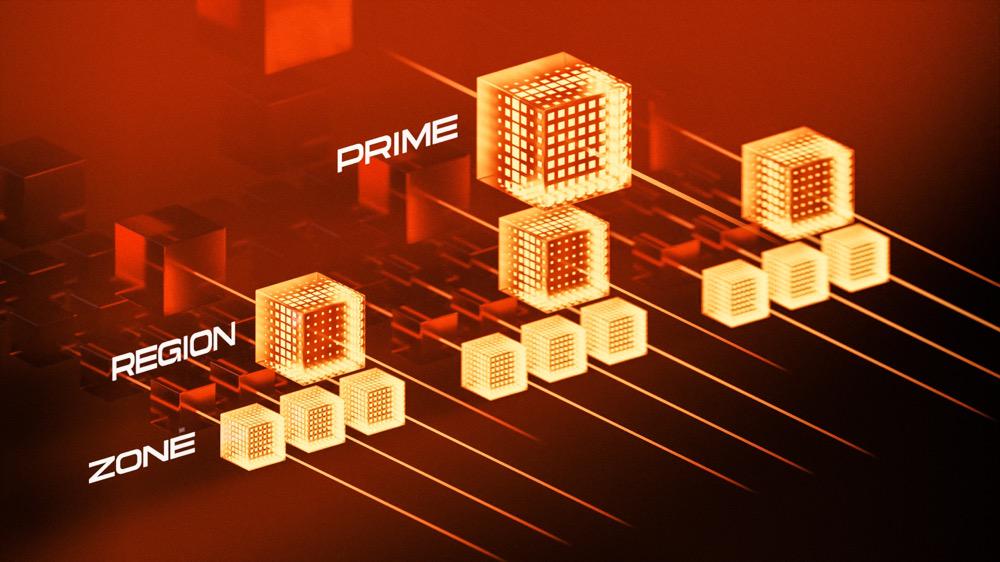
· Cross-chain interoperability: Quai Network adopts a hierarchical multi-chain architecture, dividing the network into multiple interoperable blockchains (execution shards): Prime Chain, Region Chains, and Zone Chains. This design can achieve a throughput of up to 50,000 TPS. To improve the efficiency of cross-shard transactions, Quai Network integrates seamless cross-chain transactions (ETXs), multi-chain contracts, atomicity guarantees, and dynamic sharding to ensure efficient and secure interoperability.

Imagine that using Quai Network to transfer money is like swiping a universal credit card. Whether you are sending money from the United States to a friend in Europe or buying a cup of coffee on the street corner, the money will arrive in a few seconds, the fee is less than 1 cent, and it is safe and tamper-proof. In this process, the main chain is responsible for coordination, the sub-chain is responsible for clearing the bill, and the partition chain is like a cash register that settles instantly, making cross-border payments as fast and efficient as local transactions.

More importantly, Quai Network is compatible with the Ethereum Virtual Machine (EVM). Developers can directly use Ethereum tools to develop and deploy smart contracts without having to learn a new technology stack, which greatly reduces the entry barrier. At the same time, Quai Network can also seamlessly connect with the Ethereum ecosystem (such as DApps, wallets, and infrastructure). In addition, Quai Network also adopts an anti-MEV (maximum extractable value) transaction sorting mechanism to ensure fairer and more efficient execution in the DeFi market.

Merged Mining: Quai Network significantly improves the scalability, security, and energy efficiency of blockchains through a merged mining mechanism. Miners can hash and protect multiple blockchains at the same time. This concept was first proposed by Satoshi Nakamoto, and Quai Network has further developed it into a multi-chain shared protocol network, which ensures network security and efficient collaboration through multi-chain parallelism, shared computing power, and overlapping blocks. In the Quai Network system, miners can mine three chains at the same time, improving computing power utilization and network throughput. Overlapping blocks (generated when miners find a nonce that meets the multi-chain difficulty) realize cross-chain state transfer through hash links, reducing reliance on trust and enhancing system stability.

For example, Xiao Pai buys coffee at a global coffee chain. Traditional blockchain is like using independent cash registers in stores in each country, which makes checkout slow and error-prone. However, Quai's merged mining is like an accountant using smart devices to process bills from multiple stores at the same time, making payment fast and secure. The overlapping block is a payment voucher that can be used in multiple countries. No matter which chain is used for payment, the system can quickly identify and complete the settlement.

In addition, Quai Network adopts the ASIC-resistant ProgPoW algorithm to encourage GPU mining, lower the hardware threshold, and strengthen decentralization. Of course, any blockchain that supports ProgPoW can join Quai Network for merged mining to further expand the ecological influence.

From this point of view, as the global demand for high-performance blockchain continues to grow, Quai Network attempts to break the "impossible triangle" problem through technical innovations such as PoEM consensus, dynamic sharding, cross-chain interoperability and merged mining, and builds an efficient, secure and scalable blockchain network. It can inject more possibilities into high-load application scenarios such as PayFi, and lay a technical foundation for the popularization of encrypted assets.

Create a dual-wheel driven token model, the mainnet has been officially launched

In addition to providing strong technical support for PayFi's diverse application scenarios, Quai Network's dual-token economic model can balance stability and flexibility in different financial market environments, bringing a dual-wheel drive of value storage and transaction medium to PayFi's application scenarios.
Crypto infrastructure that drives both technology and applications, how does Quai Network open up the PayFi highway?

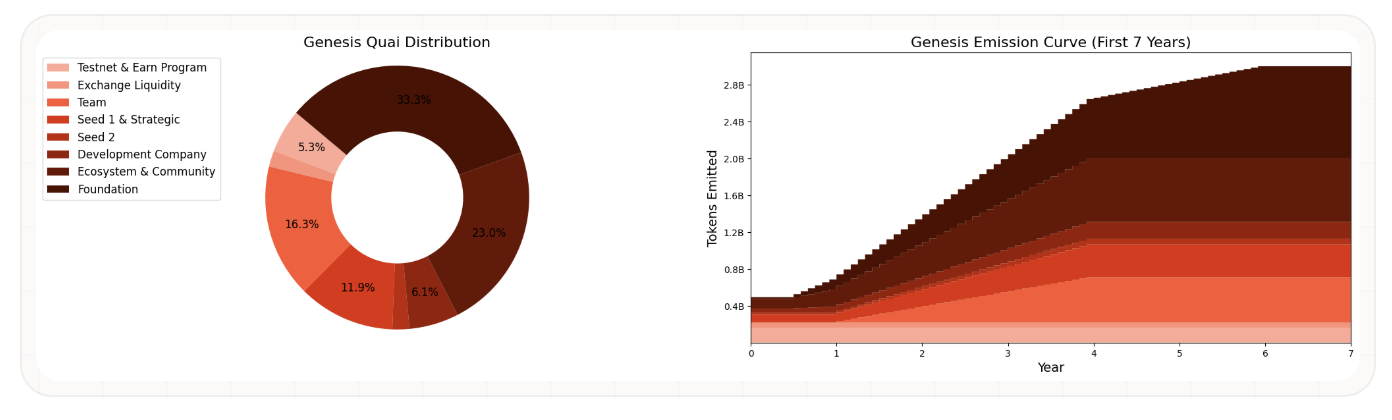
Among them, Quai is an EVM-compatible deflationary token that performs the function of storing value. The supply of Quai consists of two parts: the pre-allocation of the genesis block and the miner reward. It is designed with scarcity and deflation mechanisms to ensure that the growth rate of token supply is always lower than the network expansion rate. In other words, as the network scale and participation increase, the supply of Quai will gradually decrease. This mechanism effectively avoids the cyclical boom and bust model in the traditional economy, allowing Quai to not only meet the decentralized economy's demand for value storage, but also maintain the potential for value-added in the long run. In the PayFi scenario, Quai's value storage function provides users and financial institutions with a stable asset anchor point, such as savings products, DeFi collateral or settlement assets, cross-border asset management, and many other practical applications.

Qi is another core token in Quai Network. As an energy-backed "flatcoin", its value is directly linked to the energy cost consumed by mining. This allows the supply of Qi to flexibly respond to changes in market demand and mining costs: when mining difficulty increases, Qi supply increases; when difficulty decreases, supply decreases accordingly. Quai Network has also designed a two-way conversion mechanism between Qi and Quai, which users and miners can exchange according to the current block reward ratio.

Qi also has cash-like privacy characteristics and low volatility, and can be used as a unit of account and medium of exchange, suitable for daily payments and dynamic financial activities. Its efficiency and stability provide support for PayFiPayFi's daily payments and dynamic financial activities, including instant payments, incentives for ecological participation, etc., allowing users to enjoy the convenience of blockchain in daily transactions while avoiding drastic price fluctuations.

It can be said that Quai Network's dual-token model provides PayFi with dual guarantees of stability and flexibility in different market environments. It can not only meet the diversified financial needs of wealth preservation and efficient payment, but also lay a solid foundation for the diversified application scenarios of decentralized finance.

The innovation of Quai Network has also been recognized by capital and the market. So far, Quai Network has received $15 million through multiple rounds of financing, with participating institutions including Polychain, Alumni Ventures, MH Ventures, Cogitent Ventures and TPC Ventures. At the same time, Quai Network actively builds and expands its cooperation ecosystem, covering DeFi, AI, DAO, infrastructure, wallets and other fields, including Kaito AI, IO.NET, Entangle, Akash Network, MarginEx, IceCream Swap, Penomo, Portal DeFi, Butterfly Protocol and UTXO Alliance.

In general, Quai Network has built a high-speed road for the crypto economy and business scenarios, which is a combination of technology and applications, and especially provides an ideal infrastructure for high-load, low-latency payment applications such as PayFi. Through technological innovations that challenge the "impossible triangle" and dual-wheel-driven token design, Quai Network not only helps to resolve the contradiction between traditional payments and blockchain scalability, but also accelerates the deep integration of crypto assets with the real world, bringing more room for the decentralized economy.


Market Opportunity
RealLink Logo
RealLink Price(REAL)
$0.0729
$0.0729$0.0729
-2.08%
USD
RealLink (REAL) Live Price Chart
Disclaimer: The articles reposted on this site are sourced from public platforms and are provided for informational purposes only. They do not necessarily reflect the views of MEXC. All rights remain with the original authors. If you believe any content infringes on third-party rights, please contact service@support.mexc.com for removal. MEXC makes no guarantees regarding the accuracy, completeness, or timeliness of the content and is not responsible for any actions taken based on the information provided. The content does not constitute financial, legal, or other professional advice, nor should it be considered a recommendation or endorsement by MEXC.

You May Also Like

Seeker (SKR) will soon be listed on Bybit Spot, Alpha, and Byreal.

Seeker (SKR) will soon be listed on Bybit Spot, Alpha, and Byreal.

PANews reported on January 21 that Bybit will launch Seeker (SKR) on its spot, Alpha, and Byreal platforms. Users can quickly trade without setting up a separate
Share
PANews2026/01/21 08:20
Perpetual DEX in testing with cross‑chain liquidity and ADL

Perpetual DEX in testing with cross‑chain liquidity and ADL

The post Perpetual DEX in testing with cross‑chain liquidity and ADL appeared on BitcoinEthereumNews.com. Sunperp, a new perpetual DEX being tested on the Tron blockchain, promises millisecond executions, cross-chain liquidity aggregation, and an integrated auto-deleveraging (ADL) system. Justin Sun reshared the announcement on X, inviting users to try it and highlighting dedicated incentives, while numerous economic details and operational metrics remain to be confirmed. According to the data collected by on-chain analysts and industry reports, in May 2025 TRON hosted over 75 billion USDT, with the network recording over 8.3 million daily transactions and approximately 306 million active accounts, a context that justifies the interest in USDT-collateralized derivatives. Market analysts following perpetual DEX also note that the massive availability of USDT on TRON facilitates cross-chain arbitrage operations and reduces costs for market makers. What is Sunperp and what it brings differently to Tron Sunperp is a platform perp DEX that uses USDT as collateral, with profits and losses calculated in USDT. The architecture separates matching, executed off-chain to maximize speed, from settlement, recorded on-chain to ensure transparency of trading results. In this context, the debut announcement was originally reported by Jamie Redman; the team also states that, while in the testing phase, the core contracts are non-upgradable. Main Technical Features Order types: market, limit (with FOK – Fill-or-Kill, GTC – Good-Till-Cancelled, and IOC – Immediate-or-Cancel modes), post-only orders, plan orders, trailing, and TWAP (Time-Weighted Average Price). Use of multi-source oracles to determine the mark price employed in the calculation of profits and liquidations. Primary collateral: USDT, with P&L calculated in the same currency. Core contracts declared non-upgradable in an environment still in testing. Cross-chain liquidity: less slippage and tighter spreads The protocol claims to aggregate liquidity flows from various networks in order to increase market depth and improve order execution, thereby reducing slippage and spreads in large-size trades. However, the actual effect will depend…
Share
BitcoinEthereumNews2025/09/22 17:20
Akash Network’s Strategic Move: A Crucial Burn for AKT’s Future

Akash Network’s Strategic Move: A Crucial Burn for AKT’s Future

BitcoinWorld Akash Network’s Strategic Move: A Crucial Burn for AKT’s Future In the dynamic world of decentralized computing, exciting developments are constantly shaping the future. Today, all eyes are on Akash Network, the innovative supercloud project, as it proposes a significant change to its tokenomics. This move aims to strengthen the value of its native token, AKT, and further solidify its position in the competitive blockchain space. The community is buzzing about a newly submitted governance proposal that could introduce a game-changing Burn Mint Equilibrium (BME) model. What is the Burn Mint Equilibrium (BME) for Akash Network? The core of this proposal revolves around a concept called Burn Mint Equilibrium, or BME. Essentially, this model is designed to create a balance in the token’s circulating supply by systematically removing a portion of tokens from existence. For Akash Network, this means burning an amount of AKT that is equivalent to the U.S. dollar value of fees paid by network users. Fee Conversion: When users pay for cloud services on the Akash Network, these fees are typically collected in various cryptocurrencies or stablecoins. AKT Equivalence: The proposal suggests converting the U.S. dollar value of these collected fees into an equivalent amount of AKT. Token Burn: This calculated amount of AKT would then be permanently removed from circulation, or ‘burned’. This mechanism creates a direct link between network utility and token supply reduction. As more users utilize the decentralized supercloud, more AKT will be burned, potentially impacting the token’s scarcity and value. Why is This Proposal Crucial for AKT Holders? For anyone holding AKT, or considering investing in the Akash Network ecosystem, this proposal carries significant weight. Token burning mechanisms are often viewed as a positive development because they can lead to increased scarcity. When supply decreases while demand remains constant or grows, the price per unit tends to increase. Here are some key benefits: Increased Scarcity: Burning tokens reduces the total circulating supply of AKT. This makes each remaining token potentially more valuable over time. Demand-Supply Dynamics: The BME model directly ties the burning of AKT to network usage. Higher adoption of the Akash Network supercloud translates into more fees, and thus more AKT burned. Long-Term Value Proposition: By creating a deflationary pressure, the proposal aims to enhance AKT’s long-term value, making it a more attractive asset for investors and long-term holders. This strategic move demonstrates a commitment from the Akash Network community to optimize its tokenomics for sustainable growth and value appreciation. How Does BME Impact the Decentralized Supercloud Mission? Beyond token value, the BME proposal aligns perfectly with the broader mission of the Akash Network. As a decentralized supercloud, Akash provides a marketplace for cloud computing resources, allowing users to deploy applications faster, more efficiently, and at a lower cost than traditional providers. The BME model reinforces this utility. Consider these impacts: Network Health: A stronger AKT token can incentivize more validators and providers to secure and contribute resources to the network, improving its overall health and resilience. Ecosystem Growth: Enhanced token value can attract more developers and projects to build on the Akash Network, fostering a vibrant and diverse ecosystem. User Incentive: While users pay fees, the potential appreciation of AKT could indirectly benefit those who hold the token, creating a circular economy within the supercloud. This proposal is not just about burning tokens; it’s about building a more robust, self-sustaining, and economically sound decentralized cloud infrastructure for the future. What Are the Next Steps for the Akash Network Community? As a governance proposal, the BME model will now undergo a period of community discussion and voting. This is a crucial phase where AKT holders and network participants can voice their opinions, debate the merits, and ultimately decide on the future direction of the project. Transparency and community engagement are hallmarks of decentralized projects like Akash Network. Challenges and Considerations: Implementation Complexity: Ensuring the burning mechanism is technically sound and transparent will be vital. Community Consensus: Achieving broad agreement within the diverse Akash Network community is key for successful adoption. The outcome of this vote will significantly shape the tokenomics and economic model of the Akash Network, influencing its trajectory in the rapidly evolving decentralized cloud landscape. The proposal to introduce a Burn Mint Equilibrium model represents a bold and strategic step for Akash Network. By directly linking network usage to token scarcity, the project aims to create a more resilient and valuable AKT token, ultimately strengthening its position as a leading decentralized supercloud provider. This move underscores the project’s commitment to innovative tokenomics and sustainable growth, promising an exciting future for both users and investors in the Akash Network ecosystem. It’s a clear signal that Akash is actively working to enhance its value proposition and maintain its competitive edge in the decentralized future. Frequently Asked Questions (FAQs) 1. What is the main goal of the Burn Mint Equilibrium (BME) proposal for Akash Network? The primary goal is to adjust the circulating supply of AKT tokens by burning a portion of network fees, thereby creating deflationary pressure and potentially enhancing the token’s long-term value and scarcity. 2. How will the amount of AKT to be burned be determined? The proposal suggests burning an amount of AKT equivalent to the U.S. dollar value of fees paid by users on the Akash Network for cloud services. 3. What are the potential benefits for AKT token holders? Token holders could benefit from increased scarcity of AKT, which may lead to higher demand and appreciation in value over time, especially as network usage grows. 4. How does this proposal relate to the overall mission of Akash Network? The BME model reinforces the Akash Network‘s mission by creating a stronger, more economically robust ecosystem. A healthier token incentivizes network participants, fostering growth and stability for the decentralized supercloud. 5. What is the next step for this governance proposal? The proposal will undergo a period of community discussion and voting by AKT token holders. The community’s decision will determine if the BME model is implemented on the Akash Network. If you found this article insightful, consider sharing it with your network! Your support helps us bring more valuable insights into the world of decentralized technology. Stay informed and help spread the word about the exciting developments happening within Akash Network. To learn more about the latest crypto market trends, explore our article on key developments shaping decentralized cloud solutions price action. This post Akash Network’s Strategic Move: A Crucial Burn for AKT’s Future first appeared on BitcoinWorld.
Share
Coinstats2025/09/22 21:35





