The post Flow Blockchain Advances Isolated Recovery Plan After Hack, FLOW Token Drops 40% appeared on BitcoinEthereumNews.com. The Flow blockchain has launched The post Flow Blockchain Advances Isolated Recovery Plan After Hack, FLOW Token Drops 40% appeared on BitcoinEthereumNews.com. The Flow blockchain has launched

Flow Blockchain Advances Isolated Recovery Plan After Hack, FLOW Token Drops 40%

  • Flow abandons full chain rollback due to partner opposition and hacker fund movement off-chain.

  • Validators have approved the software upgrade, with tests ongoing before resuming broader operations.

  • 2025 crypto hacks have exceeded $3 billion, highlighting persistent vulnerabilities in the sector.

Flow blockchain isolated recovery plan activates post-$3.9M hack. Validators agree on upgrade to block hackers, protect users. Discover details, token impact, and next steps for secure operations. Read now.

Source: X

What is Flow’s Isolated Recovery Plan After the Hack?

Flow’s isolated recovery plan is a targeted software upgrade designed to restore network operations following a $3.9 million exploit, without disrupting legitimate transactions. Validators have reached consensus, and testing is in progress before phase 1 deployment, which will isolate addresses connected to the hack. This approach prioritizes user safety and swift recovery, as confirmed by the Flow Foundation.

Developed after the breach last weekend, the plan shifts from an initial full-chain rollback idea amid feedback from ecosystem partners. It ensures broader chain resumption while blocking tainted funds, addressing the rapid movement of stolen assets to Ethereum and other networks.

Why Did Flow Abandon the Initial Rollback Plan?

The original proposal for a complete rollback to pre-hack state faced swift opposition from key partners and exchanges handling significant FLOW volumes. Security expert Tay Vano noted that the hacker had already bridged the $3.9 million off Flow to Ethereum, rendering the rollback ineffective against the attacker.

Source: X/deAlex

Alex Smirnov, co-founder of deBridge, confirmed his platform was not informed of the rollback in advance, risking innocent users who continued transactions unaware. Implementing it post-fund movement would penalize unaffected parties. Instead, the isolated recovery isolates only compromised addresses, gaining support from major builder Dapper Labs.

Dapper Labs stated: “The revised approach preserves all legitimate user activity—meaning no rollback is required—and provides a clear path to restoring network operations. Safety remains the priority, but urgency is paramount.” This endorsement underscores the plan’s balance of security and usability in Flow’s decentralized structure.

Source: X

Flow, a Layer 1 blockchain known for scalable NFTs and applications like NBA Top Shot, operates under the Flow Foundation with independent ecosystem developers. This governance model enabled rapid consensus among validators, critical after the exploit added to 2025’s over $3 billion in crypto hacks reported by various security firms.

The native FLOW token plummeted over 40% to around $0.1 immediately post-breach, reflecting market concerns over fund recovery and chain stability. Phase 1 deployment post-testing will mark a pivotal step in mitigating further risks.

Frequently Asked Questions

What Caused the Flow Blockchain’s $3.9 Million Hack?

The Flow exploit, reported over the weekend, involved unauthorized access leading to the theft of $3.9 million in assets. The attacker quickly bridged funds off-chain to Ethereum, complicating recovery. Details on the vulnerability remain under investigation by the Flow Foundation and security teams.

How Will Flow’s Isolated Recovery Plan Impact Users and the FLOW Token?

The plan safeguards legitimate transactions with no rollbacks, resuming normal operations soon after testing. Restricted hacker addresses prevent further misuse. For the FLOW token, trading at $0.1 after a 40% drop, successful execution could stabilize confidence, though market reactions depend on deployment outcomes.

Key Takeaways

  • Validator Consensus Achieved: Flow’s software upgrade for isolated recovery is approved, with tests underway before phase 1.
  • Rollback Scrapped for Practicality: Hacker’s off-chain fund movement and partner feedback made it unviable, protecting innocent users.
  • Token Impact and Outlook: FLOW fell 40% to $0.1; monitor deployment for potential recovery signals.

Conclusion

Flow’s isolated recovery plan represents a pragmatic response to the $3.9 million hack, securing validator buy-in while preserving user activity and blocking threats. As 2025’s crypto hacks surpass $3 billion, such measures from Layer 1 chains like Flow demonstrate evolving resilience. Watch for phase 1 deployment to gauge network stability and FLOW token performance.

Source: https://en.coinotag.com/flow-blockchain-advances-isolated-recovery-plan-after-hack-flow-token-drops-40

Disclaimer: The articles reposted on this site are sourced from public platforms and are provided for informational purposes only. They do not necessarily reflect the views of MEXC. All rights remain with the original authors. If you believe any content infringes on third-party rights, please contact service@support.mexc.com for removal. MEXC makes no guarantees regarding the accuracy, completeness, or timeliness of the content and is not responsible for any actions taken based on the information provided. The content does not constitute financial, legal, or other professional advice, nor should it be considered a recommendation or endorsement by MEXC.

You May Also Like

Ethereum unveils roadmap focusing on scaling, interoperability, and security at Japan Dev Conference

Ethereum unveils roadmap focusing on scaling, interoperability, and security at Japan Dev Conference

The post Ethereum unveils roadmap focusing on scaling, interoperability, and security at Japan Dev Conference appeared on BitcoinEthereumNews.com. Key Takeaways Ethereum’s new roadmap was presented by Vitalik Buterin at the Japan Dev Conference. Short-term priorities include Layer 1 scaling and raising gas limits to enhance transaction throughput. Vitalik Buterin presented Ethereum’s development roadmap at the Japan Dev Conference today, outlining the blockchain platform’s priorities across multiple timeframes. The short-term goals focus on scaling solutions and increasing Layer 1 gas limits to improve transaction capacity. Mid-term objectives target enhanced cross-Layer 2 interoperability and faster network responsiveness to create a more seamless user experience across different scaling solutions. The long-term vision emphasizes building a secure, simple, quantum-resistant, and formally verified minimalist Ethereum network. This approach aims to future-proof the platform against emerging technological threats while maintaining its core functionality. The roadmap presentation comes as Ethereum continues to compete with other blockchain platforms for market share in the smart contract and decentralized application space. Source: https://cryptobriefing.com/ethereum-roadmap-scaling-interoperability-security-japan/
Share
BitcoinEthereumNews2025/09/18 00:25
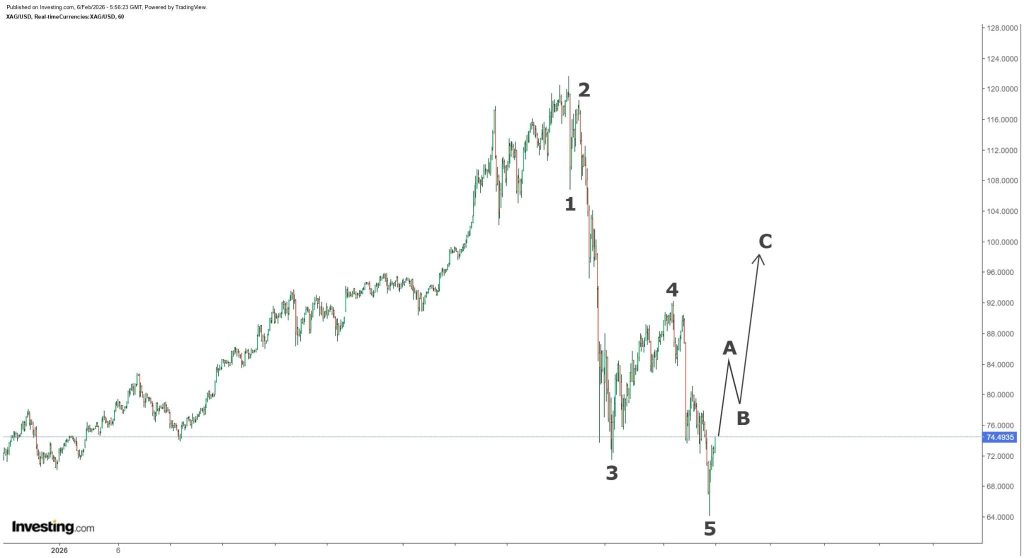
Silver Price Crash Is Over “For Real This Time,” Analyst Predicts a Surge Back Above $90

Silver Price Crash Is Over “For Real This Time,” Analyst Predicts a Surge Back Above $90

Silver has been taking a beating lately, and the Silver price hasn’t exactly been acting like a safe haven. After running up into the highs, the whole move reversed
Share
Captainaltcoin2026/02/07 03:15
Tapzi is Investors’ 1000x Pick in Volatile Market

Tapzi is Investors’ 1000x Pick in Volatile Market

The post Tapzi is Investors’ 1000x Pick in Volatile Market appeared on BitcoinEthereumNews.com. Crypto News 18 September 2025 | 00:05 Bitcoin swings after CPI data release as Tapzi’s presale gains momentum, emerging as a top crypto project in 2025. The crypto market moved sharply last week after the release of US Consumer Price Index (CPI) data. Bitcoin, the largest digital asset, reacted within minutes of the announcement, recording rapid swings before settling back near earlier levels.  At the same time, presale projects continued to attract investors, with Tapzi emerging as one of the most-watched tokens this month. It is being picked by investors as the next crypto to explode due to its high-growth potential in Tier 1 and Tier 2 countries, with Web3 gaming’s increasing adoption. Tapzi Presale Draws Attention While Bitcoin reacted to economic data, Tapzi’s presale has become a focal point among both retail and larger investors. Tapzi is a Web3 gaming platform designed to merge competitive gameplay with blockchain-based settlements. Players stake TAPZI tokens in head-to-head matches of chess, checkers, rock-paper-scissors, and tic-tac-toe. Winners receive tokens directly from prize pools funded by players, not by inflationary rewards. Don’t Watch the Wave – Ride It With $TAPZI! The presale opened with tokens priced at $0.0035. More than 27 million tokens have already been sold, with prices set to increase in each new stage. Analysts following the sale point to potential gains of around 300% once TAPZI lists on exchanges later this year. Liquidity locks and vesting schedules are in place to reduce the risks of sharp sell-offs after launch. This has placed Tapzi on the radar of investors searching for the best crypto to buy now. Bitcoin Price Reacts to CPI Last week, Bitcoin climbed toward $114,000 before jumping to $114,500, its highest level in weeks. The gains were short-lived as the price quickly dropped by $1,000. At press time, Bitcoin…
Share
BitcoinEthereumNews2025/09/18 06:26