Expanded pharmacogenomic panel enhances safety for patients receiving 5-FU and capecitabine MASON, Ohio, Jan. 5, 2026 /PRNewswire/ — Mira Precision Health todayExpanded pharmacogenomic panel enhances safety for patients receiving 5-FU and capecitabine MASON, Ohio, Jan. 5, 2026 /PRNewswire/ — Mira Precision Health today

Mira Precision Health, Based in Mason, Ohio, Announces U.S. Launch of ToxNav® Advantage™ at the 2026 ASCO® GI Cancers Symposium

Expanded pharmacogenomic panel enhances safety for patients receiving 5-FU and capecitabine

MASON, Ohio, Jan. 5, 2026 /PRNewswire/ — Mira Precision Health today announced the official U.S. launch of ToxNav® Advantage™, a clinically validated pharmacogenomic assay designed to identify cancer patients at increased risk of severe or potentially life-threatening toxicities from fluoropyrimidine-based chemotherapies, including 5-fluorouracil (5-FU) and capecitabine (XELODA®).

This launch comes amid heightened concern regarding fluoropyrimidine safety in certain patient populations. The U.S. Food and Drug Administration recently updated the XELODA® (capecitabine) prescribing information to include a Black Box Warning highlighting the risk of severe, life-threatening, and potentially fatal toxicities in patients with dihydropyrimidine dehydrogenase (DPD) deficiency. This warning underscores the urgent need for proactive identification of genetically at-risk patients prior to initiating treatment with fluoropyrimidines.

Key features of ToxNav® Advantage™ include:

  • Comprehensive analysis of 23 DPYD gene variants
  • Inclusion of DGLUCY and ENOSF1/TYMS variants predictive of fluoropyrimidine-associated cardiotoxicity (CTRCD) and Hand-Foot Syndrome (HFS)
  • Rapid 48-hour turnaround time for clinically actionable results
  • Clear, clinician-friendly reports that support dose optimization, reduced hospitalizations, and lower treatment-related mortality

The launch will be highlighted by a Mira-sponsored Industry Expert Theater (IET) session at the 2026 ASCO® Gastrointestinal Cancers Symposium in San Francisco, CA.

The 45-minute session, titled “From Oxford to the U.S.: The Clinical Utility Evolution of ToxNav® Advantage™ in Preventing 5-FU/Capecitabine Toxicities,” will be presented by Abdul Rahman Jazieh, MD, MPH, Chief Medical Officer of Mira Precision Health. Dr. Jazieh will discuss a real-world case study of fluoropyrimidine-induced cardiovascular toxicity demonstrating the clinical value of variant testing in identifying at-risk patients and informing care decisions.

Professor David Kerr, CBE, MA, MSc, MD, PhD, DSc, FRCP, founder of the original ToxNav® program, internationally recognized oncology researcher, and Chair of Mira Precision Health’s Scientific Advisory Board, will also be onsite throughout ASCO-GI. As the architect of ToxNav’s scientific foundation and a global leader in fluoropyrimidine toxicity research, Professor Kerr will support the U.S. debut of ToxNav® Advantage™ and be available for expert discussions with clinicians, researchers, and industry stakeholders.

ToxNav® Advantage™ builds on more than a decade of peer-reviewed clinical research and real-world implementation of ToxNav® across U.K. and E.U. healthcare systems. The test analyzes 26 clinically relevant gene variants, including 23 DPYD variants aligned with the Association for Molecular Pathology (AMP) 2025 Tier 1 and Tier 2 classifications, along with additional Oxford-validated markers. ToxNav® Advantage™ uniquely extends fluoropyrimidine toxicity risk assessment beyond DPYD deficiency by incorporating genetic variants associated with cancer therapy–related cardiac dysfunction (CTRCD)—a potentially life-threatening complication—and Hand-Foot Syndrome (HFS), a frequent cause of treatment modification or discontinuation in patients receiving fluoropyrimidines.

“We developed ToxNav® to identify patients with a high likelihood of severe toxicity from 5-FU and capecitabine—two of the most widely prescribed cancer therapies worldwide,” said Professor Kerr. “Through our collaboration with Mira Precision Health, ToxNav® has been optimized for the U.S. market, delivering greater clinical utility and rapid turnaround times that can meaningfully improve patient outcomes.”

“ToxNav® Advantage™ provides oncologists with fast, actionable insights to help prevent life-threatening toxicities before treatment begins,” said Dr. Jazieh. “Our mission is to enable precision-driven care that protects patients across every stage of therapy.”

“As a long-time partner of Mira and strong advocate for life science advancement, we’re excited to see this partnership with Oxford bring life-changing technology to the U.S.,” said Michele Blair, Director of Economic Development for the City of Mason. “We’re leaning in to our ‘Mason Living Lab’ platform, which engages city residents and employees as participants to advance new technology. This program differentiates Mason’s position in the Midwestern ecosystem and accelerates science discovery.”

About Mira Precision Health

Mira Precision Health is a CLIA-certified, high-complexity clinical laboratory headquartered in Mason, Ohio, specializing in precision medicine diagnostics. Through its advanced pharmacogenomic and oncology testing solutions, Mira empowers clinicians nationwide to deliver safer, more personalized cancer care.

About the City of Mason, Ohio

The City of Mason, Ohio, is an established hub for biohealth and biotech life science companies, with focus areas in cardiology, mental health and precision medicine. Mason was one of the first cities in Ohio designated a Premier Life Science Ready Community in 2025 by the Ohio Life Sciences Association for its infrastructure readiness, dedicated support systems, accessible real estate and high-quality resources that make it attractive to life science development. For more information about the City of Mason, visit www.whymason.com or www.imaginemason.org.

For media inquiries, please contact:
Lori Borchers
Vice President, Sales and Marketing
Mira Precision Health
Email: lborchers@miraprecision.com
Website: https://www.miraprecision.com/toxnav/

Cision View original content to download multimedia:https://www.prnewswire.com/news-releases/mira-precision-health-based-in-mason-ohio-announces-us-launch-of-toxnav-advantage-at-the-2026-asco-gi-cancers-symposium-302652722.html

SOURCE City of Mason

Market Opportunity
Mira Logo
Mira Price(MIRA)
$0.1206
$0.1206$0.1206
-0.41%
USD
Mira (MIRA) Live Price Chart
Disclaimer: The articles reposted on this site are sourced from public platforms and are provided for informational purposes only. They do not necessarily reflect the views of MEXC. All rights remain with the original authors. If you believe any content infringes on third-party rights, please contact service@support.mexc.com for removal. MEXC makes no guarantees regarding the accuracy, completeness, or timeliness of the content and is not responsible for any actions taken based on the information provided. The content does not constitute financial, legal, or other professional advice, nor should it be considered a recommendation or endorsement by MEXC.

You May Also Like

Seeker (SKR) will soon be listed on Bybit Spot, Alpha, and Byreal.

Seeker (SKR) will soon be listed on Bybit Spot, Alpha, and Byreal.

PANews reported on January 21 that Bybit will launch Seeker (SKR) on its spot, Alpha, and Byreal platforms. Users can quickly trade without setting up a separate
Share
PANews2026/01/21 08:20
Perpetual DEX in testing with cross‑chain liquidity and ADL
Perpetual DEX in testing with cross‑chain liquidity and ADL

The post Perpetual DEX in testing with cross‑chain liquidity and ADL appeared on BitcoinEthereumNews.com. Sunperp, a new perpetual DEX being tested on the Tron blockchain, promises millisecond executions, cross-chain liquidity aggregation, and an integrated auto-deleveraging (ADL) system. Justin Sun reshared the announcement on X, inviting users to try it and highlighting dedicated incentives, while numerous economic details and operational metrics remain to be confirmed. According to the data collected by on-chain analysts and industry reports, in May 2025 TRON hosted over 75 billion USDT, with the network recording over 8.3 million daily transactions and approximately 306 million active accounts, a context that justifies the interest in USDT-collateralized derivatives. Market analysts following perpetual DEX also note that the massive availability of USDT on TRON facilitates cross-chain arbitrage operations and reduces costs for market makers. What is Sunperp and what it brings differently to Tron Sunperp is a platform perp DEX that uses USDT as collateral, with profits and losses calculated in USDT. The architecture separates matching, executed off-chain to maximize speed, from settlement, recorded on-chain to ensure transparency of trading results. In this context, the debut announcement was originally reported by Jamie Redman; the team also states that, while in the testing phase, the core contracts are non-upgradable. Main Technical Features Order types: market, limit (with FOK – Fill-or-Kill, GTC – Good-Till-Cancelled, and IOC – Immediate-or-Cancel modes), post-only orders, plan orders, trailing, and TWAP (Time-Weighted Average Price). Use of multi-source oracles to determine the mark price employed in the calculation of profits and liquidations. Primary collateral: USDT, with P&L calculated in the same currency. Core contracts declared non-upgradable in an environment still in testing. Cross-chain liquidity: less slippage and tighter spreads The protocol claims to aggregate liquidity flows from various networks in order to increase market depth and improve order execution, thereby reducing slippage and spreads in large-size trades. However, the actual effect will depend…
Share
BitcoinEthereumNews2025/09/22 17:20
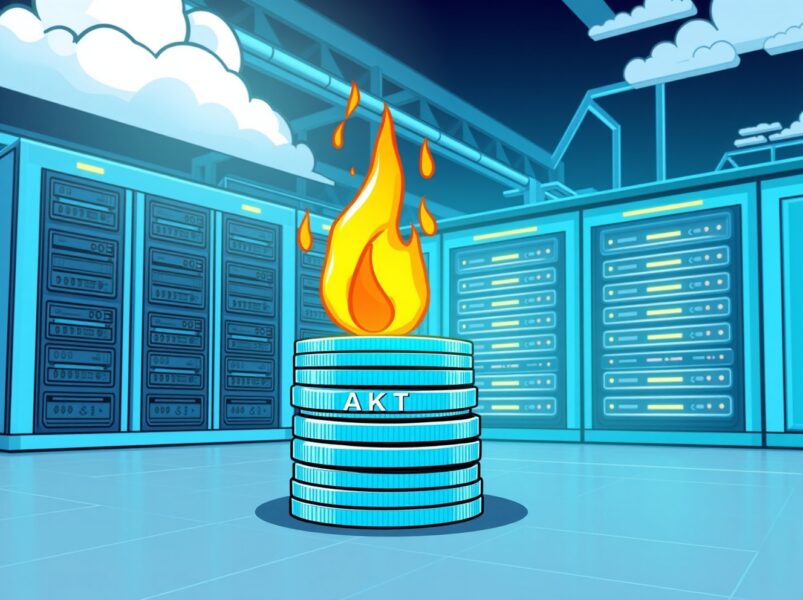
Akash Network’s Strategic Move: A Crucial Burn for AKT’s Future

Akash Network’s Strategic Move: A Crucial Burn for AKT’s Future

BitcoinWorld Akash Network’s Strategic Move: A Crucial Burn for AKT’s Future In the dynamic world of decentralized computing, exciting developments are constantly shaping the future. Today, all eyes are on Akash Network, the innovative supercloud project, as it proposes a significant change to its tokenomics. This move aims to strengthen the value of its native token, AKT, and further solidify its position in the competitive blockchain space. The community is buzzing about a newly submitted governance proposal that could introduce a game-changing Burn Mint Equilibrium (BME) model. What is the Burn Mint Equilibrium (BME) for Akash Network? The core of this proposal revolves around a concept called Burn Mint Equilibrium, or BME. Essentially, this model is designed to create a balance in the token’s circulating supply by systematically removing a portion of tokens from existence. For Akash Network, this means burning an amount of AKT that is equivalent to the U.S. dollar value of fees paid by network users. Fee Conversion: When users pay for cloud services on the Akash Network, these fees are typically collected in various cryptocurrencies or stablecoins. AKT Equivalence: The proposal suggests converting the U.S. dollar value of these collected fees into an equivalent amount of AKT. Token Burn: This calculated amount of AKT would then be permanently removed from circulation, or ‘burned’. This mechanism creates a direct link between network utility and token supply reduction. As more users utilize the decentralized supercloud, more AKT will be burned, potentially impacting the token’s scarcity and value. Why is This Proposal Crucial for AKT Holders? For anyone holding AKT, or considering investing in the Akash Network ecosystem, this proposal carries significant weight. Token burning mechanisms are often viewed as a positive development because they can lead to increased scarcity. When supply decreases while demand remains constant or grows, the price per unit tends to increase. Here are some key benefits: Increased Scarcity: Burning tokens reduces the total circulating supply of AKT. This makes each remaining token potentially more valuable over time. Demand-Supply Dynamics: The BME model directly ties the burning of AKT to network usage. Higher adoption of the Akash Network supercloud translates into more fees, and thus more AKT burned. Long-Term Value Proposition: By creating a deflationary pressure, the proposal aims to enhance AKT’s long-term value, making it a more attractive asset for investors and long-term holders. This strategic move demonstrates a commitment from the Akash Network community to optimize its tokenomics for sustainable growth and value appreciation. How Does BME Impact the Decentralized Supercloud Mission? Beyond token value, the BME proposal aligns perfectly with the broader mission of the Akash Network. As a decentralized supercloud, Akash provides a marketplace for cloud computing resources, allowing users to deploy applications faster, more efficiently, and at a lower cost than traditional providers. The BME model reinforces this utility. Consider these impacts: Network Health: A stronger AKT token can incentivize more validators and providers to secure and contribute resources to the network, improving its overall health and resilience. Ecosystem Growth: Enhanced token value can attract more developers and projects to build on the Akash Network, fostering a vibrant and diverse ecosystem. User Incentive: While users pay fees, the potential appreciation of AKT could indirectly benefit those who hold the token, creating a circular economy within the supercloud. This proposal is not just about burning tokens; it’s about building a more robust, self-sustaining, and economically sound decentralized cloud infrastructure for the future. What Are the Next Steps for the Akash Network Community? As a governance proposal, the BME model will now undergo a period of community discussion and voting. This is a crucial phase where AKT holders and network participants can voice their opinions, debate the merits, and ultimately decide on the future direction of the project. Transparency and community engagement are hallmarks of decentralized projects like Akash Network. Challenges and Considerations: Implementation Complexity: Ensuring the burning mechanism is technically sound and transparent will be vital. Community Consensus: Achieving broad agreement within the diverse Akash Network community is key for successful adoption. The outcome of this vote will significantly shape the tokenomics and economic model of the Akash Network, influencing its trajectory in the rapidly evolving decentralized cloud landscape. The proposal to introduce a Burn Mint Equilibrium model represents a bold and strategic step for Akash Network. By directly linking network usage to token scarcity, the project aims to create a more resilient and valuable AKT token, ultimately strengthening its position as a leading decentralized supercloud provider. This move underscores the project’s commitment to innovative tokenomics and sustainable growth, promising an exciting future for both users and investors in the Akash Network ecosystem. It’s a clear signal that Akash is actively working to enhance its value proposition and maintain its competitive edge in the decentralized future. Frequently Asked Questions (FAQs) 1. What is the main goal of the Burn Mint Equilibrium (BME) proposal for Akash Network? The primary goal is to adjust the circulating supply of AKT tokens by burning a portion of network fees, thereby creating deflationary pressure and potentially enhancing the token’s long-term value and scarcity. 2. How will the amount of AKT to be burned be determined? The proposal suggests burning an amount of AKT equivalent to the U.S. dollar value of fees paid by users on the Akash Network for cloud services. 3. What are the potential benefits for AKT token holders? Token holders could benefit from increased scarcity of AKT, which may lead to higher demand and appreciation in value over time, especially as network usage grows. 4. How does this proposal relate to the overall mission of Akash Network? The BME model reinforces the Akash Network‘s mission by creating a stronger, more economically robust ecosystem. A healthier token incentivizes network participants, fostering growth and stability for the decentralized supercloud. 5. What is the next step for this governance proposal? The proposal will undergo a period of community discussion and voting by AKT token holders. The community’s decision will determine if the BME model is implemented on the Akash Network. If you found this article insightful, consider sharing it with your network! Your support helps us bring more valuable insights into the world of decentralized technology. Stay informed and help spread the word about the exciting developments happening within Akash Network. To learn more about the latest crypto market trends, explore our article on key developments shaping decentralized cloud solutions price action. This post Akash Network’s Strategic Move: A Crucial Burn for AKT’s Future first appeared on BitcoinWorld.
Share
Coinstats2025/09/22 21:35
