

XRP Remains in a Critical Consolidation Phase — More Investors Turn to SolStaking to Manage the “Waiting Cost”
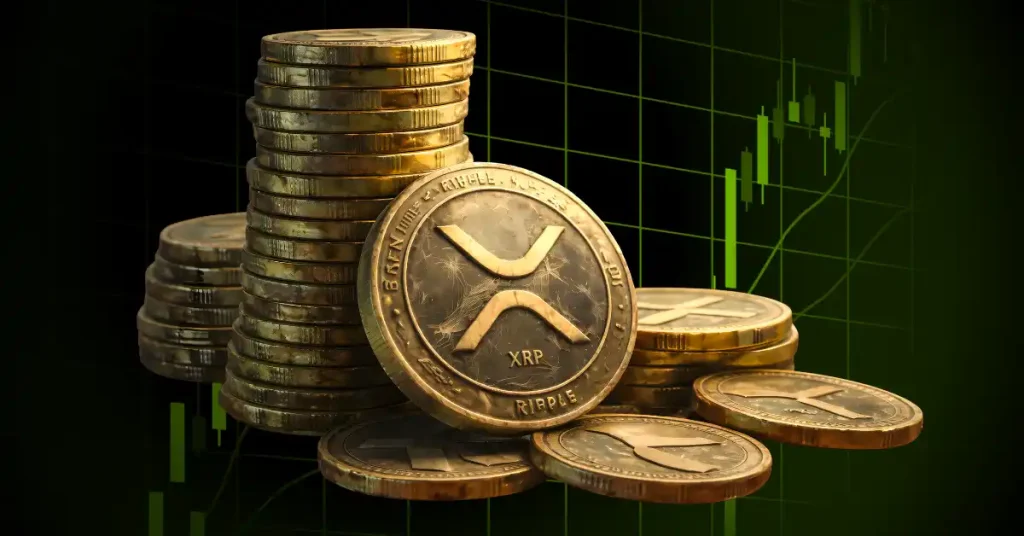
The post XRP Remains in a Critical Consolidation Phase — More Investors Turn to SolStaking to Manage the “Waiting Cost” appeared first on Coinpedia Fintech News
As 2026, XRP once again finds itself at a critical crossroads.
From a technical perspective, XRP is still trading within a long-term consolidation range. From a fundamental standpoint, however, Ripple continues to expand cross-border payment adoption, prepare upgrades to the XRPL protocol, and strengthen its institutional ecosystem.
That disconnect defines the current reality for XRP investors:
The long-term direction is becoming clearer, but price momentum has yet to arrive.
As a result, market focus is shifting. Instead of asking “When will the breakout happen?”, more investors are asking a different question:
“How do I manage capital efficiently while waiting?”
Key Takeaways: Fundamentals Are Improving, Price Still Needs Time
Based on recent developments, XRP’s situation can be summarized in three points:
- Ripple plans to significantly expand real-world XRP usage in cross-border payments throughout 2026, moving beyond pilot programs toward recurring settlement in high-volume regions.
- The XRPL is expected to receive protocol upgrades related to programmability, lending, and privacy, expanding XRP’s role beyond payments alone.
- From a market structure perspective, XRP remains below major resistance levels. Any sustained breakout will depend on execution and adoption—not short-term sentiment.
In short, XRP’s long-term thesis is strengthening, but price discovery requires patience.
The Investor Dilemma: Long-Term Conviction, Idle Capital
For many XRP holders, the main challenge isn’t confidence—it’s time.
Extended consolidation periods usually mean two things:
- Risk hasn’t fully disappeared.
- Capital efficiency continues to erode.
That’s why a growing number of investors are looking for solutions that don’t rely on price appreciation, yet still align with a long-term holding strategy. This is where SolStaking enters the picture.
SolStaking: A Yield System Designed for Long-Term, Patient Investors
SolStaking is not a trading platform, nor does it market itself as a price-prediction tool. Instead, it functions as a rule-based yield management system, particularly suited for sideways markets and uncertain trend phases.
1. Fixed-Term Contracts With Clear Rules
All SolStaking contracts are structured with predefined terms:
- Contract duration, return calculation, and settlement timing are known before participation.
- Once activated, terms do not change.
- This removes emotional decision-making during volatile or stagnant market conditions.
For investors who prefer consistency over constant trading, this structure is a key advantage.
2. Fully Automated Execution
Participating in SolStaking does not require:
- Running validator nodes
- Using trading bots
- Monitoring charts daily
After activation, contracts execute automatically until completion. For non-active traders, this “low-touch, high-clarity” model is often more practical than complex strategies.
3. USD-Denominated Returns
Returns are calculated in U.S. dollars rather than token price movement.
This means that whether XRP rises or falls during the contract period, the payout logic remains unchanged—an important feature for global users navigating different market cycles.
4. Multi-Asset Support to Reduce Concentration Risk
SolStaking supports a range of major digital assets, including:
XRP, BTC, ETH, SOL, USDT, and USDC.
This allows users to diversify rather than commit entirely to a single chain or narrative.
5. Integration of Real-World Asset Yield (RWA)
SolStaking’s long-term vision extends beyond purely on-chain rewards. The platform integrates cash-flow sources tied to real-world assets, such as:
- Clean energy projects
- Income-generating real estate
- Data centers
- Public infrastructure
- Select fixed-income instruments
The goal isn’t to replace crypto exposure, but to support yield stability across market cycles.
Compliance and Security: The Foundation of a Long-Term Model
SolStaking emphasizes institutional-grade structure and risk separation, including:
- A U.S.-registered operating entity
- Full segregation of user funds and operational capital
- Enterprise-level monitoring and risk management systems
- Custodied assets insured through Lloyd’s of London
For long-term participants, security often matters more than headline yield figures.
How to Register and Participate in SolStaking
The onboarding process is straightforward and suitable for new users:
- Visit https://solstaking.com
- Create an account and complete basic verification
- Deposit a supported digital asset
- Review available contract cycles
- Confirm terms and activate the contract
The platform emphasizes understanding the rules upfront, rather than encouraging impulsive participation.
Final Thoughts: Price May Lag, Strategy Doesn’t Have To
Whether XRP achieves a decisive breakout in 2026 remains up to the market.
But for long-term investors, managing capital during consolidation is part of the strategy itself.
SolStaking doesn’t promise market timing or future predictions. Instead, it offers a way to keep capital productive while uncertainty plays out.
Sometimes, letting capital work quietly is the more realistic move.
Official Website:
https://solstaking.com
Business & Cooperation:
info@solstaking.com
You May Also Like
Stellar’s Origin Story Matters Again As Tokenized XLM Dollars Move Mainstream

Cashing In On University Patents Means Giving Up On Our Innovation Future
