The post How Tilda Rice Is Turning Sustainability Into A Competitive Advantage appeared on BitcoinEthereumNews.com. Tilda’s agronomists have worked closely withThe post How Tilda Rice Is Turning Sustainability Into A Competitive Advantage appeared on BitcoinEthereumNews.com. Tilda’s agronomists have worked closely with

How Tilda Rice Is Turning Sustainability Into A Competitive Advantage

Tilda’s agronomists have worked closely with Indian farmers to educate them about more sustainable rice irrigation methods.

Tilda/Studio Charuau

Consumers are voting with their wallets when it comes to sustainability. In the grocery aisles, decisions are no longer driven solely by price or quality—environmental impact is now a factor. Tilda—Britain’s top‑selling rice brand ahead of Ben’s Original from Mars— has been reshaping its farming practices and seems to be benefiting from the shift.

At the agricultural end of its Basmati supply chain—the paddy fields of northern India—the company has intensified efforts to cut water use and reduce methane emissions (more on this below).

These changes align with a broader industry challenge. A 2024 Deloitte study, The Sustainable Consumer, notes that the global food sector accounts for roughly a quarter of all greenhouse gas emissions, spanning CO₂, methane, and nitrogen. Around two‑thirds of those emissions originate in agriculture, forestry, and land use, with the remainder tied to processing, transport, and packaging.

In her data-rich book on Earth’s future titled Not The End of the World, Hannah Ritchie, a senior researcher at the University of Oxford, said: “Look at any of the world’s environmental problems and food lies close to the center. It really is at the nexus of sustainability.”

By tackling sustainability at source, Tilda is positioning itself ahead of a curve that increasingly matters to everyone, including shoppers. A meta‑analysis of 51 studies by the University of Queensland concluded that rice consumers found that sustainable production, labels and certificates, and environmental concerns were three of the five most mentioned factors influencing rice preferences.

This is a strong signal that sustainability affects purchasing, and it has been taken onboard by Tilda, a B Corp-certified company since 2023. The brand, founded in 1970 in the U.K., has been part of Spain’s Ebro Foods, the world’s leader in rice production, since 2019. Ebro’s rice division has faced significant headwinds lately. In the first nine months of 2025, long‑grain rice prices in Asia and South America hit their lowest levels in 40 years, effectively freezing global markets. Indian production has also been hit by Trump’s tariffs, levied at 25%, plus an additional 25% penalty linked to purchasing Russian oil.

Bucking the sales trend

Ebro’s pressures contributed to a 4% revenue drop at the rice division, down to €1.77 billion ($2.06 billion), representing 78% of total group sales. Yet Tilda bucked the trend, delivering robust growth across its key markets, including the U.K., Canada, the Middle East, Australia, and Spain. Its performance mirrors the global strength of the microwaveable rice segment, particularly in the United States, France, and Spain.

Jean‑Philippe Laborde: “You need to take a few key steps where you can have real impact, work on them, and communicate them clearly.”

Kevin Rozario

Environmental credentials are only one factor behind Tilda’s resilience, but they are proving influential in what Ebro describes as “an exceptionally competitive environment.” As U.K. managing director Jean‑Philippe Laborde told Forbes.com, the company is reframing sustainability across the entire chain—from cultivation and wholesale distribution, to retail and the end consumer.

Tilda has spent three years trialing and scaling regenerative practices—most notably water‑reduction techniques and fertilizer optimization. The latest results, due to be published in the brand’s next impact report later this year, are expected to be pivotal. “Three years of data means we can even go to research-paper level,” said Laborde. “It’s not just progress—it’s proof.”

With around 50% of its Basmati supply already covered by these programs, Tilda believes it is on track to reach full coverage within a few years. The real challenge is not the science—it’s the communication. And here, Tilda sees a clear hierarchy of audiences.

Clarifying the primary audience

Despite the complexity of sustainability metrics, Tilda’s leadership is adamant that the end consumer is the key audience. Research conducted by the company shows that 63% of consumers believe brand owners are not doing enough about sustainability, or at least not communicating it clearly. Many shoppers also assume that sustainability claims mean higher prices or compromised product quality—two perceptions Tilda is determined to counter.

For the brand, the goal is to translate technical agricultural progress into trustworthy, consumer‑friendly language. That means avoiding jargon or over‑claiming, and focusing on tangible impact—particularly the benefits delivered directly to farmers. “You can’t do everything,” said the MD. “You need to take a few key steps where you can have real impact, work on them, and communicate them clearly.”

At the retailer level, while pricing is important, major U.K. grocers increasingly expect their suppliers to demonstrate measurable environmental progress, partly because their own carbon‑reduction strategies depend on it. Scope 3 emissions—those generated in the supply chain—are the hardest for retailers to control, which shifts the pressure onto suppliers.

Flooding paddy fields increases greenhouse gas emissions. (Photo by R.Satish BABU / AFP via Getty Images)

AFP via Getty Images

Tilda’s B Corp certification—a route many companies are taking— has opened doors, enabling more constructive conversations and reducing the tension that often characterizes supplier-retailer relationships. Some grocers have even created dedicated B Corp in-store areas, with upscale supermarket Waitrose offering an online page called ‘B Corp: Food Cupboard’ where Tilda is strongly represented.

Wins in the ethnic wholesale sector

The surprise, however, is the ethnic market, which is where Tilda began its journey in the 1970s. Contrary to expectations, Tilda has found that independent cash‑and‑carry operators—many owned by South Asian families—are highly engaged when it comes to sustainability. Their interest is often personal, rooted in cultural and agricultural ties to the regions in India where Tilda sources its rice. What began as tentative five‑minute briefings have evolved into in‑depth sustainability discussions with key wholesalers.

Across all channels, the company’s message is consistent, and getting louder: sustainability must be meaningful, scalable, and transparent. And while retailers and wholesalers play crucial roles in amplifying that message, Tilda sees the consumer as the ultimate judge.

A growing evidence base

As the company prepares to release its third‑year data later this year, it is positioning sustainability not as a marketing lever, but as a long‑term commitment to farmers, natural ecosystems, which it hopes will engender trust from retail buyers and shoppers.

Back in the paddy fields of India, Tilda has now successfully recruited all of the farmers it works with to adopt the Alternate Wetting and Drying (AWD) method, a major milestone in its sustainability journey. This also saves the farmers money in reduced fertiliser use of almost 20% per hectare. The AWD program was launched in 2021 and now includes 3,240 farms covering 10,900 hectares.

Emily Servanté, a postdoctoral research associate at the University of Cambridge Crop Science Centre, explains her rice research aims.

Kevin Rozario

AWD, a water-saving, intermittent irrigation technique developed by the International Rice Research Institute (IRRI), cuts methane emissions caused by conventional permanently flooding of fields by as much as 45%. Methane is among the most potent greenhouse gases associated with traditional rice farming.

According to Tilda’s latest data, AWD farms have cut average carbon footprints to 766kg CO₂ per tonne of rice, compared with 1,177 kg for non-AWD farms and saved more than 22 billion litres of water annually—equivalent to the consumption of 428,000 U.K. adults. AWD yields have also increased by nearly 6%, lifting farm income by 7% per hectare.

Laborde said: “AWD has already transformed the climate and economic footprint of Basmati farming and we are immensely proud of the progress the farmers are making. Sustainability is about continuous improvement, and this milestone shows what can be achieved when business, science, and farmers work together.”

The next challenge: nitrous oxide

The upsides have come with challenges. While AWD reduces methane and water use, drier soils, through exposure of synthetic fertilizers to oxygen, stimulate nitrous oxide (N₂O) release, a greenhouse gas almost 300 times more damaging than CO₂. The release offsets an estimated 10-15% of AWD’s methane-reduction benefits.

To address this, Tilda and academic partners are now testing bio-fertilizers containing beneficial arbuscular mycorrhizal (AM) fungi. Early comparisons versus synthetic fertilizers have shown stronger root growth, improved plant performance, and in one case, a farmer reported yield gain of up to 20%.

Dr. Emily Servante, a postdoctoral research associate at the University of Cambridge Crop Science Centre and Tilda’s lead scientific partner, said: “These early results are extremely encouraging. We’ve confirmed that AM fungi naturally associate with Pusa Basmati rice, and that bio-fertilizers can enhance root development and crop vigor.”

Tilda is continuing the research this year as it investigates whether synthetic inputs can be progressively reduced or even replaced with bio-fertilizers. Servante added: “Our next step is to quantify these benefits at scale and ensure that any inputs are truly sustainable.”

Sustainability has become one of the most contested and misunderstood battlegrounds in modern food retail, but for Tilda, the path forward is becoming clearer—and aligned with what the consumer wants. The shift goes beyond certification badges or marketing language. It is, Laborde argues, about rebuilding trust with consumers while bringing every stakeholder in the value chain along for the journey.

Source: https://www.forbes.com/sites/kevinrozario/2026/01/15/how-tilda-rice-is-turning-sustainability-into-a-competitive-advantage/

Market Opportunity
RICE AI Logo
RICE AI Price(RICE)
$0.004884
$0.004884$0.004884
-1.15%
USD
RICE AI (RICE) Live Price Chart
Disclaimer: The articles reposted on this site are sourced from public platforms and are provided for informational purposes only. They do not necessarily reflect the views of MEXC. All rights remain with the original authors. If you believe any content infringes on third-party rights, please contact service@support.mexc.com for removal. MEXC makes no guarantees regarding the accuracy, completeness, or timeliness of the content and is not responsible for any actions taken based on the information provided. The content does not constitute financial, legal, or other professional advice, nor should it be considered a recommendation or endorsement by MEXC.

You May Also Like

Seeker (SKR) will soon be listed on Bybit Spot, Alpha, and Byreal.

Seeker (SKR) will soon be listed on Bybit Spot, Alpha, and Byreal.

PANews reported on January 21 that Bybit will launch Seeker (SKR) on its spot, Alpha, and Byreal platforms. Users can quickly trade without setting up a separate
Share
PANews2026/01/21 08:20
Perpetual DEX in testing with cross‑chain liquidity and ADL

Perpetual DEX in testing with cross‑chain liquidity and ADL

The post Perpetual DEX in testing with cross‑chain liquidity and ADL appeared on BitcoinEthereumNews.com. Sunperp, a new perpetual DEX being tested on the Tron blockchain, promises millisecond executions, cross-chain liquidity aggregation, and an integrated auto-deleveraging (ADL) system. Justin Sun reshared the announcement on X, inviting users to try it and highlighting dedicated incentives, while numerous economic details and operational metrics remain to be confirmed. According to the data collected by on-chain analysts and industry reports, in May 2025 TRON hosted over 75 billion USDT, with the network recording over 8.3 million daily transactions and approximately 306 million active accounts, a context that justifies the interest in USDT-collateralized derivatives. Market analysts following perpetual DEX also note that the massive availability of USDT on TRON facilitates cross-chain arbitrage operations and reduces costs for market makers. What is Sunperp and what it brings differently to Tron Sunperp is a platform perp DEX that uses USDT as collateral, with profits and losses calculated in USDT. The architecture separates matching, executed off-chain to maximize speed, from settlement, recorded on-chain to ensure transparency of trading results. In this context, the debut announcement was originally reported by Jamie Redman; the team also states that, while in the testing phase, the core contracts are non-upgradable. Main Technical Features Order types: market, limit (with FOK – Fill-or-Kill, GTC – Good-Till-Cancelled, and IOC – Immediate-or-Cancel modes), post-only orders, plan orders, trailing, and TWAP (Time-Weighted Average Price). Use of multi-source oracles to determine the mark price employed in the calculation of profits and liquidations. Primary collateral: USDT, with P&L calculated in the same currency. Core contracts declared non-upgradable in an environment still in testing. Cross-chain liquidity: less slippage and tighter spreads The protocol claims to aggregate liquidity flows from various networks in order to increase market depth and improve order execution, thereby reducing slippage and spreads in large-size trades. However, the actual effect will depend…
Share
BitcoinEthereumNews2025/09/22 17:20
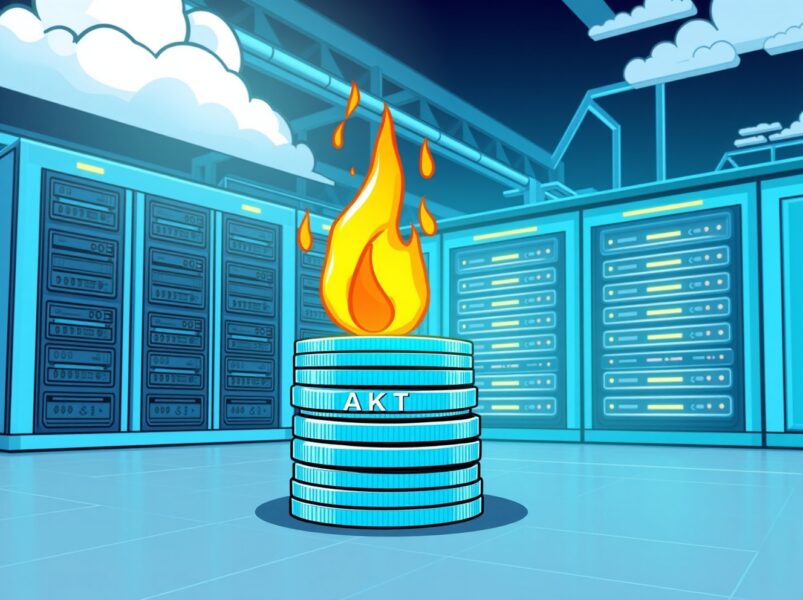
Akash Network’s Strategic Move: A Crucial Burn for AKT’s Future

Akash Network’s Strategic Move: A Crucial Burn for AKT’s Future

BitcoinWorld Akash Network’s Strategic Move: A Crucial Burn for AKT’s Future In the dynamic world of decentralized computing, exciting developments are constantly shaping the future. Today, all eyes are on Akash Network, the innovative supercloud project, as it proposes a significant change to its tokenomics. This move aims to strengthen the value of its native token, AKT, and further solidify its position in the competitive blockchain space. The community is buzzing about a newly submitted governance proposal that could introduce a game-changing Burn Mint Equilibrium (BME) model. What is the Burn Mint Equilibrium (BME) for Akash Network? The core of this proposal revolves around a concept called Burn Mint Equilibrium, or BME. Essentially, this model is designed to create a balance in the token’s circulating supply by systematically removing a portion of tokens from existence. For Akash Network, this means burning an amount of AKT that is equivalent to the U.S. dollar value of fees paid by network users. Fee Conversion: When users pay for cloud services on the Akash Network, these fees are typically collected in various cryptocurrencies or stablecoins. AKT Equivalence: The proposal suggests converting the U.S. dollar value of these collected fees into an equivalent amount of AKT. Token Burn: This calculated amount of AKT would then be permanently removed from circulation, or ‘burned’. This mechanism creates a direct link between network utility and token supply reduction. As more users utilize the decentralized supercloud, more AKT will be burned, potentially impacting the token’s scarcity and value. Why is This Proposal Crucial for AKT Holders? For anyone holding AKT, or considering investing in the Akash Network ecosystem, this proposal carries significant weight. Token burning mechanisms are often viewed as a positive development because they can lead to increased scarcity. When supply decreases while demand remains constant or grows, the price per unit tends to increase. Here are some key benefits: Increased Scarcity: Burning tokens reduces the total circulating supply of AKT. This makes each remaining token potentially more valuable over time. Demand-Supply Dynamics: The BME model directly ties the burning of AKT to network usage. Higher adoption of the Akash Network supercloud translates into more fees, and thus more AKT burned. Long-Term Value Proposition: By creating a deflationary pressure, the proposal aims to enhance AKT’s long-term value, making it a more attractive asset for investors and long-term holders. This strategic move demonstrates a commitment from the Akash Network community to optimize its tokenomics for sustainable growth and value appreciation. How Does BME Impact the Decentralized Supercloud Mission? Beyond token value, the BME proposal aligns perfectly with the broader mission of the Akash Network. As a decentralized supercloud, Akash provides a marketplace for cloud computing resources, allowing users to deploy applications faster, more efficiently, and at a lower cost than traditional providers. The BME model reinforces this utility. Consider these impacts: Network Health: A stronger AKT token can incentivize more validators and providers to secure and contribute resources to the network, improving its overall health and resilience. Ecosystem Growth: Enhanced token value can attract more developers and projects to build on the Akash Network, fostering a vibrant and diverse ecosystem. User Incentive: While users pay fees, the potential appreciation of AKT could indirectly benefit those who hold the token, creating a circular economy within the supercloud. This proposal is not just about burning tokens; it’s about building a more robust, self-sustaining, and economically sound decentralized cloud infrastructure for the future. What Are the Next Steps for the Akash Network Community? As a governance proposal, the BME model will now undergo a period of community discussion and voting. This is a crucial phase where AKT holders and network participants can voice their opinions, debate the merits, and ultimately decide on the future direction of the project. Transparency and community engagement are hallmarks of decentralized projects like Akash Network. Challenges and Considerations: Implementation Complexity: Ensuring the burning mechanism is technically sound and transparent will be vital. Community Consensus: Achieving broad agreement within the diverse Akash Network community is key for successful adoption. The outcome of this vote will significantly shape the tokenomics and economic model of the Akash Network, influencing its trajectory in the rapidly evolving decentralized cloud landscape. The proposal to introduce a Burn Mint Equilibrium model represents a bold and strategic step for Akash Network. By directly linking network usage to token scarcity, the project aims to create a more resilient and valuable AKT token, ultimately strengthening its position as a leading decentralized supercloud provider. This move underscores the project’s commitment to innovative tokenomics and sustainable growth, promising an exciting future for both users and investors in the Akash Network ecosystem. It’s a clear signal that Akash is actively working to enhance its value proposition and maintain its competitive edge in the decentralized future. Frequently Asked Questions (FAQs) 1. What is the main goal of the Burn Mint Equilibrium (BME) proposal for Akash Network? The primary goal is to adjust the circulating supply of AKT tokens by burning a portion of network fees, thereby creating deflationary pressure and potentially enhancing the token’s long-term value and scarcity. 2. How will the amount of AKT to be burned be determined? The proposal suggests burning an amount of AKT equivalent to the U.S. dollar value of fees paid by users on the Akash Network for cloud services. 3. What are the potential benefits for AKT token holders? Token holders could benefit from increased scarcity of AKT, which may lead to higher demand and appreciation in value over time, especially as network usage grows. 4. How does this proposal relate to the overall mission of Akash Network? The BME model reinforces the Akash Network‘s mission by creating a stronger, more economically robust ecosystem. A healthier token incentivizes network participants, fostering growth and stability for the decentralized supercloud. 5. What is the next step for this governance proposal? The proposal will undergo a period of community discussion and voting by AKT token holders. The community’s decision will determine if the BME model is implemented on the Akash Network. If you found this article insightful, consider sharing it with your network! Your support helps us bring more valuable insights into the world of decentralized technology. Stay informed and help spread the word about the exciting developments happening within Akash Network. To learn more about the latest crypto market trends, explore our article on key developments shaping decentralized cloud solutions price action. This post Akash Network’s Strategic Move: A Crucial Burn for AKT’s Future first appeared on BitcoinWorld.
Share
Coinstats2025/09/22 21:35