

Can AI help generate passive income?
FinancePolice aims to make these concepts clear and usable for everyday readers. The goal here is to help you weigh opportunities against costs, legal checks, and required maintenance so you can decide whether to run a small pilot.
What we mean by AI-enabled passive income
Definition and scope
By “AI-enabled passive income” we mean revenue sources that rely on AI tools and automation to reduce day-to-day human input. These are largely automated products or services where the initial setup and periodic maintenance do most of the heavy lifting.
In plain language, passive does not mean zero work. Most AI setups need configuration, monitoring, occasional updates, and handling of edge cases. A realistic view treats automation as a way to lower ongoing time, not to remove responsibility entirely. The OECD has noted how creators can scale automated pipelines, but that maintenance and oversight remain part of the operating model OECD report on AI and the digital economy.
AI can enable passive income streams by reducing marginal production costs and enabling new digital products, but outcomes vary widely and depend on demand, differentiation, distribution, ongoing costs, and legal rules.
Why the question matters now
Generative models and orchestration tools became widely available in recent years. That matters because lower access costs and easier tooling let individuals and small teams build products that were once expensive to run. At the same time, distribution and regulation shape which approaches scale and which remain niche.
How generative AI changed the economics of creators and small businesses
Productivity and distribution effects
Several industry analyses indicate generative AI raises productivity and opens new monetization paths for creators and small businesses, often by lowering the marginal cost of producing content or digital goods. This shift creates more ways to turn effort into recurring or near-recurring revenue, and it can make some creator workflows far more efficient McKinsey report on generative AI.
Who captures value
Even when productivity improves, gains are uneven. Reports show that platform distribution and firms that can scale automation often capture a large share of the value. For an individual creator, that means opportunity exists, but success depends on differentiation, access to distribution, and sometimes platform rules.
Common AI-driven models people call passive income
Content automation and publishing
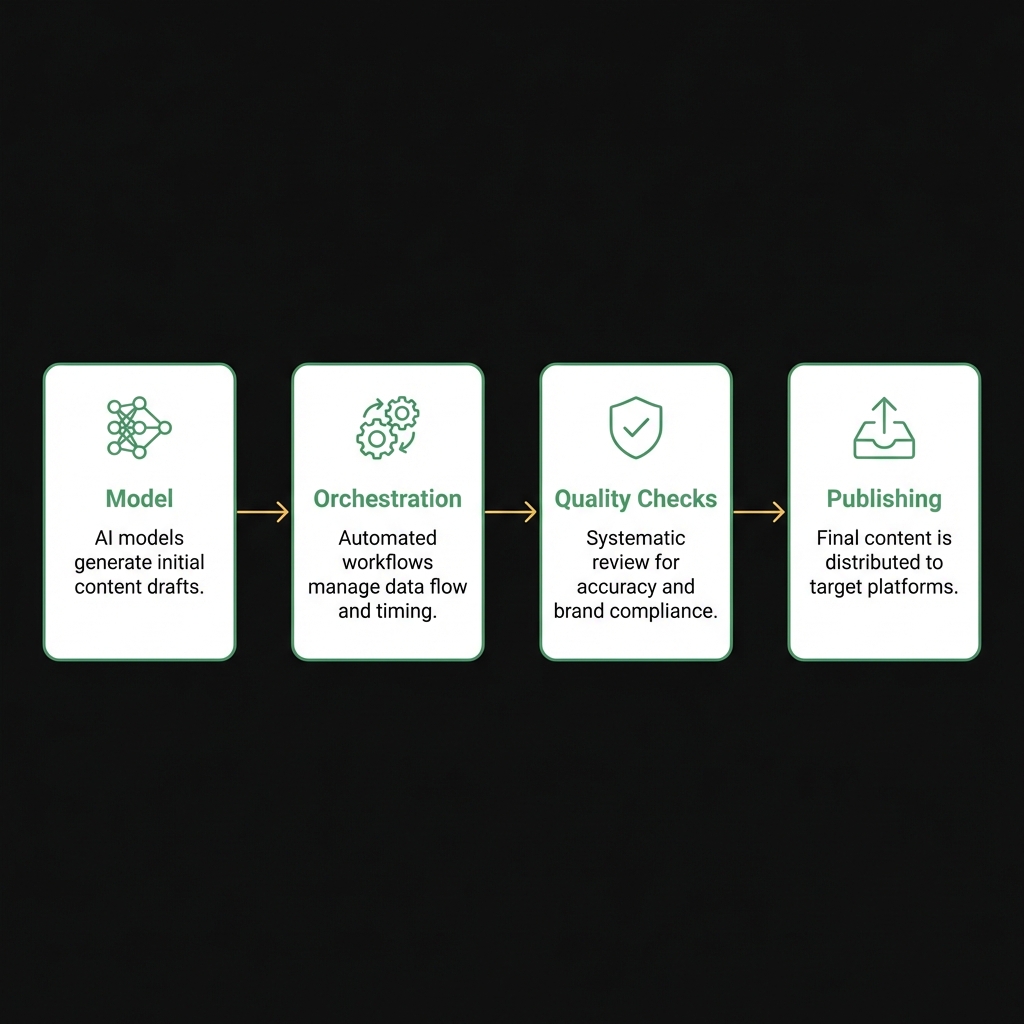
Content automation covers automated blogs, newsletters, video scripts, and distribution workflows that generate material at scale. These systems combine a content model, templates, and publishing orchestration to reduce manual work. Surveys of generative pipelines describe typical architectures and the trade-offs creators face when automating output systematic survey of autonomous AI agents and pipelines.
Partner with FinancePolice to reach creators and small business readers
The checklist below can help you evaluate whether an AI idea is worth testing, focusing on demand, differentiation, delivery cost, and regulatory risk.
Discuss advertising and partnerships
AI-generated digital products
Digital products include templates, prompt packs, design assets, microservices, and packaged model outputs that sell as one-time purchases or subscriptions. Once a production pipeline and storefront are in place, incremental cost per sale can be low, but licensing and platform rules matter for how you can distribute and price those products.
Algorithmic trading and automated investing
AI-driven trading strategies can operate with limited human input, but they carry distinct oversight requirements and monitoring needs. Regulators expect risk controls and continuous supervision for automated strategies, so simple technical feasibility does not remove compliance obligations ESMA highlights on AI risks in financial markets.
Agentic SaaS, bots, and microservices
Agentic SaaS products run autonomous agents that perform tasks for users or integrate into business workflows. These can be sold on subscription or per-use models and may automate recurring tasks for customers, but uptime, support, and model updates are ongoing responsibilities.
A simple framework to evaluate an AI passive income idea
Demand, differentiation, delivery, and durability
Use four axes to judge ideas: demand, differentiation, delivery cost, and regulatory risk. Demand asks whether a real group of customers will pay for the product. Differentiation looks for durable features that competitors cannot quickly copy. Delivery cost covers model fees, hosting, and maintenance. Regulatory risk checks whether laws or platform rules could block or limit the product.
When you score an idea, be explicit about assumptions. For example, estimate how many paying users you need to break even given model access fees and hosting. Industry reports show that productivity gains are real but uneven, so treat market projections as indicative rather than definitive McKinsey report on generative AI.
Quick checklist to score an idea
Checklist questions include: Is there verified demand? Can you deliver differentiation with modest ongoing work? Do unit economics survive expected model and hosting fees? Is the legal position on ownership and licensing clear enough to sell? Use small pilots to validate each axis before scaling.
Key cost and revenue drivers to consider
Upfront build vs ongoing expenses
Major cost categories to plan for are model access fees, hosting and storage, orchestration costs, monitoring and incident response, and compliance or legal review. These costs can convert what looks like passive revenue into a small service business if not managed carefully. OECD analysis highlights how operational costs and access fees affect creator economics OECD report on AI and the digital economy.
Distribution and marketing costs
Revenue sources vary: one-time sales, subscriptions, ad revenue, licensing, or transaction fees. Distribution costs include marketing spend, platform fees, and the effort to build a repeatable funnel. Scale often improves unit economics, but distribution power is commonly concentrated with large platforms.
Legal, copyright, and compliance checklist
Copyright and content ownership
Guidance on AI-assisted works and registration is evolving. In some jurisdictions creators must document how content was produced and confirm ownership or license rights for training data before monetizing outputs. The U.S. Copyright Office has published guidance on handling AI-assisted works and registration questions to help clarify these steps U.S. Copyright Office guidance on AI and copyright.
Financial regulation for trading strategies
Algorithmic trading and automated investment strategies face specific oversight. Regulators expect risk controls, monitoring, and reporting for automated systems to reduce market risk. If you plan to run or sell trading automation, check applicable rules and be ready for compliance and operational controls ESMA highlights on AI risks in financial markets.
Where laws are unclear or changing, consider getting professional advice before you scale a revenue-generating system. Primary sources and counsel help manage jurisdictional differences.
Technical setup, monitoring, and maintenance needs
Automation pipelines and toolchain
Typical components are model access, orchestration or workflow engines, hosting and storage, and delivery or publishing channels. You also need logging and simple quality checks so outputs stay within acceptable quality and compliance bounds.
test a minimal model-access and hosting chain
run a short pilot to measure costs
Monitoring and update workflows
Monitoring tasks include quality sampling, drift detection, incident response, and scheduled model updates. Autonomous agents and trading bots in particular require continuous supervision and a plan to pause or roll back when things move outside expected bounds. Surveys of autonomous systems describe common monitoring patterns and failure modes to watch for systematic survey of autonomous AI agents and pipelines.
Typical mistakes and blind spots that turn passive into active work
Common operational pitfalls
Creators often underestimate maintenance time, ignore platform policy risk, or assume a product will keep selling without ongoing effort. Missing these items can convert a planned passive income stream into a constant operational burden.
Business-model blind spots
Other blind spots include thin margins after model fees, fragile distribution channels, and overreliance on a single platform. Industry reviews suggest that while AI can expand creator opportunities, benefits are uneven and often favor scale players with distribution reach WTO World Trade Report 2025.
Simple safeguards include running a short pilot, building a cost model that includes maintenance, and documenting legal checks before monetizing outputs.
Example: automated content publishing pipeline
How a pipeline is built
A minimal content pipeline includes a content template, a model or generation engine, an orchestration layer to produce and queue outputs, quality checks, and a publishing channel such as a blog or newsletter. You can automate parts of the workflow while keeping human review in key spots to preserve quality.
Revenue paths and costs
Revenue typically comes from ad revenue, subscriptions, affiliate links, or product funnels that promote higher-value items. Costs to watch include model calls, hosting, and content moderation. Surveys of generative pipelines show that content automation is technically feasible but demands ongoing quality control to remain monetizable systematic survey of autonomous AI agents and pipelines.
Example: selling AI-generated digital products
Product types and marketplaces
Creators sell templates, prompt bundles, images, and small microservices that solve narrow tasks. Marketplaces and direct storefronts can work, but licensing terms and platform policy determine what you can offer and how to protect your rights.
Pricing and differentiation
Pricing options include one-time sales, bundles, and subscriptions for regular updates. Differentiation can come from vertical expertise, higher quality control, or offering ongoing updates that buyers value. Remember that model access fees and platform commissions affect net margins.
Example: algorithmic trading and automated investment strategies
How automated trading differs from other models
Automated trading can run with limited human input, but it differs because financial markets are regulated and potential losses can be large. Operational errors or bad assumptions can cause fast losses, so monitoring and controls are more stringent than for content or digital products.
Regulatory and risk controls
Regulators expect firms and individuals running automated strategies to implement risk controls and oversight. ESMA and other market authorities have highlighted risks from AI in markets, and that creates compliance work that affects costs and allowed practices ESMA highlights on AI risks in financial markets.
Example: agentic SaaS and microservices that earn passively
Business model examples
Agentic SaaS products might perform scheduling, summarization, or automated reporting for customers. These services can be sold as subscriptions or on per-use pricing. The product design must include fail-safes and clear expectations about what the agent will and will not do.
Maintenance and customer support needs
Customer support, uptime guarantees, and model updates are ongoing obligations. Even small SaaS offerings require monitoring, billing systems, and support triage, which turns some passive models into low-overhead service businesses rather than hands-off income streams.
Long-term considerations: scale, taxation, and platform risk
Sustainability of revenue streams
Platform policy shifts, copyright law changes, and evolving rules for autonomous agents can alter access to distribution and revenue. Industry and trade reports warn that gains from automation can concentrate with scale players, so watch for policy and competitive shifts that affect your channel.
Tax and policy uncertainties
Tax treatment for AI-generated revenue is not uniform across jurisdictions and could change as authorities update rules. Treat tax outcomes as jurisdiction-specific and consult primary sources or a tax professional before treating projected net income as certain WTO World Trade Report 2025.

How to start: a practical 30-day pilot plan
Week-by-week tasks
Week 1: Research demand and validate an idea with small customer interviews or ad tests. Week 2: Build a minimal pipeline or product prototype and set up basic monitoring. Week 3: Launch a controlled pilot to a small group and measure key metrics. Week 4: Review results, refine the product, and decide whether to scale or stop.
Metrics to track
Track unit economics, conversion rates, engagement, and ongoing cost burn rate for model access and hosting. Set stopping conditions such as clear negative unit economics or unacceptable compliance risk. Market reports show indicative ranges for effort and time to scale, but they vary by niche so use pilots to get your own data McKinsey report on generative AI.
Conclusion: realistic expectations and next steps
Summary checklist
AI can help create passive income streams by lowering marginal production costs and enabling new product types. However, operational costs, legal checks, distribution, and maintenance shape net returns. Use the checklist: validate demand, estimate ongoing costs, confirm legal position, and run a short pilot.
Where to learn more
Start with primary sources such as trade and policy reports, and consider professional advice for tax or compliance questions. Industry analyses offer a useful overview but treat revenue estimates as indicative rather than definitive OECD report on AI and the digital economy.
Not usually. Most AI setups need initial build work, ongoing monitoring, updates, and handling of exceptions. Expect reduced day-to-day time, not zero work.
Verify ownership and licensing of training data, check platform rules, and consult primary sources or legal counsel for your jurisdiction before monetizing outputs.
No. Automated trading faces stricter regulatory oversight and stronger monitoring requirements, so it has different compliance and operational demands.
For complex legal or tax questions, consult primary sources or a qualified professional in your jurisdiction.
You May Also Like

Altcoin Rally Will Come Only When This Coin Makes ATH

AI Data Centers: Unleashing Billions in a Revolutionary Tech Investment Wave
