The post SEI Staking Guide – Validators, Liquid Options, and Pool Selection appeared on BitcoinEthereumNews.com. Rebeca Moen Jan 29, 2026 10:16 Sei Network’The post SEI Staking Guide – Validators, Liquid Options, and Pool Selection appeared on BitcoinEthereumNews.com. Rebeca Moen Jan 29, 2026 10:16 Sei Network’

SEI Staking Guide – Validators, Liquid Options, and Pool Selection


Rebeca Moen
Jan 29, 2026 10:16

Sei Network’s staking ecosystem offers multiple paths for SEI holders. Here’s how to evaluate validators, liquid staking protocols, and avoid common pitfalls.

Sei Network has published a comprehensive breakdown of staking options for SEI token holders, covering everything from direct validator delegation to liquid staking protocols. The guide arrives as institutional interest in staking continues to grow—Bitmine Immersion Technologies just added 113,280 ETH to its staked holdings on January 28, pushing its total to roughly $7 billion.

For SEI holders weighing their options, the three main paths each carry distinct trade-offs worth understanding before committing capital.

Direct Delegation: The Simple Route

The most straightforward approach involves delegating SEI directly to validators through a self-custody wallet. You retain control of your keys while validators handle the technical work of block production. Sei’s ~400ms finality means delegation transactions confirm almost instantly—useful when you’re trying to catch optimal timing.

When evaluating validators, commission rates matter less than you’d think. A validator charging 5% with 99.9% uptime will likely outperform one charging 2% that misses blocks regularly. Check track records before chasing the lowest fees.

One detail that trips up newcomers: most Proof-of-Stake networks enforce unbonding periods. Your tokens won’t be immediately available if you decide to unstake. Know this window before you need emergency liquidity.

Liquid Staking: Rewards Plus DeFi Access

Liquid staking protocols let you stake SEI while receiving a derivative token representing your position. That derivative can then be deployed across Sei’s DeFi ecosystem—lending protocols, liquidity pools, trading collateral.

The appeal is obvious: earn staking yield while your capital stays productive elsewhere. But this isn’t free money. You’re adding smart contract risk, potential liquidity mismatches if you need to exit quickly, and pricing differentials between your liquid token and native SEI.

Before choosing a liquid staking provider, verify they’ve completed transparent audits and maintain healthy liquidity for their derivative token. Getting stuck in an illiquid position defeats the purpose.

Exchange Staking: Convenience at a Cost

Centralized exchanges offer one-click staking with zero technical requirements. The catch? You surrender custody entirely. Your tokens sit on someone else’s balance sheet, subject to their withdrawal policies, potential platform outages, and counterparty risk.

For small positions where convenience outweighs security concerns, this works. For serious capital, think twice.

Practical Considerations

A few rules that apply regardless of which path you choose:

Never stake 100% of your SEI. You’ll need tokens for transaction fees when claiming rewards or adjusting positions. Getting locked out of your own stake because you can’t afford gas is an avoidable headache.

Spread your delegation across multiple validators rather than concentrating with the largest operator. This reduces your exposure to any single validator’s technical issues while supporting network decentralization.

Sei’s EVM compatibility means familiar wallet experiences carry over from Ethereum. If you’ve staked on other chains, the mechanics will feel similar—just faster given Sei’s parallelized architecture.

The broader staking landscape continues evolving. Lighter announced on January 29 that users must now stake LIT tokens to access LLP allocations, with up to 3% of uncovered amounts returned daily. These kinds of staking requirements are becoming more common across DeFi protocols.

For SEI holders, the “best” staking pool ultimately depends on individual priorities: maximum simplicity, DeFi flexibility, or somewhere in between. The technical barriers have largely disappeared—now it’s about matching the mechanism to your risk tolerance and liquidity needs.

Image source: Shutterstock

Source: https://blockchain.news/news/sei-staking-guide-validators-liquid-pools-selection

Disclaimer: The articles reposted on this site are sourced from public platforms and are provided for informational purposes only. They do not necessarily reflect the views of MEXC. All rights remain with the original authors. If you believe any content infringes on third-party rights, please contact service@support.mexc.com for removal. MEXC makes no guarantees regarding the accuracy, completeness, or timeliness of the content and is not responsible for any actions taken based on the information provided. The content does not constitute financial, legal, or other professional advice, nor should it be considered a recommendation or endorsement by MEXC.

You May Also Like

Ethereum unveils roadmap focusing on scaling, interoperability, and security at Japan Dev Conference

Ethereum unveils roadmap focusing on scaling, interoperability, and security at Japan Dev Conference

The post Ethereum unveils roadmap focusing on scaling, interoperability, and security at Japan Dev Conference appeared on BitcoinEthereumNews.com. Key Takeaways Ethereum’s new roadmap was presented by Vitalik Buterin at the Japan Dev Conference. Short-term priorities include Layer 1 scaling and raising gas limits to enhance transaction throughput. Vitalik Buterin presented Ethereum’s development roadmap at the Japan Dev Conference today, outlining the blockchain platform’s priorities across multiple timeframes. The short-term goals focus on scaling solutions and increasing Layer 1 gas limits to improve transaction capacity. Mid-term objectives target enhanced cross-Layer 2 interoperability and faster network responsiveness to create a more seamless user experience across different scaling solutions. The long-term vision emphasizes building a secure, simple, quantum-resistant, and formally verified minimalist Ethereum network. This approach aims to future-proof the platform against emerging technological threats while maintaining its core functionality. The roadmap presentation comes as Ethereum continues to compete with other blockchain platforms for market share in the smart contract and decentralized application space. Source: https://cryptobriefing.com/ethereum-roadmap-scaling-interoperability-security-japan/
Share
BitcoinEthereumNews2025/09/18 00:25
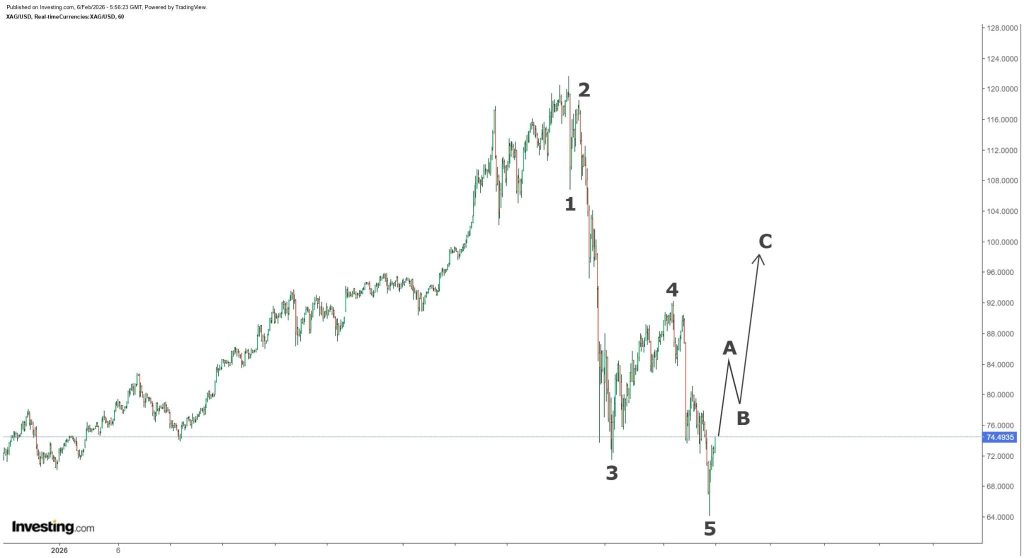
Silver Price Crash Is Over “For Real This Time,” Analyst Predicts a Surge Back Above $90

Silver Price Crash Is Over “For Real This Time,” Analyst Predicts a Surge Back Above $90

Silver has been taking a beating lately, and the Silver price hasn’t exactly been acting like a safe haven. After running up into the highs, the whole move reversed
Share
Captainaltcoin2026/02/07 03:15
Tapzi is Investors’ 1000x Pick in Volatile Market

Tapzi is Investors’ 1000x Pick in Volatile Market

The post Tapzi is Investors’ 1000x Pick in Volatile Market appeared on BitcoinEthereumNews.com. Crypto News 18 September 2025 | 00:05 Bitcoin swings after CPI data release as Tapzi’s presale gains momentum, emerging as a top crypto project in 2025. The crypto market moved sharply last week after the release of US Consumer Price Index (CPI) data. Bitcoin, the largest digital asset, reacted within minutes of the announcement, recording rapid swings before settling back near earlier levels.  At the same time, presale projects continued to attract investors, with Tapzi emerging as one of the most-watched tokens this month. It is being picked by investors as the next crypto to explode due to its high-growth potential in Tier 1 and Tier 2 countries, with Web3 gaming’s increasing adoption. Tapzi Presale Draws Attention While Bitcoin reacted to economic data, Tapzi’s presale has become a focal point among both retail and larger investors. Tapzi is a Web3 gaming platform designed to merge competitive gameplay with blockchain-based settlements. Players stake TAPZI tokens in head-to-head matches of chess, checkers, rock-paper-scissors, and tic-tac-toe. Winners receive tokens directly from prize pools funded by players, not by inflationary rewards. Don’t Watch the Wave – Ride It With $TAPZI! The presale opened with tokens priced at $0.0035. More than 27 million tokens have already been sold, with prices set to increase in each new stage. Analysts following the sale point to potential gains of around 300% once TAPZI lists on exchanges later this year. Liquidity locks and vesting schedules are in place to reduce the risks of sharp sell-offs after launch. This has placed Tapzi on the radar of investors searching for the best crypto to buy now. Bitcoin Price Reacts to CPI Last week, Bitcoin climbed toward $114,000 before jumping to $114,500, its highest level in weeks. The gains were short-lived as the price quickly dropped by $1,000. At press time, Bitcoin…
Share
BitcoinEthereumNews2025/09/18 06:26