

Coinbase Insider Trading Lawsuit Against Armstrong/Andreessen Advances
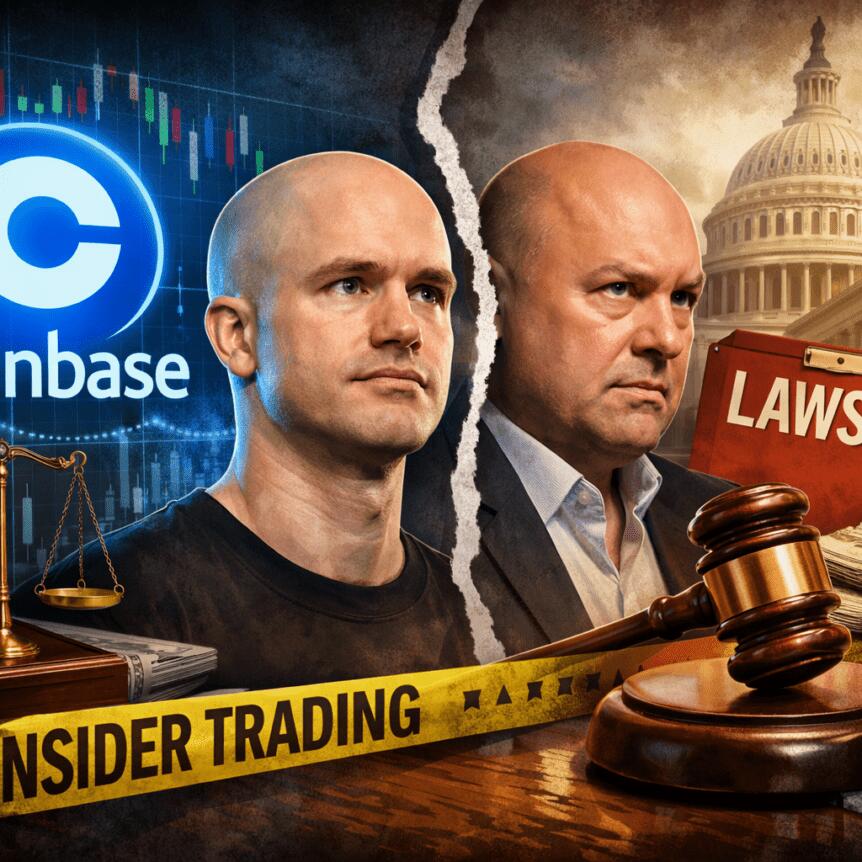
A Delaware judge has allowed a shareholder lawsuit accusing Coinbase directors of insider trading to proceed, despite an internal investigation that cleared the executives of wrongdoing. Filed in 2023 by a Coinbase investor, the complaint targets CEO Brian Armstrong and board member Marc Andreessen, alleging they used confidential information to sidestep more than $1 billion in losses around the company’s 2021 direct listing. The filing contends insiders sold more than $2.9 billion worth of stock, with Armstrong personally divesting about $291.8 million. While Coinbase’s special litigation committee produced findings that bolster the directors’ defenses, the court signaled that questions about the independence of one committee member were enough to keep the case alive for now.
Key takeaways
- The Delaware Chancery Court declined to dismiss the insider-trading suit, allowing it to move forward despite an internal probe that cleared the executives.
- At the heart of the dispute is Coinbase’s 2021 direct listing, which proceeded without a traditional IPO structure, lockups, or new share issuance, enabling immediate liquidity for existing holders.
- The plaintiffs allege insiders sold about $2.9 billion of stock, including roughly $291.8 million from Armstrong, in the run-up to and just after the listing.
- The court underscored independence concerns surrounding a member of the special litigation committee, keeping the case alive even as the committee’s findings favored the directors.
- Coinbase denies the allegations and says it will continue to contest the claims; the matter adds to ongoing scrutiny of governance around crypto listings and disclosures.
Tickers mentioned: $BTC
Market context: The ruling arrives amid heightened regulatory focus on listing processes and insider-trading enforcement in crypto markets. Coinbase’s 2021 direct listing—unlike a traditional IPO—lacked both a lockup and new share issuance, a structure that has become a focal point in debates about investor protections and corporate governance during liquidity events. The case illustrates the tension between liquidity for existing shareholders and the vigilance regulators seek over material nonpublic information in high-profile crypto companies.
Why it matters
The decision preserves a high-stakes dispute that could reshape accountability standards for executives during liquidity events. If future findings show that material nonpublic information was misused to influence trading around a direct listing, it could expose Coinbase leadership to liability and potentially influence how similar listings are structured across the crypto and fintech sectors. For investors, the outcome may influence how they assess governance risk at firms that mobilize large-scale liquidity events without the protections typical of conventional public offerings.
From a governance perspective, the case spotlights the delicate balance between allowing insiders to realize liquidity and ensuring that nonpublic information does not confer an unfair advantage. The court’s emphasis on independence concerns within the committee hints at a broader scrutiny regime that could affect how internal probes are conducted in high-profile corporate disputes linked to crypto ventures. As Coinbase navigates this legal exposure, market participants will watch for any changes to disclosure practices or internal controls designed to prevent information leaks that could tilt trading in the days surrounding a listing.
The dispute also intersects with broader market dynamics. While the original filing centers on a corporate governance question, the debate over information symmetry and liquidity remains relevant as exchanges and issuers experiment with direct listings and token-related disclosures. The case sits alongside parallel discussions about how token listings and market signals are managed, particularly in an environment where listing decisions can influence asset prices and trader behavior. The matter thus extends beyond a single company to provoke questions about best practices for information management in the crypto ecosystem.
Coinbase shares sold by directors after listing. Source: LawsuitCoinbase and the defendants have previously denied the allegations, arguing there is no evidence they possessed or acted on material nonpublic information. In a public comment reported around the case, Coinbase expressed disappointment with the court’s decision to allow the suit to proceed and reaffirmed its intent to contest the claims. The dispute has also prompted discussions about how token listings and market signals are communicated to the market, with Coinbase signaling plans to adjust its token-listing processes to reduce information leaks and uneven access to market data in the coming quarters.
The period of investigation behind the committee’s work lasted about 10 months, culminating in a recommendation to end the case and a portrayal of the sales as largely liquidity-driven for a direct-listing scenario. Yet the court’s ruling shows that questions of independence—particularly around a committee member with past business ties—remain a potential obstacle to a clean outcome, ensuring the case will continue to orbit the governance and disclosure questions that have long shadowed Coinbase’s rapid ascent in the crypto economy.
What to watch next
- Upcoming court steps and potential rulings on motions related to the independence issue.
- Any material updates to Coinbase’s governance controls or token-listing procedures in response to the allegations.
- Possible parallel actions by other shareholders or regulators examining listing practices in crypto markets.
- Further public disclosures or statements from Coinbase as the case progresses toward possible settlements or trial phases.
Sources & verification
- The 2023 shareholder lawsuit alleging insider trading by Coinbase directors, including specifics on stock sales.
- Delaware Chancery Court ruling by Judge Kathaleen St. J. McCormick denying dismissal and allowing the case to proceed.
- The special litigation committee’s 10-month review and its conclusions on liquidity-driven sales and price behavior.
- Bloomberg Law reporting on independence concerns surrounding a committee member.
- Details of Coinbase’s direct listing, including the absence of a lockup and no issuance of new shares.
Judge allows insider-trading lawsuit against Coinbase directors to proceed
In a decision that keeps a contentious governance dispute alive at a pivotal moment for Coinbase, the Delaware court did not grant a sweepingly favorable end to the insider-trading allegations. The complaint, brought by a Coinbase investor, centers on claims that key executives using confidential information navigated the post-listing period to avoid substantial losses tied to the company’s direct listing in 2021. The substance of the allegations rests on the volume of stock sold by insiders—over $2.9 billion—highlighting Armstrong’s personal disposition of approximately $291.8 million. The plaintiff contends that such actions were rooted in access to material nonpublic information about Coinbase’s valuation and market strategy, raising questions about whether a liquidity event without a traditional lockup created incentives to trade ahead of public knowledge.
The case also hinges on Coinbase’s decision to go public via a direct listing rather than a classic IPO. The absence of a lockup and the lack of new shares meant existing holders could sell immediately, a feature that critics say magnifies information flow and potential market impact around the listing. The court acknowledged the SLC’s work, which concluded the trades were largely liquidity-driven and that Coinbase’s share price movements tracked Bitcoin’s broader price action, but it nonetheless found that concerns about the independence of a committee member were enough to sustain the litigation. The result is a nuanced stance: the committee’s findings still matter, but the court’s scrutiny of the independence issue prevents a swift resolution.
Coinbase responded to the ruling by reiterating that it disputes the allegations and intends to fight the case on the merits. The company has indicated it plans to refine its internal processes to minimize information leaks and to align token-listing practices with enhanced market safeguards. The legal exposure now wraps into ongoing governance questions for the company as it navigates a broader regulatory and competitive landscape, where investor protections, disclosure norms, and the balance between liquidity events and price integrity remain in focus for both market watchers and policymakers.
This article was originally published as Coinbase Insider Trading Lawsuit Against Armstrong/Andreessen Advances on Crypto Breaking News – your trusted source for crypto news, Bitcoin news, and blockchain updates.
You May Also Like

Victra Named 2025 Recipient of Verizon’s Best Build Compliance Award

Stablecoins could face yield compression after Fed’s rate cut
