The post Fact Check: Do the Epstein Files Show Israel Took Control of Bitcoin? appeared first on Coinpedia Fintech News As the Epstein files continue to be releasedThe post Fact Check: Do the Epstein Files Show Israel Took Control of Bitcoin? appeared first on Coinpedia Fintech News As the Epstein files continue to be released

Fact Check: Do the Epstein Files Show Israel Took Control of Bitcoin?

4 min read
Israel controls Bitcoin fact check

The post Fact Check: Do the Epstein Files Show Israel Took Control of Bitcoin? appeared first on Coinpedia Fintech News

As the Epstein files continue to be released, new claims are surfacing almost every day, raising serious concerns. One recent claim circulating on X and within crypto circles alleges that Israel secretly gained control of the Bitcoin network more than a decade ago. 

The claim also tries to connect the newly discussed Epstein files with Bitcoin core developers, Blockstream, and Tether.

So Coinpedia stepped in to fact-check whether the claim is real or just another false allegation.

Who Made This Claim?

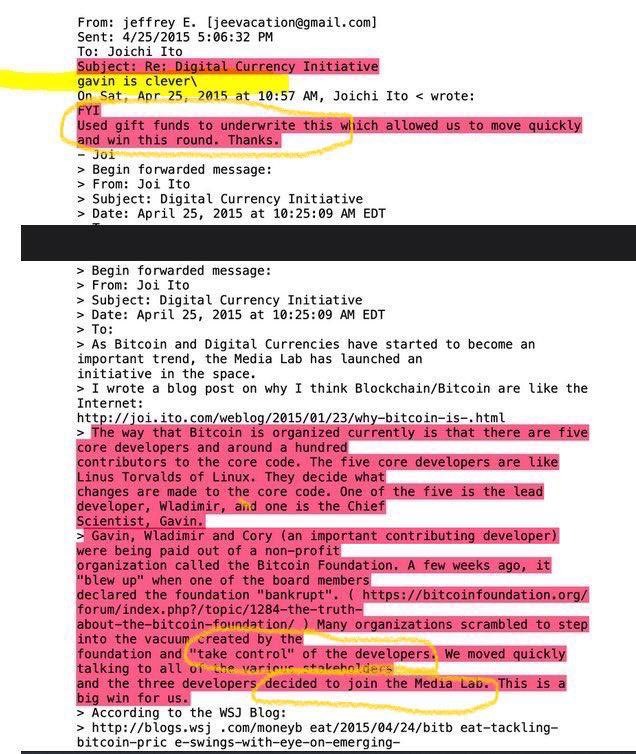
The claim was made by SwanDesk CEO Jacob King, who cited an alleged Epstein file document. He says the document shows a conversation between Jeffrey Epstein and Joichi Ito, a Japanese entrepreneur, suggesting that some Bitcoin core developers received hidden gifts. 
Epstein files

King also claimed that Israel paid the salaries of about 60% of Bitcoin developers. He further alleged that Epstein and Israel were major investors in Blockstream, and that Blockstream and Tether could influence Bitcoin’s price and code.

But is all this claim true? Let’s break it down.

Coinpedia’s Key Findings: What’s Actually True?

No Evidence Israel Controlled Bitcoin Developers

The recent release of millions of documents by the U.S. Department of Justice (DOJ) under the Epstein Files Transparency Act has found no substantiated evidence that Israel hijacked control of the Bitcoin network

Also, the claim that Israel paid 60% of Bitcoin core developers is unsupported. Meanwhile, no document proves Israeli state payrolls or centralized hiring.

Epstein Had a Minor, Indirect Blockstream Investment

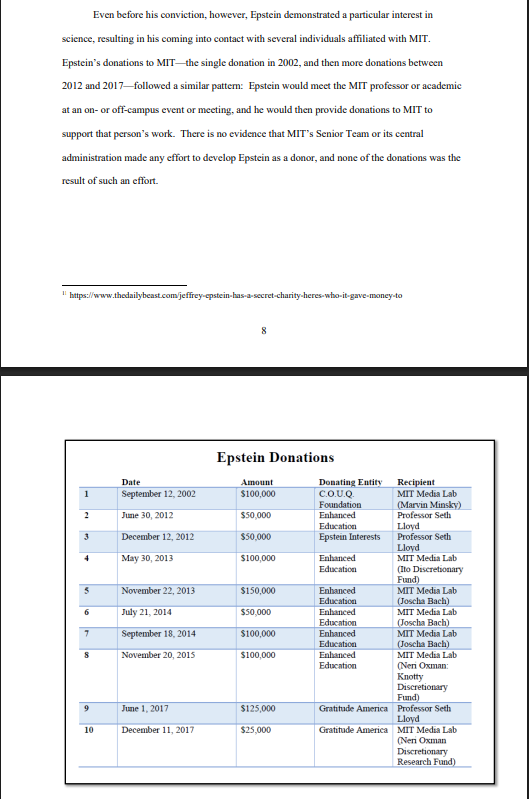
MIT Digital Currency Initiative (DCI) records show that Jeffrey Epstein donated around $850,000 to MIT between 2002 and 2017. Perhaps, this does not amount to control or major ownership.

In 2015, part of this money was reportedly used by MIT’s Digital Currency Initiative to pay salaries of Bitcoin Core developers like Gavin Andresen and Wladimir van der Laan. This support came after the Bitcoin Foundation shut down, and funding for developers became uncertain.
funding details

Why is Israel being linked to the Bitcoin Foundation and MIT Media Lab?

The main Israel link comes through former Prime Minister Ehud Barak. Records show Barak stayed at Jeffrey Epstein’s New York home several times between 2013 and 2017, the same period when claims of Israeli control over Bitcoin.

Epstein also reportedly acted as a backchannel for Israeli interests, helping arrange security deals in several countries. 

In 2015, Epstein donated $850,000 to the MIT Media Lab. Prominent Israeli figures, such as designer Neri Oxman, were senior researchers at the Media Lab during the period it was accepting Epstein’s funds.

Epstein was also connected to Bitcoin infrastructure as well. In 2014, he joined an $18 million funding round for Blockstream, a company that employs important Bitcoin developers. 

However, Blockstream CEO Adam Back later clarified that Epstein’s stake was quickly sold and the company has no financial ties to him today.

Tether Allegations Are Unrelated and Unproven

Claims that Bitcoin’s price can be manipulated using “unbacked Tether” are separate allegations. These claims do not prove that anyone controls the Bitcoin network, controls Bitcoin developers, or that any government is manipulating Bitcoin.

Summary Table: Coinpedia’s Evidence Against the Theory

Claim Made by TheoryCoinpedia’s Counter-Evidence
Does Israel Hijack Control of the Bitcoin Network?U.S. Department of Justice (DOJ) said their were no substantiated evidence to support this claim
Did Epstein funded Bitcoin takeover?Minor, but that was also through indirect investment of only $50,000 and $500,000
Were 60% of devs paid by IsraelNo Document to support these claims.

Conclusion

ClaimDo the Epstein Files Reveal Israel Hijacked Control of the Bitcoin Network?
Verdict❌ False
Fact-Check by CoinpediaAs per Coinpedia research and a review of official sources, there is no credible evidence that Israel controls Bitcoin, pays core developers, or manipulates the network through Blockstream or Tether. Until then, this claim remains unverified and speculative.
Never Miss a Beat in the Crypto World!

Stay ahead with breaking news, expert analysis, and real-time updates on the latest trends in Bitcoin, altcoins, DeFi, NFTs, and more.

bell icon Subscribe to News
Disclaimer: The articles reposted on this site are sourced from public platforms and are provided for informational purposes only. They do not necessarily reflect the views of MEXC. All rights remain with the original authors. If you believe any content infringes on third-party rights, please contact service@support.mexc.com for removal. MEXC makes no guarantees regarding the accuracy, completeness, or timeliness of the content and is not responsible for any actions taken based on the information provided. The content does not constitute financial, legal, or other professional advice, nor should it be considered a recommendation or endorsement by MEXC.

You May Also Like

Victra Named 2025 Recipient of Verizon’s Best Build Compliance Award

Victra Named 2025 Recipient of Verizon’s Best Build Compliance Award

Verizon Recognizes Victra for Industry-Leading Excellence in Store Design and Brand Compliance. RALEIGH, N.C., Feb. 3, 2026 /PRNewswire/ — Verizon has named Victra
Share
AI Journal2026/02/03 20:49
Stablecoins could face yield compression after Fed’s rate cut

Stablecoins could face yield compression after Fed’s rate cut

The post Stablecoins could face yield compression after Fed’s rate cut appeared on BitcoinEthereumNews.com. The Federal Reserve reduced its policy rate by 25 basis points to 4.00%–4.25%, the first rate cut this year. The move, framed as a response to weakening labor data, signals the start of a cautious easing cycle. Projections show two more cuts possible before year-end, with further reductions likely in 2026. Inflation remains above target, but Chairman Jerome Powell emphasized risk management over immediate price control, prioritizing stability in employment conditions. Stablecoins will be quickly affected by this. Issuers like Tether and Circle have generated large profits by holding reserves in short-term Treasuries during the high-rate environment of the past two years. That income stream now begins to erode. DeFi protocols that offered tokenized Treasury exposure face the same squeeze, with returns set to fall further if the Fed continues cutting into next year. A multi-cut easing cycle could substantially reduce stablecoin profitability, forcing issuers and protocols to adapt. The decline in dollar yields also alters the balance between holding stablecoins passively and seeking higher returns in risk assets. Bitcoin benefits most from this reallocation. As nominal rates move lower and inflation remains sticky, real yields decline, making non-yielding assets more attractive. The weaker dollar and improving risk appetite amplify the effect, positioning Bitcoin as a relative winner of the Fed’s shift. The September cut is modest, but it could bring significant changes to the crypto market. Stablecoin models built on Treasury income face structural headwinds after the rate cut, while Bitcoin and other high-beta assets stand to gain from falling real yields and increased liquidity. The Fed has opened an easing cycle, and crypto’s internal capital flows will move with it. The post Stablecoins could face yield compression after Fed’s rate cut appeared first on CryptoSlate. Source: https://cryptoslate.com/insights/stablecoins-could-face-yield-compression-after-feds-rate-cut/
Share
BitcoinEthereumNews2025/09/18 19:31
Wormhole Jumps 11% on Revised Tokenomics and Reserve Initiative

Wormhole Jumps 11% on Revised Tokenomics and Reserve Initiative

The post Wormhole Jumps 11% on Revised Tokenomics and Reserve Initiative appeared on BitcoinEthereumNews.com. Cross-chain bridge Wormhole plans to launch a reserve funded by both on-chain and off-chain revenues. Wormhole, a cross-chain bridge connecting over 40 blockchain networks, unveiled a tokenomics overhaul on Wednesday, hinting at updated staking incentives, a strategic reserve for the W token, and a smoother unlock schedule. The price of W jumped 11% on the news to $0.096, though the token is still down 92% since its debut in April 2024. W Chart In a blog post, Wormhole said it’s planning to set up a “Wormhole Reserve” that will accumulate on-chain and off-chain revenues “to support the growth of the Wormhole ecosystem.” The protocol also said it plans to target a 4% base yield for governance stakers, replacing the current variable APY system, noting that “yield will come from a combination of the existing token supply and protocol revenues.” It’s unclear whether Wormhole will draw from the reserve to fund this target. Wormhole did not immediately respond to The Defiant’s request for comment. Wormhole emphasized that the maximum supply of 10 billion W tokens will remain the same, while large annual token unlocks will be replaced by a bi-weekly distribution beginning Oct. 3 to eliminate “moments of concentrated market pressure.” Data from CoinGecko shows there are over 4.7 billion W tokens in circulation, meaning that more than half the supply is yet to be unlocked, with portions of that supply to be released over the next 4.5 years. Source: https://thedefiant.io/news/defi/wormhole-jumps-11-on-revised-tokenomics-and-reserve-initiative
Share
BitcoinEthereumNews2025/09/18 01:31