JPMorgan, Chase, and Coinbase have announced a partnership that will give over 80 million Chase customers new access to crypto through a series of integrations. The collaboration includes credit card funding, bank account linking, and the ability to redeem Chase rewards points for stablecoins. Coinbase announced that starting this fall, Chase customers will be able to fund their Coinbase accounts directly using Chase credit cards. The announcement also noted that customers will gain the option to link their Chase bank accounts with Coinbase in 2026. Read more ↓ https://t.co/ZuX2rqxUfS — Coinbase 🛡️ (@coinbase) July 30, 2025 Coinbase noted that by 2026, the Chase Ultimate Rewards program will allow users to redeem points for USDC, Coinbase’s preferred stablecoin, on Base, the Layer 2 blockchain developed by the exchange. Coinbase described the partnership as a major step in lowering entry barriers to crypto. “We believe crypto is for everyone,” the company said in a statement. “This is just the beginning.” Coinbase and JPMorgan Partner to Bring Tokenized Deposits to Base This isn’t the first rodeo between JPMorgan and Coinbase, as JPMorgan, the largest U.S. bank, has been increasingly active in blockchain infrastructure. This is evidenced by its recently launched “ JPMD,” a tokenized deposit on Base, backed one-to-one by U.S. dollars. The token launched on July 18 is JPMorgan’s latest blockchain-backed tool for digital payments, as the bank announced that JPMD was designed to enhance settlement and token movement across public blockchains, but in a controlled and compliant manner. “JPMD is intended to enhance the global digital payments ecosystem by bringing trusted financial infrastructure onto public blockchain,” JPMorgan stated. In parallel, JPMorgan has taken steps to bring crypto further into mainstream finance. The bank is reportedly exploring ways to lend against client-held Bitcoin and Ethereum , as well as expanding collateral options to include crypto ETFs like BlackRock’s iShares Bitcoin Trust. That service is expected to begin with high-net-worth clients and may expand over time. CEO Jamie Dimon, long known for his essential stance on Bitcoin, recently acknowledged that stablecoins and deposit tokens are “real.” 💰 @jpmorgan launches first banking token "JPMD" on Coinbase Base network, marking Wall Street's biggest blockchain step with dollar-backed deposits for institutional clients. #JPMorgan #Base #Coinbase https://t.co/WGwEE8k3iZ — Cryptonews.com (@cryptonews) June 18, 2025 He also said JPMorgan would be involved in both. While he still opposes fully decentralized crypto, Dimon has allowed the bank to gradually increase its exposure to digital asset services. Banks Step Into Crypto as Traditional Finance with Coinbase as a Major Player The line between traditional finance and crypto is vanishing fast. U.S. banking giants like JPMorgan, PNC Bank , Citigroup , and Fidelity are integrating crypto services into their platforms, allowing millions of customers to access digital assets directly through familiar banking apps. This shift is making crypto more accessible to traditional users who were once held back by technical barriers or regulatory uncertainty. 🏦 PNC Bank to add Coinbase’s Crypto-as-a-Service platform for trading of digital assets, and would offer banking services to Coinbase. #PNCBank #Coinbase #CryptoServices https://t.co/a5vBf8o3Y8 — Cryptonews.com (@cryptonews) July 23, 2025 Coinbase has emerged as a key player in bridging the gap. CEO Brian Armstrong stated on the company’s earnings call in May that the exchange is no longer just focused on trading but seeks to become the world’s leading financial services app. “Crypto is eating financial services,” Armstrong said. “Money market funds, real estate, securities, debt—these are all coming on-chain.” Coinbase already provides payments, staking, stablecoin rewards, and custodial services to institutions including BlackRock, Stripe, and PayPal. 🔨 The OCC has relaxed its restrictions on banks engaging with crypto, just hours after @realDonaldTrump pledged to end regulatory barriers. #OCC #Trump https://t.co/GEYG4fCXHu — Cryptonews.com (@cryptonews) March 8, 2025 This expansion coincides with a major regulatory pivot. In a major shift, the Office of the Comptroller of the Currency (OCC) has joined the Federal Reserve and FDIC in permitting regulated U.S. banks to buy, sell, and custody crypto assets . Just last year, these agencies had warned against such partnerships. But with the Trump administration relaxing crypto-related constraints and Congress passing stablecoin legislation , traditional banks are jumping in. The market is also being reshaped by the rise of spot ETFs , which allow investors to gain exposure to Bitcoin and Ethereum through traditional brokerage accounts. Products from BlackRock, Fidelity, and Grayscale have become key entry points for everyday investors. As access improves and trust increases, capital from traditional institutions is pouring into crypto markets. The influx is supporting prices, increasing liquidity, and even stabilizing volatility.JPMorgan, Chase, and Coinbase have announced a partnership that will give over 80 million Chase customers new access to crypto through a series of integrations. The collaboration includes credit card funding, bank account linking, and the ability to redeem Chase rewards points for stablecoins. Coinbase announced that starting this fall, Chase customers will be able to fund their Coinbase accounts directly using Chase credit cards. The announcement also noted that customers will gain the option to link their Chase bank accounts with Coinbase in 2026. Read more ↓ https://t.co/ZuX2rqxUfS — Coinbase 🛡️ (@coinbase) July 30, 2025 Coinbase noted that by 2026, the Chase Ultimate Rewards program will allow users to redeem points for USDC, Coinbase’s preferred stablecoin, on Base, the Layer 2 blockchain developed by the exchange. Coinbase described the partnership as a major step in lowering entry barriers to crypto. “We believe crypto is for everyone,” the company said in a statement. “This is just the beginning.” Coinbase and JPMorgan Partner to Bring Tokenized Deposits to Base This isn’t the first rodeo between JPMorgan and Coinbase, as JPMorgan, the largest U.S. bank, has been increasingly active in blockchain infrastructure. This is evidenced by its recently launched “ JPMD,” a tokenized deposit on Base, backed one-to-one by U.S. dollars. The token launched on July 18 is JPMorgan’s latest blockchain-backed tool for digital payments, as the bank announced that JPMD was designed to enhance settlement and token movement across public blockchains, but in a controlled and compliant manner. “JPMD is intended to enhance the global digital payments ecosystem by bringing trusted financial infrastructure onto public blockchain,” JPMorgan stated. In parallel, JPMorgan has taken steps to bring crypto further into mainstream finance. The bank is reportedly exploring ways to lend against client-held Bitcoin and Ethereum , as well as expanding collateral options to include crypto ETFs like BlackRock’s iShares Bitcoin Trust. That service is expected to begin with high-net-worth clients and may expand over time. CEO Jamie Dimon, long known for his essential stance on Bitcoin, recently acknowledged that stablecoins and deposit tokens are “real.” 💰 @jpmorgan launches first banking token "JPMD" on Coinbase Base network, marking Wall Street's biggest blockchain step with dollar-backed deposits for institutional clients. #JPMorgan #Base #Coinbase https://t.co/WGwEE8k3iZ — Cryptonews.com (@cryptonews) June 18, 2025 He also said JPMorgan would be involved in both. While he still opposes fully decentralized crypto, Dimon has allowed the bank to gradually increase its exposure to digital asset services. Banks Step Into Crypto as Traditional Finance with Coinbase as a Major Player The line between traditional finance and crypto is vanishing fast. U.S. banking giants like JPMorgan, PNC Bank , Citigroup , and Fidelity are integrating crypto services into their platforms, allowing millions of customers to access digital assets directly through familiar banking apps. This shift is making crypto more accessible to traditional users who were once held back by technical barriers or regulatory uncertainty. 🏦 PNC Bank to add Coinbase’s Crypto-as-a-Service platform for trading of digital assets, and would offer banking services to Coinbase. #PNCBank #Coinbase #CryptoServices https://t.co/a5vBf8o3Y8 — Cryptonews.com (@cryptonews) July 23, 2025 Coinbase has emerged as a key player in bridging the gap. CEO Brian Armstrong stated on the company’s earnings call in May that the exchange is no longer just focused on trading but seeks to become the world’s leading financial services app. “Crypto is eating financial services,” Armstrong said. “Money market funds, real estate, securities, debt—these are all coming on-chain.” Coinbase already provides payments, staking, stablecoin rewards, and custodial services to institutions including BlackRock, Stripe, and PayPal. 🔨 The OCC has relaxed its restrictions on banks engaging with crypto, just hours after @realDonaldTrump pledged to end regulatory barriers. #OCC #Trump https://t.co/GEYG4fCXHu — Cryptonews.com (@cryptonews) March 8, 2025 This expansion coincides with a major regulatory pivot. In a major shift, the Office of the Comptroller of the Currency (OCC) has joined the Federal Reserve and FDIC in permitting regulated U.S. banks to buy, sell, and custody crypto assets . Just last year, these agencies had warned against such partnerships. But with the Trump administration relaxing crypto-related constraints and Congress passing stablecoin legislation , traditional banks are jumping in. The market is also being reshaped by the rise of spot ETFs , which allow investors to gain exposure to Bitcoin and Ethereum through traditional brokerage accounts. Products from BlackRock, Fidelity, and Grayscale have become key entry points for everyday investors. As access improves and trust increases, capital from traditional institutions is pouring into crypto markets. The influx is supporting prices, increasing liquidity, and even stabilizing volatility.

JPMorgan Partners with Coinbase, Letting Millions of Chase Customers Buy Crypto Instantly

4 min read

JPMorgan, Chase, and Coinbase have announced a partnership that will give over 80 million Chase customers new access to crypto through a series of integrations. The collaboration includes credit card funding, bank account linking, and the ability to redeem Chase rewards points for stablecoins.

Coinbase announced that starting this fall, Chase customers will be able to fund their Coinbase accounts directly using Chase credit cards. The announcement also noted that customers will gain the option to link their Chase bank accounts with Coinbase in 2026.

Coinbase noted that by 2026, the Chase Ultimate Rewards program will allow users to redeem points for USDC, Coinbase’s preferred stablecoin, on Base, the Layer 2 blockchain developed by the exchange.

Coinbase described the partnership as a major step in lowering entry barriers to crypto. “We believe crypto is for everyone,” the company said in a statement. “This is just the beginning.”

Coinbase and JPMorgan Partner to Bring Tokenized Deposits to Base

This isn’t the first rodeo between JPMorgan and Coinbase, as JPMorgan, the largest U.S. bank, has been increasingly active in blockchain infrastructure. This is evidenced by its recently launched “JPMD,” a tokenized deposit on Base, backed one-to-one by U.S. dollars.

The token launched on July 18 is JPMorgan’s latest blockchain-backed tool for digital payments, as the bank announced that JPMD was designed to enhance settlement and token movement across public blockchains, but in a controlled and compliant manner.

“JPMD is intended to enhance the global digital payments ecosystem by bringing trusted financial infrastructure onto public blockchain,” JPMorgan stated.

In parallel, JPMorgan has taken steps to bring crypto further into mainstream finance. The bank is reportedly exploring ways to lend against client-held Bitcoin and Ethereum, as well as expanding collateral options to include crypto ETFs like BlackRock’s iShares Bitcoin Trust. That service is expected to begin with high-net-worth clients and may expand over time.

CEO Jamie Dimon, long known for his essential stance on Bitcoin, recently acknowledged that stablecoins and deposit tokens are “real.”

He also said JPMorgan would be involved in both. While he still opposes fully decentralized crypto, Dimon has allowed the bank to gradually increase its exposure to digital asset services.

Banks Step Into Crypto as Traditional Finance with Coinbase as a Major Player

The line between traditional finance and crypto is vanishing fast. U.S. banking giants like JPMorgan, PNC Bank, Citigroup, and Fidelity are integrating crypto services into their platforms, allowing millions of customers to access digital assets directly through familiar banking apps.

This shift is making crypto more accessible to traditional users who were once held back by technical barriers or regulatory uncertainty.

Coinbase has emerged as a key player in bridging the gap. CEO Brian Armstrong stated on the company’s earnings call in May that the exchange is no longer just focused on trading but seeks to become the world’s leading financial services app.

“Crypto is eating financial services,” Armstrong said. “Money market funds, real estate, securities, debt—these are all coming on-chain.”

Coinbase already provides payments, staking, stablecoin rewards, and custodial services to institutions including BlackRock, Stripe, and PayPal.

This expansion coincides with a major regulatory pivot. In a major shift, the Office of the Comptroller of the Currency (OCC) has joined the Federal Reserve and FDIC in permitting regulated U.S. banks to buy, sell, and custody crypto assets.

Just last year, these agencies had warned against such partnerships. But with the Trump administration relaxing crypto-related constraints and Congress passing stablecoin legislation, traditional banks are jumping in.

The market is also being reshaped by the rise of spot ETFs, which allow investors to gain exposure to Bitcoin and Ethereum through traditional brokerage accounts. Products from BlackRock, Fidelity, and Grayscale have become key entry points for everyday investors.

As access improves and trust increases, capital from traditional institutions is pouring into crypto markets. The influx is supporting prices, increasing liquidity, and even stabilizing volatility.

Disclaimer: The articles reposted on this site are sourced from public platforms and are provided for informational purposes only. They do not necessarily reflect the views of MEXC. All rights remain with the original authors. If you believe any content infringes on third-party rights, please contact service@support.mexc.com for removal. MEXC makes no guarantees regarding the accuracy, completeness, or timeliness of the content and is not responsible for any actions taken based on the information provided. The content does not constitute financial, legal, or other professional advice, nor should it be considered a recommendation or endorsement by MEXC.

You May Also Like

Three dormant wallets, suspected to belong to the same entity, purchased 5,970 ETH eight hours ago.

Three dormant wallets, suspected to belong to the same entity, purchased 5,970 ETH eight hours ago.

PANews reported on February 4 that, according to Lookonchain monitoring, three wallets that had been dormant for four years (likely controlled by the same entity
Share
PANews2026/02/04 11:36
BlackRock Increases U.S. Stock Exposure Amid AI Surge
BlackRock Increases U.S. Stock Exposure Amid AI Surge

The post BlackRock Increases U.S. Stock Exposure Amid AI Surge appeared on BitcoinEthereumNews.com. Key Points: BlackRock significantly increased U.S. stock exposure. AI sector driven gains boost S&P 500 to historic highs. Shift may set a precedent for other major asset managers. BlackRock, the largest asset manager, significantly increased U.S. stock and AI sector exposure, adjusting its $185 billion investment portfolios, according to a recent investment outlook report.. This strategic shift signals strong confidence in U.S. market growth, driven by AI and anticipated Federal Reserve moves, influencing significant fund flows into BlackRock’s ETFs. The reallocation increases U.S. stocks by 2% while reducing holdings in international developed markets. BlackRock’s move reflects confidence in the U.S. stock market’s trajectory, driven by robust earnings and the anticipation of Federal Reserve rate cuts. As a result, billions of dollars have flowed into BlackRock’s ETFs following the portfolio adjustment. “Our increased allocation to U.S. stocks, particularly in the AI sector, is a testament to our confidence in the growth potential of these technologies.” — Larry Fink, CEO, BlackRock The financial markets have responded favorably to this adjustment. The S&P 500 Index recently reached a historic high this year, supported by AI-driven investment enthusiasm. BlackRock’s decision aligns with widespread market speculation on the Federal Reserve’s next moves, further amplifying investor interest and confidence. AI Surge Propels S&P 500 to Historic Highs At no other time in history has the S&P 500 seen such dramatic gains driven by a single sector as the recent surge spurred by AI investments in 2023. Experts suggest that the strategic increase in U.S. stock exposure by BlackRock may set a precedent for other major asset managers. Historically, shifts of this magnitude have influenced broader market behaviors as others follow suit. Market analysts point to the favorable economic environment and technological advancements that are propelling the AI sector’s momentum. The continued growth of AI technologies is…
Share
BitcoinEthereumNews2025/09/18 02:49
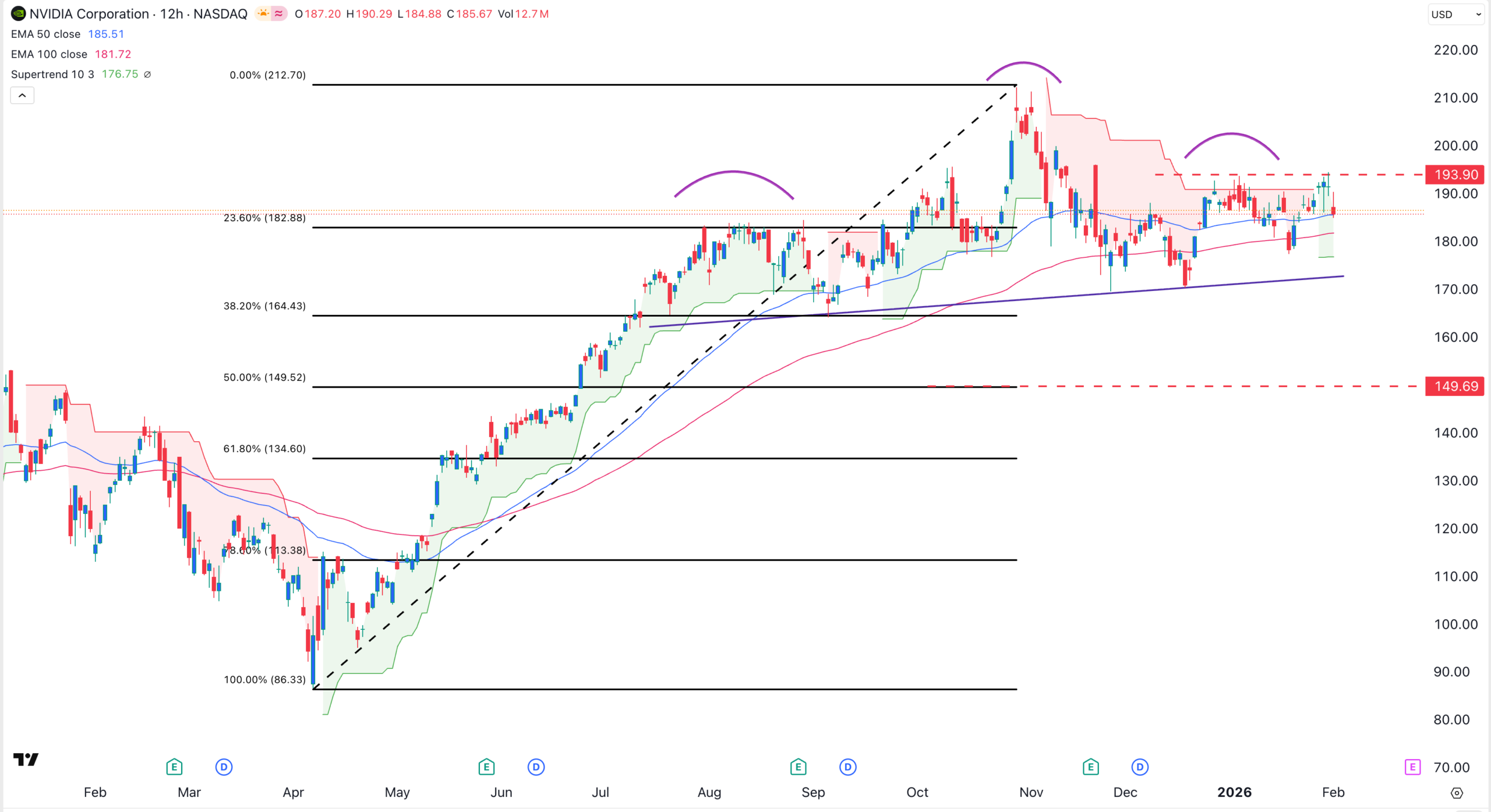
NVIDIA Stock Price Analysis as OpenAI Issues Concerns About its Chips

NVIDIA Stock Price Analysis as OpenAI Issues Concerns About its Chips

Key Insights NVIDIA stock started the week in the red. It crashed by over 2%. Meanwhile, the S&P 500, Dow Jones, and Nasdaq 100 moved close to their all-time highs
Share
Themarketperiodical2026/02/04 11:27
