

PANews reported on February 12th that, according to The Block, crypto infrastructure company Zerohash has added support for the Monad blockchain and the USDC stablecoinPANews reported on February 12th that, according to The Block, crypto infrastructure company Zerohash has added support for the Monad blockchain and the USDC stablecoin
Zerohash adds support for the Monad network to expand USDC stablecoin payments.
PANews reported on February 12th that, according to The Block, crypto infrastructure company Zerohash has added support for the Monad blockchain and the USDC stablecoin on that network, expanding the application scenarios for stablecoin payments on Layer 1 networks. This integration allows Zerohash's clients (including prediction market Kalshi, human resources management platform Gusto, and trading platform Public) to build and deploy stablecoin-based payment processes without needing to build their own blockchain infrastructure or obtain regulatory approvals. The solution supports use cases such as real-time account top-ups, cross-border payments, B2B settlements, and on-chain commerce.
Market Opportunity
USDCoin Price(USDC)
$1.0007
$1.0007$1.0007
USD
USDCoin (USDC) Live Price Chart
Disclaimer: The articles reposted on this site are sourced from public platforms and are provided for informational purposes only. They do not necessarily reflect the views of MEXC. All rights remain with the original authors. If you believe any content infringes on third-party rights, please contact service@support.mexc.com for removal. MEXC makes no guarantees regarding the accuracy, completeness, or timeliness of the content and is not responsible for any actions taken based on the information provided. The content does not constitute financial, legal, or other professional advice, nor should it be considered a recommendation or endorsement by MEXC.
You May Also Like

White House adviser: Cryptocurrency bill is "very close" to passage
PANews reported on June 18 that according to Jinshi, a US White House adviser said that the cryptocurrency bill is "very close" to passage, which will create demand for the
Share
PANews2025/06/18 23:52
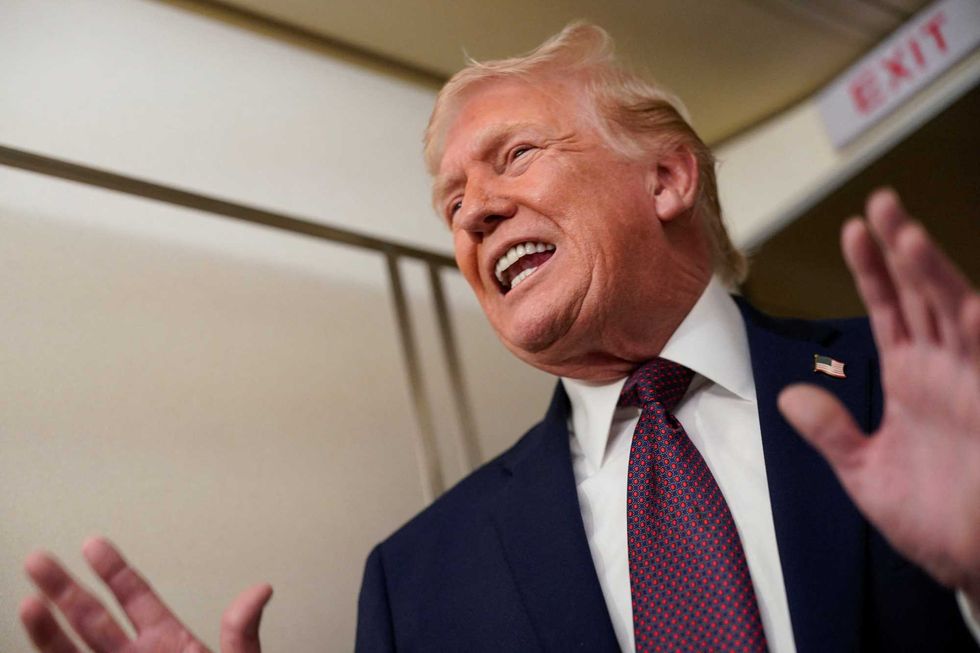
Trump caves on his own snubs as retaliation ploy against Dem governors backfires
President Donald Trump on Wednesday walked back a snub he gave to two Democratic Governors. Last week, Trump notably did not invite Democratic governors Wes Moore
Share
Rawstory2026/02/12 10:29

Bitcoin devs cheer block reconstruction stats, ignore security budget concerns
The post Bitcoin devs cheer block reconstruction stats, ignore security budget concerns appeared on BitcoinEthereumNews.com. This morning, Bitcoin Core developers celebrated improved block reconstruction statistics for node operators while conveniently ignoring the reason for these statistics — the downward trend in fees for Bitcoin’s security budget. Reacting with heart emojis and thumbs up to a green chart showing over 80% “successful compact block reconstructions without any requested transactions,” they conveniently omitted red trend lines of the fees that Bitcoin users pay for mining security which powered those green statistics. Block reconstructions occur when a node requests additional information about transactions within a compact block. Although compact blocks allow nodes to quickly relay valid bundles of transactions across the internet, the more frequently that nodes can reconstruct without extra, cumbersome transaction requests from their peers is a positive trend. Because so many nodes switched over in August to relay transactions bidding 0.1 sat/vB across their mempools, nodes now have to request less transaction data to reconstruct blocks containing sub-1 sat/vB transactions. After nodes switched over in August to accept and relay pending transactions bidding less than 1 sat/vB, disparate mempools became harmonized as most nodes had a better view of which transactions would likely join upcoming blocks. As a result, block reconstruction times improved, as nodes needed less information about these sub-1 sat/vB transactions. In July, several miners admitted that user demand for Bitcoin blockspace had persisted at such a low that they were willing to accept transaction fees of just 0.1 satoshi per virtual byte — 90% lower than their prior 1 sat/vB minimum. With so many blocks partially empty, they succumbed to the temptation to accept at least something — even 1 billionth of one bitcoin (BTC) — rather than $0 to fill up some of the excess blockspace. Read more: Bitcoin’s transaction fees have fallen to a multi-year low Green stats for block reconstruction after transaction fees crash After…
Share
BitcoinEthereumNews2025/09/18 04:07