The XRP Ledger has activated Token Escrow (XLS-85) on mainnet on Feb.12, extending the network’s native escrow mechanics beyond XRP to Trustline-based tokens (IOUsThe XRP Ledger has activated Token Escrow (XLS-85) on mainnet on Feb.12, extending the network’s native escrow mechanics beyond XRP to Trustline-based tokens (IOUs

XRP Ledger Activates Token Escrow: Here’s What XLS-85 Unlocks

2026/02/13 17:30
3 min read

The XRP Ledger has activated Token Escrow (XLS-85) on mainnet on Feb.12, extending the network’s native escrow mechanics beyond XRP to Trustline-based tokens (IOUs) and Multi-Purpose Tokens (MPTs). The amendment was enabled today with 88% consensus (30/34 validators) and was introduced in rippled v2.5.0 under the XLS-85 specification.

Escrow, But For Every Asset On XRP Ledger

RippleX framed the change as a broadening of XRPL’s settlement primitives from one native asset to the wider token stack via X:

“Token Escrow (XLS-85) is now live on XRPL Mainnet! This feature extends native escrow functionality beyond XRP to all Trustline-based tokens (IOUs) and Multi-Purpose Tokens (MPTs). From stablecoins like RLUSD to Real World Assets, the XRPL now supports secure, conditional, onchain settlement for all assets.” It added: “The toolbox for Institutional DeFi just got bigger.”

XRPL.org describes escrow in familiar terms, then emphasizes what the ledger automates: “Traditionally, an escrow is a contract between two parties to facilitate financial transactions… The XRP Ledger takes escrow a step further, replacing the third party with an automated system built into the ledger.” With the TokenEscrow amendment, that same approach now applies to fungible tokens, not just XRP.

For Trust Line Tokens, the issuing account must enable the Allow Trust Line Locking flag so the issued token can be escrowed. For MPTs, the issuer must set Can Escrow and Can Transfer flags at issuance so those tokens can both be held in escrow and transferred when released. One notable constraint: issuers cannot create escrows using their own issued tokens, though they can receive escrowed tokens as recipients.

Authorization gating also matters. If a token requires authorization, the sender must be pre-authorized by the issuer before creating an escrow, and must be authorized to receive the tokens back if an expired escrow is canceled—regardless of who submits the cancellation. Separately, the recipient must be pre-authorized before an escrow can be finished.

XRPL supports time-based, conditional, and combination escrows. The flow is anchored around EscrowCreate to lock funds, EscrowFinish to release them when conditions are met, and EscrowCancel to return funds once an escrow expires. For token escrows specifically, an expiration time is mandatory.

The feature is not free. XRPL.org flags that escrow “requires two transactions” and that Crypto-Conditions increase fees. While the ledger supports Crypto-Conditions, it currently only supports PREIMAGE-SHA-256, and fulfillment verification raises EscrowFinish costs. The documentation gives a concrete minimum: an EscrowFinish with a fulfillment requires at least 330 drops of XRP plus an additional amount based on fulfillment size, with the formula scaling if fee settings change.

RippleX highlighted use cases spanning vesting and grants, conditional payments and OTC-style swaps, treasury workflows like legal holds and collateral, and tokenized rights and RWA-style unlocks. The common thread is a native, on-ledger “lock until X” mechanism now available to the token layer, useful for structured settlement, compliance-shaped flows, and predictable release conditions without relying on a third-party custodian or purely off-chain coordination.

At press time, XRP traded at $1.35.
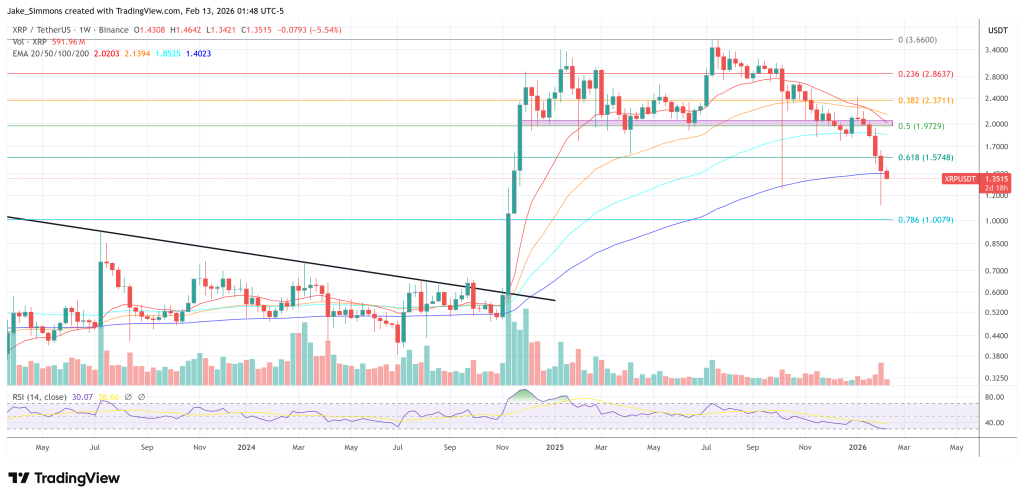
XRP price chart
Market Opportunity
XRP Logo
XRP Price(XRP)
$1.479
$1.479$1.479
+0.33%
USD
XRP (XRP) Live Price Chart
Disclaimer: The articles reposted on this site are sourced from public platforms and are provided for informational purposes only. They do not necessarily reflect the views of MEXC. All rights remain with the original authors. If you believe any content infringes on third-party rights, please contact service@support.mexc.com for removal. MEXC makes no guarantees regarding the accuracy, completeness, or timeliness of the content and is not responsible for any actions taken based on the information provided. The content does not constitute financial, legal, or other professional advice, nor should it be considered a recommendation or endorsement by MEXC.

You May Also Like

MoneyGram launches stablecoin-powered app in Colombia

MoneyGram launches stablecoin-powered app in Colombia

The post MoneyGram launches stablecoin-powered app in Colombia appeared on BitcoinEthereumNews.com. MoneyGram has launched a new mobile application in Colombia that uses USD-pegged stablecoins to modernize cross-border remittances. According to an announcement on Wednesday, the app allows customers to receive money instantly into a US dollar balance backed by Circle’s USDC stablecoin, which can be stored, spent, or cashed out through MoneyGram’s global retail network. The rollout is designed to address the volatility of local currencies, particularly the Colombian peso. Built on the Stellar blockchain and supported by wallet infrastructure provider Crossmint, the app marks MoneyGram’s most significant move yet to integrate stablecoins into consumer-facing services. Colombia was selected as the first market due to its heavy reliance on inbound remittances—families in the country receive more than 22 times the amount they send abroad, according to Statista. The announcement said future expansions will target other remittance-heavy markets. MoneyGram, which has nearly 500,000 retail locations globally, has experimented with blockchain rails since partnering with the Stellar Development Foundation in 2021. It has since built cash on and off ramps for stablecoins, developed APIs for crypto integration, and incorporated stablecoins into its internal settlement processes. “This launch is the first step toward a world where every person, everywhere, has access to dollar stablecoins,” CEO Anthony Soohoo stated. The company emphasized compliance, citing decades of regulatory experience, though stablecoin oversight remains fluid. The US Congress passed the GENIUS Act earlier this year, establishing a framework for stablecoin regulation, which MoneyGram has pointed to as providing clearer guardrails. This is a developing story. This article was generated with the assistance of AI and reviewed by editor Jeffrey Albus before publication. Get the news in your inbox. Explore Blockworks newsletters: Source: https://blockworks.co/news/moneygram-stablecoin-app-colombia
Share
BitcoinEthereumNews2025/09/18 07:04
Federal Reserve Announces Rate Cut Amid Shifting Economic Risks

Federal Reserve Announces Rate Cut Amid Shifting Economic Risks

Detail: https://coincu.com/markets/fed-cuts-rates-economic-risks/
Share
Coinstats2025/09/18 04:39
Stack Smart, Not Hard: Turn $3K into $248K With Top Meme Coin Presale – APEMARS Offers 8,100% ROI While Pepe and Floki Compete

Stack Smart, Not Hard: Turn $3K into $248K With Top Meme Coin Presale – APEMARS Offers 8,100% ROI While Pepe and Floki Compete

Could today’s market dips hide the next explosive crypto opportunity? Pepe (PEPE) is trading at $0.000004389 after a 7.95% drop, and FLOKI sits at $0.00003180 following
Share
Coinstats2026/02/17 10:15