

China Draws a Red Line Under Tokenization, Stablecoins
China's crackdown on crypto in the country now includes stablecoins and tokenization beyond the tokens.
The central bank and other top regulatory authorities in Beijing have now extended the crypto ban to include tokenization of real-world assets and stablecoins.
Virtual currencies and mining are completely prohibited in China, and now, prior authorization is required for the issuance of stablecoins tied to the RMB outside the country.
The "Notice" was released by the People's Bank of China and the China Securities Regulatory Commission (CSRC) along with other relevant agencies with the aim of further preventing and resolving risks associated with virtual currencies.
For the first time, the Notice makes it clear that domestic businesses and foreign entities under their control cannot issue virtual currencies worldwide unless they have obtained the necessary permits from the relevant authorities in accordance with applicable laws and regulations.
The Notice emphasizes that monetary sovereignty is affected by stablecoins that are related to legal tender since they perform certain tasks of the latter in circulation and usage.
It emphasizes that no entity or individual, domestic or foreign, can issue any RMB-pegged stablecoin outside of the country without the appropriate authorizations from legal and regulatory bodies.
The Notice spells out the prohibition of virtual currency-related companies and stresses the need to continue to regulate virtual currency "mining."
The National Development and Reform Commission and relevant agencies will continue to work towards a solution by implementing stringent regulations on these "mining" operations.
Beijing's concerns mostly include organizations that seem to be data centers but are actually engaged in "mining"; managers of these organizations are moving their equipment between areas to avoid local oversight; and there is a clear correlation between some mining operations and speculation and trading in virtual currencies.
The Notice also lays out the ground rules for the first-ever tokenization of real-world assets (RWAs), including the compliance criteria.
According to the regulators, tokenization, through the use of encryption and distributed ledger technology, comprises the issue and trade of rights to ownership, income, and other interests in assets.
The rule emphasizes that providing intermediary or tech services for RWA tokenization activities in China, as well as engaging in such activities themselves, may be considered unlawful financial operations.
The following should be absolutely forbidden: the illegal sale of tokenized securities, the sale of securities in public without proper authority, the trading of criminal securities or futures, and the solicitation of funds without a proper license.
On the other hand, the Notice does hint at the possibility of exclusions for relevant commercial operations carried out using specific financial infrastructure and with the approval of relevant authorities in accordance with current laws and regulations.
The entity with actual control over the underlying assets is required under the Regulatory Guidelines to file a report with the CSRC before participating in connected operations.
The domestic filing company, underlying assets, token issue strategy, and related details must be described in great depth in the overseas issuance paperwork, together with any other relevant documentation.
Hong Kong Defies Mainland's 'Notice'
However, despite China's persistent opposition to cryptocurrency activity, the Hong Kong central bank is still planning to grant an initial set of stablecoin licenses in March.
On the other hand, experts believe that Hong Kong's stablecoin projects are more of a precautionary step than a change in attitude from Beijing.
Eddie Yue, CEO of the Hong Kong Monetary Authority, in a Legislative Council meeting on February 2, said, "We hope that by March we will be able to make a decision."
The government is currently evaluating 36 applications submitted by stablecoin issuers, according to an official interpreter.
The FT said, Beijing has halted preparations to authorize the issuance of stablecoins in Hong Kong, prompting Yue to provide an update.
Stablecoins are digital currencies that are designed to maintain steady values. They don't fluctuate in price like other crypto tokens since they are linked to assets like traditional currencies or gold.
The Stablecoins Ordinance was passed by the Hong Kong government in May.
It requires permits to be obtained by entities that issue stablecoins in the territory or connect them to the Hong Kong Dollar. Shortly after the law went into effect in August, the HKMA began to accept applications.
Stablecoins have several possible regional uses, including tokenized deposit systems for foreign banks and cross-border payments, which the HKMA discussed in a document.
Digital tokens representing client deposits on blockchain networks that function under the supervision of the conventional banking system are known as tokenized deposit systems.
China's Crackdown vs. US Angle
It has been reported that Ant Group, a Chinese e-commerce business funded by Alibaba, and JD.com, another key competitor, have expressed interest in the licensing structure in Hong Kong.
The proposal came to a total halt in October after Chinese authorities, notably the People's Bank of China, had reservations about it, according to the Financial Times, quoting sources, in October.
Despite Hong Kong's claims to autonomy under the "one country, two systems" arrangement, Beijing continues to have substantial influence over major policy decisions.
Beijing is taking a more measured approach to bitcoin than Hong Kong.
That comes despite China's early dominance in cryptocurrency trading and mining, the country's regulatory framework became increasingly strict beginning in 2013.
Concerns about volatility and illegal activity prompted a total ban on cryptocurrency transactions in 2021, the result of all these regulations.
Recent research indicates that stablecoins served as the primary method for Chinese organized crime to move illicit funds, with daily transfers amounting to $44 million facilitated by intricate networks.
Another issue that Beijing is concerned about is the growing role of the US dollar in the digital asset market.
This is especially true with dollar-tied stablecoins such as USDT and USDC.
Similar problems have surfaced in Washington.
At a Senate Banking Committee hearing last week, US Treasury Secretary Scott Bessent said that he "would not be surprised" if the digital asset program in Hong Kong was seen as an attempt to establish a "alternative to American financial leadership."
However, China has banned the issuance of stablecoins without prior approval.
Blockcast – Licensed to Shill: What's in Store for 2026 – Stablecoins, the Future of DeFi.. and a Return of NFTs?
Licensed to Shill opens 2026 with a forward-looking conversation on the forces shaping the next phase of digital assets. Real-world assets, prediction markets, NFTs beyond the hype cycle, and the role of SMEs in pushing practical adoption all feature as the panel weighs what’s likely to matter – and what’s likely to fade – in 2026.
Thanks for tuning in! If you enjoyed this episode, please like and subscribe to Blockcast on your favorite podcast platforms like Spotify and Apple.
Be at the heart of TradFi–DeFi collaboration at Money20/20 Asia 2026.
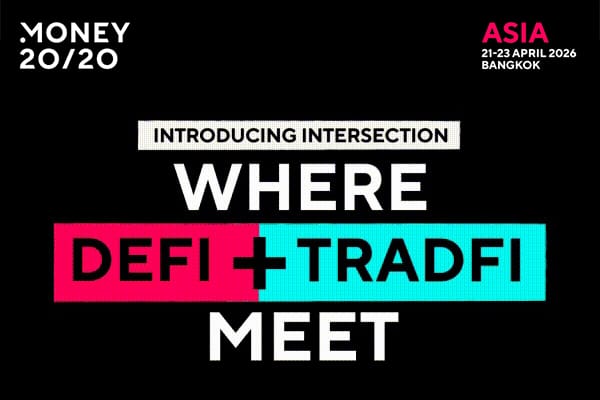
Are you looking to forge partnerships with banks and fintechs? To expand into new markets across Asia, or to secure funding from top-tier investors? This April, the world of digital assets, blockchain, and Web3 converges with the biggest players in APAC’s financial ecosystem at Money20/20 Asia 2026 and its brand new ‘Intersection’ zone, complete with a dedicated content stage, TradFi-Defi innovator showcase, and curated networking spaces. From traditional banking giants to decentralised innovators, private equity leaders, and cutting-edge fintech disruptors, this is where they meet to forge partnerships, spark dialogue, and shape the future of finance.
You May Also Like

WLFI Expands Into Forex With World Swap Launch

BUZZ HPC Closes Acquisition of 7.2 MW Toronto Site to Build Data Centre for Sovereign AI Infrastructure

BitGo wins BaFIN nod to offer regulated crypto trading in Europe
BitGo’s move creates further competition in a burgeoning European crypto market that is expected to generate $26 billion revenue this year, according to one estimate. BitGo, a digital asset infrastructure company with more than $100 billion in assets under custody, has received an extension of its license from Germany’s Federal Financial Supervisory Authority (BaFin), enabling it to offer crypto services to European investors. The company said its local subsidiary, BitGo Europe, can now provide custody, staking, transfer, and trading services. Institutional clients will also have access to an over-the-counter (OTC) trading desk and multiple liquidity venues.The extension builds on BitGo’s previous Markets-in-Crypto-Assets (MiCA) license, also issued by BaFIN, and adds trading to the existing custody, transfer and staking services. BitGo acquired its initial MiCA license in May 2025, which allowed it to offer certain services to traditional institutions and crypto native companies in the European Union.Read more