

Anthony Scaramucci Interviews Propy’s Founder: The Future of Real Estate Has Arrived with Bitcoin Home Buying

By Yuliya, PANews
In a recent episode of Wealthion hosted by Anthony Scaramucci, Propy’s founder and CEO Natalia Karayaneva shared her bold vision for the future of the real estate industry. With 15 years of experience in real estate development and a background as a software engineer, Natalia has a deep understanding of the pain points in traditional real estate transactions. “In the next decade,” she said, “you may be able to buy property anywhere in the world with just a few clicks—quickly, inexpensively, and without the fear of fraud.” While this vision may sound futuristic, Natalia believes such a transformation is already underway, driven by technological advancement and evolving market demand.
Cross-Industry Innovation from Engineers and Real Estate Experts

For decades, the real estate market has been plagued by high transaction costs, lengthy closing processes, and rampant fraud risks. Traditional home-buying involves multiple time-consuming steps, such as contract signing, bank loan approvals, and title registration, often stretching the process over several months. At the same time, title fraud, identity theft, and wire transfer scams cause substantial losses for buyers, making the market inherently uncertain. As cross-border property transactions increase, these risks are now expanding on a global scale. During the ongoing digital transformation, the clash between outdated paper-based documentation and emerging technologies has only exacerbated vulnerabilities related to identity theft and financial fraud, further intensifying market uncertainty.
The creation of Propy was specifically designed to address these industry challenges. As an expert with deep understanding of both real estate development ecosystems and blockchain fundamentals, Natalia leads a team of 40 professionals who have developed breakthrough solutions. The Propy team has built a decentralized property rights management system based on smart contracts, implementing multiple innovations through blockchain technology:
-
Automation: The system can automatically execute transaction terms, verify property ownership and fund flows in real-time, significantly reducing transaction cycles.
-
Security and transparency: Blockchain's distributed ledger technology ensures all transaction processes are open and transparent, preventing information tampering and fraudulent activities.
-
Real-time tracking: Every transaction step is recorded on the blockchain, allowing relevant parties to check progress at any time, effectively reducing the risk of human error.
To date, the Propy platform has processed over $4 billion in transaction volume. Through its pioneering property tokenization solution, the platform has successfully transformed complex cross-border real estate investments into something as simple as sending an email. From Bitcoin-backed mortgages to property tokenization, Propy is reshaping how the real estate market operates, ushering in a new era for global buyers.
Dual Approach: Blockchain and Traditional Processes for Two Types of Buyers
How exactly does Propy make home buying simpler? They offer two purchasing methods for different user needs.
The first method targets users familiar with cryptocurrency, and the process is very straightforward. As Natalia explains, "For users comfortable with cryptocurrency, they can simply connect their digital wallet and buy a house with a few mouse clicks, provided the property has been converted into a digital asset by us." This method reduces the home-buying process from several months to just minutes.
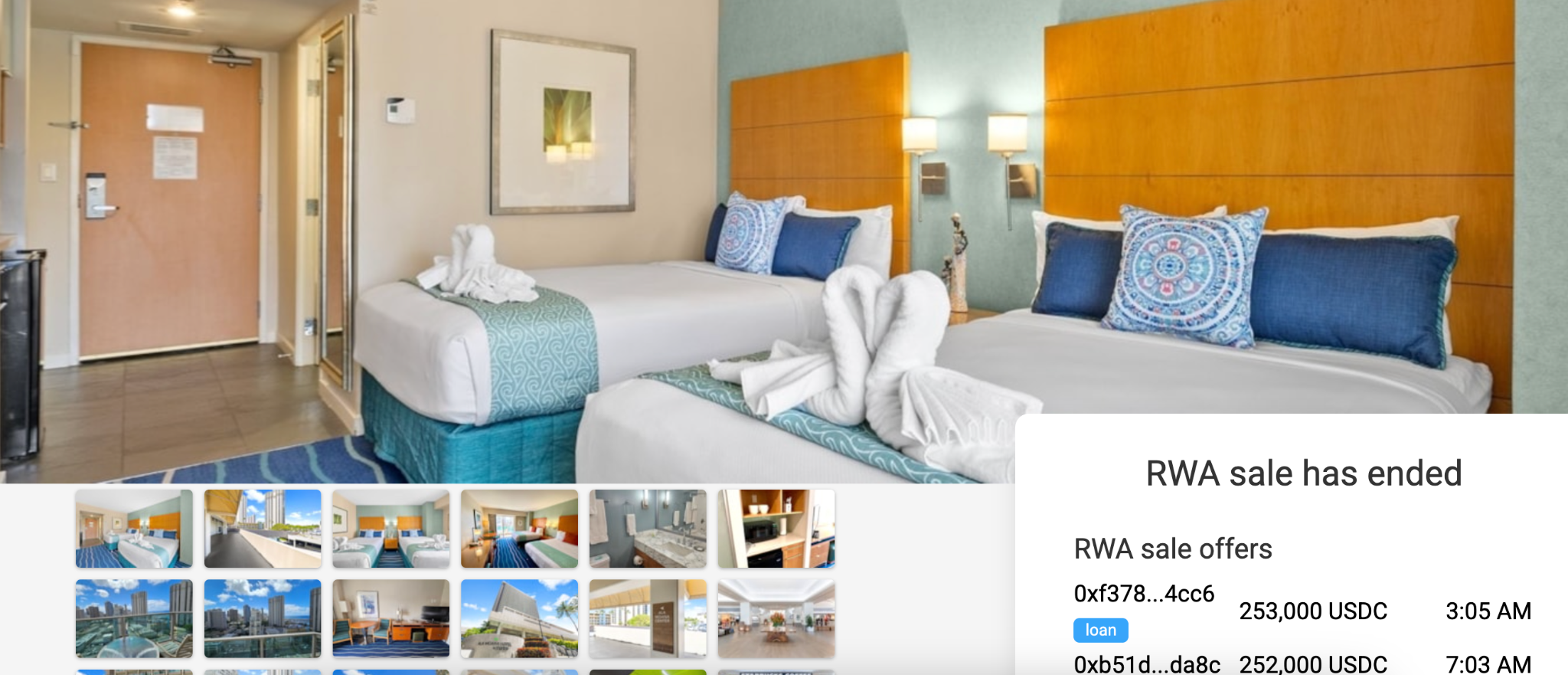
For example, in late January, Propy launched a new loan product supporting a crypto-asset-backed purchase of a Hawaii condominium, with a starting offer of 250,000 USDC. Because the entire transaction occurs on the blockchain, buyers don't have to go through the traditional 30-day transaction process and can complete the purchase almost immediately. By February 2nd, the property was sold—the buyer completed the purchase using a Bitcoin-backed loan. Natalia detailed this innovation: "In last month's transaction, a Bitcoin holder was able to bid on property without selling their Bitcoin. We consider Bitcoin excellent collateral for investing in other assets. In this transaction, if you had $250,000 in Bitcoin, upon successful bidding, you could immediately receive a Bitcoin-backed loan without any review or waiting for the traditional bank's 30-day loan approval, and become a homeowner right away using this loan."
Of course, many users still prefer traditional home-buying methods. The second approach combines traditional real estate transaction processes with innovative technology, suitable for users who prefer conventional home-buying methods. Natalia explains, "Actually, our most popular method is still the more traditional one. We have dedicated title and escrow companies, you need to sign a purchase contract, and then our AI system immediately processes this contract and initiates the transaction process. Transactions can start immediately, even during evenings or weekends." This method retains some key steps of traditional home buying but greatly improves efficiency through technological means.
Property Tokenization and Crypto-Backed Mortgage Mechanisms
Buying digitized properties on the Propy platform offers many benefits, most notably fast transaction speeds and easy liquidation.
Natalia emphasizes, "The advantage of tokenized assets is that you can purchase them immediately, obtaining property ownership in just minutes. It's more liquid, so you can sell it within an hour or a day by simply initiating an auction on Propy's RWA marketplace." This high liquidity fundamentally changes real estate as an investment category, making it more similar to trading other financial assets. In the future, RWA trading platforms like Coinbase and Opensea might support real estate transactions. Currently, these platforms don't require KYC and AML verification, but as regulations adjust, real estate tokenization is expected to become mainstream.
Meanwhile, Propy is exploring possibilities for fractional property ownership. Natalia explains that by further dividing NFTs, multiple buyers can jointly own a property with proportional rights distribution. However, since these transactions fall under securities regulations, they must be filed with the U.S. SEC.
Natalia points out that this process is relatively complex, taking about four months to complete, and the transparency requirements for SEC filing make it more like a mini-IPO, resulting in higher costs. Therefore, it's more challenging for smaller properties, though technically feasible. She believes that despite current high barriers, fractional property ownership will be one of the future directions for real estate tokenization.
Of course, Propy continues to optimize platform features to enhance user experience and meet rapidly changing market demands. In the future, users will be able to independently manage real estate NFTs through the Propy platform or wallet, increasing asset control and further reducing transaction barriers.
In terms of deed management, Propy ensures compliance with local laws and regulations while establishing a verification mechanism for property transfers. Users can choose to sell through traditional methods, maintaining compatibility with conventional markets and meeting the needs of conservative investors; alternatively, they can opt to transfer tokenized ownership on the blockchain, enabling fast, low-cost transactions and access to global liquidity opportunities.
Furthermore, Propy has launched an innovative cryptocurrency-collateralized lending model, offering new options for investors unwilling to sell their crypto assets. Their lending model accepts Bitcoin, XRP, or Ethereum as collateral. According to Natalia: "In our recent transaction, we used Bitcoin as collateral for a two-year loan with a 10% interest rate and monthly payments. It operates similarly to a mortgage, but the main advantage is avoiding the lengthy 30-day mortgage approval process. This model is particularly suitable for investors primarily holding crypto assets, as traditional financial institutions often don't recognize the collateral value of cryptocurrency."
Regarding repayment, the platform supports various cryptocurrencies and offers flexible repayment terms. Users can choose early repayment without penalties while interest rates adjust dynamically based on market conditions. To control risks, the platform implements comprehensive risk management measures, including real-time Bitcoin price monitoring, margin call mechanisms, smart contract automatic liquidation protection, and a professional risk assessment team.
Notably, Natalia also presented a future vision of Bitcoin as collateral for real estate investment. She states: "I believe Bitcoin will become a premium form of collateral in the future, allowing users to access other asset classes. Imagine being able to automatically obtain on-chain loans based on your Bitcoin holdings, without credit checks or the traditional 30-day mortgage approval process."
This DeFi + real estate model will make real estate transactions more efficient and liquid while providing unprecedented freedom for investors. With Propy's continued innovation, the real estate market is moving toward a more intelligent, decentralized era.
Additionally, Propy has deployed multi-layered security mechanisms to prevent fraud. Natalia notes: "If fraud occurs, our AI or other means might detect it, and we'll report these fraudsters to the FBI and all relevant service agencies according to current title industry rules, and re-record the deed." This multi-layered security mechanism significantly reduces fraud risk in property transactions, providing users with a more secure trading environment.
Regulatory and Institutional Progress Accelerating Transformation
Looking ahead, Propy is confident about the digital transformation of the real estate industry and maintains active cooperation with regulatory authorities and financial institutions to ensure the compliance and scalability of their solutions.
On the regulatory front, Propy actively cooperates with government agencies' policy adjustments to promote the legalization of real estate tokenization. Natalia mentions: "Now agencies like the SEC are studying fractional real estate ownership on blockchain and how to allow more citizens to invest, as this is clearly a security. I always advise all real estate operators and owners entering the tokenization space to follow SEC rules and register under Reg D, Reg A, etc."
Meanwhile, the regulatory environment is evolving in a more positive direction. Natalia points out: "After multiple conversations with legislators, I see their willingness to actually relax certain securities laws, especially for assets backed by real estate." This shift in regulatory attitude will pave the way for further development of blockchain real estate, making this innovative technology accessible to more people.
As blockchain real estate gradually enters mainstream visibility, institutional adoption shows positive signals. Natalia notes: "About a week ago, Robinhood's Vlad tweeted about Robinhood becoming a platform for buying real estate. I think they're referring to securities, they're referring to fractional real estate ownership." This indicates that mainstream financial institutions are recognizing the potential of blockchain real estate and beginning to position themselves, providing strong momentum for the industry's development.
Conclusion
While homebuyers still need to go through traditional property selection processes, such as community assessment, house viewing, and investment return evaluation, Propy's innovation significantly simplifies the post-purchase transaction process. After making a purchase decision, title transfer becomes simple and transparent, with buyers able to instantly understand property title status and potential risks. More importantly, the entire transaction process can be completed in just minutes. If future relocation is needed, properties can be quickly liquidated, truly achieving high liquidity for real estate assets.
Looking forward, Natalia is optimistic about the cryptocurrency market and Real World Assets (RWA) sector. She expects U.S. annual house sales to grow from the current 5 million to 20 million units. This growth stems from revolutionary transaction methods—future home purchases will be as convenient as using ride-hailing or short-term rental platforms today. The impact of this innovative model extends far beyond developed countries. For many developing countries struggling to attract investment due to inadequate property rights systems, this represents a chance to change their destiny. The digital transformation of U.S. real estate transactions has the potential to become an important cornerstone in driving global capital market reform, opening doors for investment and financing in more countries.
Propy is leading a real estate revolution through blockchain technology and cryptocurrency, committed to creating a more efficient, transparent, and inclusive global real estate market. As technology continues to develop and adoption rates increase, the future of buying houses with Bitcoin has quietly arrived. This transformation not only addresses many pain points in the current real estate market but also promises to return house buying to its essential purpose of meeting housing needs.
You May Also Like

Victra Named 2025 Recipient of Verizon’s Best Build Compliance Award

Stablecoins could face yield compression after Fed’s rate cut
